
Reviewed · HISTORICAL TOURS
Shared Tour of Bogota’s Historic Downtown (La Candelaria)
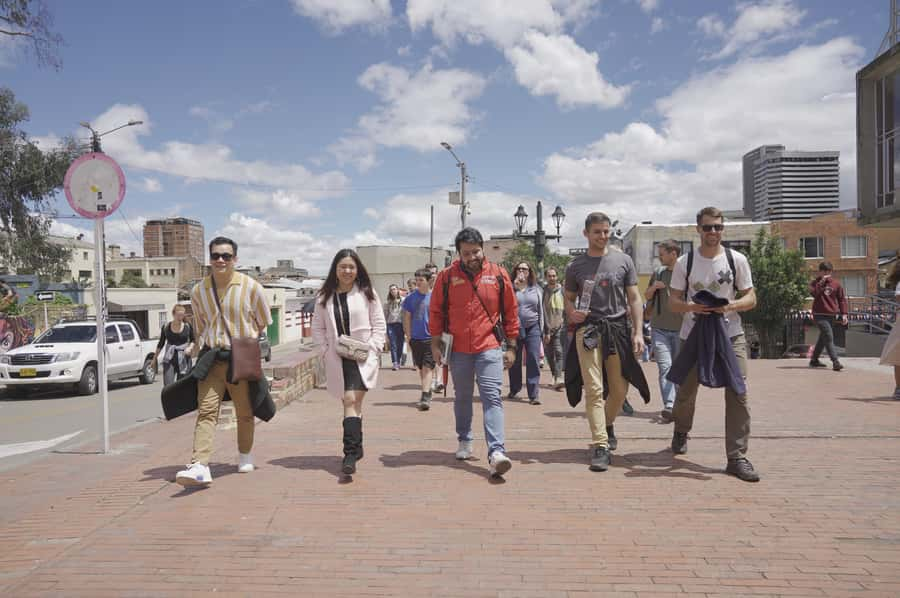
Bogotá’s story comes alive on foot in La Candelaria, where grand government buildings, colonial lanes, political scars, street art, and local food all sit close together. This shared tour connects the city’s founding with the 1948 Bogotazo riot, then brings you into everyday Bogotá through chicha and neighborhood graffiti.
I like the way the route mixes major sights such as Bolivar Square with less polished stops such as the informal emerald market and El Embudo alleyway. I also like the guides’ practical approach: Juliana, Lorenzo, Leo, Santiago, Byron, and others have been praised for clear explanations, friendly conversation, and useful advice for the rest of your stay.
The catch is the walking. You may cover about 7 kilometers, including uphill streets at roughly 8,600 feet above sea level. A large group can also make it harder to hear, and one departure had 36 people.
Key points to know before you book
- The route links Bogotá’s biggest stories: Spanish settlement, the founding of the capital, El Dorado, the Bogotazo, and modern street art.
- Bolivar Square gives you the city’s political center: You’ll examine the cathedral, government buildings, and the history tied to the square.
- Chicha adds a local taste: The ancestral corn drink is usually sampled at or near Concordia market when available.
- The tour covers about 7 kilometers: Expect uphill walking, rest stops, and little shelter from rain.
- Guide quality is a major strength: Guides including Lorenzo, Juliana, Leo, Santiago, Byron, and Lucho have earned especially warm praise for storytelling and helpfulness.
- The $13 price is strong value: You get a local guide, a broad introduction to central Bogotá, and no surprise entrance charges, though food, drinks, and transport cost extra.
Starting outside the Museo del Oro
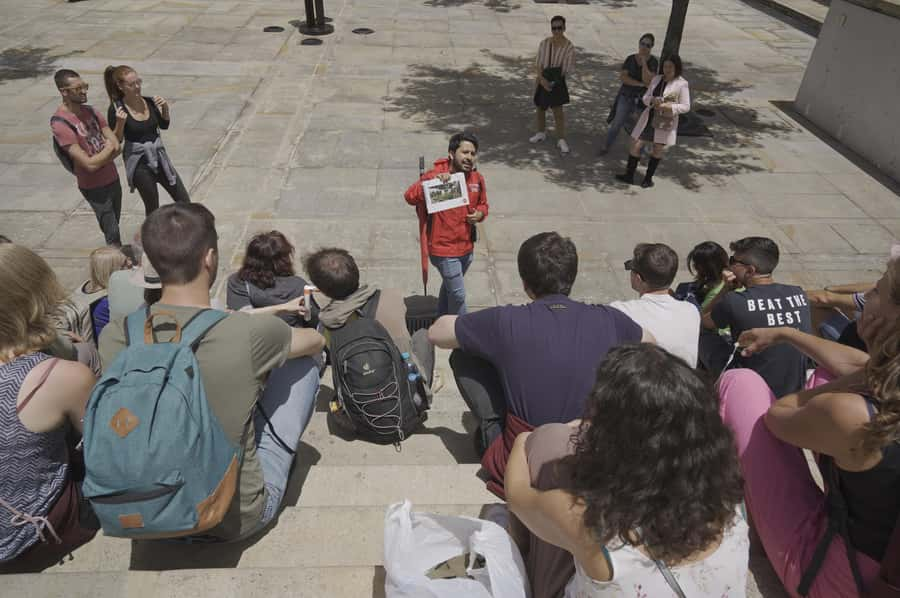
The tour begins in an easy-to-find spot: directly in front of the Museo del Oro, under Beyond Colombia’s red umbrellas. That location matters because the museum sits near the historic center and is a practical place to begin a first look at Bogotá.
You do not need to arrange a taxi or shuttle for the tour itself. Once the group gathers, the rest is on foot. Bring water, sunscreen, a hat, and comfortable shoes. Bogotá’s weather can shift quickly, so a rainproof coat or umbrella is not optional decoration. It can make the difference between enjoying the afternoon and counting the minutes.
The company offers the tour in English and Spanish. It is a shared outing, not a private walk, so you should expect to meet other people and adjust to the group’s pace. The provider has operated local tours since 2013, and the large guide team means the exact personality of your experience depends on who leads that departure.
That variety has worked well for this route. Lorenzo has been praised for making a long walk feel quick through energetic storytelling. Juliana is especially good for visitors who want clear explanations and suggestions for places to visit afterward. Leo has handled questions about architecture, Colombian history, and Fernando Botero’s work with confidence. Byron has also received credit for managing a group well during rain.
More Shared Tours in Bogota
- Zipaquirá: Salt Cathedral Group Tour with Pickup
★ 4.8 · 1,606 reviews - Bogota: Guatavita and Salt Cathedral Daily Group Tour
★ 4.7 · 615 reviews - Shared Tour Zipaquirá Salt Cathedral and Guatavita Lagoon
★ 5.0 · 139 reviews
Bolivar Square and the making of a capital
Bolivar Square is the route’s main anchor. This is where Bogotá’s political and religious power gathers, and the guide explains how the buildings around the square reflect different periods of the country’s development.
You’ll hear about the city’s origins and the arrival of the Spanish, then follow the story toward the organization of modern Bogotá. The tour also introduces Simón Bolívar, the independence-era figure whose name appears across northern South America and whose statue gives the square its familiar name.
The value here is not only in seeing impressive facades. A good explanation helps you understand why this square matters as a working civic center rather than just a photo stop. The Palace of Justice, the cathedral, and other institutions represent power, faith, law, and national identity in one compact space.
The Palace of Justice also brings the route into more recent and painful history. The guide discusses the siege of the building, one of the events that shaped Colombia’s political memory. The promise of objective presentation is useful here. You are not getting a simple good-versus-bad version of the country’s past, but a guided effort to explain competing sides and consequences.
The square can be crowded, and a shared group may need to gather tightly around the guide. Stay close and keep your belongings secure. The tour’s own warning is plain: keep your friends close and your belongings even closer.
El Bogotazo and the city’s political scars
The 1948 Bogotazo riot is one of the most important subjects on the walk. The assassination of Jorge Eliécer Gaitán triggered violence and destruction in Bogotá, leaving a lasting mark on the city’s politics and physical center.
This is where the tour moves beyond pretty colonial streets. You learn how one event can alter a capital’s buildings, public mood, and political direction. The guide places Gaitán’s role and the riot within Colombia’s wider story, giving you context that is hard to gain from passing through the neighborhood alone.
The subject can be heavy, but it is essential. La Candelaria is not a preserved stage set. Its streets hold memories of conflict, social division, resistance, and change. The tour is strongest when it connects those memories to the places you can see around you.
The pace helps here. Stops break up the walking, and the guide gives you time to listen before moving on. Still, this is not a quiet museum lecture. Street noise, traffic, rain, and a group of 20 or more people can compete with the explanation. Position yourself near the guide when a major story begins.
Chorro de Quevedo and the earliest Bogotá stories
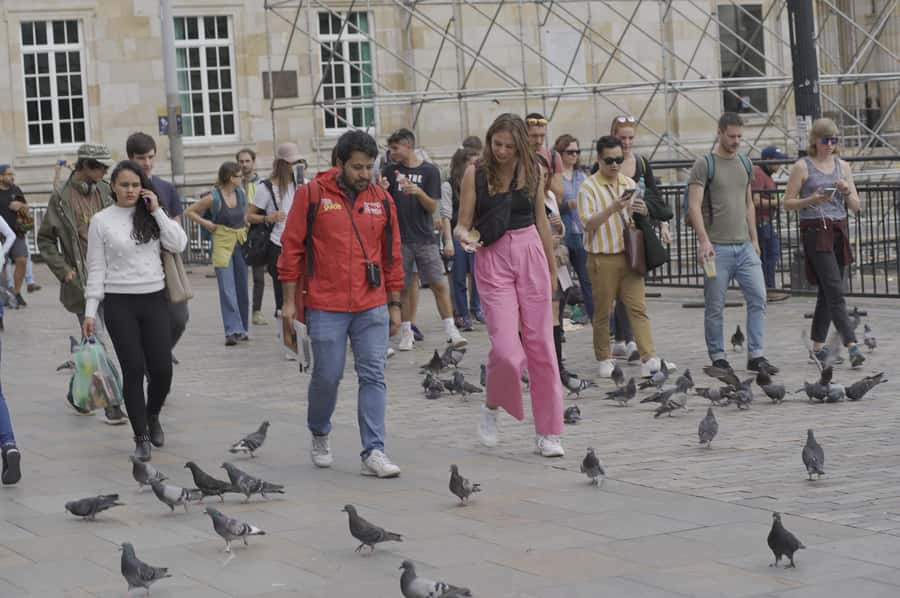
Chorro de Quevedo is associated with the foundation of Bogotá and gives the tour a more intimate setting than Bolivar Square. The smaller square and surrounding streets help you picture the early settlement before the modern capital spread outward.
This part of the route also opens the door to the myth of El Dorado. The story has influenced how outsiders imagined Colombia for centuries, but the tour places it within local history rather than treating it as a treasure-hunt fantasy.
You will also encounter the False Door, a small local landmark tied to the neighborhood’s everyday character. It is the kind of stop that benefits from a guide because its significance may not be obvious when you first see it.
La Candelaria’s charm comes from this mix of scale. One moment you are in front of a national institution, and a few minutes later you are on a narrow lane with a small market or an old doorway. The route makes those contrasts easy to appreciate.
More historical tours in Bogota:
- Historical tour Bogota
★ 5.0 · 72 reviews - 7-hour City Tour of Historic Bogotá with Monserrate
★ 4.7 · 47 reviews - From bogota: Salt Cathedral tour a Cultural Heritage Tour
★ 4.5 · 23 reviews - Bogota’s Historic Center and Monserrate in one day
★ 4.9 · 8 reviews
Chicha at Concordia market
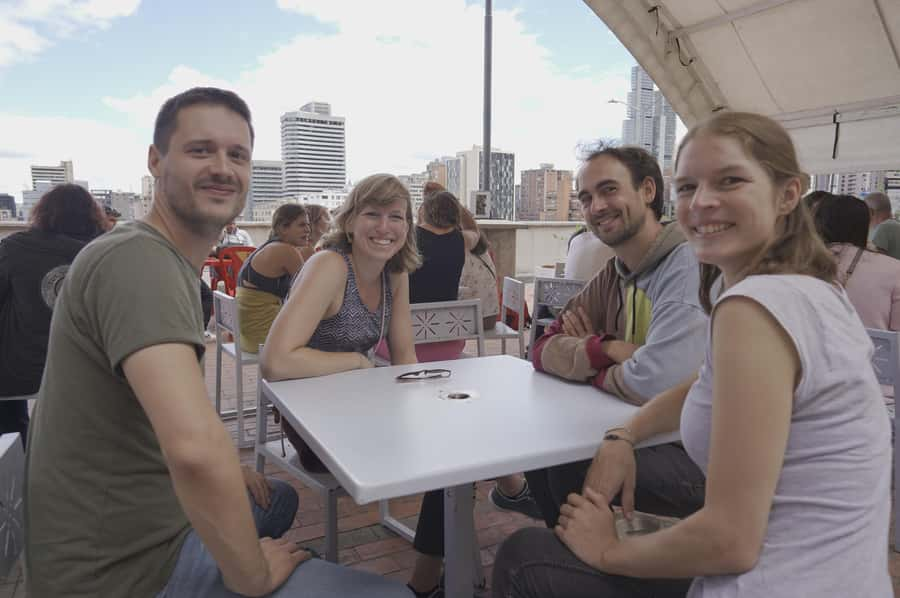
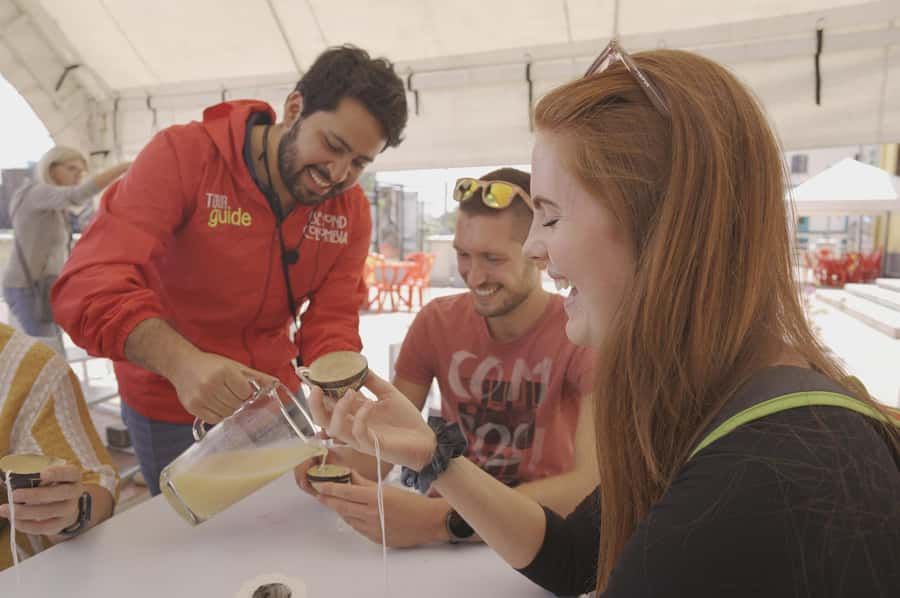
Chicha is one of the most distinctive parts of the outing. This traditional corn drink has Indigenous roots and remains an important part of Colombia’s cultural heritage. The tour uses it to discuss more than taste. You’ll learn about its place in local life and why traditional drinks matter to cultural identity.
A tasting is included when available, usually around the Concordia market area. Availability matters, so do not book this tour solely for the sample. If it is offered, consider it a small introduction rather than a full food tour. Drinks, food, and souvenirs beyond the included tasting are not covered.
One visitor found the chicha underwhelming, and that is a useful warning. The drink may not suit every palate. Its value is in the story and tradition as much as in the flavor. You do not need to love it to appreciate why it belongs on a Bogotá history walk.
The Concordia market also gives you a look at local food culture and creates a natural pause during a long route. If you need water or a short rest, this part of the walk is especially welcome. The tour includes recommendations for places to eat, buy coffee, and shop for souvenirs, so make a note of any suggestions that fit your schedule.
Graffiti, resistance, and El Embudo alleyway
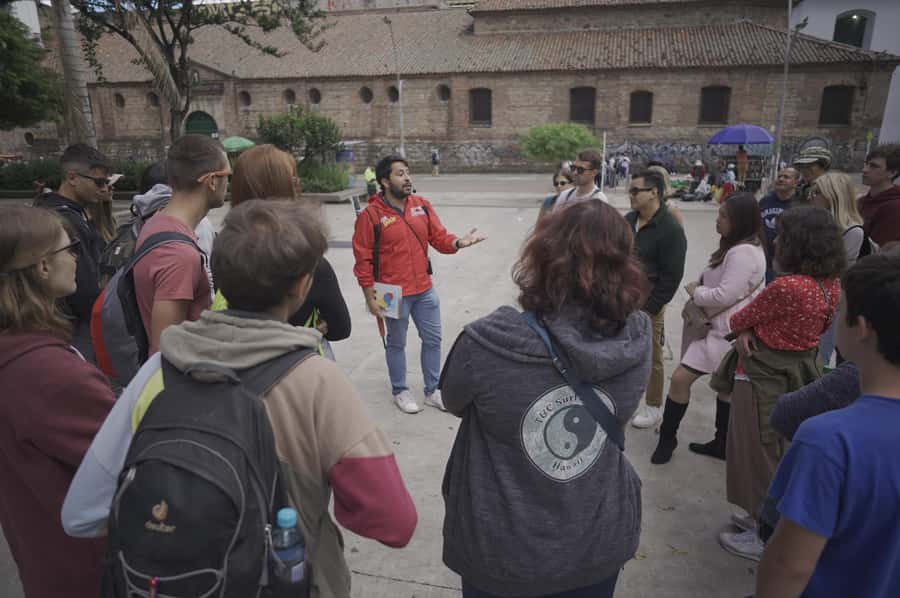
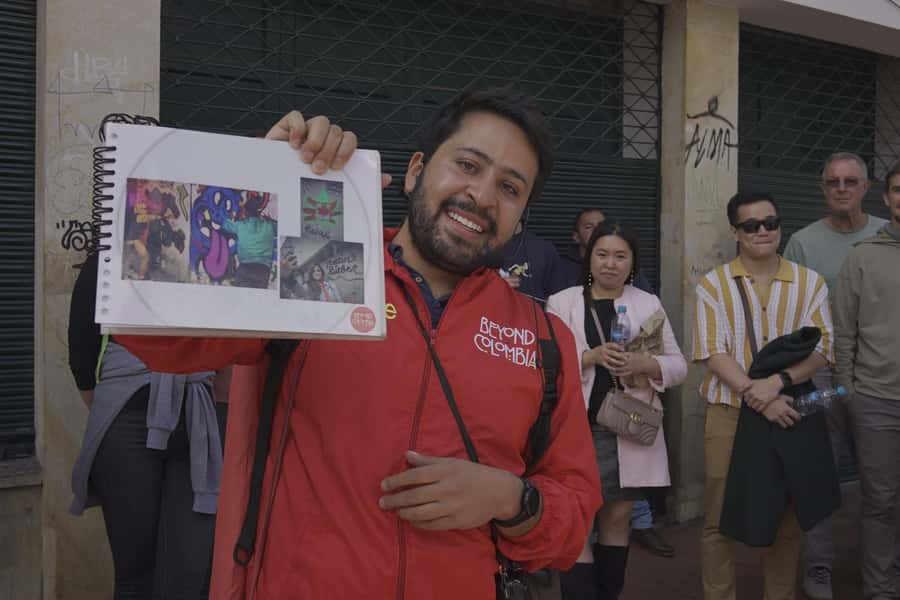
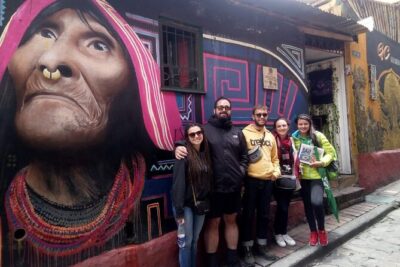
Bogotá’s street art gives the tour a modern voice. In El Embudo alleyway, you’ll see iconic murals and graffiti tied to technique, local expression, and resistance.
The guide explains how to read the work rather than simply pointing out colorful walls. You may hear about the artists’ methods, the social messages behind the images, and the role of public art in a city with a complicated political past.
This is a strong contrast with the colonial architecture. It also prevents the tour from presenting La Candelaria as frozen in the past. The neighborhood continues to change, and its walls carry current concerns as well as historic references.
Bring a camera, but do not use flash photography. The tour also asks you not to smoke. More importantly, listen while the guide explains the murals. A quick photograph will not tell you why a particular image matters.
Botero, the cultural square, and Colombia’s art scene
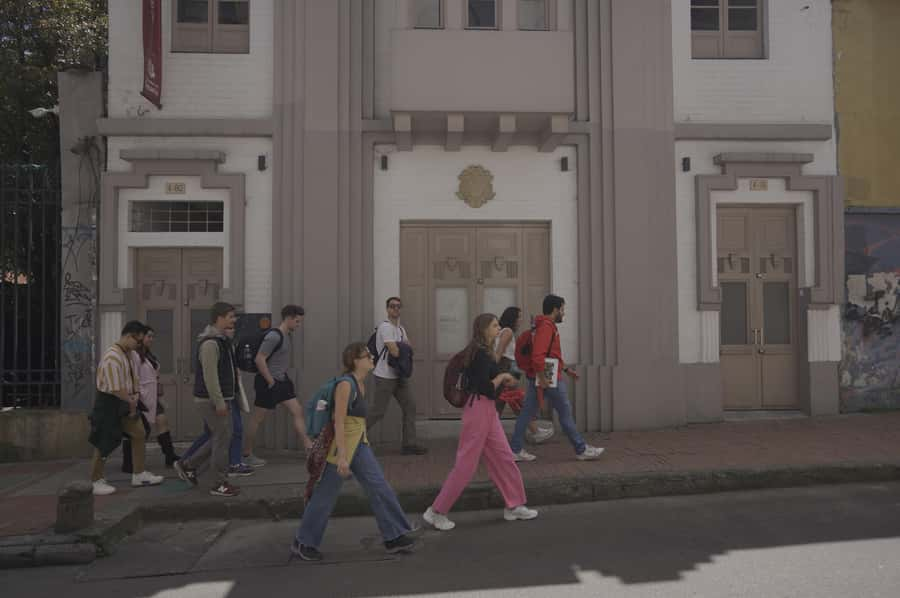
The route includes Botero’s Museum and a nearby cultural square. Fernando Botero is one of Colombia’s best-known artists, and the stop gives you a chance to connect the country’s public identity with its art.
The details of the museum visit should be clear before you go: the tour does not include paid entrances, and it does not take you to places where sudden extra charges appear. This means the guide can explain the cultural setting and point out the museum, but you should not assume that a full museum visit is part of the 150-minute walk.
That arrangement can be useful. You get an introduction before deciding how to spend more time later. If Botero interests you, ask the guide for advice about returning on your own.
This is also where guides such as Leo can add real value. His explanations of Botero’s work and history have been singled out as part of a strong city overview. You are not simply collecting landmark photos. You are building a list of places worth revisiting.
The informal emerald market and everyday Bogotá
The informal emerald market adds a different layer to the route. Colombia is famous for emeralds, and this stop introduces the trade in a direct, local setting rather than through a polished jewelry showroom.
Take care here. The market is not presented as a formal shopping excursion, and the tour does not include purchases. If you are considering buying anything, ask questions, take your time, and do not feel pressured.
This part of the walk is valuable because it shows how history and commerce continue in ordinary streets. The same city that produced grand government buildings also supports informal markets and small-scale trading. That mixture is central to understanding Bogotá.
Your guide can help you interpret what you are seeing and may offer practical advice. The tour’s stated goal is to remain objective, which is especially useful around topics involving money, politics, and national identity.
How hard is the seven-kilometer walk?
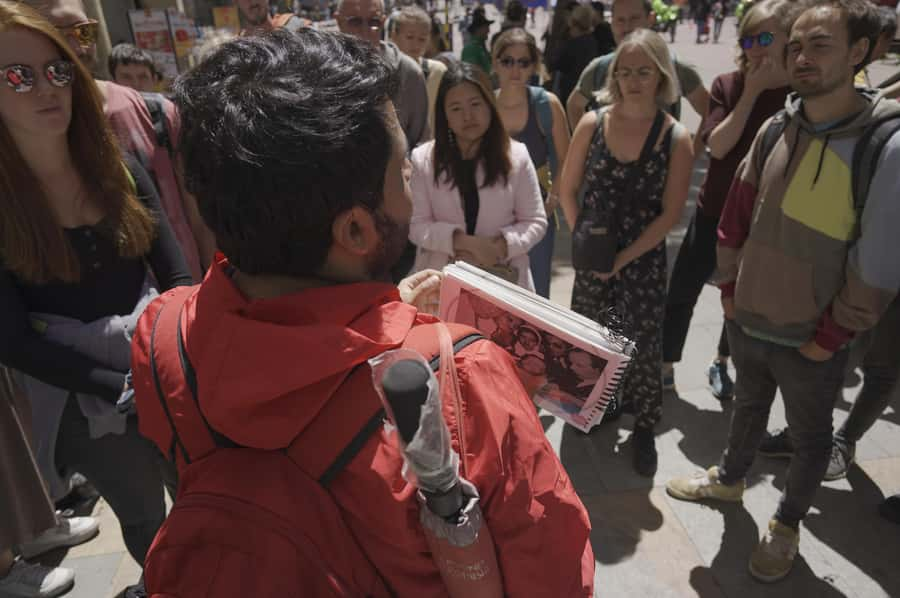
The tour is advertised at 150 minutes, while the provider also describes it as approximately three hours. Plan for the longer estimate. The route covers about 7 kilometers, includes uphill sections, and has rest stops rather than vehicle transfers.
Altitude is a real consideration. One visitor found the climb tiring at approximately 8,600 feet, especially when walking uphill. Even fit people may want to start slowly, drink water, and avoid treating this as a casual stroll.
You should choose this tour if you can walk steadily for several hours and manage uneven or uphill streets. It is not suitable for wheelchair users or people with mobility impairments, according to the activity information.
The walk is not all effort. Several stops provide time to listen, take photographs, and catch your breath. Still, bring your own hydration because food and drinks are not included apart from the possible chicha tasting.
Rain can change the feel of the outing. Byron reportedly kept a group moving well during wet weather, but no guide can control Bogotá’s skies. Wear shoes that can handle damp streets and carry a proper rain layer.
Group size, guide style, and the $13 value
At $13 per person, this is a very inexpensive way to get a structured introduction to central Bogotá. You receive an English or Spanish-speaking guide, a broad route through La Candelaria, historical explanations, a possible chicha tasting, and local recommendations for food, coffee, and shopping.
The shared format keeps the price down. It also means the experience can feel social and lively, but less personal than a private tour. One departure had 36 people, a size that can make street crossings, photographs, and hearing the guide more difficult.
Guide quality is the tour’s strongest asset. The most praised names include Lorenzo, Juliana, Leo, Santiago, Byron, Lucho, Sergio, Daniel, and Juan. Their strengths vary, but the pattern is clear: you should expect an engaging local host who can answer questions and connect Bogotá’s buildings to Colombia’s wider story.
Juan has been praised for presenting history without taking sides and for helping with individual needs. Lucho has been particularly useful for first-day visitors because he combines context with practical advice. That makes this tour a good orientation walk early in your stay.
The wristband given at the end can provide discounts and benefits with recommended partners. Treat that as a bonus, not the main reason to book. The real value is the time saved researching the historic center and the context you gain from walking it with a local guide.
Who should book this La Candelaria walk?
Book it if you want a strong first or second-day introduction to Bogotá and prefer stories over a checklist of photo stops. It suits curious adults, first-time visitors, and anyone who wants to understand how Spanish colonial beginnings, independence, political violence, traditional drinks, art, and street culture fit together.
It is also useful if you want local recommendations after arriving. Guides can suggest places for lunch, coffee, souvenirs, and further sightseeing.
Think twice if you dislike long walks, uphill streets, changing weather, or shared groups. You should also avoid booking it if you need wheelchair access or have a mobility limitation that makes 7 kilometers difficult.
Should you book it?
I would book this tour for the price and the range of subjects. Few short walks can take you from Bolivar Square and the Palace of Justice to Chicha, El Embudo graffiti, Botero, Chorro de Quevedo, and an emerald market without charging separate entrance fees.
Go prepared: wear proper shoes, bring water and rain protection, and keep expectations realistic about the chicha tasting and group size. If you can handle the climb and want Bogotá explained by a friendly local guide, this is a smart, affordable starting point.
FAQ
Where does the tour meet?
Meet directly in front of the Museo del Oro in Bogotá. Look for the red umbrellas marked Beyond Colombia.
How long does the tour last?
The activity is listed as 150 minutes, while the provider describes it as approximately three hours. Plan for close to three hours.
Is transportation included?
No. You walk the entire route, with resting stops along the way. Transportation to and from your hotel is also not included.
What language is the tour offered in?
The tour is available with a live guide in English or Spanish.
Is chicha included?
A chicha tasting is included when available. Other drinks, food, and souvenirs are not included.
Is the tour suitable for wheelchair users?
No. The activity is not suitable for wheelchair users or people with mobility impairments. You should also be prepared to walk about 7 kilometers, including uphill sections.
Just added around Bogota
- Zipaquirá: Private tour to the Salt Cathedral, Colombia’s first wonder★ 4.9 · 33 reviews
- Zipaquira: 5 hrs Salt Cathedral Tour★ 4.4 · 9 reviews
- Wonders of Salt: Colombia’s Underground Cathedral★ 5.0 · 18 reviews
- Zipaquirá Salt Cathedral & Andrés Carne de Res (Chía)★ 4.6 · 30 reviews
- Zipaquirá: Private Salt Cathedral Mine and Walking Tour★ 4.8 · 3 reviews
- Villa de Leyva Trip by Private Transportation★ 4.8 · 27 reviews
- Wonderful tour of Villa de Leyva, and Zipaquira Salt Cathedral.★ 4.5 · 34 reviews
- Theatron Party-Tour, 20 Clubs, Map, cocktail, bottle, After-party★ 5.0 · 27 reviews
Historical Tours, compared.
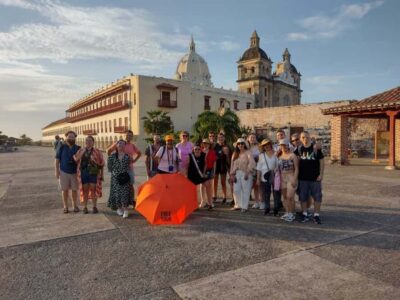
Historic Center and Getsemaní Shared Walking Tour
Read our review →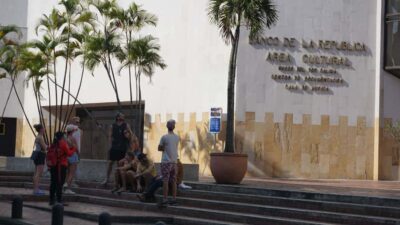

History & Local Life Essentials Tour on an E-Bike
Read our review →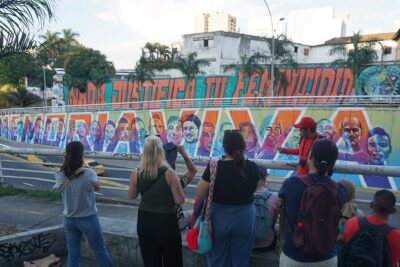
Historical Shared Tour Salsa, Graffiti & Resistance in Cali
Read our review →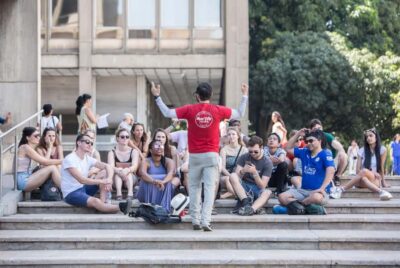

Browse the lists this tour appears in