
Reviewed · CARTAGENA TOURS
Tour Compartido de Gabriel García Marquez en Cartagena
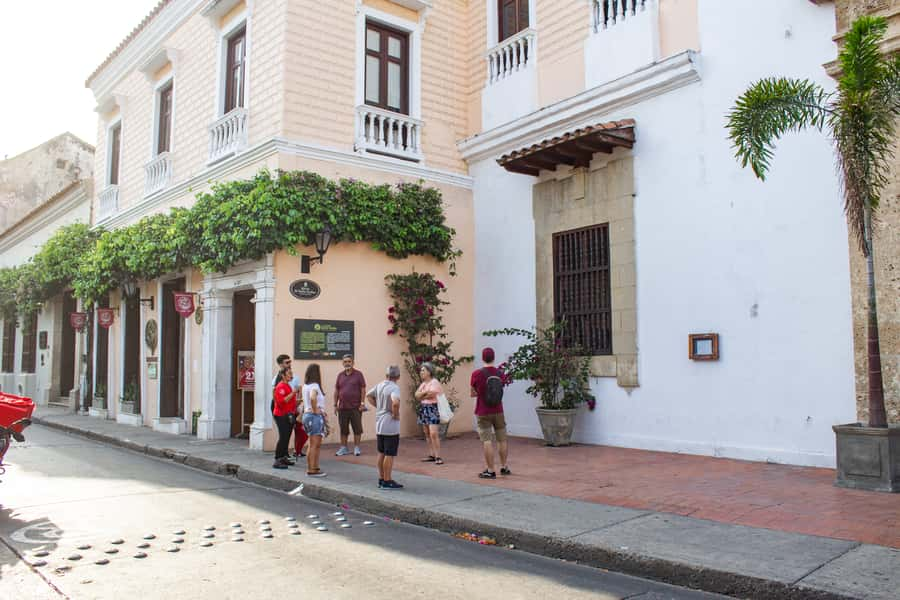
Cartagena’s San Diego district feels made for a Gabriel García Márquez tour. Colonial balconies, convent walls, narrow streets, and old family houses give the guide plenty to work with, and the walk connects real places to the loves, secrets, and loneliness in Gabo’s books. I especially like the link between ordinary Cartagena life and magical realism, and the focus on the author’s political and personal story, not just his bibliography.
I also like the clear, practical approach used by guides such as Juli, Yuli, and Juliet. They explain difficult ideas in simple Spanish and point out how status, faith, family power, and memory shaped the city. The main drawback is the physical demand: the walk may cover about 8 kilometers, and the stated timing varies between two hours and two and a half hours.
Key points at a glance
- San Diego through Gabo’s eyes: Connect colonial streets, balconies, houses, and convents with the settings and moods of his fiction.
- A Spanish-language literary walk: The guide explains Gabo’s life, books, and political background in Spanish.
- Plaza de San Diego and the walled city: You’ll explore one of Cartagena’s oldest districts, where religion, commerce, and family power once met.
- A long walking route: Expect rest stops, but bring water and comfortable shoes for a route listed at about 8 kilometers.
- Good value at $12: The fee includes the guided walk, local suggestions, and possible discounts with recommended businesses.
- Important age and access note: Wheelchair access is listed, but the activity is not recommended for people over 65 because of the walking demands.
San Diego, Where Cartagena Starts Reading Like Gabo
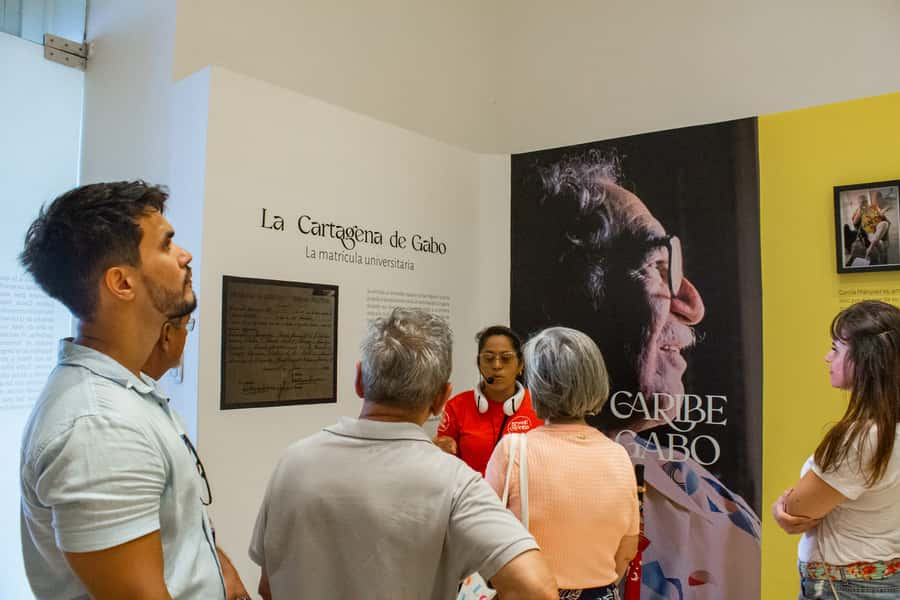
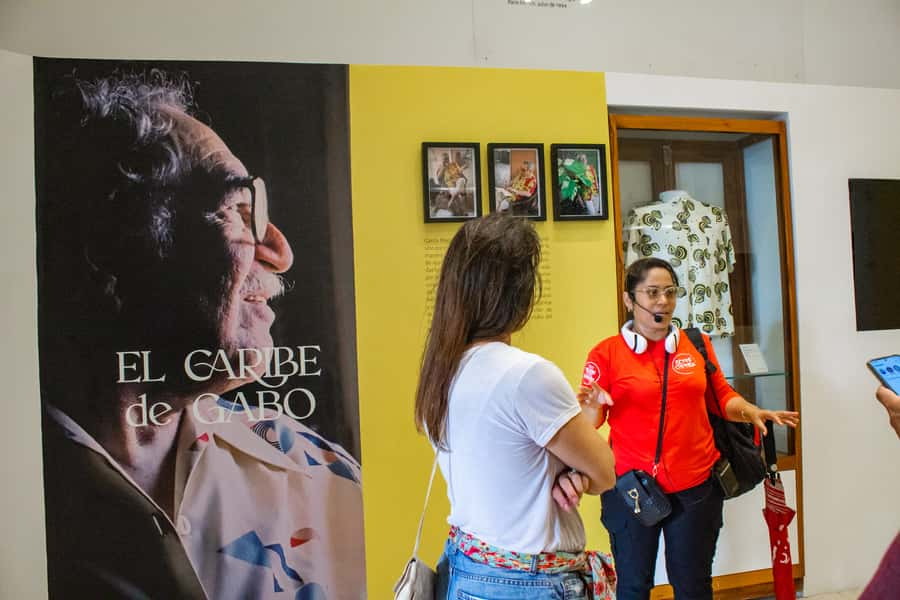
This tour works best when you think of it as a walk through a living source of ideas, not a museum visit devoted to one author. San Diego supplies the setting: old streets, colonial homes, balconies, convents, bells, and the traces of families who once held power.
Your guide’s job is to connect these details to Gabriel García Márquez’s world. That means looking at how a real city can become universal fiction. A balcony is not only a balcony. It can suggest family pride, social rank, romance, secrecy, or a character watching the street below.
The tour also gives you a useful way to read Cartagena. Gabo’s magical realism did not come from nowhere. The walk presents the city as a place where daily life already carried odd juxtapositions: faith and politics, private corridors and public ceremony, grand houses and ordinary routines.
You will not simply hear a list of book titles. The strongest part of the experience is the effort to show how memory turns a physical place into a story.
A few more Cartagena half-days worth weighing up
- Cartagena: Historic Center and Getsemaní Shared Walking Tour
★ 4.9 · 2,716 reviews - Cartagena: Rosario Islands Catamaran with Lunch and Snorkel
★ 4.5 · 2,479 reviews - Full-Day Rosario Islands Including Barú, Bocachica & Playa Blanca
★ 4.0 · 1,729 reviews
Meeting at Botero’s Gertrudis in Santo Domingo Square
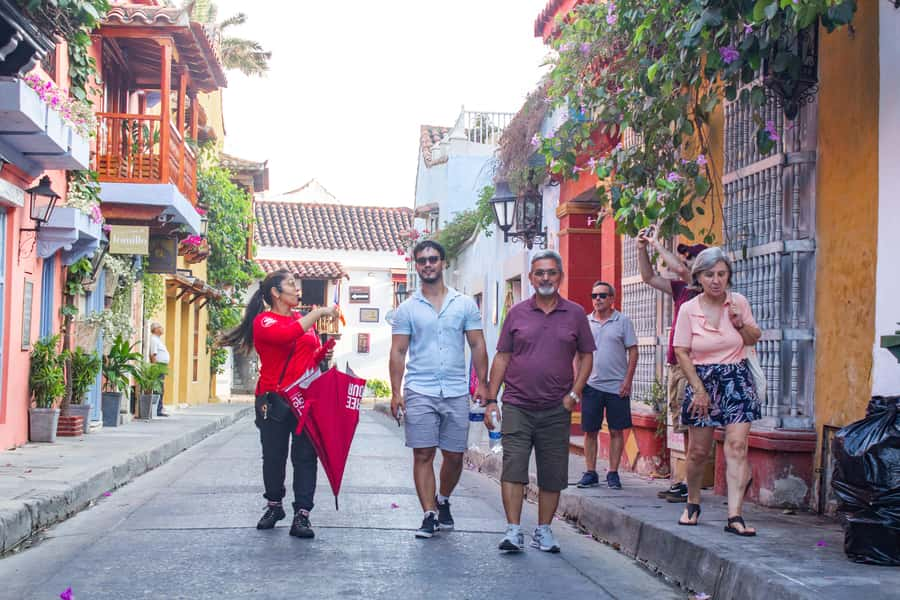
The meeting point is the Botero sculpture Gertrudis in Santo Domingo Square, where you should look for the red Beyond Colombia sign. This is a useful starting point in the walled city, but give yourself enough time to find the exact sculpture and guide.
From here, the walk moves toward San Diego. The opening section helps set the tone: Cartagena is presented not only as a colonial city preserved in stone, but as the emotional setting behind Gabo’s work.
The group format matters. This is a shared tour, so you will not have the guide’s attention to yourself. That keeps the price low and can make the walk more social, but it also means you may need to stand close and listen carefully in busy streets.
Party groups are not allowed, which suits the subject. This is a discussion-led literary walk rather than a nightlife outing.
Plaza de San Diego and the Old Colonial Core
Plaza de San Diego is one of the tour’s key settings. The square and its surrounding streets help you picture Cartagena during the city’s colonial and early modern years, when merchants, religious orders, and influential families shaped public life.
The guide uses the area to explain how faith and political power overlapped. San Diego was not just a residential district. Convents managed part of the colonial economy, important households lived nearby, and religious bells still connect the present street scene with the 17th century.
That background adds weight to the literary discussion. In Gabo’s fiction, private longing often sits beside public rules. People fall in love, hide secrets, defend family names, and struggle against social expectations. San Diego gives those themes a physical setting.
You may also hear about the internal corridors that once linked certain houses. These passages allowed people to move out of sight, adding a practical explanation to the city’s atmosphere of secrecy. The point is not to claim that every fictional event happened here. It is to show why this kind of city could feed an author’s imagination.
Balconies, Family Houses, and the Social Meaning of Architecture
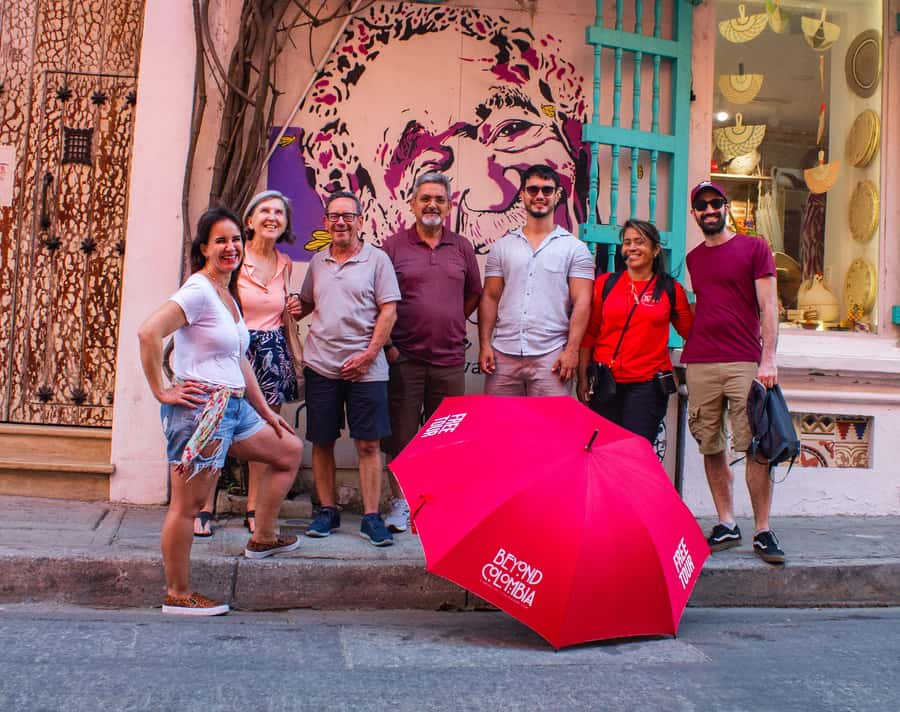
Cartagena’s colonial balconies are among the most useful details on this walk. They are easy to photograph, but the tour asks you to look at them as signs of rank and family identity.
A balcony could reveal who lived inside, how a family wanted to be seen, and how residents could watch street life while remaining partly private. In a Gabo-focused walk, that makes the architecture part of the storytelling.
The same goes for the old houses. The guide may point out features that help you imagine domestic life in another era, including the ways homes were organized and how movement through them could be controlled. You will see why houses in García Márquez’s novels often feel like characters in their own right.
I like this approach because it gives you something to notice after the tour ends. When you continue walking through Cartagena, you can read balconies, doorways, and walls as clues about family history and social position, rather than treating them as a row of attractive façades.
The limitation is that the experience is mainly outdoors. You should not expect a long series of interior visits, museum exhibits, or formal literary displays. The value comes from the guide’s interpretation of the streets.
A completely different kind of day, same corner of Colombia:
- Cartagena de Indias: 2-Hour Sunset Cruise
★ 4.7 · 1,105 reviews - 2-hour tour in Cartagena Sunset View in party boat
★ 4.6 · 899 reviews - Cartagena: Guided Street Food Tour with Tastings
★ 4.9 · 833 reviews - Cartagena: City Sightseeing Hop-On Hop-Off Bus Tour & Extras
★ 3.9 · 681 reviews
Love in the Time of Cholera in Real Cartagena
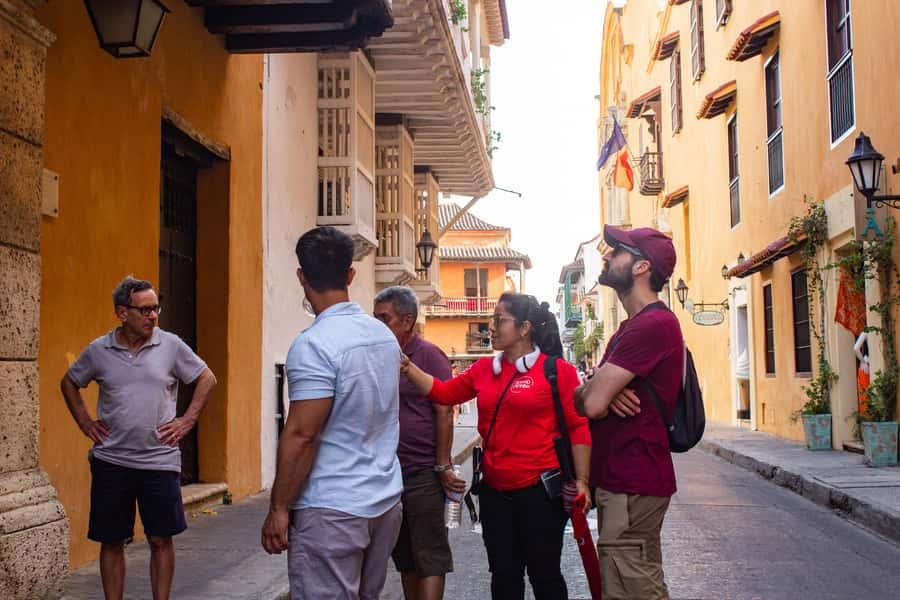
The tour makes a clear connection between San Diego and Love in the Time of Cholera. The streets and houses help explain the novel’s emotional climate: long memory, stubborn love, social barriers, and the way a city keeps the past present.
You will hear about corners associated with the novel’s atmosphere and about the kinds of everyday scenes that helped turn Cartagena into a literary setting. The guide’s task is to separate documented biography, local memory, and fictional transformation.
That distinction is important. A good literary tour should not suggest that every fictional character lived at a particular address. Instead, it should show how real details became material for fiction. This experience appears to take that broader route, connecting places, moods, and social patterns to Gabo’s writing.
If you have read the novel, you will get more from these sections. You can compare the streets in front of you with the book’s descriptions and better understand how the city’s heat, density, and old social codes support the story.
If you have not read it, the tour still gives you a useful introduction. You may want to read the book afterward, when Cartagena’s streets have names and shapes in your memory.
Of Love and Other Demons and the City’s Darker Side
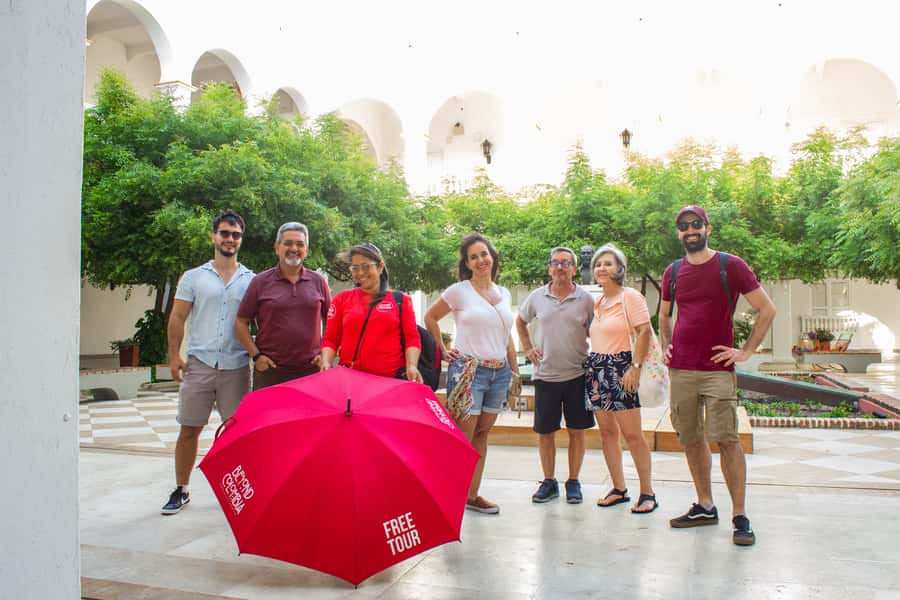
The walk also explores the atmosphere behind Of Love and Other Demons. This brings a different mood to the experience. Instead of focusing only on romance, the guide connects the novel to faith, fear, religious authority, illness, and the tension between belief and evidence.
San Diego’s convents and old religious institutions make this part especially fitting. The bells, walls, and stories of colonial authority help you understand how religion shaped daily decisions and public behavior.
The tour does not treat Cartagena as a pretty backdrop alone. It gives attention to secrets, power, and the cost of social control. That makes the experience more useful for readers interested in the political and moral questions in Gabo’s work.
The walk may also touch on the way people from the past continue to influence the city’s stories. Some characters in García Márquez’s books drew inspiration from people who lived in places like these, even when the final fictional versions changed greatly.
Gabo’s Life, Politics, and the Road to the Nobel Prize
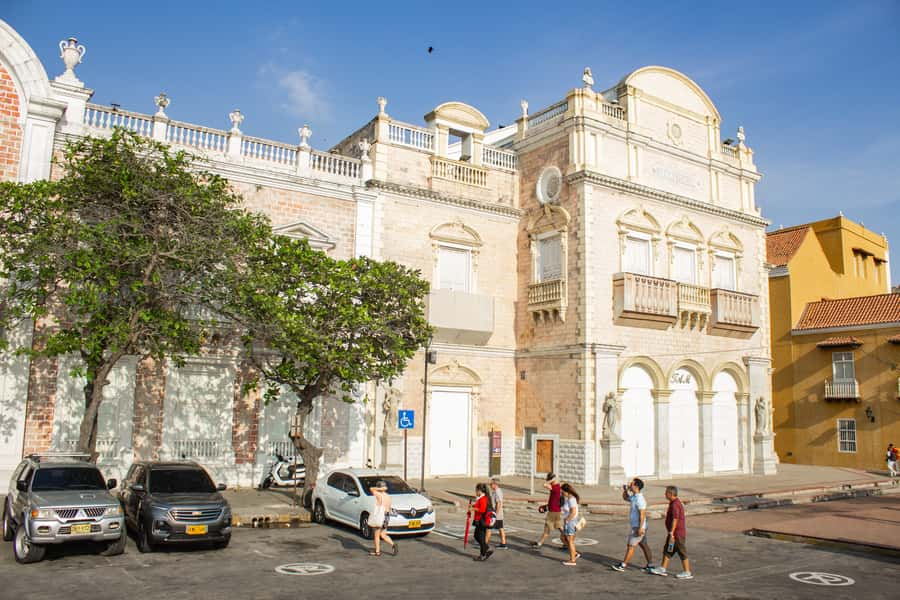
One of the most praised elements of the experience is the guide’s explanation of Gabo’s life and political story. The tour is not limited to romantic novels. It also addresses the political setting that shaped the writer’s thinking and public identity.
That wider view matters because García Márquez was more than a novelist associated with magical realism. His journalism, political interests, friendships, and views of Latin American society affected how he understood power and history.
The guide explains these ideas in Spanish, using direct language rather than assuming you already know literary theory. Recent guides identified as Juli, Yuli, and Juliet have been noted for clear explanations and strong command of Gabo’s biography and bibliography.
You should keep your expectations realistic. This is a two-hour walk, not a university seminar. You will get a guided selection of important themes and places, not a complete account of every book or stage of his life.
Still, the political angle gives the tour more substance. It helps connect the private stories of love and loss to the public forces that shape people’s lives.
Gabo’s Cartagena House and the Boundary Between Fact and Fiction
The route includes Gabo’s house in Cartagena, adding a direct biographical connection to the city. This is one of the most useful stops for anyone who wants to understand the difference between an author’s life and his fictional worlds.
The house gives the guide a chance to discuss where Gabo lived, how Cartagena affected him, and why the city became an emotional laboratory for his work. The phrase is useful here because the tour treats the city as a place where he tested memories, observations, and ideas before transforming them into literature.
Do not expect the house to function like a full public museum unless the guide specifically explains otherwise. The supplied details present it as an important exterior or route stop rather than promising a complete interior visit.
That distinction helps you judge the tour fairly. You are paying for interpretation and context, not a private house tour or a collection of rare manuscripts.
What the Two to Two and a Half Hours Feel Like
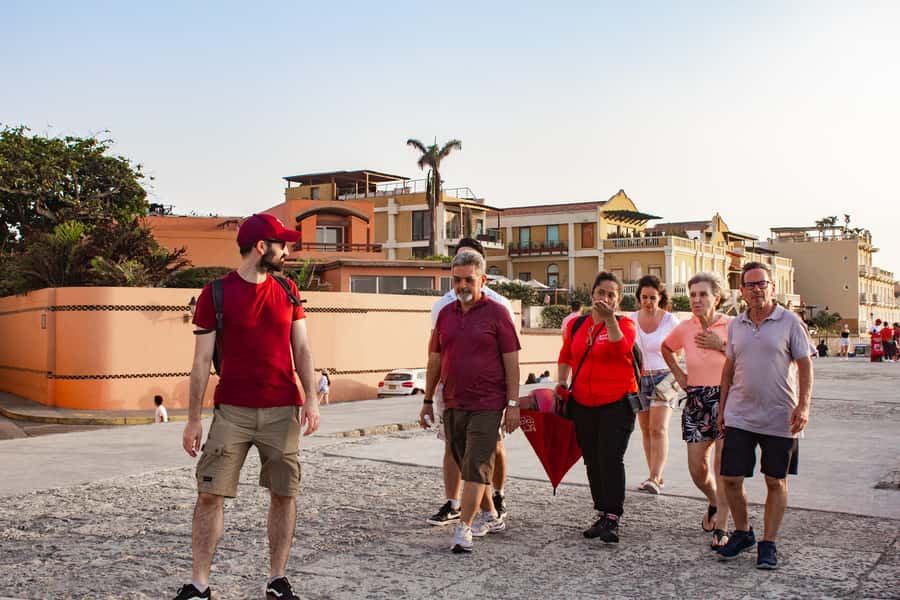
The timing needs a little care. The activity information lists a duration of two hours, while the detailed description says approximately two hours and 30 minutes. The route also says you may walk about 8 kilometers with rest stops.
For you, that means the experience can feel more active than the short duration suggests. Cartagena’s heat, uneven colonial streets, and frequent stops may make the walk tiring even if the pace is not rushed.
Bring water or another drink. Wear comfortable shoes and light, comfortable clothes. The organizers specifically encourage you to dress for ease rather than appearance, which is sound advice for a long outdoor walk.
The guide will pause to speak, but you should not assume that every stop has seating. If you need regular rest, stay near the guide and say so early.
The activity is listed as wheelchair accessible, but the 8-kilometer route and older streets deserve a direct conversation before booking. It is also marked as unsuitable for people over 65, a stricter condition than many city walks. If you are older or have limited stamina, ask the provider about the current route before paying.
Is $12 a Fair Price?
At $12 per person, the tour offers good value if you want a focused introduction to Gabo and San Diego. The fee includes a Spanish-speaking guide, the literary and historical walk, practical recommendations, and possible discounts with selected local businesses.
Those recommendations can be useful after the tour. You may receive suggestions for lunch, coffee, souvenirs, and local shops, giving the walk some value beyond its scheduled hours.
The price is also low because this is a shared group experience. You will not receive a private itinerary or a guide who can adjust every explanation to your reading level. For a personal literary consultation, you would need a different format.
The phrase free tour appears in the description, but the listed price is $12. Treat $12 as the amount to budget, and confirm the final booking terms before you reserve.
Cancellation is flexible: you can cancel up to 24 hours ahead for a full refund, and you can reserve now and pay later. Those terms help if your Cartagena plans are still changing.
Who Should Book This San Diego Walk?
I would choose this tour if you meet most of these conditions:
- You enjoy García Márquez or want a clear introduction to his work.
- You are comfortable listening in Spanish.
- You like connecting books to real streets and buildings.
- You want a low-cost walk through the walled city with local food and coffee suggestions afterward.
- You can handle a route that may reach 8 kilometers.
- You prefer a shared group setting to a private guide.
I would hesitate if you want an English tour, many indoor visits, or a short stroll with little physical effort. The language is Spanish, the route is long, and the main attraction is the guide’s storytelling rather than a collection of exhibits.
Keep your belongings close in crowded areas. The organizers use the Colombian expression no dar papaya, meaning do not make it easy for someone to take advantage of you. That is sensible advice anywhere in Cartagena’s busy old center.
Should You Book It?
Book this tour if Gabo’s books interest you and you want to see how Cartagena’s streets, houses, faith, politics, and family life fed his imagination. The strongest value comes from the connections: San Diego to Love in the Time of Cholera, convent life to Of Love and Other Demons, and real people and places to fictional memory.
Skip it if you need English, dislike long walks, or want a private and highly customized experience. For Spanish speakers who can manage the distance, $12 is a modest price for a thoughtful way to read Cartagena beyond its postcard views.
FAQ
Where does the Gabriel García Márquez tour meet?
The meeting point is at Botero’s Gertrudis sculpture in Santo Domingo Square. Look for the red Beyond Colombia sign.
How long does the tour last?
The activity information lists two hours, while the full description gives an approximate duration of two hours and 30 minutes. Confirm the current timing when checking availability.
What language is the tour in?
The tour is conducted in Spanish with a live Spanish-speaking guide.
How much does the tour cost?
The listed price is $12 per person.
Is this a private tour?
No. It is a shared tour, so you will walk with a group rather than have an exclusive guide.
How far will I walk?
The information says you will walk about 8 kilometers, with stops to listen to the guide and rest along the route.
Which García Márquez books are discussed?
The tour connects Cartagena with Love in the Time of Cholera and Of Love and Other Demons. It also discusses Gabo’s life, bibliography, and political story.
Is food included?
No. Drinks, food, and souvenirs are not included. The guide can recommend local places for lunch, coffee, and shopping.
Can I cancel the booking?
Yes. You can cancel up to 24 hours in advance for a full refund.
Is the tour wheelchair accessible?
The activity is listed as wheelchair accessible. However, the route may cover about 8 kilometers, and the activity is marked as unsuitable for people over 65, so confirm that the current route fits your mobility needs before booking.
Just added around Cartagena
- Exotic Yacht – Tour through the bay of Cartagena★ 3.7 · 4 reviews
- White Night Boat Party: Dinner Buffet, Dancing and Open Bar★ 4.6 · 3 reviews
- Volcan del Totumo + Playa + Piscina★ 4.7 · 4 reviews
- cartagena: Mucura and Santa Cruz Islands Tour spectacular★ 4.0 · 12 reviews
- Enjoy the totumo volcano from cartagena + snack★ 4.0 · 11 reviews
- 5 islands tour to rosario Islands with snorkeling activity!★ 4.5 · 36 reviews
- Romantic Date Night in the Bay of Cartagena★ 5.0 · 47 reviews
- Totumo volcano tour + snack★ 4.5 · 44 reviews
Cartagena Tours, compared.
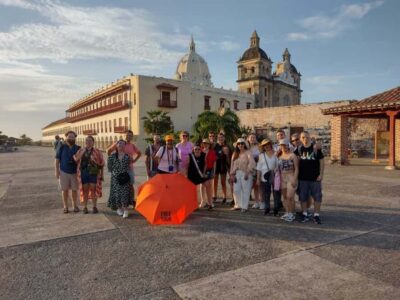
Historic Center and Getsemaní Shared Walking Tour
Read our review →
Rosario Islands Catamaran with Lunch and Snorkel
Read our review →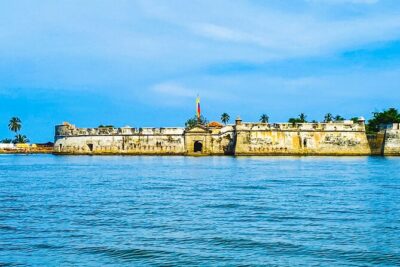
Full-Day Rosario Islands Including Barú, Bocachica & Playa Blanca
Read our review →

2-hour tour in Cartagena Sunset View in party boat
Read our review →
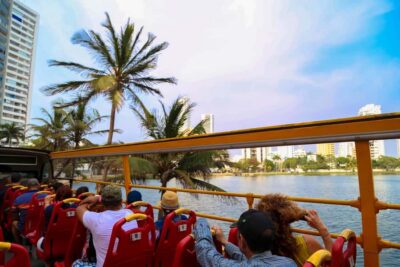
City Sightseeing Hop-On Hop-Off Bus Tour & Extras
Read our review →
Browse the lists this tour appears in