
Reviewed · MEDELLíN TOURS
Anti tour Medellin
Medellín’s Anti Tour asks an uncomfortable question: what did the city sacrifice in its rush toward progress? You walk through former markets, altered civic spaces, and surviving colonial corners while hearing stories that a standard sightseeing tour usually skips. I especially like the focus on what disappeared and the chance to connect city planning with ordinary lives.
I also like the viche tasting and personal stories from people affected by Colombia’s armed conflict, which give the walk a human edge. The trade-off is clear: this is not a light, postcard-style outing. Some streets can feel rough or unsafe, and the subject matter is serious, so you should arrive ready to listen.
Key points to know before you go
- Look beyond the modern city: La Alpujarra, Parque de las Luces, and El Hueco reveal how much Medellín changed in the name of progress.
- Expect a thoughtful three-hour walk: The route covers the old center on foot, with several short visits and time for discussion.
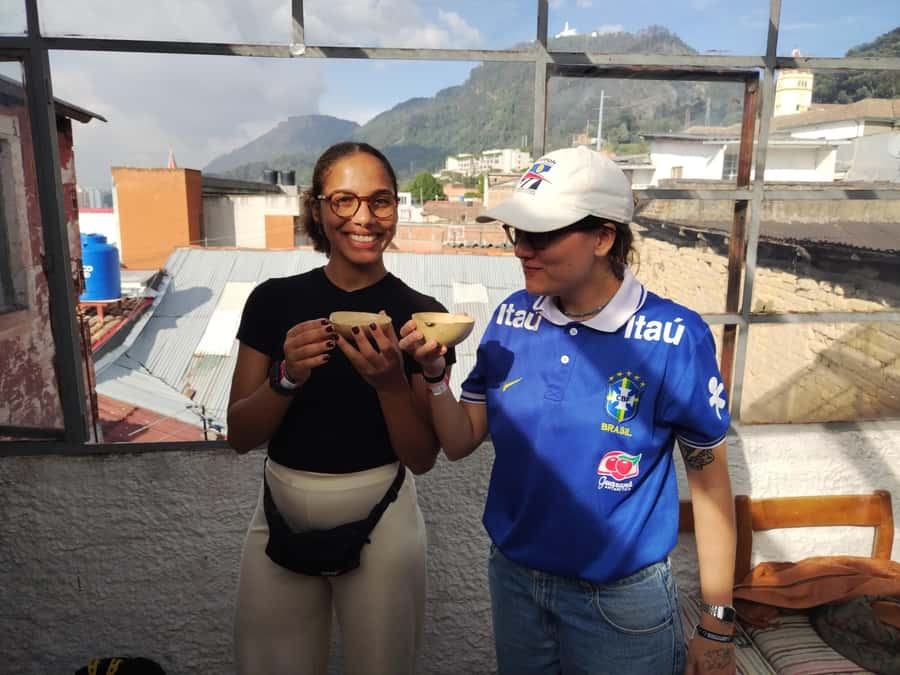
- Taste traditional viche: A liquor tasting adds a local, social element to the history lesson.
- Hear personal accounts of conflict: The experience brings you into contact with ex-combatants and victims connected to Colombia’s armed conflict.
- Visit Casa de la Memoria: The museum gives the tour its most reflective stop, linking Medellín’s past violence with resilience.
- Wear proper walking shoes: Bring water, sunscreen, a hat, and some caution around crowded or less comfortable areas.
Why this is not a standard Medellín walking tour
Many city walks point out what remains. This one gives equal attention to what was demolished, renamed, covered over, or pushed aside. That change in focus makes Medellín easier to understand, but it also makes the tour more demanding.
Medellín rebuilt itself through industry, commerce, and ambitious public projects. In doing so, much of the older city center disappeared. The Anti Tour treats that loss as part of the story, not as an unfortunate footnote.
You’ll look at familiar places in a different way. A modern plaza may occupy the site of an old market. A shopping center may once have been a court building. A famous sculpture-filled square may also serve as part of a campaign to reshape the city’s public image.
The English-speaking guide leads the route and provides the context. Manuel, one guide associated with the experience, has been praised for explaining Medellín’s history and its strong drive toward progress. His approach, and the tour’s general design, favors conversation and interpretation over a list of dates.
That matters because the route does not always offer a single neat answer. You may leave with a better sense of why Medellín changed, but also with harder questions about who benefited, who was displaced, and what a city chooses to remember.
A few more Medellin half-days worth weighing up
- Medellin: Comuna 13 Graffiti Tour, Cable Car & Street Food
★ 4.8 · 9,046 reviews - Medellín: The Real Pablo Escobar Tour
★ 4.8 · 3,205 reviews - Medellín: Comuna 13 True Story and Street Food Tour
★ 4.9 · 1,779 reviews
Beginning at Monumento a la Raza
The meeting point is in front of the Monumento a la Raza in La Alpujarra, the city’s political and administrative district. This is a fitting place to begin. The monument speaks to identity and power, while the surrounding buildings show Medellín presenting itself as a modern regional center.
Take a moment to get your bearings before the walk starts. The area is broad and urban, so comfortable shoes matter from the first step. The tour includes roughly 15 minutes of walking early on, followed by short visits and longer periods of explanation.
Nearby, the old train station helps explain the city’s industrial rise. Rail connections supported commerce and manufacturing, but industrial growth also helped push aside older parts of the center. The point is not simply that the train station is historic. It is that transportation, business, and urban renewal changed the shape of daily life.
This opening gives you a useful frame for the rest of the tour. Medellín did not change by accident. It made repeated choices about efficiency, trade, public space, and the image it wanted to project.
La Veracruz, one of the old city’s survivors
The Church of La Veracruz is one of the few colonial-era buildings left in this part of Medellín. The visit is brief, around 10 minutes, but it provides a sharp contrast with the newer structures around it.
Inside and around the church, you can consider how unusual it is for an older building to survive when so much of the surrounding city was replaced. La Veracruz is not presented only as a religious site. It also represents continuity, memory, and a version of Medellín that modernization did not completely erase.
The stop is compact, so do not expect a long formal church tour. Its value comes from the contrast. After hearing about demolished streets and changing civic priorities, you are looking at a real piece of the older city.
Parque de las Luces and the missing market
Parque de las Luces is one of the route’s clearest examples of urban reinvention. The space was once a lively market area. Today, its tall light poles give it a very different character.
The contrast can feel strange. A public square that once supported trade and everyday encounters now carries a more planned, symbolic purpose. The lights are not the whole story. The important question is what happened to the market, the people who used it, and the older buildings that framed it.
Nearby structures such as the Carré and Vásquez buildings, the EPM Library, and newer civic architecture show different stages of Medellín’s redevelopment. You will see modern public investment, but the tour asks you to notice the absences around it.
This section is useful for anyone interested in architecture or city planning. You do not need a technical background. The guide connects the buildings to larger choices about public space, commerce, and identity.
A completely different kind of day, same corner of Colombia:
- Medellín: Comuna 13 District Tour with Cable Car Ride
★ 4.8 · 1,467 reviews - Medellin: Coffee Tour with Transport, Snacks and Tastings
★ 4.7 · 1,357 reviews - From Medellín: Paragliding Tour with GoPro Photos & Videos
★ 4.9 · 1,210 reviews - Tour Guatapé
★ 5.0 · 865 reviews
El Hueco, where daily Medellín takes over
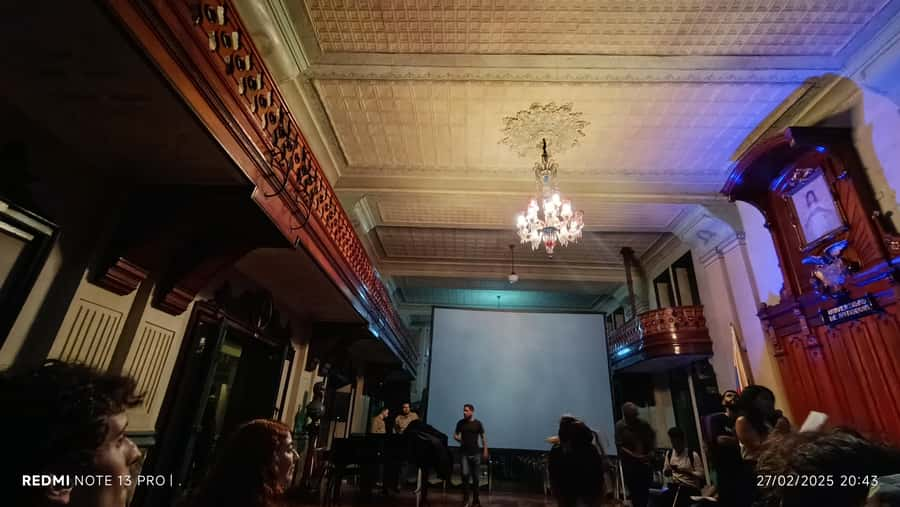
The route then reaches El Hueco, a dense commercial district known for informal trade, music, crowds, and constant movement. This is not a polished heritage zone. It is an active part of everyday Medellín.
You may see fragments of older buildings beside plain modern constructions. The area reflects a city that keeps building, selling, adapting, and moving forward without always stopping to preserve what came before.
The tour allows about 15 minutes here, including scenic views along the way. That is enough to take in the atmosphere and hear the explanation, but not enough for a long independent exploration. Stay close to the guide and keep your attention on your belongings, especially in crowded areas.
One important practical point comes from the nature of the route itself. Some places can feel unsafe or uncomfortable, and the experience does not present the center as a tidy attraction designed only for sightseeing. I would not choose this walk if you want a relaxed route through quiet streets. I would choose it if you want to see how the city works beyond its carefully promoted public spaces.
The Palacio Nacional and La Veracruz contrast
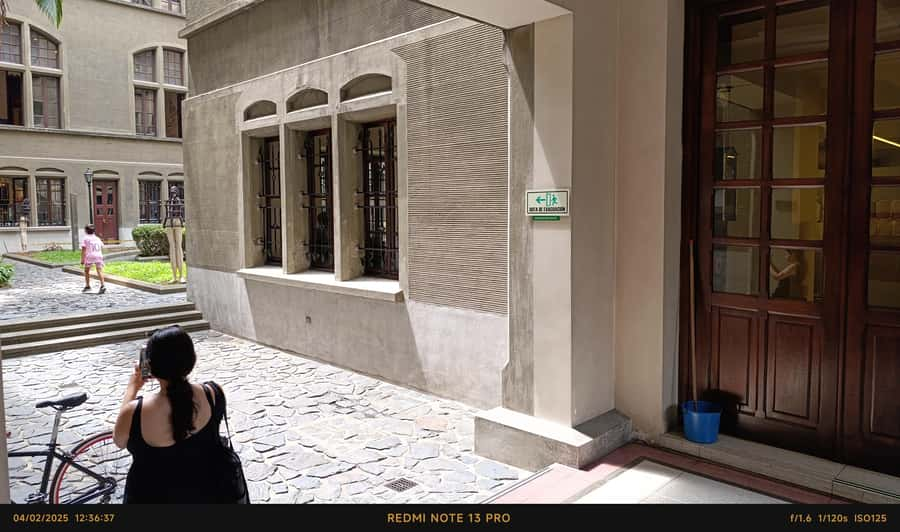
The Palacio Nacional adds another layer to the tour’s theme. A former judicial palace now functions as a shopping center, so a place once linked with law and authority has been absorbed into commercial life.
That change is easy to miss if you only see the building from the outside. The Anti Tour makes you consider how power moves through urban space. A courthouse can become a marketplace. A government district can become a place for shopping. Buildings continue to exist, but their meaning changes.
The visit to the Palacio Nacional’s art gallery lasts around 15 minutes and includes guidance from the tour leader. This is a useful pause in the route because it links architecture, commerce, and public memory without requiring a long museum visit.
The nearby Church of La Veracruz then offers a strong counterpoint. One building has changed function. The other retains its religious identity and much of its historic presence. Seeing both close together makes the city’s competing layers easy to grasp.
La Alpujarra, viche, and the city’s forward drive
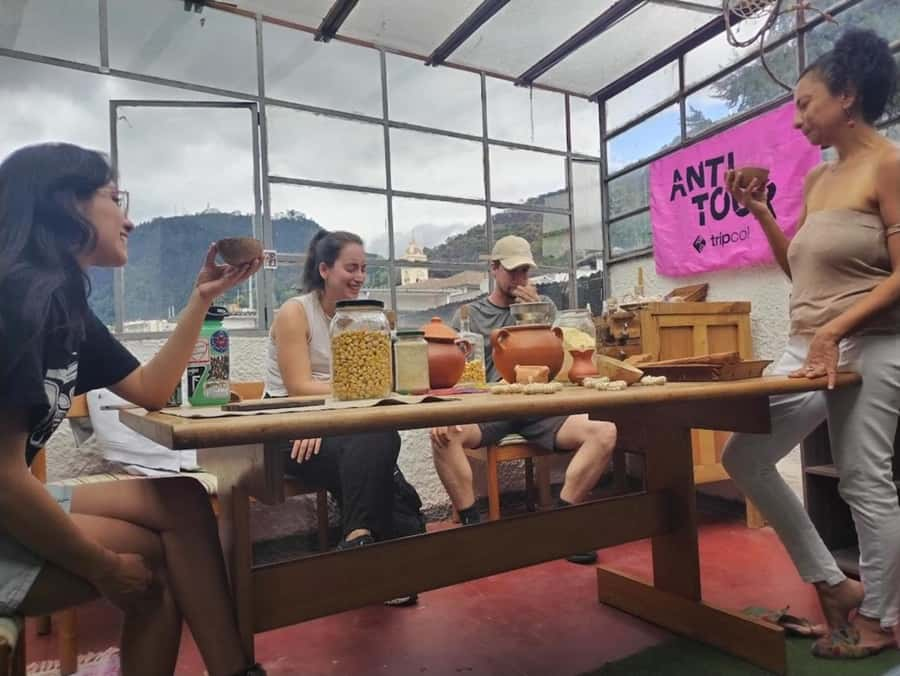
The tour returns to La Alpujarra for its longest scheduled segment, about 40 minutes. This is where the political story and the city’s ambition come together.
You will explore the district while discussing how Medellín presented itself through administrative buildings, public works, and industrial confidence. The old train station and Monumento a la Raza take on more meaning after you have seen the commercial center and the remains of the older city.
There is also a viche tasting. Viche is a traditional Colombian liquor, and this part of the experience gives the tour a more social rhythm. It breaks up the heavier material and lets you encounter a local tradition through taste rather than explanation alone.
The tasting is not a substitute for a meal, so bring water and consider a snack. The day can be sunny, and the route includes outdoor walking. A hat and sunscreen are sensible, even if the weather looks mild when you begin.
La Alpujarra also helps explain why the Anti Tour is not simply a tour of ruins. Medellín is not presented as a city trapped in the past. You are looking at a place that repeatedly chose change, sometimes with impressive results and sometimes at a high human cost.
Plaza Botero, public art, and a new city image
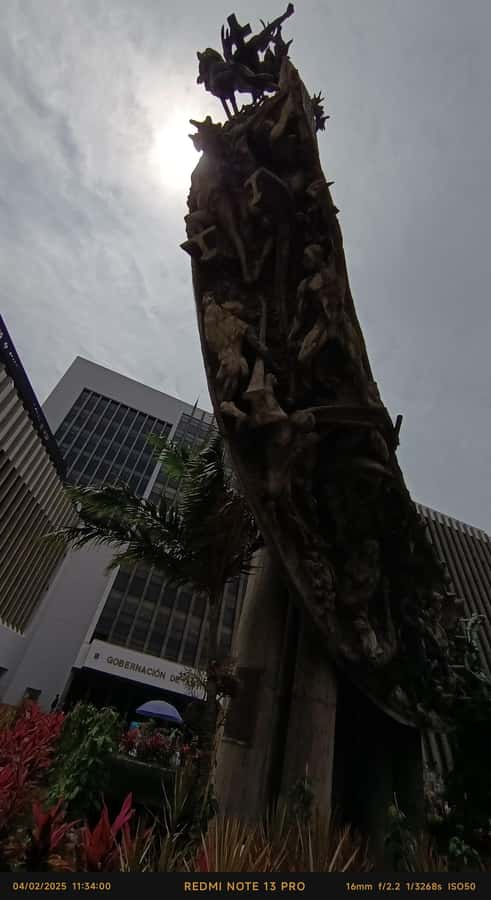
Plaza Botero brings art into the discussion. The square is surrounded by Fernando Botero’s large sculptures and the Palacio de la Cultura Rafael Uribe Uribe, making it one of the city center’s most recognizable public spaces.
The tour considers how art and culture have helped redefine Medellín’s public image. The sculptures are enjoyable to see, but the point is not only to take photographs. You are encouraged to think about how a city uses cultural projects to attract attention, reshape its reputation, and give new meaning to difficult urban areas.
This is one of the more visually appealing parts of the walk, but it still fits the Anti Tour’s larger purpose. Public art can invite people back into a central district. It can also become part of a carefully shaped story about renewal.
You will not get a complete Botero art lesson in this short visit. Instead, the square works as a bridge between Medellín’s industrial past and its effort to present a newer cultural identity.
Coltejer Building and Junín Street
The Coltejer Building represents Medellín’s industrial ambition. Its presence points back to the city’s manufacturing strength and the business culture that helped drive its growth.
From there, the route traces Junín Street, once the center of elegant urban life. This was a place associated with shopping, social life, and formal city culture. As commerce and development shifted, the street’s role changed too.
This part of the walk is valuable because it moves the story beyond violence. Medellín’s past includes conflict, but it also includes class, industry, consumer culture, and changing ideas about what a successful city should look like.
You may find the contrast between old references and present-day activity especially interesting here. The city’s memory is not held in one preserved historic district. It is scattered through buildings, streets, names, and altered uses.
Casa de la Memoria and the cost of progress
The most serious stop is Casa de la Memoria Museum. The visit lasts about 30 minutes and is included in the tour price.
The museum gives you space to reflect on Colombia’s armed conflict, including violence, loss, displacement, and survival. The experience also includes contact with ex-combatants and victims connected to that conflict. This makes the subject more personal than a general history lecture.
Expect a thoughtful visit rather than a quick photo stop. The museum is the place to slow down and consider the human cost behind political decisions and urban change. You may find the material difficult, particularly if you prefer cheerful sightseeing.
The museum also helps prevent the earlier parts of the tour from becoming only an architectural argument. Demolished buildings and changed public spaces matter because people lived, worked, traded, gathered, and suffered in those places.
The tour ends at the Church of San Ignacio de Loyola. That final location provides a quiet endpoint after the museum and gives you a chance to continue thinking about the route on your own.
What the $33 price gets you
At $33 per person, the value depends on what you want from a city tour. You are not paying simply for three hours of walking. The price covers an English-speaking guide, a shaped historical argument, the viche tasting, several guided stops, and entry to Casa de la Memoria.
That is a fair package for someone who wants more than landmarks. A conventional city walk might offer more famous sights and lighter commentary. This experience offers access to difficult subjects and connections between buildings that are easy to overlook.
The tour lasts three hours, though the listed stop times do not include every transition or discussion. Expect the pace to vary. Some stops are only 10 or 15 minutes, while La Alpujarra and the museum receive more time.
Transportation to and from the activity is not included. You need to make your own way to the Monumento a la Raza and leave from San Ignacio de Loyola at the end. Since the start and finish are different, plan your next move before the walk begins.
Free cancellation up to 24 hours before the activity and a reserve-now, pay-later option make the booking terms flexible. The tour is currently offered in English.
Who should book the Anti Tour
I would recommend this experience to you if you want to understand Medellín through its conflicts and contradictions. It suits curious first-time visitors who want context for the center, as well as repeat visitors who have already seen the main tourist sights.
It is especially useful for people interested in architecture, public space, urban development, memory, and Colombia’s recent past. The route also suits anyone who prefers ordinary commercial districts and civic areas to carefully staged attractions.
I would think twice if you want a calm, easy stroll, have limited mobility, or are looking for a family outing built around entertainment. The activity is not suitable for wheelchair users, and the center includes crowded or less comfortable areas. Comfortable shoes are essential.
The emotional tone matters too. You will hear about conflict and meet people connected to it. That can be one of the most meaningful parts of the experience, but it requires respect and attention.
Should you book it?
Book the Anti Tour if you want Medellín explained through what changed and what was lost, not just through its success story. The combination of La Alpujarra, El Hueco, Plaza Botero, historic buildings, viche, and Casa de la Memoria gives you a broad view in three hours.
Skip it if you want a polished introduction with little walking and no difficult subjects. For everyone else, the $33 price is reasonable because the tour connects places, policies, and personal memory in a way that is hard to get from sightseeing alone.
FAQ
How long does the Anti Tour Medellín last?
The experience lasts three hours. The route includes walking between sites, short guided visits, a longer stop at La Alpujarra, and about 30 minutes at Casa de la Memoria Museum.
Where does the tour begin?
You meet in front of the Monumento a la Raza in La Alpujarra, Medellín.
Where does the tour finish?
The tour ends at the Parroquia de San Ignacio de Loyola.
Is the tour offered in English?
Yes. The activity includes a live English-speaking guide.
Is Casa de la Memoria Museum included?
Yes. The museum ticket is included in the tour price.
What should I bring?
Wear comfortable walking shoes and bring water, a hat, sunscreen, and possibly a snack. Be prepared for changing weather, and you may also want a camera.
Just added around Medellin
- Commune 13, Graffitour street food. History.All inclusive★ 5.0 · 35 reviews
- City tour, Commune 13, Metro Cable, Botero Park and more. Private★ 5.0 · 34 reviews
- Aerial Hammocks, Zip and Waterfall Trek on Medellin Private Tour★ 5.0 · 39 reviews
- Walking tour downtown Medellín★ 5.0 · 39 reviews
- Tour to the Hacienda Nápoles Theme Park★ 4.0 · 22 reviews
- Hiking Mountains and Magical Forests★ 5.0 · 27 reviews
- Barrio transformation and urban escalator of Comuna 13★ 5.0 · 47 reviews
- The “not polite to use his name” City Tour★ 4.5 · 45 reviews
Medellín Tours, compared.
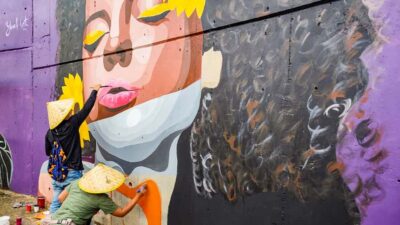
Comuna 13 Graffiti Tour, Cable Car & Street Food
Read our review →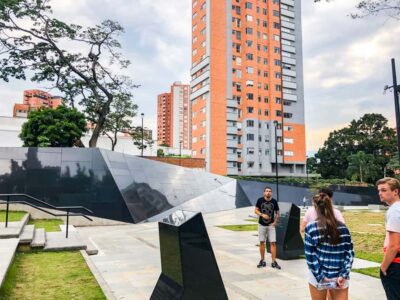


Coffee Tour with Transport, Snacks and Tastings
Read our review →

Guatapé Day Trip & Boat to Pablo Escobar’s Estate
Read our review →Browse the lists this tour appears in