
Reviewed · MEDELLíN TOURS
Do Not Say That Name
Medellín’s recent past is not tucked away in a museum. It appears in a memorial park built on the site of a destroyed mansion, a cemetery visited by pilgrims, and neighborhoods that once lived under armed control. This private, four-hour tour connects those places with the city’s difficult turn toward peace.
I like two things here. First, private transportation and a bilingual guide make it easier to ask direct questions about a subject often flattened into television drama. Second, the possible Comuna 13 portion gives the tour a needed second act: you see not only violence, but also public works, local pride, and a community trying to move forward.
The main caution is simple: the cartel-related sites are brief, and the route can vary. Some outings have included Comuna 13, the outdoor escalators, and the cable car, while the stated itinerary lists only short stops at three locations. Ask exactly what your departure includes before paying $78.
Key points to know before booking
- The old mansion is gone: Parque Memorial Inflexión now occupies the former site, so you visit a public memorial rather than the original building.
- The cemetery stop is short: Jardines Montesacro is planned as about 20 minutes, with a brief visit to the grave.
- Comuna 13 may be the strongest part: Accounts of the experience include escalators, murals, a local guide, and the cable car, but this should be confirmed.
- Your guide matters: Juan Carlos and Héctor have been praised for clear, lively explanations, while weak English and scattered narration have caused real disappointment.
- It is a private outing: Only your group participates, and private transport is included.
- The price buys convenience, not a long list of sights: At $78 per person, the value depends heavily on the guide and the exact route.
What this Medellín tour is really about
This is not a simple sightseeing circuit of famous addresses. It is an attempt to explain how Medellín moved from cartel violence toward a more hopeful civic identity.
The former cartel leader is the headline subject, but the better question is what his era did to the city, and how Medellín responded. That distinction matters. If you expect a parade of intact hideouts and dramatic crime scenes, you may leave frustrated. Many of the places tied to the story have disappeared, been rebuilt, or sit far outside the city.
The tour works best when the guide connects the sites to a timeline. You want to understand the old power structure, the war against the cartel, the effect on ordinary families, and the public changes that followed. A guide who only points at a grave or names a building will leave you with a handful of disconnected facts.
The private format helps. You can ask how much of the popular television version is accurate, request more detail about a particular event, or slow down when a story needs explanation. The quality of that conversation depends on the guide’s English and preparation, so this is not a small detail.
A few more Medellin half-days worth weighing up
- Medellin: Comuna 13 Graffiti Tour, Cable Car & Street Food
★ 4.8 · 9,046 reviews - Medellín: The Real Pablo Escobar Tour
★ 4.8 · 3,205 reviews - Medellín: Comuna 13 True Story and Street Food Tour
★ 4.9 · 1,779 reviews
Parque Memorial Inflexión: a site where the building disappeared
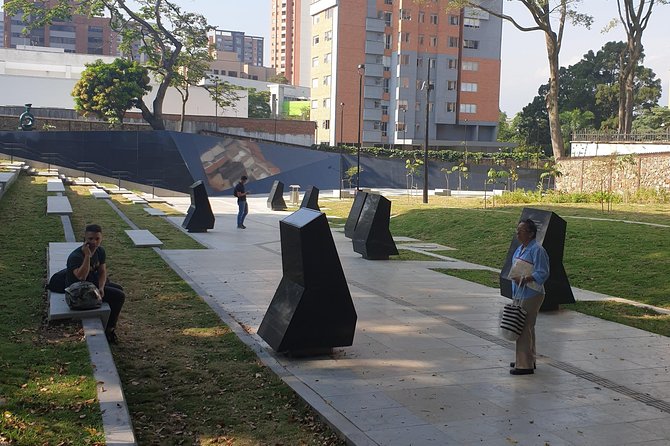
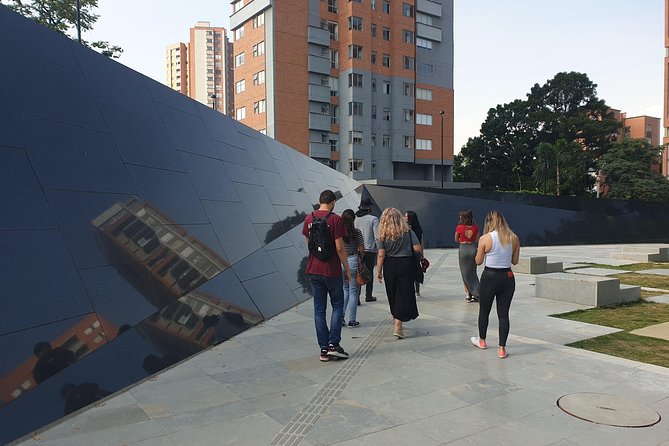
The first listed stop is Parque Memorial Inflexión, built on the former site of the Monaco Building. That building was once associated with the cartel leader and became a symbol of fear and violence. It is no longer there. The public park now turns the site into a place for memory rather than spectacle.
You have about 15 minutes here, and admission is free. That is enough for an introduction and a look at the memorial, but not enough for a long lecture unless your guide uses the drive wisely.
I find this stop valuable because it corrects a common expectation. You are not touring a preserved mansion or walking through a secret room. You are seeing how Medellín chose to mark a painful place after the original structure vanished. The absence is part of the story.
The guide should explain the bombing and the building’s connection to the era, then place those events in the wider conflict. If the stop becomes only a quick photo opportunity, its meaning is lost. Ask your guide what happened to the original building and why the public memorial took its place.
The shrine and the cemetery at Jardines Montesacro
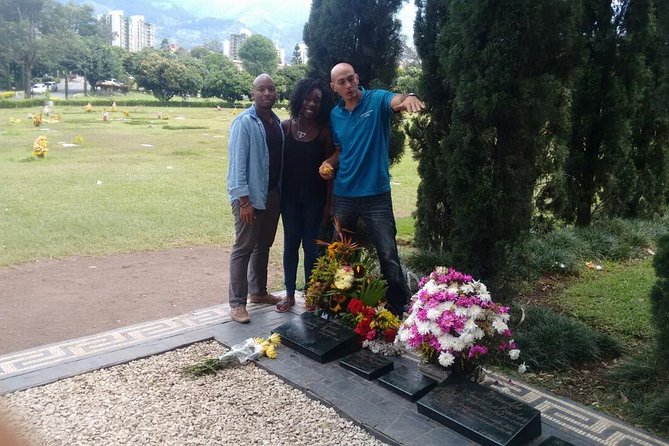
The route also includes a shrine to the Virgin Mary, where pilgrims ask for miracles, followed by Jardines Montesacro cemetery. The cemetery visit is listed at about 20 minutes, with a short stop at the grave.
This is a more intimate and complicated part of the outing. A grave can become a site of fascination, devotion, anger, or all three at once. The nearby shrine adds another layer, showing how personal faith and public notoriety can exist side by side in the same place.
The cemetery stop may also include graves connected to other figures from Colombia’s cartel era. One account describes a visit to the grave of Griselda Blanco, known as the Black Widow. If that subject interests you, ask the guide how much time will be given to the cemetery and which stories will be covered.
You should not expect a long, formal cemetery tour. The listed timing is short, and one account describes only a few minutes at the grave. The best guides use the stop to explain the human cost of the period, not simply to point out a famous name.
Respect is important here. This is an active cemetery and a religious setting, not a film set. Keep your voice down, follow your guide’s instructions, and remember that local people may be visiting for personal reasons.
Parque San Antonio and the change in the war
At Parque San Antonio, the guide explains the shift in the conflict against the cartel. The stop is listed at about 15 minutes, with free admission.
That timing tells you what to expect: a focused explanation, not a full walking tour. The value comes from the narration. You need a clear account of how the conflict changed, who held power at different points, and what those changes meant for the city.
This is one of the places where a prepared guide can make the difference between a useful history lesson and a vague stop. Ask for dates, causes, and consequences. If the answer is simply that the war changed, press for the sequence of events.
The park also helps move the tour away from a single personality. Medellín’s story is not only about one criminal organization or one leader. It is about government pressure, rival groups, public fear, and the long work of rebuilding trust. A good explanation gives you that wider frame.
A completely different kind of day, same corner of Colombia:
- Medellín: Comuna 13 District Tour with Cable Car Ride
★ 4.8 · 1,467 reviews - Medellin: Coffee Tour with Transport, Snacks and Tastings
★ 4.7 · 1,357 reviews - From Medellín: Paragliding Tour with GoPro Photos & Videos
★ 4.9 · 1,210 reviews - Tour Guatapé
★ 5.0 · 865 reviews
Comuna 13: the part that can change the whole experience
Several accounts of this outing include Comuna 13, even though the formal stop list focuses on the memorial, cemetery, and San Antonio. That difference is important. Confirm before booking if Comuna 13, its outdoor escalators, and the cable car are included in your departure.
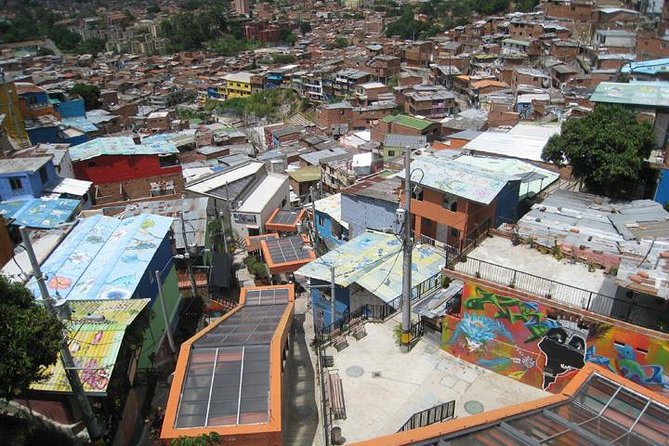
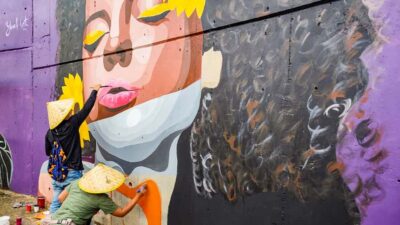
If they are, this may be the most rewarding part of the day. Comuna 13 is presented through its transformation from an area marked by armed control and severe hardship into a neighborhood known for public art, local enterprise, and improved access.
The outdoor escalators are a practical piece of infrastructure, not just a photo stop. One account describes riding them upward and looking across homes, murals, and daily life. You get a physical sense of the steep setting and of how better transport can change access within a neighborhood.
The tour may also include a cable car ride. Medellín’s cable system is part of the city’s public transport network, not merely a sightseeing ride. From above, you can see the city spread through the valley and understand why movement has always mattered so much here.
Some outings bring in a local Comuna 13 guide. That can add a personal voice and a closer connection to the neighborhood. It can also create a language problem if the local explanation is in Spanish and your main guide does not translate well. If anyone in your group needs English interpretation, ask who will provide it.
The strongest version of this section explains what life was like during the period of armed control, including restrictions, fear, shortages, and the effect on families. It also explains the community’s response, the public works, and the famous moment when residents came out wearing white and waving white flags.
The weaker version simply shows murals, a slide made in memory of a murdered boy, and shops selling hats, food, artwork, and souvenirs. Those stops are not automatically bad. You just need the history first. Ask what each place means before deciding if you want to spend time shopping.
Why the guide is the most important feature
The tour includes a bilingual guide, but bilingual does not always mean equally strong in both languages. Your experience will depend on clear English, a sensible chronology, and the guide’s willingness to answer questions.
Juan Carlos has been praised for making the outing lively and for showing pride in Medellín. Héctor has also been described as enthusiastic, especially during the Comuna 13 and cable car sections. Those are useful names to request if the operator can accommodate a guide preference, though availability is not promised.
There has also been a serious complaint about a guide named Nicolas Zapata, whose English was described as weak and whose explanations were scattered. That account is a reminder to speak up early. If the first part feels thin, ask for more detail rather than waiting until the end.
I would ask these questions at the start:
- How much time will we spend at each stop?
- Is Comuna 13 included today?
- Will we ride the escalators or cable car?
- Who will interpret if a local guide speaks Spanish?
- Can you explain the timeline before we begin?
A good guide should welcome those questions. You are paying for interpretation, not only a vehicle between addresses.
Is $78 per person a fair price?
At $78 per person, the price is reasonable for a private half-day outing if you value door-to-door transport, a bilingual guide, and the ability to shape the conversation around your interests. Medical assistance is also included, though that is not a feature you should treat as the main reason to book.
The calculation changes if the route contains only three very short stops and basic explanations. Admission to the listed sites is free, and the cemetery, memorial, and park do not require expensive tickets. In that case, much of the price goes toward transport and guiding.
The price makes more sense when Comuna 13, the escalators, the cable car, and a strong local explanation are part of the day. Those elements add time, movement, and a clearer connection between Medellín’s past and present.
Because the tour is private, you are not stuck with a large group or a fixed discussion. That matters for families, first-time visitors, and anyone who wants to ask sensitive questions without holding up strangers. It is less appealing if you prefer to explore independently and do not need a guide to explain the context.
Timing, transport, and who should book
You can choose a morning or afternoon departure. Four hours is enough for an introduction to the subject, but the route may feel compressed if it includes Comuna 13 and the cable car as well as the listed sites.
Private transportation is included, and the tour is near public transportation. Most people can participate. Food and drinks are not included, so bring what you need for the half-day, especially if you choose an afternoon departure.
I would recommend this for adults interested in Medellín’s recent political and social past, families with older teenagers who already know the subject, and first-time visitors who want a guide to connect separate parts of the city.
I would be more cautious for anyone seeking crime-scene tourism. The city has changed, the original sites are often gone, and the best part of the outing is the explanation of change rather than a collection of sensational locations.
The tour can work for families, but the subject is serious. Parents should decide how much detail is suitable before booking. A private format gives you more control over that conversation.
How to get the most from the four hours
Read a short account of Medellín’s history before you go. You do not need a textbook. A basic timeline will help you recognize when the guide skips from one event to another.
Keep your questions specific. Ask how the former building was destroyed, why the memorial was created, what happened at the cemetery, and how public projects changed Comuna 13. If you hear a dramatic claim, ask for its source or context.
Do not judge the outing only by the number of locations. A fifteen-minute stop with a careful explanation can be more useful than several rushed addresses. At the same time, if the guide offers little context, three free-admission stops do not provide strong value by themselves.
Cancellation is free if you cancel at least 24 hours before the local start time. Changes or cancellations inside that window are not accepted for a refund.
Should you book this Medellín tour?
Book it if you want a private introduction to Medellín’s cartel era and recovery, and if you can confirm that your departure includes the Comuna 13 section. I especially like the combination of the memorial park, cemetery, and neighborhood transformation because it keeps the day from becoming a one-person crime story.
Before booking, confirm the exact route and request a strong bilingual guide. Juan Carlos or Héctor would be names worth asking for if the operator can accommodate that request. If the answer about Comuna 13 is vague, or if you want a detailed account of every famous location, choose another outing or plan independent research.
The tour is best understood as a history-and-city tour with a cartel-era focus, not a pure shrine tour. With a good guide, it can explain how Medellín remembers violence while showing the public changes that helped the city look ahead. With a weak guide, you may see little more than a grave, a memorial, and a few quick stops.
FAQ
How long does the tour last?
The tour lasts approximately four hours.
What locations are included?
The stated route includes Parque Memorial Inflexión, a shrine to the Virgin Mary, Jardines Montesacro cemetery, and Parque San Antonio. Some accounts of the outing also include Comuna 13, its escalators, and the cable car, so confirm the exact route before booking.
Is the tour private?
Yes. Only your group participates, and private transportation is included.
Is a bilingual guide included?
Yes. A bilingual guide is included, along with medical assistance.
Are food and drinks included?
No. Food and drinks are not included unless specifically stated.
Can I cancel for a full refund?
Yes, if you cancel at least 24 hours before the experience’s local start time. Cancellations or changes made less than 24 hours before the start are not refunded or accepted.
Just added around Medellin
- Commune 13, Graffitour street food. History.All inclusive★ 5.0 · 35 reviews
- City tour, Commune 13, Metro Cable, Botero Park and more. Private★ 5.0 · 34 reviews
- Aerial Hammocks, Zip and Waterfall Trek on Medellin Private Tour★ 5.0 · 39 reviews
- Walking tour downtown Medellín★ 5.0 · 39 reviews
- Tour to the Hacienda Nápoles Theme Park★ 4.0 · 22 reviews
- Hiking Mountains and Magical Forests★ 5.0 · 27 reviews
- Barrio transformation and urban escalator of Comuna 13★ 5.0 · 47 reviews
- Tour Santa Fe de Antioquia★ 5.0 · 46 reviews
Medellín Tours, compared.
Comuna 13 Graffiti Tour, Cable Car & Street Food
Read our review →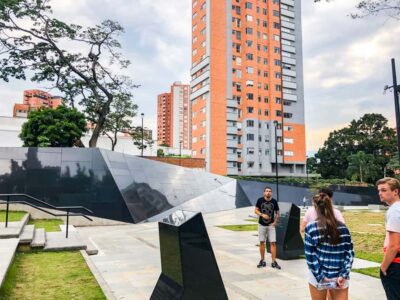


Coffee Tour with Transport, Snacks and Tastings
Read our review →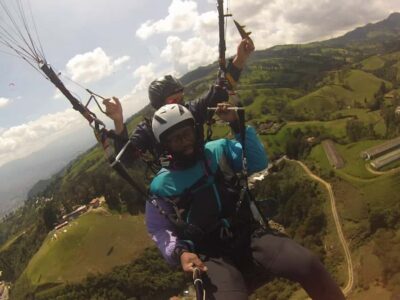
Guatapé Day Trip & Boat to Pablo Escobar’s Estate
Read our review →Browse the lists this tour appears in