
Reviewed · HISTORICAL TOURS
Medellin downtown: History and culture through fun stories
Medellín’s downtown tells a sharp story of change, and this walk brings that story to life through curious local tales rather than a dry list of dates. You move from the old railway area to Botero’s huge bronze figures, then up to a palace terrace for a broad view of the city. I like the route’s variety and Sebastian Santamaria’s gift for making history entertaining.
I also like the small-group limit of 10 people, which gives you a better chance to ask questions and hear the guide clearly. The main consideration is that the walk happens mostly in the morning, with plenty of sun and city activity, so bring a hat, sunscreen, and comfortable shoes.
Key points to know before you go
- See Medellín’s former railway center: Start at Alpujarra, where the old Train Station helps explain the city’s growth and transport history.
- Visit two important palaces: Enter the former Palace of Justice and the Palace of Culture Rafael Uribe Uribe.
- Stand beside Botero’s famous sculptures: Plaza Botero is the largest gallery created by Colombia’s best-known artist.
- Choose how the walk ends: Continue along traditional Junin Street or stop for local foods such as empanadas, buñuelos, and arepas.
- Finish beside the Metro: The walk ends at Parque Berrío Station, a useful point for continuing around Medellín.
- Pay nothing when you reserve: The advertised price is $0, with free cancellation up to 24 hours ahead.
Why this downtown walk is worth your morning
This is a city walk for people who want Medellín explained from street level. You are not simply checking off monuments. You are moving through public squares, former civic buildings, a historic commercial street, and an art-filled plaza while your guide connects them with stories about how the city changed.
The route also gives you a useful first look at central Medellín. Alpujarra, Parque de las Luces, Carabobo Street, Plaza Botero, and Parque Berrío are close enough to link on foot, but each has a different feel and purpose. That makes the three hours feel varied.
Guide Sebastian Santamaria leads the experience in English or Spanish. One especially useful strength is his storytelling. He is described as having very good English and a lively way of explaining downtown history, which matters here because the appeal depends as much on interpretation as on the buildings themselves.
The group is limited to 10 people. That is small enough for a more personal walk without making the experience feel like a private tour. You can ask about the odd details that catch your eye, and the guide can keep the pace suited to the group.
More Historical Tours in Medellin
- Medellín: History & Local Life Essentials Tour on an E-Bike
★ 4.9 · 130 reviews - Medellin Historic Walking Tour
★ 4.9 · 86 reviews - From Medellín: Private Pablo Escobar History Tour
★ 4.9 · 84 reviews
Starting at Alpujarra and the old railway center
Meet at the north exit of Alpujarra Metro Station, by the turnstiles. This clear meeting point is helpful in a large city, especially if you are still learning how Medellín’s Metro works.
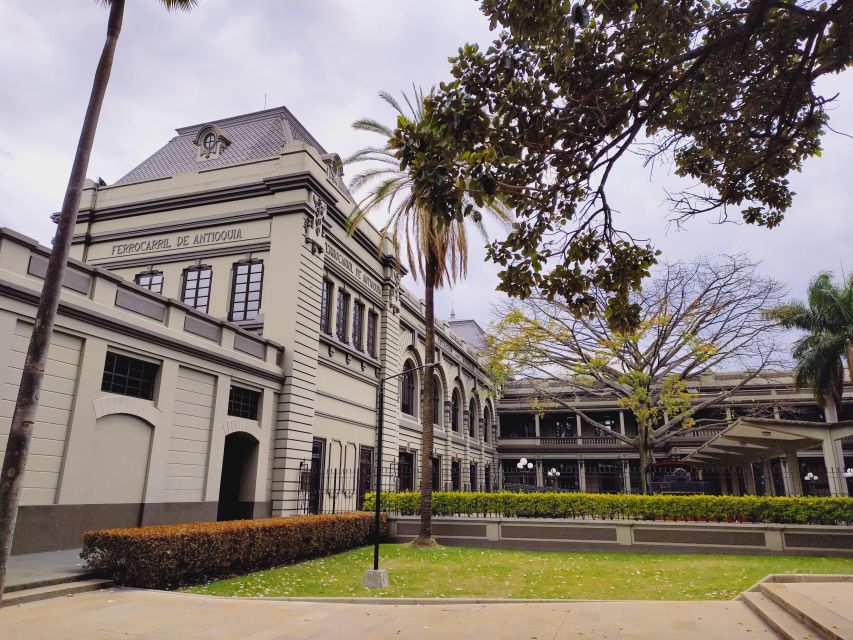
The first part focuses on the Train Station, City Hall, and Administrative Center. The station is not just a place to pass through. It gives the walk a direct connection to Medellín’s earlier transport network and to the city’s growth as a major center in Antioquia.
I like beginning here because it sets up the rest of the experience. You start with civic buildings and transportation, then move into public art, courts, palaces, and shopping streets. The route becomes a way to see how different parts of city life overlap.
The station and palaces are included in the experience. Metro tickets are not included, so you need to cover your own ride to the starting point and any Metro trip you take afterward. The tour itself is on foot.
Parque de las Luces and Medellín’s public spaces
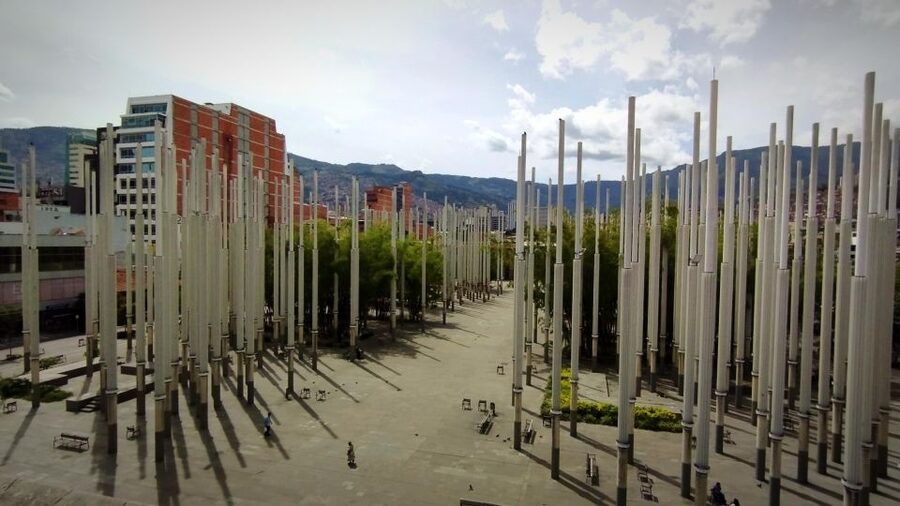
The walk continues to Parque de las Luces, also called Cisneros Square in the tour description. Allow about 45 minutes for sightseeing here, making it one of the longer stops.
The square is a good place to see the city’s public side. You are surrounded by activity, civic buildings, pedestrian movement, and the tall light structures that give the park its name. Your guide uses the area to explain parts of Medellín’s past and its effort to reshape central spaces.
This is not a quiet garden stop. You are in the middle of downtown, so expect traffic, people, and the normal noise of a working city. That is part of the point. The tour presents Medellín as a place used by residents every day, not as a collection of preserved monuments separated from modern life.
Bring sunscreen even if the morning begins cool. The route includes open spaces, and the supplied information specifically recommends a hat and sunscreen.
Carabobo Street and the former Palace of Justice
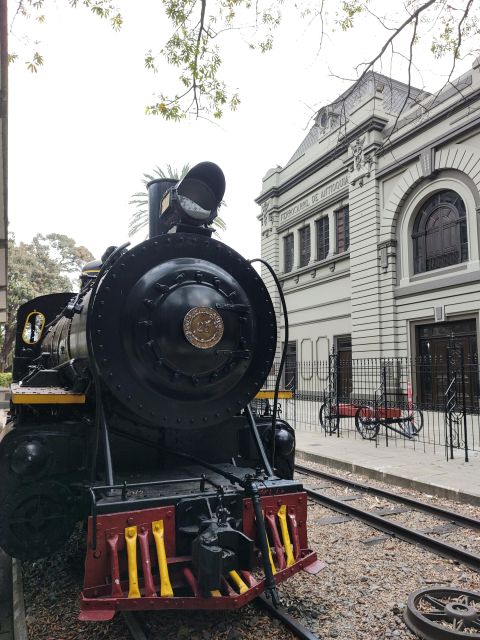
From Parque de las Luces, you walk along Carabobo Street and visit the former Palace of Justice. This section adds a strong architectural and civic layer to the tour.
The Palace of Justice is one of the two palace visits. The other is the Palace of Culture later in the walk. Seeing both helps you compare different kinds of public buildings and understand how central Medellín gathered legal, political, and cultural power in a relatively compact area.
Carabobo Street also changes the pace. Instead of remaining in formal squares, you walk through one of the city’s traditional central corridors. The route is not just about looking at façades. It gives you a sense of how commerce and public institutions sit side by side downtown.
Your guide’s role is important here. Buildings can be easy to overlook when you do not know what they represent. Sebastian’s approach, based on stories and curious facts, helps turn this stretch into more than a transfer between major stops.
A completely different kind of day, same corner of Colombia:
- Medellin: Comuna 13 Graffiti Tour, Cable Car & Street Food
★ 4.8 · 9,046 reviews - Medellín: The Real Pablo Escobar Tour
★ 4.8 · 3,205 reviews - Medellín: Comuna 13 True Story and Street Food Tour
★ 4.9 · 1,779 reviews - Medellín: Comuna 13 District Tour with Cable Car Ride
★ 4.8 · 1,467 reviews
Plaza Botero and Colombia’s most recognizable sculptor
The next major stop is Plaza Botero, with about 30 minutes for sightseeing. This is likely the most immediately recognizable part of the walk.
The square is filled with the large bronze sculptures of Fernando Botero, Colombia’s most famous artist. The experience describes it as the biggest gallery created by Botero. You can see the works in an open public setting rather than only inside a museum.
That setting matters. You can study the sculptures at close range, take pictures, and watch the square function as a real downtown meeting place. Botero’s rounded figures are easy to recognize, but the guide can give you more context about why this plaza matters to Medellín and Colombia.
The Museum of Antioquia is nearby, but admission is not included. The approximate extra cost is $6. This tour does not require you to enter, which keeps the walk focused and maintains the three-hour schedule. If you want a longer art visit, you should budget extra time and money for the museum separately.
For many people, Plaza Botero will be the main reason to choose this route. For others, the square works best as one piece of a larger downtown story. The tour does not treat art as an isolated stop. It places Botero’s work within the city center, close to palaces, shops, and Metro access.
The Palace of Culture terrace and city views
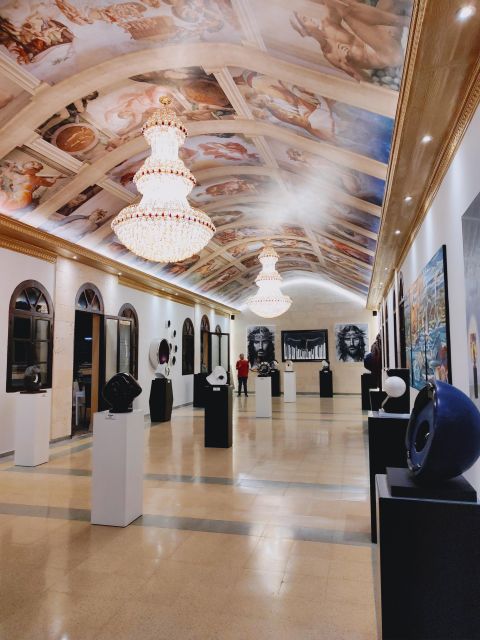
After Plaza Botero, you visit the Palace of Culture Rafael Uribe Uribe. The planned sightseeing time is about 30 minutes.
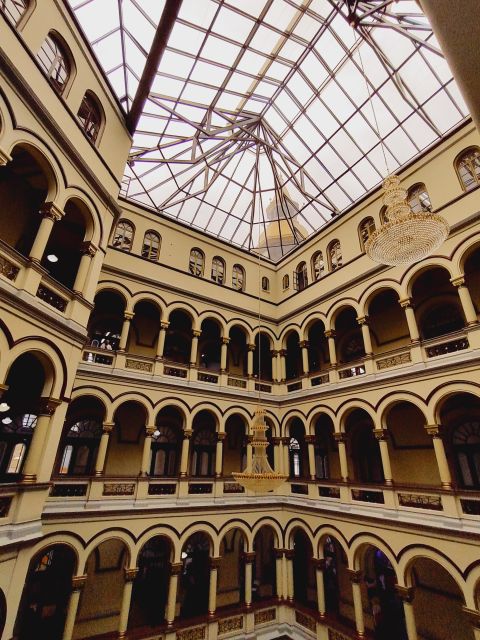
The building itself adds a dramatic change in style and mood. Its historic design makes it easy to understand why the tour includes two palaces. You are not just passing another government building. You are entering a major cultural site and then heading to its terrace.
The terrace is one of the most useful photo stops on the route. From here, you can look across Medellín and get a better sense of how the downtown area fits together. A city view is more meaningful after you have walked through the streets below. You recognize the squares and buildings instead of seeing an anonymous spread of rooftops.
This is also a good point to pause and think about the city’s transformation. The walk has moved from the old railway center through civic spaces, a former justice building, an art plaza, and a cultural palace. The view helps tie those pieces together.
The terrace is a practical highlight, but conditions can vary with the morning light and weather. Bring your phone or camera if you want pictures, but do not let photography take over the stop. The value here comes from seeing the city after learning what you are looking at.
Junin Street or a taste of Medellín
At this stage, you have two possible ways to continue. You may walk along Junin Street, described as the most traditional market street, or stop at traditional restaurants and try local foods.
Junin Street gives you a closer look at downtown commerce. It is a useful choice if you want to keep walking and see one of the city’s best-known shopping corridors. You can ask Sebastian about the street, its role in local life, and the everyday details you might miss while moving through it alone.
The food option gives the tour a more relaxed ending. Possible tastes include empanadas, buñuelos, and arepas. These are simple, familiar Colombian foods, but trying them with a local guide can help you understand what people commonly eat during a day in the city.
Food is not included, so bring Colombian pesos or another accepted form of payment for anything you choose to buy. The exact restaurant or snack stop is not fixed in the supplied details, so think of this as an optional local-food finish rather than a formal tasting menu.
I like having this choice because it lets you shape the last part of the walk. Choose Junin Street if you want more urban history and shopping. Choose food if you want a slower close and a chance to ask Sebastian about Colombian dishes.
Finishing at Parque Berrío Metro Station
The walk ends at Parque Berrío Station. This is a useful finish because you are left beside Medellín’s Metro system rather than in an isolated area.
You can continue exploring downtown, return to your lodging, or use the station as a starting point for another part of Medellín, Antioquia, or Colombia. The supplied information describes the ending as a place where you can feel safe to keep exploring, though you should still use normal city awareness and follow local advice.
The end point also makes the tour practical on a first day. You have covered a central route, learned how several key places connect, and finished with transport close by. It is easier to continue your day when a walk ends at a clear Metro station.
Price, group size, and what the $0 cost means
The listed price is $0 per person. That makes this one of the easiest ways to add a guided introduction to Medellín without committing money at booking. You can reserve and pay later, and cancellation is free up to 24 hours in advance.
A no-cost walking tour can offer strong value when the guide adds the right context. Here, the value is in Sebastian’s stories, the access to the Train Station and palaces, and the structure of a route that would take more effort to assemble on your own.
The cost does not cover Metro tickets, food, or admission to the Museum of Antioquia, which costs about $6. The tour is therefore free, but your full morning will not be entirely cost-free if you use public transport, eat, or add the museum.
One review describes a visitor buying a local paisa lunch and giving Sebastian a tip afterward. That was a personal choice, not a stated required charge. If you appreciate the guide’s time, you may want to plan for a tip, but the listed price remains $0.
Who will enjoy this Medellín experience
I would choose this walk if you want a first introduction to central Medellín with a local guide and a clear three-hour time frame. It suits people who enjoy public art, civic architecture, city stories, and short stops that build into a larger picture.
It is also a good match if you want a small group. With no more than 10 participants, you get a better chance to hear the guide and ask questions than you would on a large group walk.
Families can find plenty to hold their attention, especially at Plaza Botero and the terrace. One review describes a parent and son enjoying the walk, with the guide’s history explanations keeping the experience entertaining. The route may be less suitable if you dislike walking in active downtown areas or prefer a museum-heavy tour.
You should also consider the morning timing. The tour tends to run in the morning, and open squares can be sunny. Wear comfortable shoes, use sunscreen, and bring a hat. A passport-sized photo is also listed among the things to bring, though the supplied details do not explain when it is needed.
Should you book this downtown Medellín walk?
Book it if you want a low-cost, story-led introduction to Medellín’s center, especially if Botero, historic civic buildings, and local food appeal to you. Sebastian Santamaria seems to be the main reason the experience works: his strong English, detailed explanations, and friendly approach give the route its personality.
Skip it if you want a long museum visit, a private vehicle, or a tour devoted only to one subject. The walk covers several locations, includes open urban spaces, and leaves food and museum admission up to you.
For most first-time visitors with a free morning, the value is hard to argue with. You see the old railway area, two palaces, Botero’s sculptures, a city view, and a useful Metro connection, all while learning how Medellín’s center has changed.
FAQ
How long does the Medellín downtown tour last?
The experience lasts three hours. Starting times vary, so check availability when booking.
Where does the tour begin?
It begins at Alpujarra Metro Station. Meet at the north exit by the turnstiles.
Where does the tour finish?
The walk finishes at Parque Berrío Metro Station.
Which languages are available?
The live guide leads the experience in English or Spanish.
Is the tour free?
The listed price is $0 per person. Metro tickets, food, and admission to the Museum of Antioquia are not included.
Is the Museum of Antioquia included?
No. Entry costs approximately $6 and is separate from the tour.
What should I bring?
Bring sunscreen and a hat, since the tour tends to run in the morning. A passport-sized photo is also listed among the recommended items.
Just added around Medellin
- Commune 13, Graffitour street food. History.All inclusive★ 5.0 · 35 reviews
- City tour, Commune 13, Metro Cable, Botero Park and more. Private★ 5.0 · 34 reviews
- Aerial Hammocks, Zip and Waterfall Trek on Medellin Private Tour★ 5.0 · 39 reviews
- Walking tour downtown Medellín★ 5.0 · 39 reviews
- Tour to the Hacienda Nápoles Theme Park★ 4.0 · 22 reviews
- Hiking Mountains and Magical Forests★ 5.0 · 27 reviews
- Barrio transformation and urban escalator of Comuna 13★ 5.0 · 47 reviews
- Tour Cabalgata★ 5.0 · 37 reviews
Historical Tours, compared.
Historic Center and Getsemaní Shared Walking Tour
Read our review →
History & Local Life Essentials Tour on an E-Bike
Read our review →
Historical Shared Tour Salsa, Graffiti & Resistance in Cali
Read our review →
Shared Tour of Bogota’s Historic Downtown (La Candelaria)
Read our review →
Browse the lists this tour appears in