
Reviewed · PABLO ESCOBAR TOURS
Pablo Escobar Private Tour : Violent Times and The New Medellin
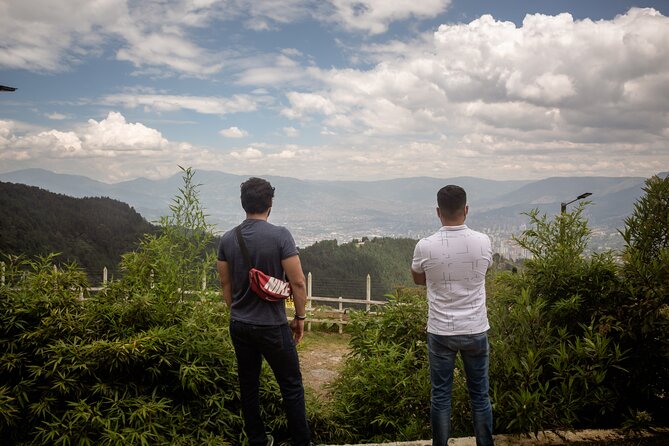
The most useful part of this Medellín tour is its shift in focus: Pablo Escobar is the entry point, but the real subject is what his violence did to ordinary people and how the city moved on. You visit his former home, neighborhood, grave, and final house while hearing competing versions of his death and legacy.
I like the memorial at Inflexión Park, which puts victims ahead of the drug lord, and I like that the tour includes today’s Medellín rather than treating the city as a backdrop to a crime story. Guides named Luis, Carlos, Andrés, Julian, and Santiago have led this experience, with Andrés also handling driving on one outing. The main drawback is the short stop time, about 15 to 20 minutes at each site, so much of the value depends on the guide’s explanation during the rides.
Key points to know before booking
- Four locations connect Escobar’s life to Medellín’s recovery: You visit Inflexión Park, Barrio Pablo Escobar, Jardines Montesacro Cemetery, and the Los Olivos neighborhood.
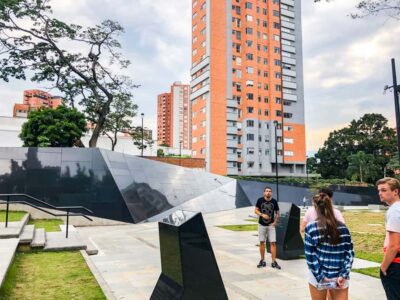
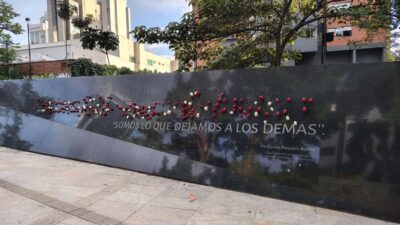
- Inflexión Park changes the tone: The former Monaco Building site is now a memorial for people killed during the conflict.
- The tour does not avoid uncomfortable details: It covers Escobar’s home, burial place, neighborhood project, and death.
- Guiding is a major part of the experience: Luis, Carlos, Andrés, Julian, and Santiago are among the guides associated with the tour.
- The group can reach 20 people: That is still manageable, but this is not a private one-on-one visit despite the tour title.
- The price is $49.99 per person: For four hours and several included admission stops, that is reasonable if you want a focused introduction to this subject.
What this Pablo Escobar tour is really about
Pablo Escobar’s name draws people in, but a good tour of this kind should not turn him into a folk hero. This experience works best when you treat it as a lesson in power, fear, inequality, and public memory.
The route takes you through places tied to Escobar’s family life, criminal network, burial, and final days. At the same time, it asks what Medellín remembers and what it wants to leave behind. That balance matters. You get the recognizable crime-story details, but you also visit a memorial dedicated to victims and a neighborhood linked to Escobar’s attempts to build loyalty.
The tour lasts about four hours. Only about 65 minutes are assigned to the four listed stops, so the rest of the time is likely spent moving through the city and listening to the guide. That makes the guide especially important. Carlos is noted for combining Escobar material with broader Medellín history and for suggesting places to eat. Luis is described as friendly and good at giving people plenty to think about. Andrés, Julian, and Santiago have also guided the route.
You should expect interpretation, not just a string of photo stops. The places themselves are relatively brief visits. The fuller picture comes from the stories, context, and questions raised between them.
More Private Tours in Medellin
- Medellín: Private City Tour with Metrocable and Comuna 13
★ 4.9 · 330 reviews - Medellín: Private Guatapé with Peñol Tickets and Boat Ride
★ 4.9 · 256 reviews - Medellín: Private Pablo Escobar and Comuna 13 Tour
★ 4.9 · 233 reviews
Inflexión Park and the ruins of the Monaco Building
The tour begins at Parque Memorial Inflexión, built on the site of the Monaco Building. Escobar lived there with his family until enemies bombed the building. The structure is gone, and the area is now a memorial park dedicated to victims of the conflict.
This is the strongest first stop because it sets a moral frame for the rest of the afternoon. You are not simply looking at the former home of a famous criminal. You are standing at a site that links his private life to the violence that affected Medellín.
The visit lasts about 15 minutes, with admission included. That is enough to see the memorial and hear its basic meaning, but it is not a long, quiet museum visit. If you want time for reflection or photographs, use the stop carefully and stay close to the guide.
I like that the route starts here rather than at the grave. It places the people harmed by the violence in the foreground before the tour moves into Escobar’s personal story. For anyone concerned that an Escobar tour might feel celebratory, this stop provides an important counterweight.
Barrio Pablo Escobar and the politics of public memory
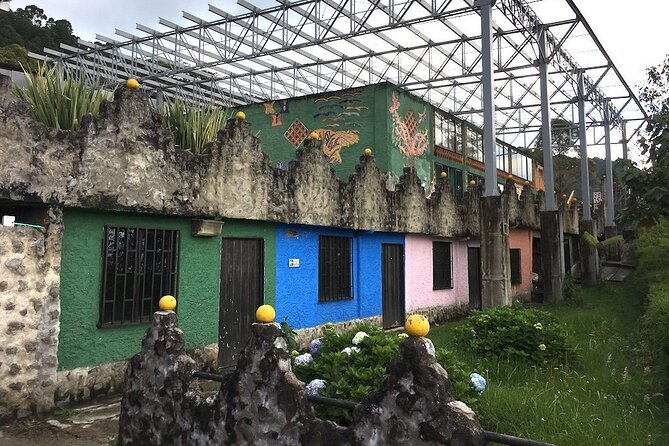
Next comes Barrio Pablo Escobar, a neighborhood built for homeless families in the late 1980s. The tour also points out a mural created by the community in his honor.
This is a more complicated stop than it may first appear. The neighborhood connects Escobar to housing and social assistance, but that does not erase the violence tied to his name. It shows how a person can be remembered differently by people who received help from him and by those harmed by his criminal activity.
That tension is worth discussing openly. A mural is not proof that a whole community shares one view, and the tour should not be reduced to the idea that charitable acts excuse violence. Instead, you can use this stop to understand why his image remains contested.
The visit lasts around 20 minutes. That gives the guide a little more room than at Inflexión Park, though you should still expect a quick visit rather than an extended neighborhood walk. Be respectful with photography and remember that this is a lived-in community, not a film set.
This stop adds something that a television series usually cannot: a look at how public memory changes from one part of a city to another. It also helps explain why Escobar’s legacy does not fit neatly into either hero or villain.
Jardines Montesacro Cemetery and the Escobar family grave
The cemetery stop takes you to Jardines Montesacro, where Pablo Escobar is buried with family members, Gustavo Gaviria, and Griselda Blanco. The visit lasts about 15 minutes, and admission is included.
A cemetery can make a famous figure feel less like a screen character and more like a real person whose actions had lasting consequences. Here, the focus is on the physical place connected to Escobar’s death and family, but the guide also provides the wider context.
You may find this stop less visually dramatic than the former Monaco site or the final house. Its value comes from what the guide explains and from the questions it raises about remembrance. A grave can attract curiosity, but it can also become a place where people overlook the victims. The wider route helps keep that issue in view.
The cemetery is also a practical reminder that the tour is not only about Escobar himself. The names connected to the site include members of his family and other major figures from Colombia’s drug trade. If you have only seen the story through popular entertainment, this stop helps connect those names to actual locations in Medellín.
More Pablo Escobar and post-conflict tours:
- Medellín: The Real Pablo Escobar Tour
★ 4.8 · 3,205 reviews - Medellín: Pablo Escobar Tour with beer included
★ 4.7 · 612 reviews - Medellin: Guatapé Day Trip & Boat to Pablo Escobar’s Estate
★ 4.7 · 365 reviews - Medellín: Private Pablo Escobar Tour with Cable Car Ride
★ 4.8 · 228 reviews
Los Olivos and the house linked to Escobar’s death
The final stop is in the Los Olivos neighborhood, at the last house where Escobar lived. You see the roof associated with his death and hear both the official account and the alternative version presented by the tour.
This is likely the most anticipated stop for people who know the story from television. It is also where you should be most alert to the difference between documented fact, local interpretation, and dramatization. The tour challenges the idea that Netflix always tells the full truth, but it does not make every alternative account automatically proven.
That distinction improves the experience. You can listen to the competing explanations, ask questions, and decide how convincing you find them. The roof becomes more than a photo opportunity because it opens a discussion about how public stories are shaped.
The stop lasts about 15 minutes. Do not expect a long visit inside a preserved historic property. The appeal is the location and the account attached to it. If you are especially interested in the final days of Escobar’s life, pay close attention during the transport portion of the tour, since the stop itself is brief.
Ending here gives the route a natural finish. You have moved from the consequences of violence, to Escobar’s social project, to his burial place, and finally to the last chapter of his life.
Why the Medellín context matters
A weaker crime tour would keep your attention locked on one man. This one is more useful when it shows how Medellín changed around the legacy he left behind.
The title’s reference to the new Medellín is important. The city is not presented only as the place where Escobar lived and died. You also get a sense of a city trying to define itself beyond the violence of the late 20th century.
That does not mean the past disappears. Inflexión Park exists because the past still matters. The neighborhood mural shows that memory can remain disputed. The cemetery and final house show how particular locations continue to carry emotional weight.
I especially value the mix of sites because each one offers a different angle:
- The memorial asks you to think about victims.
- The neighborhood raises questions about charity, loyalty, and inequality.
- The cemetery deals with family, death, and remembrance.
- The final house focuses on conflicting accounts and media storytelling.
Together, these stops offer more than a biography. They show how history is argued over in public places.
The guides can make or break the afternoon
The praise for the guides is one of the clearest reasons to consider this tour. Luis is described as friendly and able to leave people with plenty to think about. Carlos is credited with strong knowledge of both Escobar and Medellín, along with useful lunch suggestions between stops. Andrés, Julian, and Santiago are also named as guides connected with highly rated outings.
That variety means your exact guide matters. The route is short at each stop, so you need someone who can explain the setting clearly and avoid turning the afternoon into sensational storytelling. A good guide should give you context, acknowledge uncertainty around disputed claims, and keep the victims in view.
The driver-guide combination can also shape the pace. Andrés is specifically praised as a driver on one outing, while Julian handled guiding. If your group is not with one person for the whole experience, listen for clear handoffs and use the driving time to ask questions.
The maximum group size is 20 people. That is not a private tour in the strict sense, despite the title, but it is small enough for a guide to address the group without the feel of a large coach excursion. If you want a very personal conversation, a smaller group would be preferable. Still, the stated size is reasonable for a four-hour city route.
Is $49.99 good value?
At $49.99 per person, the tour offers a fair deal for a four-hour guided experience with four admission-included stops. You are paying for transportation between locations, a structured route, and the guide’s interpretation, not simply entry tickets.
The value is strongest if you are new to Medellín and want a clear introduction to both Escobar and the city’s response to his legacy. It is also useful if you prefer a guided route over trying to piece together distant locations on your own.
The price may feel less appealing if you already know the story in detail or mainly want photographs. The stops are short, and the core sites can be viewed fairly quickly. In that case, what you are buying is context, not a long museum visit.
I would judge the price by the quality of the guide. With someone like Carlos, Luis, Andrés, Julian, or Santiago, the four hours can connect the locations into a meaningful story. With a guide who simply repeats famous anecdotes, the same route could feel thin. The perfect score and universal recommendation suggest the tour has been delivering the first kind of experience, but your expectations should still be realistic.
Who should book this experience?
I would recommend it to you if:
- You want a structured introduction to Medellín’s Escobar-era past.
- You are interested in how cities remember violence.
- You want to see several connected locations in one afternoon.
- You appreciate local explanation more than a self-guided photo hunt.
- You want the subject placed beside Medellín’s modern recovery.
It may not suit you if you want a relaxed sightseeing tour with little discussion of crime, death, or political violence. It is also not ideal if you expect long visits at each place or a fully private experience.
Most people can participate, and the route is near public transportation. Confirmation comes at booking. You can cancel for a full refund if you do so at least 24 hours before the start time. Changes or cancellations made later are not accepted for a refund.
Should you book the Pablo Escobar Private Tour?
Book it if you want a serious, compact look at Escobar’s impact and Medellín’s effort to move beyond it. The best parts are the victim-focused memorial, the disputed neighborhood memory, and the chance to compare the official story of Escobar’s death with other accounts.
Do not book it expecting a theme-park version of a drug lord’s life. The tour is strongest when it treats Escobar as a way into harder questions about violence, poverty, public memory, and the city’s future. At $49.99, it is good value for a first visit, especially if you get a strong guide and use the travel time to ask questions.
FAQ
How long does the Pablo Escobar tour last?
The experience lasts approximately four hours.
How much does the tour cost?
The listed price is $49.99 per person.
Which places are visited?
The route includes Parque Memorial Inflexión, Barrio Pablo Escobar, Jardines Montesacro Cemetery, and the Los Olivos neighborhood.
Is admission included at the stops?
Admission tickets are included for all four listed stops.
How long is spent at each location?
The scheduled visits last about 15 minutes at Inflexión Park, 20 minutes at Barrio Pablo Escobar, 15 minutes at the cemetery, and 15 minutes in Los Olivos.
Who may guide the tour?
Guides associated with the experience include Luis, Carlos, Andrés, Julian, and Santiago. Andrés has also provided driving on an outing.
How many people can join?
The activity has a maximum group size of 20 participants.
Can I cancel for a full refund?
Yes. You must cancel at least 24 hours before the experience start time for a full refund. Cancellations or changes made less than 24 hours before the start time are not accepted for a refund.
Just added around Medellin
- Commune 13, Graffitour street food. History.All inclusive★ 5.0 · 35 reviews
- City tour, Commune 13, Metro Cable, Botero Park and more. Private★ 5.0 · 34 reviews
- Aerial Hammocks, Zip and Waterfall Trek on Medellin Private Tour★ 5.0 · 39 reviews
- Walking tour downtown Medellín★ 5.0 · 39 reviews
- Tour to the Hacienda Nápoles Theme Park★ 4.0 · 22 reviews
- Hiking Mountains and Magical Forests★ 5.0 · 27 reviews
- Barrio transformation and urban escalator of Comuna 13★ 5.0 · 47 reviews
- Tour Cabalgata★ 5.0 · 37 reviews
Pablo Escobar Tours, compared.

Guatapé Day Trip & Boat to Pablo Escobar’s Estate
Read our review →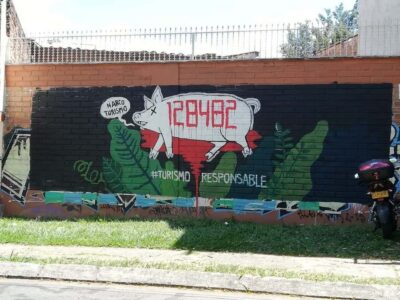


(Private Guatapé) Mansion Pablo Escobar+Paintball+Cuatrimoto+Boat
Read our review →Browse the lists this tour appears in