
Reviewed · PABLO ESCOBAR TOURS
We Don’t Talk About Pablo: Untold Narcos Story and Transformation
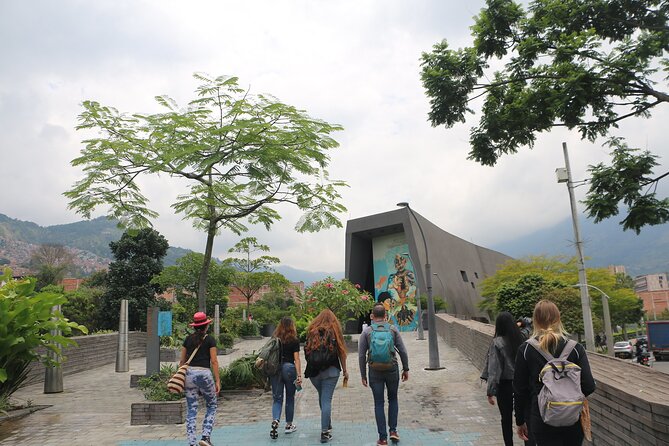
Pablo Escobar is only the doorway into this Medellín tour. The real subject is how narcotrafficking reshaped a city, harmed ordinary people, and helped spark a long push toward social repair. You move through the city by minivan, cable car, and tram, so the geography becomes part of the lesson.
I like the victim-centered approach and the chance to hear more than one version of Colombia’s past. I also like the use of the city’s public transport, especially the cable car to Comuna 8 and tram ride to the museum. The main drawback is that anyone hoping for a long list of Escobar homes, graves, or prison sites may find this tour too focused on context.
Key points at a glance
- Victims come before the legend: The tour avoids treating Escobar as a hero and focuses on the damage caused by the narco era.
- Cable car and tram included: You see how Medellín’s transport system connects steep hillside communities with the city center.
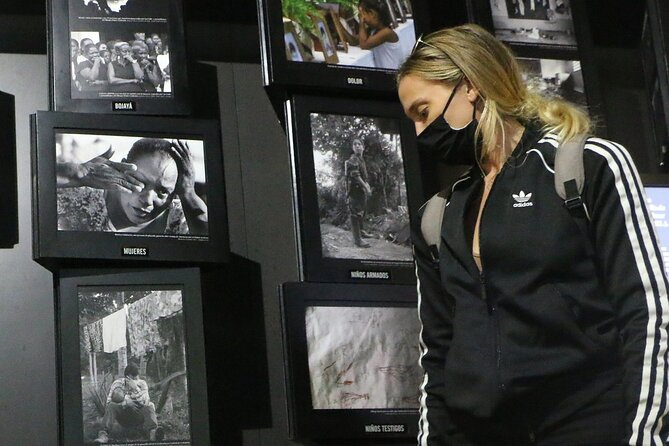
- Museo Casa de la Memoria: Interactive exhibits add voices from people affected by violence, displacement, and social conflict.
- Private four-hour outing: Your group participates alone, with a bilingual English and Spanish guide.
- Good guides matter: Guides such as Carlos, Juan Carlos, Luis Ospina, Hector, Wilson, and Nicolas have been praised for clear storytelling and personal insight.
- $95 buys more than a drive-by tour: Hotel transport, transit tickets, snacks, entrance fees, and a guide are included, though the price may feel high if you want only Escobar landmarks.
A different kind of Medellín narco tour
This experience begins with a familiar name, then quickly moves beyond it. Escobar’s life and death are part of the story, but the tour does not present him as a leader, Robin Hood, or celebrity. Its stated purpose is to explain the full history of Colombia’s narco era and the damage it left behind.
That distinction matters. Medellín has become a popular place for tours built around Escobar’s fame, yet many Colombians remember the bombings, assassinations, threats, and fear far more clearly than the legend suggests. This experience gives more room to those people and to the city’s long effort to change.
You will spend about four hours in the center and east of Medellín. The route combines a private vehicle with public transit, walking, and museum time. That makes it feel less like a string of distant photo stops and more like a lesson in how the city fits together.
The private format is useful. You are not sharing the guide’s attention with a large busload, and the route can sometimes be adjusted. Past versions of this experience have included extra stops when schedules allowed, including Comuna 13 or La Catedral for an additional fee. Confirm the exact route if one of those places is especially important to you.
More Pablo Escobar and post-conflict tours:
- Medellín: The Real Pablo Escobar Tour
★ 4.8 · 3,205 reviews - Medellín: Pablo Escobar Tour with beer included
★ 4.7 · 612 reviews - Medellin: Guatapé Day Trip & Boat to Pablo Escobar’s Estate
★ 4.7 · 365 reviews
Hotel pickup and the first hour in Medellín
The outing begins with pickup at your Medellín accommodation. The main description specifies a comfortable, air-conditioned minivan, a welcome feature in a city where traffic and warm weather can make a long ride tiring. The inclusions also refer to hotel pickup and drop-off using public transportation, so it is sensible to clarify the vehicle arrangement when you book.
The opening portion provides the basic frame: how narcotrafficking grew, why Medellín became central to the story, and how violence affected public life. A strong guide will help you connect the past to the city you see now, rather than treating the narco era as a closed chapter.
Guides named in past accounts include Carlos, Juan Carlos, Hector, Wilson, Nicolas, and Luis Ospina. Their styles differ, but the strongest praise has centered on clear explanations, good storytelling, and the ability to answer questions without turning the tour into a glorification of Escobar.
Some guides have had direct experience of the period, including one who worked as a police officer during the Escobar era. That can add a personal dimension, but you should still expect interpretation rather than a courtroom-style record. The point is to hear how violence affected Medellín and Colombia, not to collect sensational anecdotes.
This first section is also a good reason to take the tour early in your stay. It gives you a working map of Medellín and useful context for later visits to Comuna 13, the city center, or other neighborhoods connected with social change.
Cable cars to Comuna 8
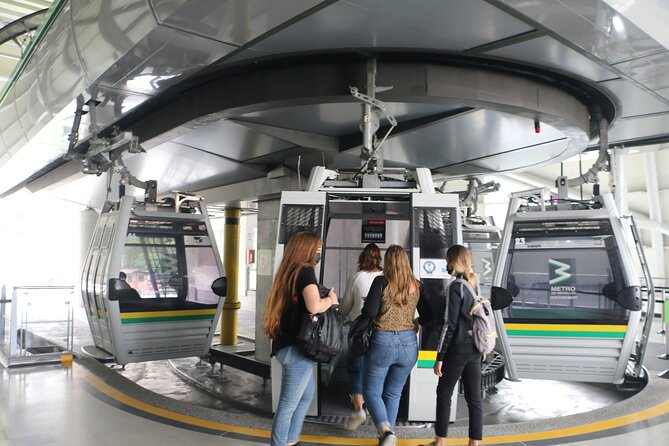
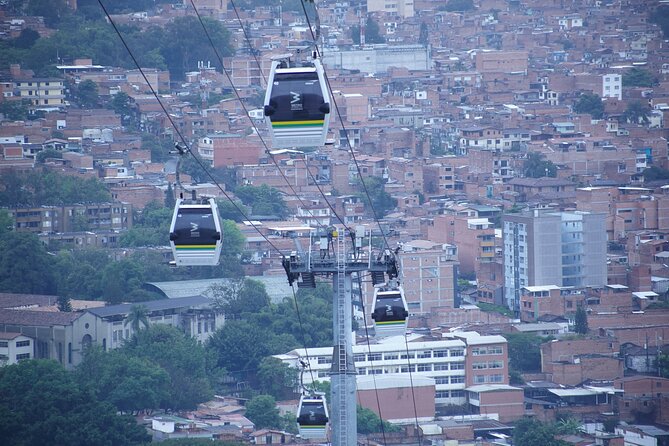
The cable car ride is one of the most effective parts of the outing. Medellín’s steep eastern communities rise sharply from the valley, and a street-level tour can make the city feel like a jumble of separate districts. From the cable car, you can see how the neighborhoods climb the hills and how transport links tie them to the center.
You are not simply riding for the view. The geography helps explain why some communities faced isolation and limited access for so long. The cable car system is part of Medellín’s effort to connect hillside residents with jobs, schools, and public services. Your guide uses the route to discuss the city’s problems and its attempts to address them.
The tour then moves through Comuna 8. The neighborhood is important because it has been heavily affected by violence, poverty, and organized crime, but it is not presented as a crime exhibit. The focus is on residents, community life, and the ability of people to rebuild after years of pressure.
Wear shoes you can walk in. You will combine the cable car with walking and other forms of transit, and the route is not designed for sitting in one vehicle the whole time. Comfortable clothing is also recommended.
A practical note: some people may feel uneasy photographing ordinary homes or residents. Listen to your guide and treat the neighborhood as a living community, not a backdrop. That simple courtesy fits the spirit of this tour much better than hunting for dramatic pictures.
Museo Casa de la Memoria and the tram ride
From the cable car area, the route uses the tram to reach Museo Casa de la Memoria. The change from hillside cable car to street-level tram is another useful lesson in the city’s transport network, but the museum is the emotional center of the experience.
The museum uses interactive displays to present Colombia’s conflict through multiple voices. You learn about the effects of narcotrafficking and violence on families and communities, along with the struggle to remember what happened. The emphasis is not just on famous criminals. It is on people who lost relatives, homes, security, or a sense of normal life.
I appreciate this stop because it puts names and human consequences ahead of mythology. A television series can make the narco era look like an intricate crime plot. A memory museum asks a harder question: what did those events do to a society?
Allow about an hour here. The exhibits require attention, and a rushed visit would blunt their effect. If you prefer a light sightseeing morning, this may feel serious. That is not a flaw, but it is worth knowing before you book.
The museum also gives balance to the rest of the tour. Escobar-related locations can encourage fascination with one man. Casa de la Memoria widens the view to victims, families, communities, and the country’s ongoing work of remembrance.
A few more Medellin half-days worth weighing up
- Medellin: Comuna 13 Graffiti Tour, Cable Car & Street Food
★ 4.8 · 9,046 reviews - Medellín: Comuna 13 True Story and Street Food Tour
★ 4.9 · 1,779 reviews - Medellín: Comuna 13 District Tour with Cable Car Ride
★ 4.8 · 1,467 reviews - Medellin: Coffee Tour with Transport, Snacks and Tastings
★ 4.7 · 1,357 reviews
Parque de la Inflexión and the city’s public memory
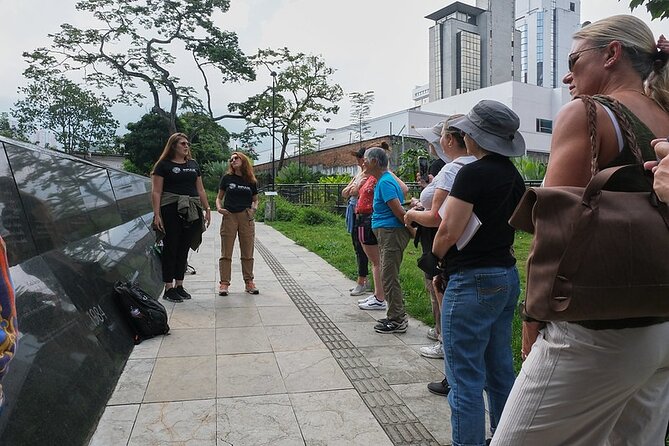
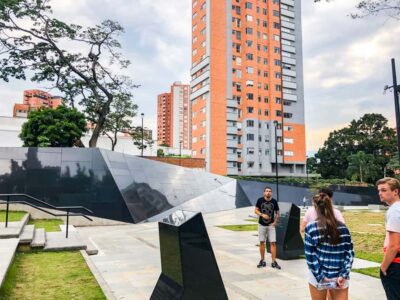
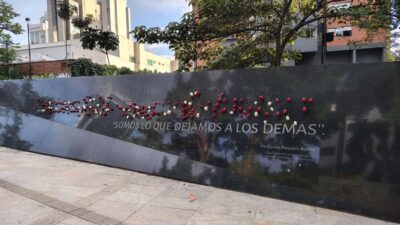
The final major section includes Parque de la Inflexión and nearby stops connected with Medellín’s transformation. The park is a memorial to victims of the narco wars, so it offers a quiet counterpoint to places associated with Escobar’s power.
Your guide explains how Medellín has tried to face its past while improving daily life. The route from El Pinal toward Ayacucho helps you see different parts of the city and discuss the changes in a physical setting rather than from a hotel lounge.
This is where the tour’s title can be misleading if you expect a pure biography. You will learn about Escobar’s life and death, but the larger subject is the city’s response to violence. The tour asks you to think about public projects, transport, memory, and community resilience as parts of the same story.
There may not be a dramatic building or cinematic reveal at every stop. One past account found the physical Escobar sites underwhelming, describing ordinary or deteriorating buildings and a modest cemetery. That is fair warning. The value lies mainly in the guide’s explanation and the wider context, not in spectacular monuments.
Older versions of the route have included Escobar’s former house, burial site, the building where he was killed, or La Catedral. Some participants also arranged a visit to La Catedral for an extra charge, while others were taken to different locations when the original plan was unavailable. Do not assume these places are part of the current standard route. Ask before booking if you want a specific Escobar site.
What the guides add
Because the route deals with painful and disputed events, your guide makes a major difference. The best guides described in the supplied accounts did more than recite dates. Carlos was praised for connecting Escobar’s story with present-day Colombian politics and for sharing personal experience. Juan Carlos was repeatedly described as a strong storyteller who explained Medellín beyond the narco subject.
Hector was singled out for showing how the city changed over four decades. Nicolas expanded the discussion into Colombian history and, on one outing, finished with local ice cream in Comuna 13. Luis Ospina was described as personable and willing to explain the past in detail. Wilson also received praise for making the subject informative and enjoyable.
Those details point to the tour’s greatest strength: human interpretation. The same streets can feel ordinary if you only drive past them. With a guide who can explain what happened there and why it still matters, the route becomes much more useful.
The bilingual format is another advantage. The tour is offered in English and Spanish, so you can ask questions in the language that suits you. Since the tour is private, you can also spend more time on subjects that interest your group, within the schedule.
Still, no guide can remove the complexity of the subject. You may hear about police, military forces, paramilitary groups, cartels, victims, and political responses in a single morning. Take notes if you want to remember names and dates, and ask for clarification when the story becomes crowded.
Is $95 a fair price?
At $95 per person, this is not Medellín’s cheapest city outing. The price makes more sense when you count what is included: hotel pickup and drop-off, the air-conditioned vehicle at the beginning and end, cable car and tram tickets, museum admission, snacks, and a bilingual private guide.
You are also paying for structure. Planning this route independently would require working out the transport connections, finding the museum, deciding which memorials fit together, and learning enough background to understand them. The guide provides the thread that links those pieces.
The value is strongest for a first visit to Medellín, for people with a serious interest in Colombia’s recent past, and for anyone who wants a balanced alternative to a celebrity-style Escobar tour. It is weaker if you mainly want famous houses, graves, prison sites, or a low-cost city ride.
One past account called the tour expensive for what felt like a drive around the city. That criticism is worth taking seriously. If you dislike museums or prefer active sightseeing, the four-hour format may feel heavy. If you value explanation, private transport, and a thoughtful route, the price is easier to justify.
The tour is often booked well ahead, with an average lead time of about 124 days. Confirmation is sent within 48 hours, subject to availability, so do not leave it until the last moment during a busy visit.
Who should book this experience?
I would choose this tour if you want to understand Medellín rather than simply photograph an Escobar location. It suits adults, solo visitors, couples, friends, and families with older children who can handle serious material about violence and loss.
It is especially useful if you have watched Narcos and want to separate television drama from Colombia’s lived experience. The tour does not treat the series as the authority. Instead, it uses the city, the museum, and local interpretation to show what the screen version leaves out.
You should also consider it if you want an easy introduction to Medellín’s transit system. The cable car and tram are not filler. They help you see how the city is arranged and how transport has become part of its social story.
I would skip it if your only goal is a greatest-hits list of Pablo Escobar sites. The current route gives priority to the Museo Casa de la Memoria, Comuna 8, Parque de la Inflexión, and the city’s broader transformation. For specific locations such as La Catedral or Escobar’s former home, ask about a different tour or a private adjustment.
The subject can be uncomfortable, and that is appropriate. Go with respect for the people who live in the neighborhoods you visit and for those whose losses are discussed. You will get much more from the experience if you listen carefully instead of treating it as dark entertainment.
Practical details before you go
The tour lasts about four hours and includes hotel pickup and return. Since the route includes walking, cable cars, and a tram, wear comfortable shoes and clothes.
Snacks and entrance tickets are included. Tips, personal purchases, and unspecified food or drinks are not included, so carry some money if you want anything beyond the supplied snack.
Most people can participate, and the activity is private to your group. It is near public transportation, but the included route already uses the cable car and tram.
Free cancellation is available when you cancel at least 24 hours before the start time. Changes or cancellations made less than 24 hours ahead are not accepted for a refund, and the cutoff follows local Medellín time.
Should you book it?
Book this experience if you want a serious, well-guided look at Medellín’s narco era and the city’s response to it. The combination of Comuna 8, public transit, Parque de la Inflexión, and Museo Casa de la Memoria gives you a fuller picture than a quick drive past Escobar landmarks.
Skip it, or confirm the route carefully, if you want only the prison, grave, house, or other locations tied directly to Escobar. At $95, the tour is best value when you want history, public memory, and social change, not just a collection of crime-tour photographs.
FAQ
How long does the tour last?
The experience lasts approximately four hours, including transportation, walking, museum time, and the cable car and tram rides.
What places are included in the route?
The stated route includes Medellín’s center-east area, Comuna 8, Museo Casa de la Memoria, Parque de la Inflexión, and stops from El Pinal toward Ayacucho.
Is hotel pickup included?
Yes. Hotel pickup and drop-off are included. The main description specifies a comfortable, air-conditioned minivan, while the inclusions also refer to public transportation for the transfer arrangement.
Are cable car and tram tickets included?
Yes. Cable car and tram tickets are included in the tour price.
Is the tour offered in English?
Yes. A bilingual English and Spanish guide is included.
Is this a private tour?
Yes. Only your group participates in the activity.
Are entrance fees included?
Yes. Entry tickets, including admission to Museo Casa de la Memoria, are included.
Can I cancel for a full refund?
Yes, if you cancel at least 24 hours before the experience begins. Cancellations made less than 24 hours before the start time are not refundable.
Just added around Medellin
- Commune 13, Graffitour street food. History.All inclusive★ 5.0 · 35 reviews
- City tour, Commune 13, Metro Cable, Botero Park and more. Private★ 5.0 · 34 reviews
- Aerial Hammocks, Zip and Waterfall Trek on Medellin Private Tour★ 5.0 · 39 reviews
- Walking tour downtown Medellín★ 5.0 · 39 reviews
- Hiking Mountains and Magical Forests★ 5.0 · 27 reviews
- Barrio transformation and urban escalator of Comuna 13★ 5.0 · 47 reviews
- Tour to the Hacienda Nápoles Theme Park★ 4.0 · 22 reviews
- Tour Cabalgata★ 5.0 · 37 reviews
Pablo Escobar Tours, compared.

Guatapé Day Trip & Boat to Pablo Escobar’s Estate
Read our review →

(Private Guatapé) Mansion Pablo Escobar+Paintball+Cuatrimoto+Boat
Read our review →Browse the lists this tour appears in