
Reviewed · WORKSHOPS
San Andres: Coco Art Workshop
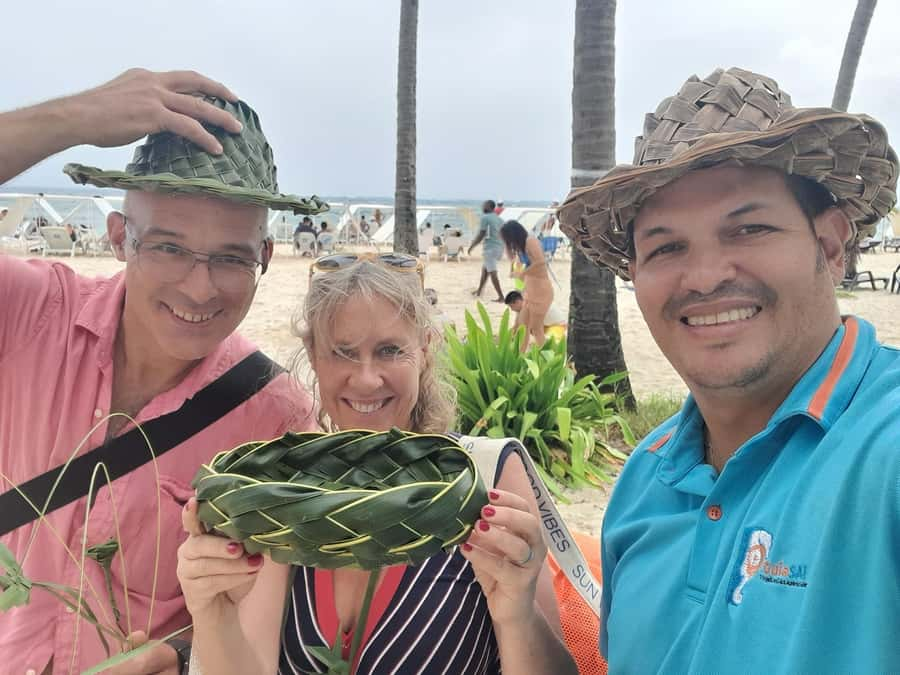
The clever part of this San Andrés experience is that the raw material is also part of the island’s story. Coconut palm is not just a beach-side decoration here. It supplied food, shade, household materials, and a traditional craft long before tourism became the island’s main business. In a private workshop with Sky and his father, you see that history become a sunhat, fruit bowl, bird, or necklace.
I like two things right away: you make something with your own hands, and the cultural talk goes beyond a quick craft lesson. You hear about San Andrés, the local language, and Creole culture while looking at old photographs and learning techniques passed down through a family. The main consideration is time. At 90 minutes to two hours, this is a focused introduction, not a full-day craft course, and some of the more advanced pieces are made by the artists rather than by you.
Key points
- Family-led instruction: Sky and his father demonstrate traditional and contemporary coconut-palm work.
- A useful cultural window: Learn how coconut trees mattered before tourism shaped the island economy.
- Hands-on making: Try simpler projects such as a decorative bird or necklace.
- Coastal setting: The experience includes scenic views and may include time near the beach.
- Private format: Your group receives direct help in English or Spanish.
- Practical souvenir: You leave with a small handmade item connected to San Andrés.
Why coconut palm tells San Andrés story
A coconut workshop might sound like a pleasant craft activity for a hot afternoon. It is that, but it also gives you a useful way to understand the island. The palm is tied to daily life, local work, and older traditions that can be easy to miss when your visit centers on beaches and restaurants.
The session explains the importance of coconut trees across the archipelago. You learn how palm leaves can become practical and decorative objects, then watch those ideas take shape in front of you. That connection between material, place, and family skill is the reason I would choose this over a generic souvenir shop.
The cultural side matters just as much as the weaving. You hear stories about the islands, the local language, and the origins of Creole culture. This gives the workshop a sense of place, rather than making it simply a lesson in folding and braiding leaves.
More hands-on workshops in San Andres:
- Fun Graffiti Workshop: The Art of Aerosol and Color
★ 5.0 · 73 reviews - Bogota: Colombian Emerald Ring Workshop
★ 5.0 · 61 reviews - Specialty Coffee Workshops in Cartagena
★ 5.0 · 34 reviews
Meeting Sky and his father near Bolívar Park
The stated meeting point is the entrance of a typical house near Bolívar Park, at Avenida 20 de Julio #4A-26. It is in front of the Omalina Clinic, diagonally across from Bolívar Park and diagonally across from the registration office. That precise description should help you find it, but keep the address handy on your phone.
Pickup is optional. If you select it, the supplier contacts you to arrange the details. The transfer portion is listed at about 20 minutes, so the outing is easy to fit into a day of island sightseeing. Drop-off is listed at two locations connected with Guia SAI in San Andrés.
The meeting point is more than a place to gather. The family’s typical house is part of the story. During one session, Sky and his father used old photographs to explain the island before tourism became its main industry. That makes the opening feel personal and grounded. You are not simply arriving at a classroom with craft supplies already laid out.
The private-group format is a real advantage here. You can ask questions without worrying about holding up a large class, and the instructor can adjust the pace. The workshop is offered in English or Spanish, making it suitable for visitors who want cultural context as well as practical instruction.
A short ride, then a class with sea views
The journey to the workshop area takes about 20 minutes by car. The exact feel of the route depends on your pickup option and the day’s arrangement, but the activity includes scenic views on the way and time near the Caribbean coast.
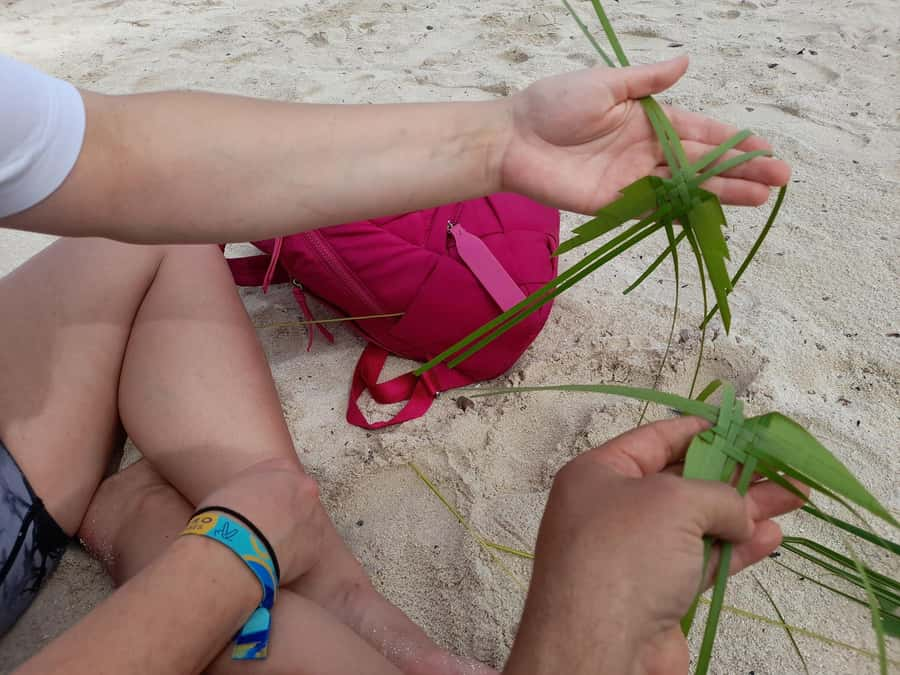
One description of the experience places the palm-leaf lesson by a northern beach. There, Sky explained the story of San Andrés, palms, and coconuts in the sand before the weaving began. That setting gives the material a clear connection to the island. You are looking at the sea while learning how a local plant became part of household life and artistic work.
The location also brings a practical point: this is an outdoor-friendly activity. Wear clothes that can get dirty, comfortable shoes, and sun protection. A hat, water, biodegradable sunscreen, insect repellent, and a camera all make sense. Beachwear and a towel are also listed among the suggested items, which hints that the outing may include a coastal setting rather than a sealed indoor studio.
Do not expect a polished museum workshop with every minute scripted. The charm comes from the family setting and the direct demonstration. The tradeoff is that conditions may feel informal. If you want a highly structured class with a fixed list of projects, this may seem loose. If you like meeting local people and seeing how a skill is actually passed along, the relaxed approach works well.
Watching a sunhat and fruit bowl take shape
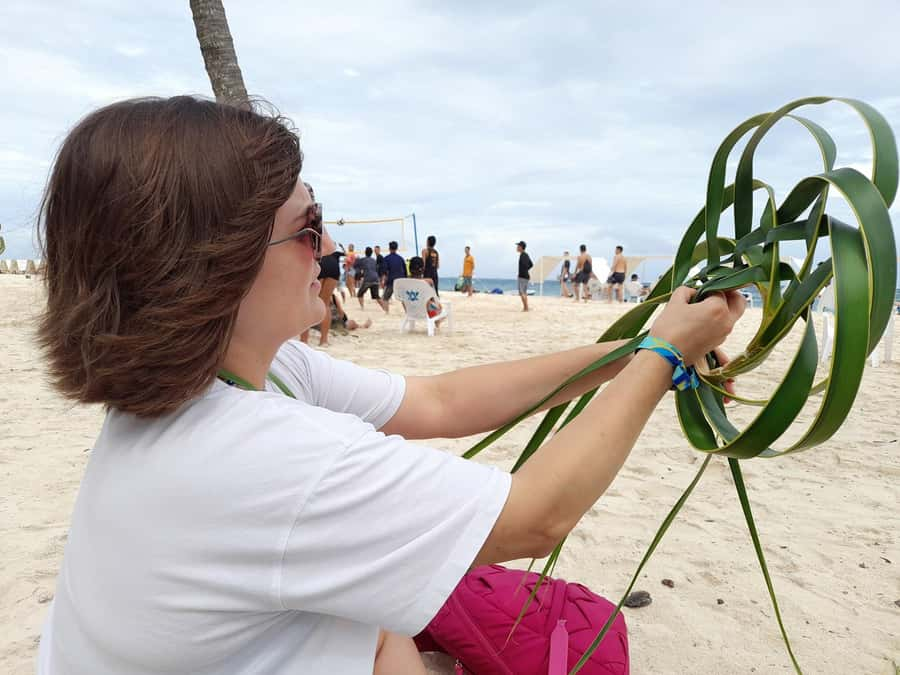
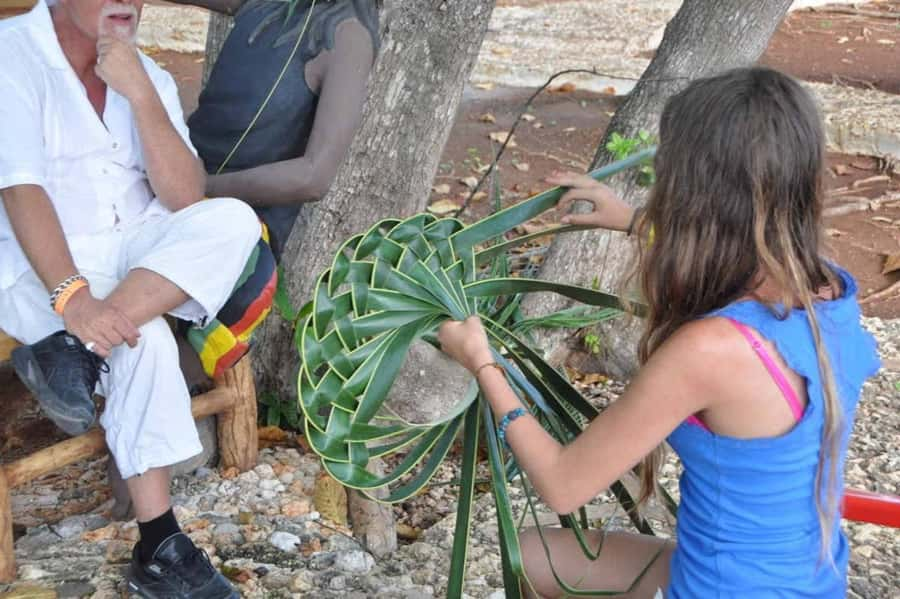
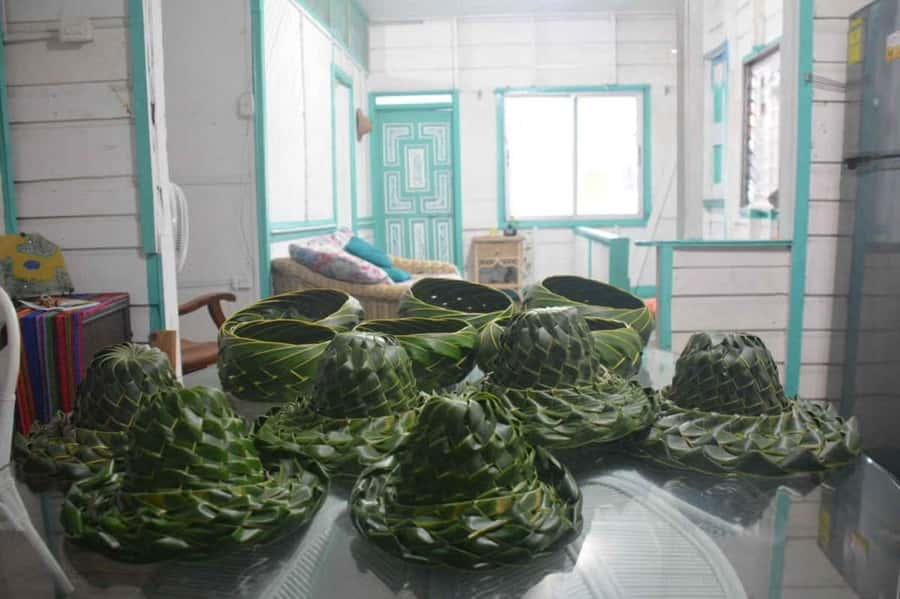
The demonstration is the visual heart of the activity. Sky and his father show how coconut-palm material can be turned into useful objects, not just simple decorations. A sunhat and fruit bowl are among the larger pieces demonstrated.
This is where the skill gap becomes clear. The artists work with the material quickly and confidently, while beginners need time to understand how the leaves bend, overlap, and hold their shape. Watching first is important. It helps you see the rhythm of the work before you try it yourself.
The material has a pleasing sense of surprise. Coconut palm looks simple when attached to a tree, but it can become a hat, bowl, ornament, or accessory. The workshop shows both older methods and newer artistic ideas, so you get a better sense of its range.
You should not assume you will make a full sunhat or fruit bowl during the session. Those pieces are demonstrations of advanced skill. Your own project is more likely to be a simpler ornament, such as a decorative bird or necklace. That is not a weakness. Smaller projects let you learn the basic handling of the material without turning the class into a test of patience.
A few more San Andres half-days worth weighing up
- San Andres: Scuba Diving Experience with Hotel Pickup
★ 4.8 · 192 reviews - Tourist white train – Tour around the island
★ 4.5 · 117 reviews - Beach Cart in San Andrés : your ideal Caribbean experience
★ 5.0 · 85 reviews - Boat Tour to Johnny Cay & Aquarium in San Andres Island
★ 4.0 · 82 reviews
Making a bird, necklace, or personal keepsake
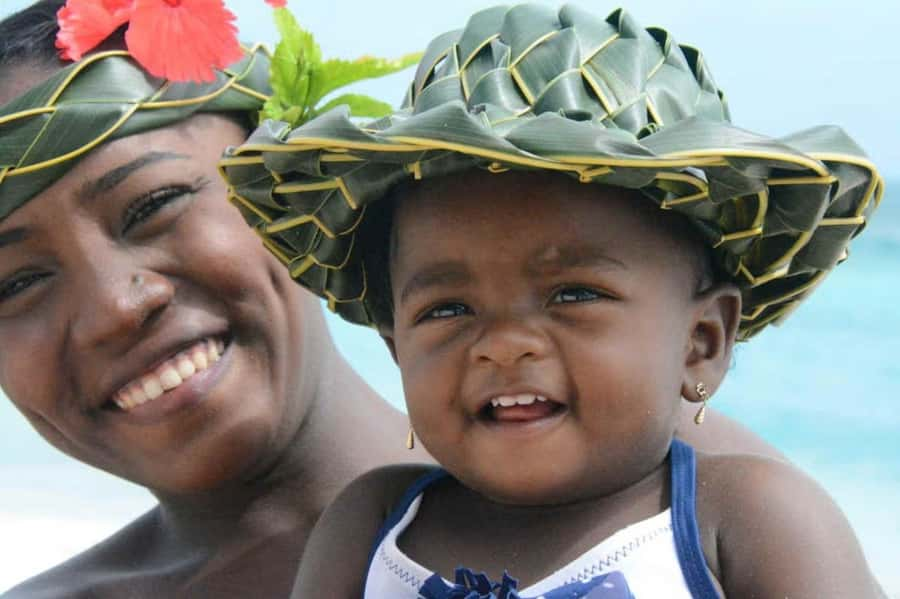
The hands-on part gives the experience its lasting value. You are not only watching a local artist perform. You are trying the technique yourself, with help from the instructor.
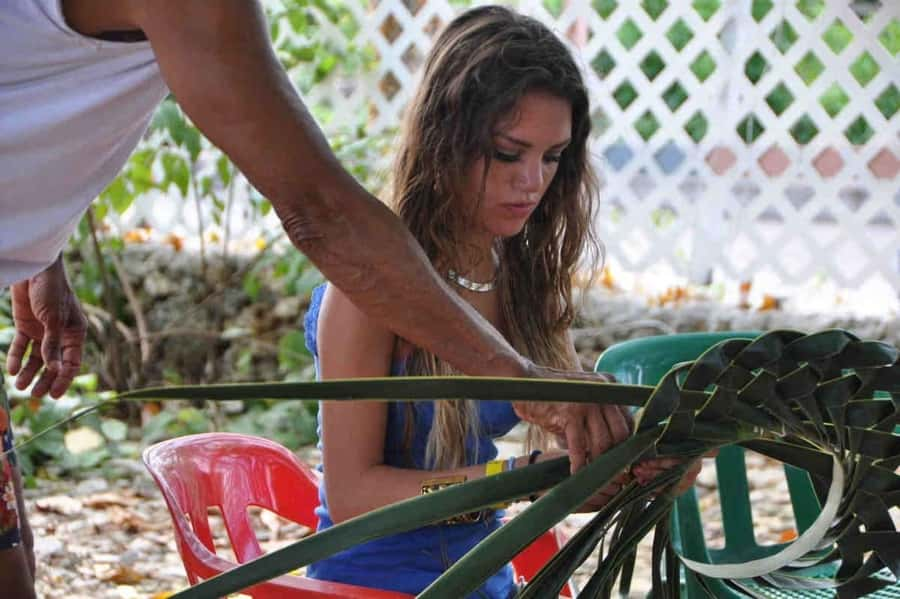
The simpler ornamental pieces are a good fit for a short session. A decorative bird gives you a clear shape to work toward, while a necklace offers a more wearable result. The instructor can also respond to individual requests when possible, which is useful if you would rather make a particular type of small souvenir.
Expect your first attempt to look more modest than the artist’s work. That is part of the fun. Coconut-palm weaving rewards care, and the private setting means you can ask for help as you go. The goal is not to match a professional craftsperson in one sitting. The goal is to understand the process and take home something you made.
The finished piece has more meaning than a mass-produced trinket. It connects you to the island’s materials and to the people who keep an older trade active. Pack it carefully, especially if you are flying home. The activity provides a souvenir, but the supplied details do not specify how it is packaged or protected for transport.
The cultural stories are the real bonus
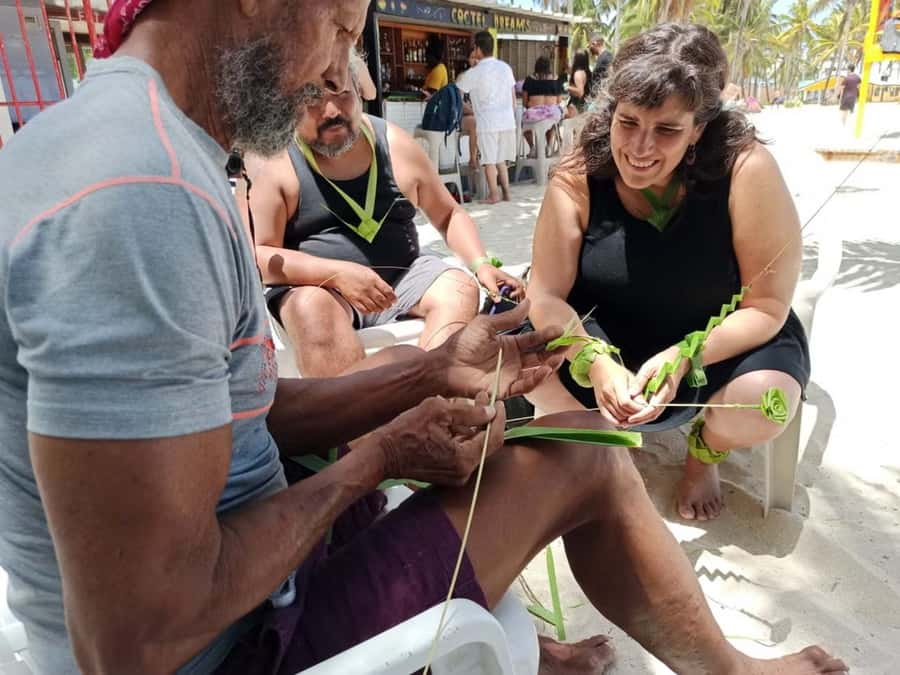
Many island activities show you a beautiful setting without explaining much about the people who live there. This workshop takes a different path. It uses coconut palm as an entry point into San Andrés culture.
You hear about life before tourism became the main industry. Old photographs help put those changes into human scale. You also learn about the island’s language and Creole culture, topics that are easy to overlook during a short beach holiday.
I especially like this combination of story and demonstration. If the guide only talked, the session might feel like a lecture. If the guide only crafted, you would miss why the work matters. Here, the two parts support each other. The palm leaf becomes easier to appreciate once you understand its place in island life.
The family connection adds another layer. Skills passed from one generation to the next can disappear when cheaper factory-made goods replace handmade items. Seeing Sky and his father work together gives you a direct look at that continuity without turning the experience into a staged performance.
Is the $39 price fair?
At $39 per person, the value depends on what you want from your San Andrés activities. If you only want a quick souvenir, buying a finished item may cost less. If you want a private cultural activity with transportation options, instruction, demonstrations, and a handmade keepsake, the price is reasonable.
You are paying for more than materials. The fee covers a 90-minute to two-hour experience, an English or Spanish-speaking guide, and the chance to spend time with local craftspeople. Hotel pickup and drop-off are included when that option is selected, though pickup is optional and needs to be coordinated.
The private format improves the value for couples, families, and small groups. You receive more direct attention than you would in a large class. For solo visitors, the price is higher on a per-person basis than simply visiting a craft stall, but the personal instruction and cultural discussion make it a fuller activity.
I would not book it mainly for the amount of artwork you produce. Book it for the story, the demonstration, the chance to try the technique, and the connection to local life. The finished bird or necklace is a pleasant reminder, not the entire point.
Who will enjoy this workshop most
This is a strong choice for anyone who wants a cultural break from swimming and sightseeing. It suits couples, families, solo visitors, and small private groups. Children who can follow simple instructions may enjoy the hands-on portion, though the supplied information does not give a minimum age or child policy.
It also works well for repeat visitors who have already seen the main beaches. You get a different view of San Andrés, one based on family memory and traditional work rather than water activities.
Photography fans should bring a camera. You can capture the coastal views, the demonstrations, and your own project as it develops. Just remember that the activity is about participation too, so do not spend the entire class behind a screen.
People with limited mobility should note that the activity is listed as wheelchair accessible. Since some of the experience may take place outdoors and near the beach, confirm the exact setup when arranging pickup if you have specific access needs.
What to bring and what to expect
Wear comfortable clothes that can get dirty. Palm weaving is not presented as a formal, dress-up activity, and outdoor conditions can be sunny or warm.
Bring:
- Water and biodegradable sunscreen
- A sun hat and insect repellent
- Comfortable shoes
- A towel and beachwear
- A camera
- Clothes suitable for outdoor work
Smoking is not allowed. The activity lasts between 90 minutes and two hours, and start times depend on availability, so check the schedule before you plan the rest of your day.
You can cancel up to 24 hours in advance for a full refund, and the reserve-now, pay-later option lets you hold a place without paying at once. Those policies are useful if your island plans depend on weather or changing transport arrangements.
Should you book the San Andrés Coco Art Workshop?
Book this if you want a personal, low-key activity that explains San Andrés through a local material. The strongest reasons are the family instruction from Sky and his father, the old photographs and island stories, and the chance to make a small coconut-palm item yourself.
Skip it if you want a long, technically demanding craft course or a major sightseeing attraction. The session is short, the finished objects may be simple, and the setting is informal. But for $39, it offers a good change of pace, especially on a trip otherwise built around beaches and water.
I would choose it for a couple, a small family, or anyone who values handmade objects over factory souvenirs. You leave with more than a necklace or decorative bird. You leave understanding why coconut palm belongs to the story of San Andrés.
FAQ
How long does the Coco Art Workshop last?
The experience lasts about 90 minutes to two hours. Available starting times vary, so check the schedule when booking.
Where is the meeting point?
The meeting point is at the entrance of a typical house near Bolívar Park, at Avenida 20 de Julio #4A-26. It is in front of the Omalina Clinic and diagonally across from Bolívar Park and the registration office.
Is hotel pickup available?
Yes. Pickup is optional, and the supplier contacts you to coordinate the details if you choose that option.
What languages are offered?
The workshop is available in English and Spanish.
Is this a private activity?
Yes. The group type is private, so your party receives direct instruction rather than joining a large shared class.
What will I make during the workshop?
You can learn to make simpler ornamental pieces such as a decorative bird or necklace. The artists also demonstrate larger works, including a sunhat and fruit bowl.
Can I buy a finished souvenir?
Yes. The activity provides an opportunity to acquire pieces made during the session, including decorative items and accessories.
Is the workshop wheelchair accessible?
The activity is listed as wheelchair accessible. Contact the supplier when arranging details if you need specific information about the outdoor setup.
What should I wear?
Wear comfortable shoes and clothing suitable for outdoor activities. Bring clothes that can get dirty, along with sun protection and water.
Can I cancel the booking?
You can cancel up to 24 hours in advance for a full refund. A reserve-now, pay-later option is also available.
Just added around San Andres
- Parasailing in San Andres Island★ 4.5 · 43 reviews
- Rent a Scooter and tour the island of San Andrés★ 4.5 · 48 reviews
- San Andrés: Guided Cays and Mangroves Tour★ 3.8 · 30 reviews
- San Andres: White Party on boat with open bar, dinner and dancers!★ 5.0 · 4 reviews
- San Andrés: Island Pontoon Boat Tour★ 3.0 · 5 reviews
- San Andres: Private Boat Trip with Aquarium and Beach Stops★ 4.8 · 3 reviews
- San Andres: Private San Andres Bay Tour by Luxury Speedboat★ 5.0 · 24 reviews
- From San Andrés: Speedboat Tour to Johnny Cay Island★ 3.6 · 6 reviews
Workshops, compared.
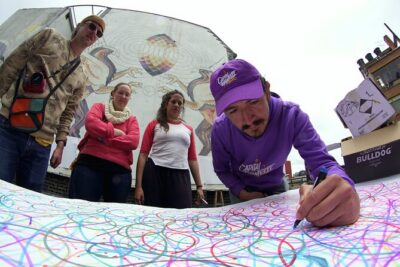
Fun Graffiti Workshop: The Art of Aerosol and Color
Read our review →
Cartagena Instagram Mobile Workshop: Scenic and Trendy Shots
Read our review →Browse the lists this tour appears in