
Reviewed · WALLED CITY & GETSEMANí TOURS
Cartagena: Historic Center and Getsemaní Shared Walking Tour
Cartagena’s past comes into focus when you walk it street by street. This 150-minute route moves from indigenous life and Spanish conquest to slavery, independence, African heritage, salsa, champeta, and modern Getsemaní. It is not just a pretty-colonial-center stroll.
I like the route’s wide historical sweep and its strong connection to present-day life. I also like that guides such as Dani, Legacy, Robert, Álvaro, Ingrid, and Rebeca add practical advice, dance, food tips, and personal pride to the facts. The main drawback is the heat: you will spend two and a half hours outside, so water, sunscreen, and comfortable shoes matter.
Key points at a glance
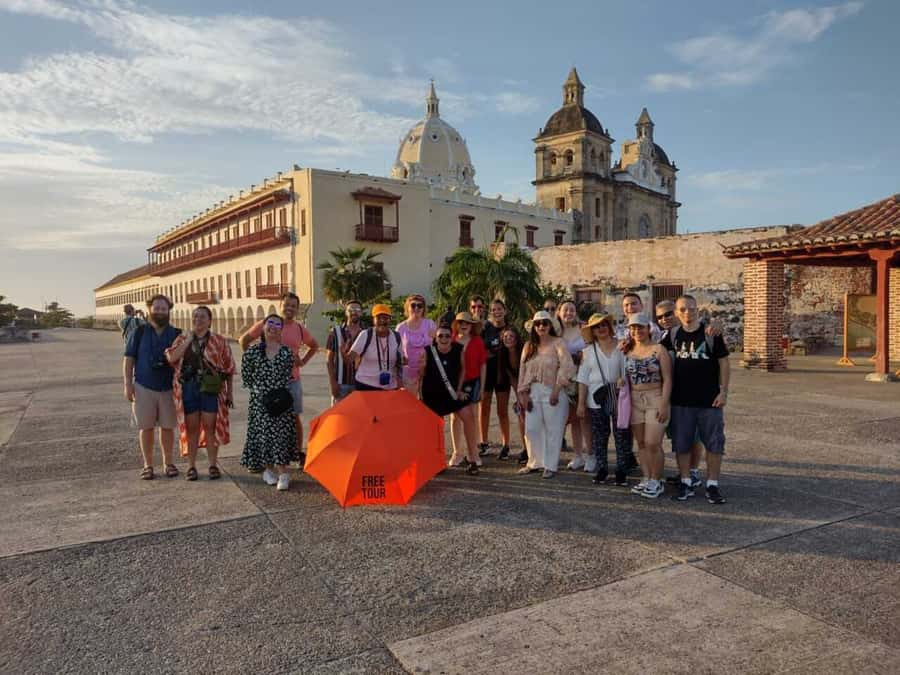
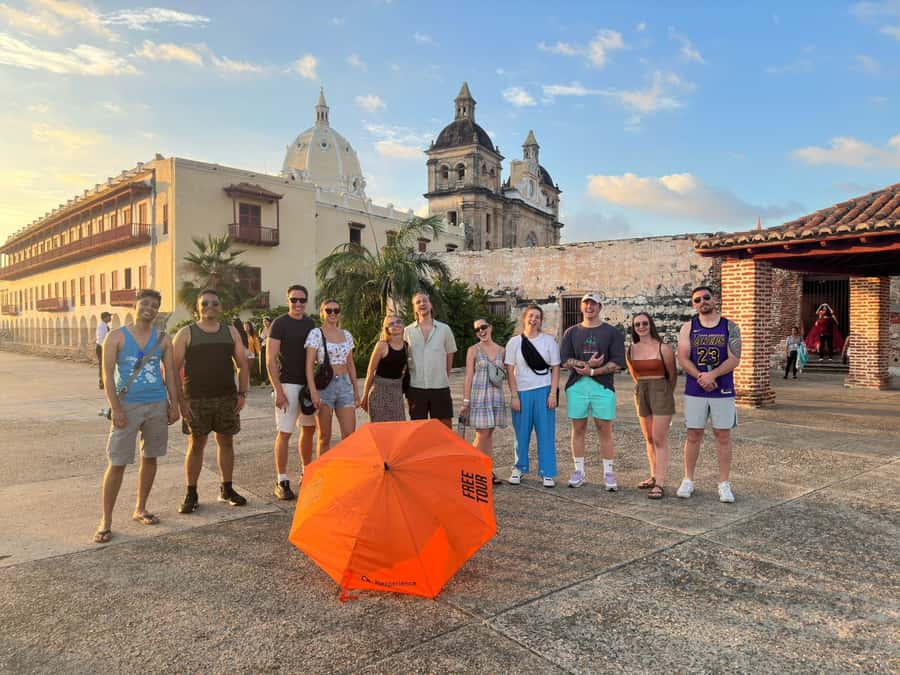
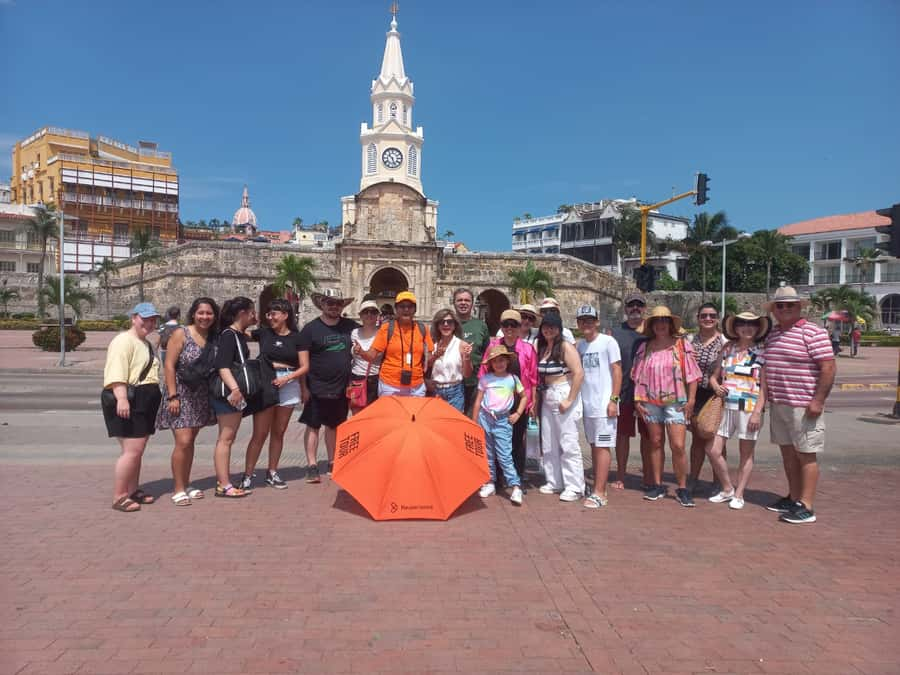
- Starts beneath the Clock Tower: Meet at Plaza Cervantes, also called Camellón de los Mártires, in front of the Clock Tower beneath the orange umbrella.
- Covers two very different districts: The route combines Cartagena’s Walled City with Getsemaní, giving you grand colonial buildings and a more local-feeling neighborhood in one walk.
- Explains slavery and African heritage: Stops around Plaza del Esclavo, Portal de los Dulces, and the old customs square connect Cartagena’s beauty with its painful past.
- Brings history into the present: Expect stories about Gabriel García Márquez, local customs, street art, champeta, salsa, and the changing social order.
- Includes shade and wildlife: Centennial Park offers a break from the sun and the chance to spot sloths, squirrels, and iguanas.
- Costs $12 with the tip already paid: That is strong value for a guided introduction, especially early in your stay.
Why this walk is a smart first look at Cartagena
Cartagena can feel confusing at first. The Walled City is compact, but every plaza has several names, every church carries layers of history, and the polished colonial streets sit beside stories of violence, trade, and forced labor. A guide helps you connect the pieces before you start exploring on your own.
This tour also avoids treating Cartagena as a postcard set. You will see handsome balconies, churches, bastions, and colorful streets, but you will also hear about indigenous communities, Spanish control, the transatlantic slave trade, African traditions, and independence. That balance gives the city more meaning.
The route lasts 150 minutes, with about two hours in the Historic Center and one hour in Getsemaní. That is long enough to cover the major sights without turning into a full-day commitment. I would schedule it near the beginning of your visit, then use the guide’s food and sightseeing suggestions for the rest of your stay.
Different guides lead the walk, and their styles vary. Dani and Daniela are especially associated with dancing and lively group interaction. Legacy brings humor and energy, while Robert is praised for useful restaurant advice and for finding shade. Álvaro David is known for clear historical explanations and practical information, and Ingrid, Liz, and Rebeca offer a more patient, culture-focused approach.
More Shared Tours in Cartagena
- Cartagena: Walled City and Getsemani Shared Walking Tour
★ 4.5 · 352 reviews - Gabriel Garcia Marquez Shared Tour: the magical Cartagena
★ 5.0 · 82 reviews - Shared Cartagena Old City Tour with Wireless Audio System
★ 4.4 · 28 reviews
From Plaza Cervantes to the Clock Tower
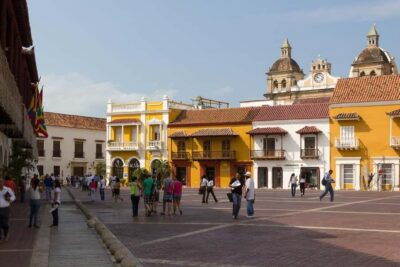
The meeting point is Plaza Cervantes, also known as Camellón de los Mártires, directly in front of the Clock Tower. Look for the orange umbrella. This is a useful landmark in a busy part of town, and arriving a little early should make the start less stressful.
The opening discussion covers the indigenous people who lived in the area before and during the arrival of the Spanish. That beginning matters because Cartagena’s story did not start with colonial buildings. It starts with the people and societies already here, then follows the changes brought by conquest.
The Clock Tower is called Cartagena’s Golden Key, and the group enters the Plaza del Ecuador, formerly connected with the Plaza del Esclavo. The names themselves point toward the city’s long role in the movement of people and goods.
From there, the route follows streets such as Porto Carrero and Candilejo. Pedro de Heredia, the city’s founder, appears in the story as the Spanish colonial chapter takes shape. You are not simply walking past old facades. You are learning how the city was organized and who held power.
Slavery, trade, and the Portal de los Dulces
The Portal de los Dulces is one of the more memorable stops because it links a familiar food arcade with the history of enslaved women and their descendants. Women played an important part in selling goods during the period of slavery, and that tradition continues in new forms today.
This is a good example of the tour’s approach. Cartagena’s cultural identity is not presented as a single Spanish inheritance. The guide connects Spanish customs with African and Caribbean traditions, including food, music, language, and social life.
The route then reaches the old Plaza de la Aduana, where merchandise was processed and sold, including enslaved people. The square is architecturally impressive, but its commercial past is difficult and important. The Municipal Hall and surrounding buildings help you see how government, trade, and colonial power shared the same public space.
I appreciate that this part is not rushed. Cartagena’s beautiful center can encourage quick photographs and quick opinions. Taking time to hear who benefited from its trade, and who paid the human cost, gives you a more honest way to read the city.
Museums, churches, and San Pedro Claver
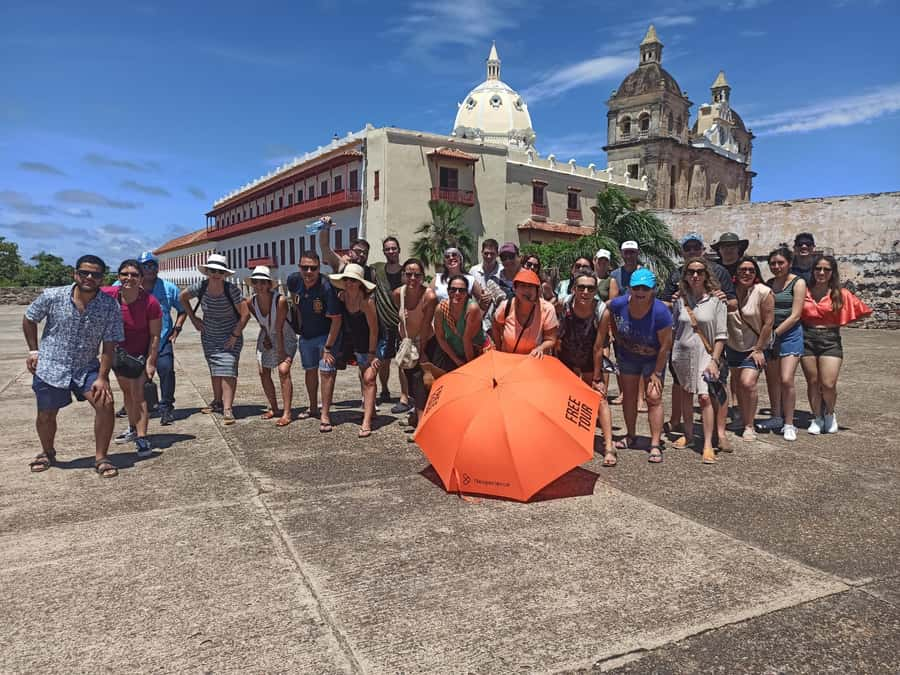
The walk passes several cultural sites, including the Museum of Modern Art, the Gold Museum, and the Emerald Museum. The route does not function as a detailed museum visit, so you should think of these as orientation points rather than full indoor tours.
The Museum of Modern Art focuses on Caribbean and Latin American art from the 1950s onward. The Gold Museum presents indigenous pieces from the Colombian Caribbean. The Emerald Museum explains the appeal of Colombian emeralds, which are famous for their color and quality.
These stops widen the story beyond conquest and forts. Indigenous craftsmanship, modern Caribbean art, and mineral wealth all form part of Cartagena’s identity. If one of these museums catches your interest, note it for a separate visit.
The Church and Museum-Monastery of San Pedro Claver bring the colonial religious story into view. San Pedro Claver is remembered as the Slave of the Slaves for his work with enslaved people. The complex is also the headquarters of human rights work, giving this historic site a connection to current concerns about dignity and justice.
You will hear about the building’s architecture and the religious order linked to it. The stop works best for people who want more than dates and names. It asks you to consider how faith, colonial power, resistance, and human rights overlap in one place.
More Walking Tours in Cartagena
- Walking Tour of Cartagena Including a Colombian Cup of Coffee
★ 5.0 · 30 reviews - Walking Tour Cartagena Old City with Gold Museum and Plaza de Bolivar
★ 4.5 · 28 reviews - San Felipe Castle and Getsemani Walking Tour with tickets
★ 4.3 · 27 reviews - Cartagena: Walled City Walking Tour
★ 4.4 · 26 reviews
Bastions, pirates, and Cartagena’s defensive walls
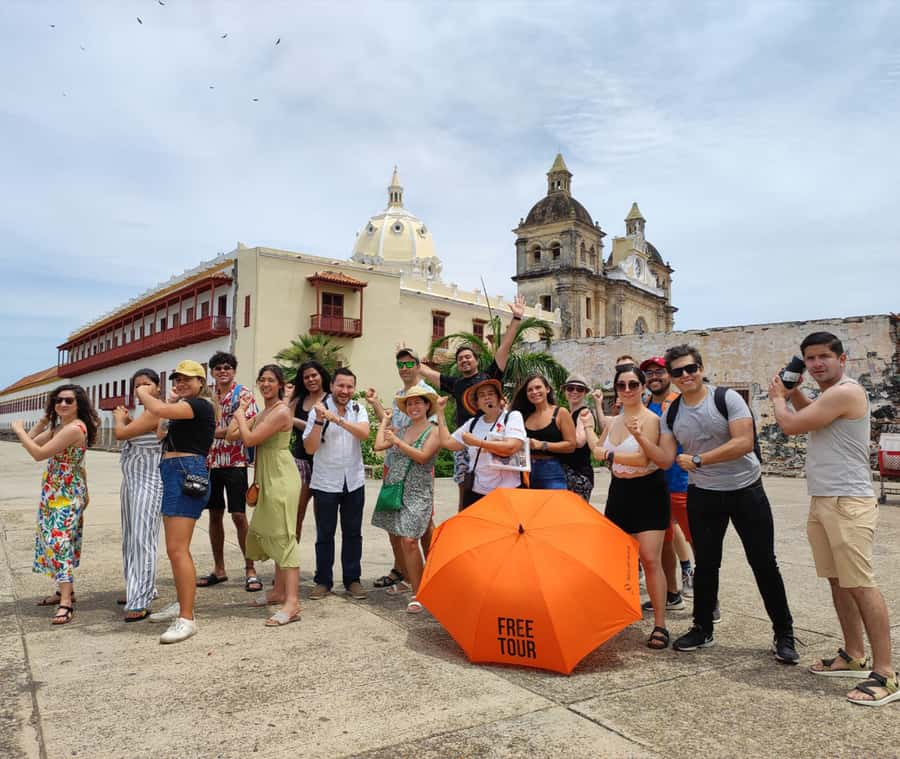
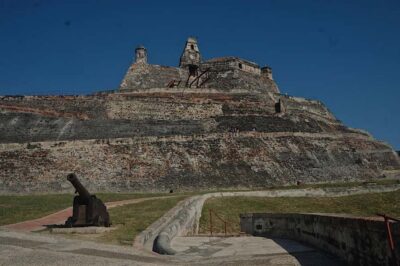
At the San Ignacio Bastion, the guide explains how Spanish military engineers defended the Bay of Souls from pirate attacks. Cartagena’s walls were not decorative. They protected a major port and the wealth passing through it.
This is where stories of pirates and corsairs meet practical military design. You will hear about Spanish defense strategies and see how the bastions fit into the wider system of walls, firing positions, and protected approaches.
The fortifications are one of the city’s defining sights, but a guide helps you understand why they were built where they were. You also get context for the repeated attacks that shaped Cartagena’s development.
The route continues to Plaza Bolívar, named for the independence leader Simón Bolívar. This is a natural place to pause and refresh. It also marks the shift from colonial rule toward independence, another major chapter in the city’s political story.
Do not expect a dedicated climb along the entire wall or a full military tour. The emphasis is on seeing key sections and understanding their purpose while moving through the center. If walking on the walls is a top priority, plan extra time separately.
Centennial Park and a cooler change of pace
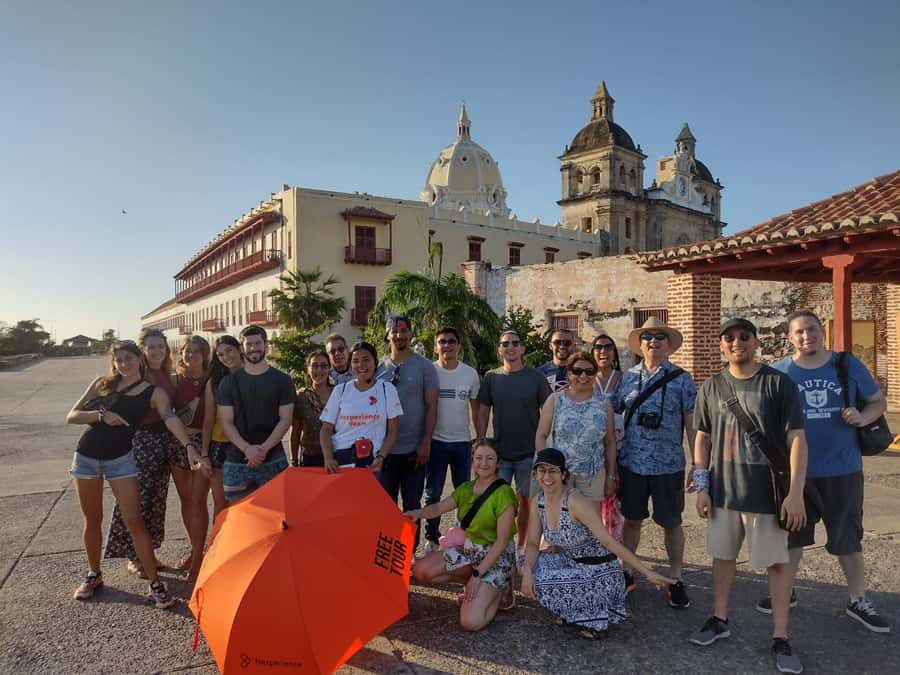
Centennial Park, the former railway station area, offers one of the tour’s most welcome changes of pace. The park is described as an important green space and a remnant of tropical dry forest within the city.
This is also where you might spot sloths, squirrels, and iguanas. Wildlife sightings are never guaranteed, but the park gives you a chance to look for them while standing under trees instead of in full sun. Several guides make a point of finding shade, which is especially helpful during a hot afternoon walk.
The park connects Cartagena’s transport history with its natural setting. It is easy to focus only on stone walls and colonial architecture, but the city also has living trees, animals, and public spaces that shape daily life.
If you are bringing a young child, this section may help keep the walk interesting. One family specifically noted that their guide checked on a two-year-old and made sure everyone was comfortable. Still, the total route is long for small children, especially in heat.
Getsemaní, umbrellas, graffiti, and street life
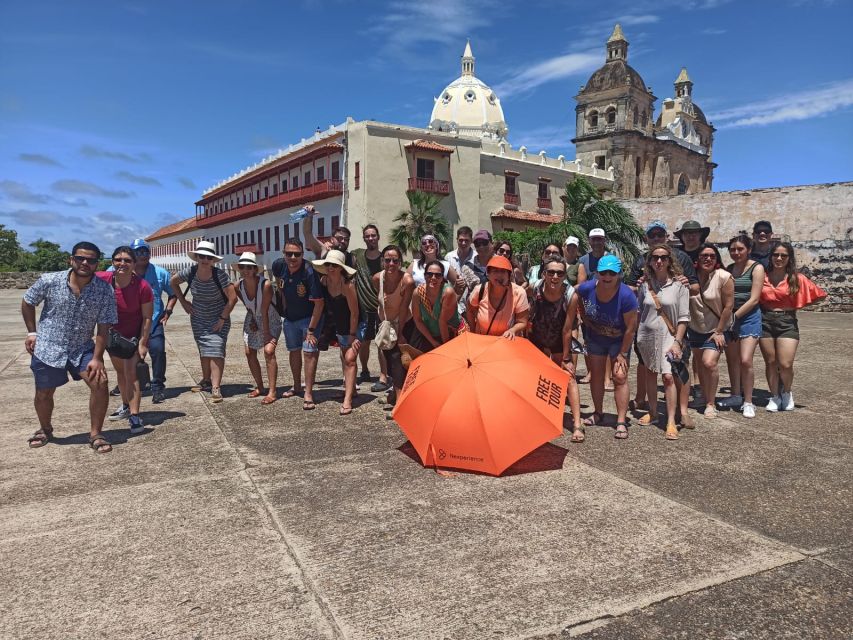
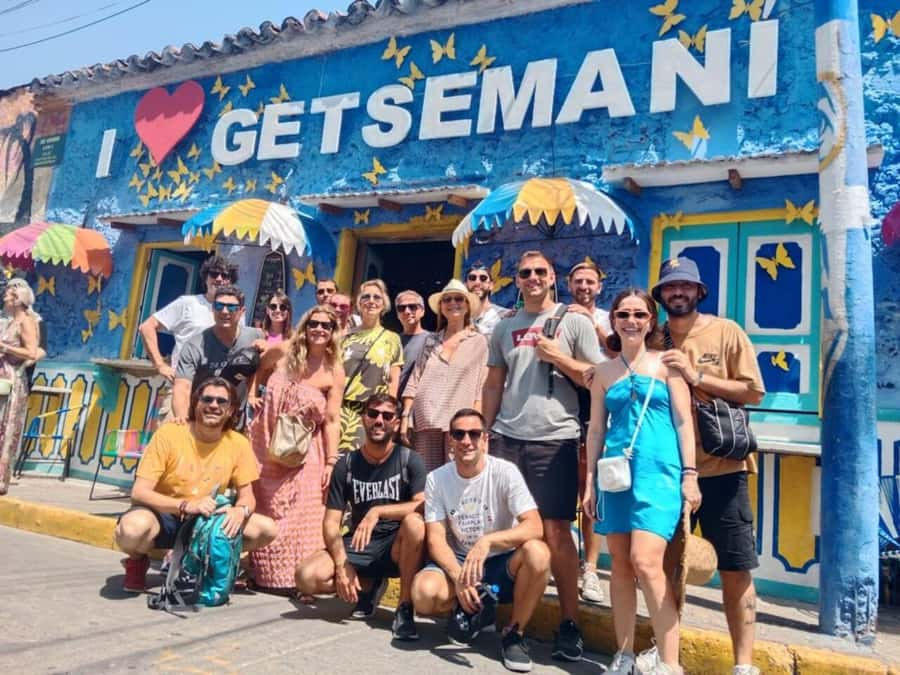
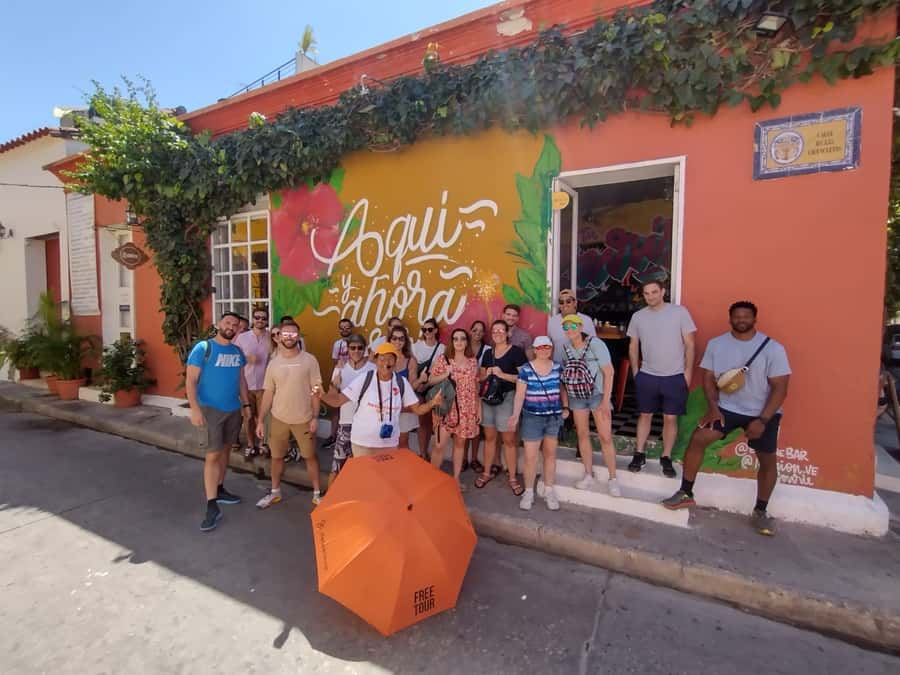
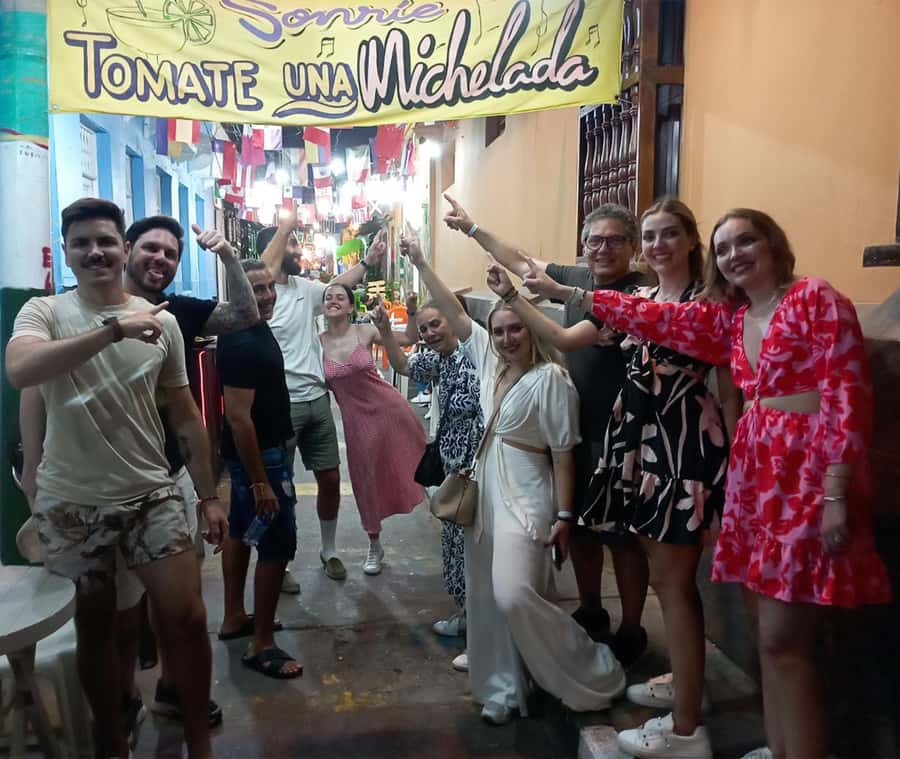
The final hour moves into Getsemaní, one of the most colorful and socially important parts of the route. Here you see umbrellas, graffiti, unusual architecture, and narrow lanes that feel different from the more formal Walled City.
Getsemaní adds the modern social story that a purely colonial tour might miss. The guide talks about local customs, the neighborhood’s changing identity, and the way Cartagena’s social order has developed. This is where the tour feels less like a monument circuit and more like a walk through a living district.
The colorful corridors are excellent for photographs, but the guide’s explanation matters more than the decoration. You learn why African and Caribbean influences remain visible in music, dance, hairstyles, food, and public life.
The final stretch follows Callejón Ancho toward Calle San Juan. The tour ends with salsa and African champeta. Some guides also teach simple dance steps along the way. Dani and Daniela are especially praised for getting groups moving, sometimes more than once during the walk.
You do not need to be a dancer. The point is to feel how music carries memory and identity in Cartagena. If you prefer a quiet, lecture-style tour, this interactive finish may feel like a lot. If you enjoy participation, it is a welcome change from standing still beside monuments.
What the $12 price really buys you
At $12 per person, this is an unusually inexpensive way to get a structured introduction to two major parts of Cartagena. The fee includes a professional guide, the Walled City route, Getsemaní, and the tip. You do not need to calculate a separate gratuity for the included guiding service.
The value is strongest if you use the tour as a starting point. You get the city’s main historical framework, learn which museums and churches deserve more time, and receive practical suggestions about restaurants, drinks, street food prices, and places to avoid paying too much.
The price does not include food, drinks, or hotel pickup and drop-off. You meet in the center and walk from there. Bring your own water and do not count on refreshments being supplied, even though some guides may share a small treat or offer local suggestions.
The shared format also means the guide must balance different interests. A history fan may want more detail, while someone else may be waiting for music and photographs. The strongest guides keep the group involved, answer questions, and adjust the pace. English and Spanish are available, but one English-language experience noted that a guide could speak quickly at times. If you need a slower pace, ask early.
Heat, rain, and practical comfort
Cartagena is hot, and this walk takes place outdoors. Wear light, comfortable clothes and good walking shoes. Sunscreen is essential, and a hat or other sun protection is sensible even though guides try to use shaded spots.
Bring water. The route is not physically extreme, but heat makes two and a half hours feel longer. One person found the late-afternoon timing lengthy and recommended carrying plenty of water. That is useful advice.
Rain can also affect the experience. One walk took place in wet conditions, making it less pleasant even though the guide performed well. Weather-appropriate clothing is listed as essential, so check the forecast and bring light rain protection if needed.
The activity is wheelchair accessible, but historic streets, plazas, and crowded areas can still make movement slower. The supplied information confirms accessibility, not the exact surface or route conditions at every stop, so contact the provider if you need detailed mobility advice.
Free cancellation is available up to 24 hours before the start, and you can reserve now and pay later. Those policies help if your Cartagena schedule may change.
Who should book this walk?
I would choose this tour if you are visiting Cartagena for the first time and want history, culture, and orientation in one outing. It suits couples, solo visitors, families with older children, and anyone who prefers learning a city on foot rather than from a vehicle.
It is especially good for people who want colonial sights explained alongside slavery, African heritage, independence, music, and current local life. The route gives you enough information to make later visits to museums, churches, restaurants, and Getsemaní more rewarding.
You may want something else if you dislike heat, group tours, audience participation, or long historical explanations. This is not a quiet photo walk, and the route does not include a meal or hotel transport.
Should you book the Cartagena walking tour?
Yes, if you want an affordable first orientation with real historical weight. The $12 cost is easy to justify for 150 minutes of guiding across the Walled City and Getsemaní, especially with the tip already included.
Book it early in your stay, bring water, and arrive ready to listen and participate. If you are choosing a guide time, a cooler period may help, but no schedule removes Cartagena’s heat. For a first look at the walls, churches, trade routes, music, and neighborhood life, this tour gives you a strong foundation.
FAQ
Where does the Cartagena walking tour begin?
It begins at Plaza Cervantes, also called Camellón de los Mártires, in front of the Clock Tower. Look for the orange umbrella.
How long does the activity last?
The full activity lasts 150 minutes, or two and a half hours. The Historic Center portion takes about two hours, followed by about one hour in Getsemaní.
What areas does the tour visit?
It visits Cartagena’s Historic Center inside the Walled City and the Getsemaní neighborhood.
What languages are available?
The tour is offered in English and Spanish with a live guide.
Is the tip included in the price?
Yes. The activity is described as a free walking tour where the tip is already paid as part of the booking.
What does the $12 price include?
It includes a professional tour guide, the Historic Center tour, the Getsemaní tour, and the tip.
Are food and drinks included?
No. Food and drinks are not included, so bring water and plan for your own refreshments.
Is hotel pickup included?
No. Hotel pickup and drop-off are not included. You meet the guide at Plaza Cervantes.
What should I bring?
Bring comfortable shoes, sunscreen, comfortable clothes, water, and clothing suited to the weather.
Is the tour wheelchair accessible?
Yes, the activity is listed as wheelchair accessible. If you need specific information about street surfaces or individual stops, check with the provider before booking.
More Historical Tours in Cartagena
- Visit Palenque with natives : history, culture and ancestral legacy
★ 5.0 · 53 reviews - Cartagena Instagrammable History
★ 4.5 · 29 reviews - Mangroves, cultural fishing, black heritage town and lunch
★ 4.5 · 29 reviews - Cartagena: History, Culture & Coffee Experience
★ 5.0 · 5 reviews
More Walled City and Getsemani Walks
- Cartagena: BILINGUAL CITYTOUR + SAN FELIPE CASTLE & Old city
★ 4.2 · 387 reviews - Cartagena: Walled City & Getsemani Private Tour
★ 4.8 · 107 reviews - Walled City, Getsemani San Felipe Castle Cartagena City Tour
★ 4.7 · 91 reviews - Cartagena: Walled City Kayak Tour
★ 4.4 · 25 reviews
Just added around Cartagena
- Exotic Yacht – Tour through the bay of Cartagena★ 3.7 · 4 reviews
- White Night Boat Party: Dinner Buffet, Dancing and Open Bar★ 4.6 · 3 reviews
- Volcan del Totumo + Playa + Piscina★ 4.7 · 4 reviews
- cartagena: Mucura and Santa Cruz Islands Tour spectacular★ 4.0 · 12 reviews
- Enjoy the totumo volcano from cartagena + snack★ 4.0 · 11 reviews
- 5 islands tour to rosario Islands with snorkeling activity!★ 4.5 · 36 reviews
- Romantic Date Night in the Bay of Cartagena★ 5.0 · 47 reviews
- Totumo volcano tour + snack★ 4.5 · 44 reviews
Walled City & Getsemaní Tours, compared.
BILINGUAL CITYTOUR + SAN FELIPE CASTLE & Old city
Read our review →
Walled City, Getsemani San Felipe Castle Cartagena City Tour
Read our review →
Shared Cartagena Old City Tour with Wireless Audio System
Read our review →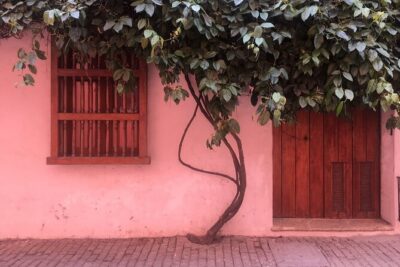
Walking Tour Cartagena Old City with Gold Museum and Plaza de Bolivar
Read our review →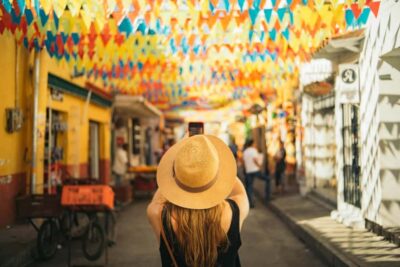
San Felipe Castle and Getsemani Walking Tour with tickets
Read our review →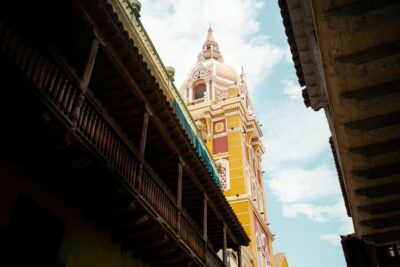
Browse the lists this tour appears in