
Reviewed · CITY TOURS
The “not polite to use his name” City Tour
Pablo Escobar’s story is easiest to understand when you see the places tied to it. This small-group tour links a former hideout, a prison built to his own specifications, a soccer field used for political ambition, and the cemetery where he is buried. I like the way it shows both the scale of Escobar’s influence and the damage he caused to Colombian life.
I especially like the memorial focus at Parque Memorial Inflexion and the chance to visit La Catedral, rather than spending the whole outing on gangster folklore. A possible drawback is the brisk schedule: four stops in three to four hours leave little time for lingering, and the subject matter can feel grim.
Key points at a glance
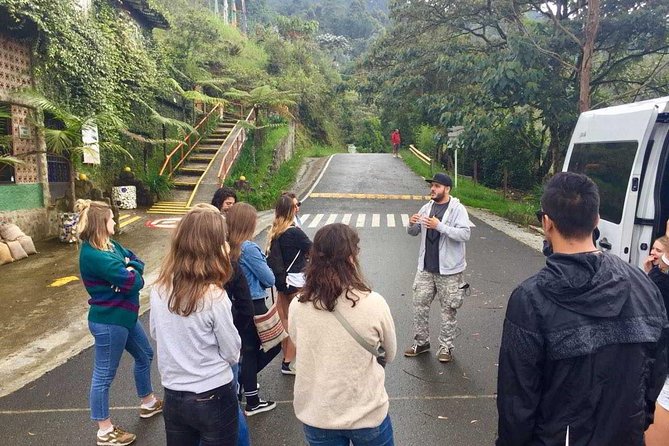
- Parque Memorial Inflexion: See how the site of Escobar’s former home was turned into a memorial for victims of Colombia’s drug war.
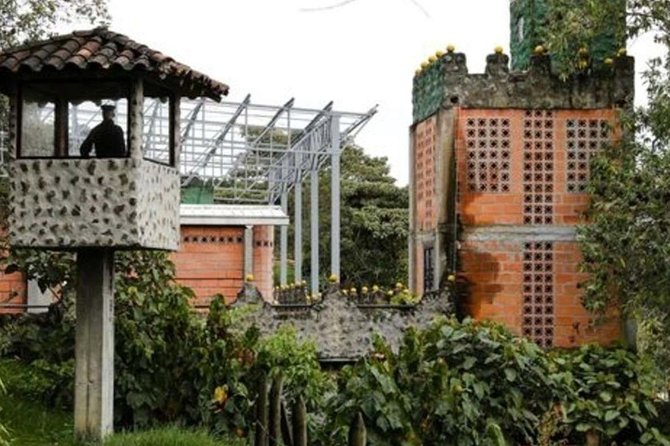
- La Catedral: Enter the prison Escobar built for himself under an agreement with the government.
- El Dorado soccer field: Visit a field built by Escobar, where he tried to build public support and enter Colombian politics.
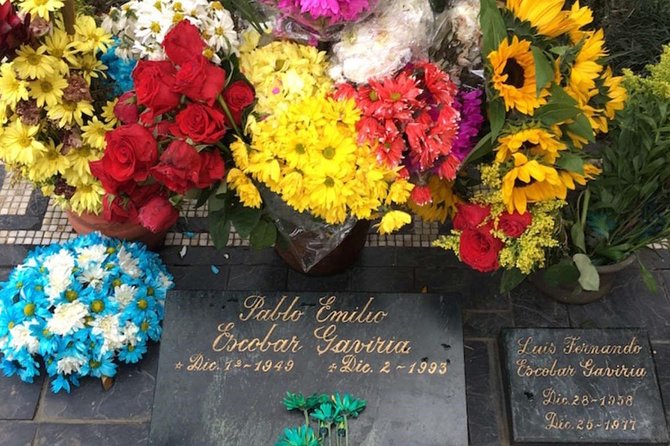
- Jardines Montesacro Cemetery: See Escobar’s grave, family tombs, and the graves of other gang members, including Griselda Blanco.
- Small-group format: The tour has a maximum of 10 people, with roundtrip transport from Lleras Park.
- Strong guide feedback: Daniel receives particular praise for his clear explanations, warmth, and willingness to answer difficult questions.
A difficult story told through four Medellín locations
This tour is not a simple sightseeing loop. It is a guided look at how money from the drug trade reached into housing, politics, sport, prisons, and public memory. That makes it more useful than a tour that only points out places connected to a famous criminal.
The experience runs about three to four hours. That is enough time to visit all four stops without turning the day into a full historical seminar. You will move by roundtrip transport from the meeting point at Cl. 9A #37-16 in El Poblado, near Lleras Park, and return there at the end.
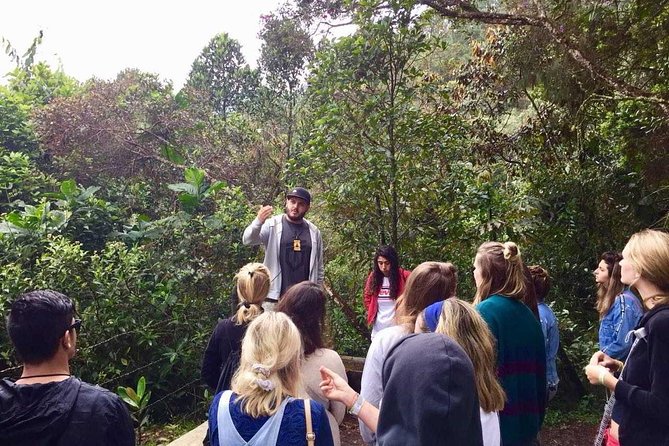
The group limit of 10 matters. At sites where the story is emotionally charged or the setting is compact, a small group makes it easier to hear the guide and ask questions. The tour is offered in English and Spanish. Daniel has been singled out for his passion, clear explanations, and friendly way of handling questions, including basic ones. If he is leading your departure, you can expect a guide who encourages conversation rather than delivering a stiff speech.
More City Tours in Medellin
- Medellín: Private City Tour with Metrocable and Comuna 13
★ 4.9 · 330 reviews - City Tour + Commune 13 Medellin
★ 4.5 · 295 reviews - Medellín City Tour and Comuna 13 Experience
★ 4.4 · 216 reviews
Parque Memorial Inflexion and the cost of remembering
The first stop, Parque Memorial Inflexion, takes about 20 minutes. It occupies the site of Escobar’s former home, a place connected to both secrecy and violence. His family was hidden there, and enemies arranged for bombs to be planted in an attempt to kill him.
The important part of this stop is what happened afterward. The site has been changed into a memorial park for victims of Colombia’s drug war. That shift gives the tour its moral center early on. You are not being asked to admire a powerful criminal’s former property. You are being shown how Medellín has tried to reshape a place associated with fear into a public space for remembrance.
Twenty minutes is a short visit, but that can work in your favor. You get the essential context without spending too long at one location. I would pay close attention to the guide’s explanation of the site’s transformation, since it helps frame the other stops. Without that context, La Catedral and the cemetery could seem like dark curiosities. With it, they become pieces of a much larger story about victims, public memory, and the long reach of organized crime.
There is no separate admission fee here. The stop is also a reminder that the tour is not built around expensive attractions. Its value comes from the guide’s interpretation and the connections between the sites.
La Catedral, the prison built for Escobar
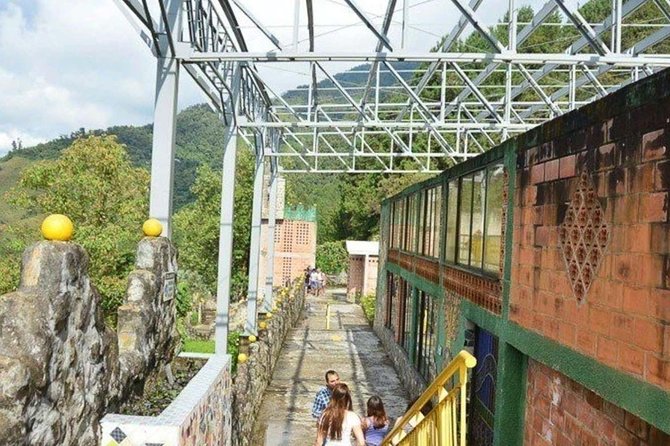
The second stop is Monasterio Santa Gertrudis La Magna, known in this story as La Catedral. You spend about 45 minutes here, making it the longest visit of the day. A new entrance fee is included in the tour price.
La Catedral was a jail Escobar built for himself as part of an agreement with the Colombian government. The arrangement allowed him to surrender while retaining an extraordinary degree of control. He later escaped, which turned the site into one of the clearest examples of how badly the agreement had failed.
The power of this stop comes from the contradiction. A prison is supposed to restrict movement and authority. La Catedral instead represented comfort, influence, and a blurred line between criminal power and official policy. Seeing the site makes that failure more concrete than hearing a brief account in a city-center lecture.
You have 45 minutes here, so expect the guide to focus on the major facts and their meaning rather than every detail. Ask questions if you want clarification. Daniel is praised for making complicated material easy to follow and for welcoming questions without making you feel foolish. That is useful here, where the facts can sound almost unbelievable.
The new entrance fee is included, which removes one common surprise from the day. Still, you should remember that this is not a polished museum visit with unlimited time. It is one part of a moving tour, and the experience depends heavily on the person explaining the place.
Cancha El Dorado and Escobar’s political ambitions
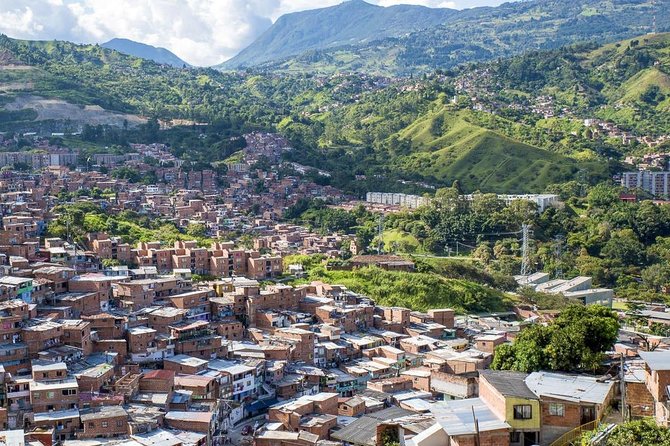
The third stop, Cancha El Dorado, lasts about 15 minutes. Escobar built this soccer field and used it as more than a place for sport. He gave speeches there while trying to make a foray into Colombian politics.
This is a short stop, but it adds an important layer to the story. Escobar’s influence did not rely only on violence or hidden money. He also tried to turn public generosity and local projects into political support. A soccer field could function as a community gift, a stage, and a way to present himself as a benefactor.
You should not expect a long walk or an extended visit here. Fifteen minutes is enough to see the field and understand its role, but not enough to explore every part of its design or political history. The stop works best as a connecting piece between the prison and cemetery. It shows how Escobar moved from private power to a public image.
The field is also described as having a visionary design. That detail is worth noting because it shows why the tour does not reduce the story to a list of crimes. Escobar could think on a grand scale and use bold projects to attract attention. Understanding that skill is part of understanding the danger. A person who could inspire loyalty and present himself as a community figure could also cause far-reaching harm.
A few more Medellin half-days worth weighing up
- Medellin: Comuna 13 Graffiti Tour, Cable Car & Street Food
★ 4.8 · 9,046 reviews - Medellín: The Real Pablo Escobar Tour
★ 4.8 · 3,205 reviews - Medellín: Comuna 13 True Story and Street Food Tour
★ 4.9 · 1,779 reviews - Medellín: Comuna 13 District Tour with Cable Car Ride
★ 4.8 · 1,467 reviews
Jardines Montesacro and the uncomfortable final stop
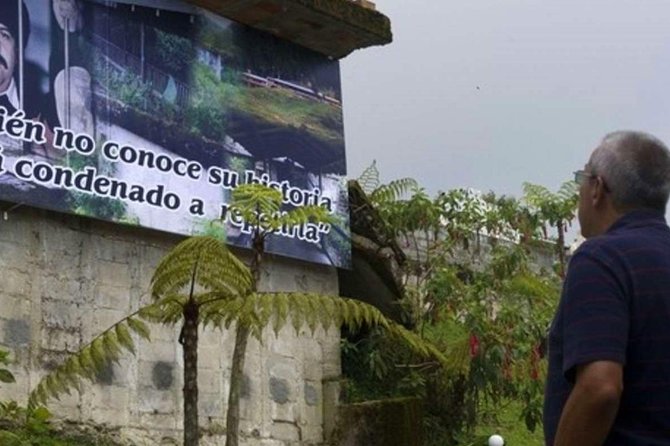
The final stop is Cementerio Jardines Montesacro, where Escobar is buried with family members and other people connected to his gang. The cemetery visit lasts about 30 minutes, and admission is included.
This is a natural ending because it brings the story back to personal consequences. You see where Escobar’s life ended, alongside the graves of relatives and fellow criminals. Griselda Blanco, another major figure in Colombia’s drug trade, is also buried there.
A cemetery visit can easily become sensational if handled poorly. Here, the stated purpose is different: you leave with a clearer understanding of Escobar’s negative effect on Colombia and on Colombian people. That distinction matters. The grave is not the point of the day by itself. It is a place to reflect on the human cost behind the money, buildings, weapons, and political theater.
You may find this stop more emotionally complicated than the earlier ones. The cemetery contains family graves as well as the graves of criminals. It is not a tidy ending with a simple moral label. Your guide’s job is to provide context without turning the site into a shrine.
Thirty minutes gives you time to understand why the cemetery is included, but not much room for a slow, private visit. Stay close to the group and listen for the explanation of who is buried there. The admission cost is included, so you do not need to arrange entry separately.
What the $44.99 price really covers
The tour costs $44.99 per person. For a three to four hour experience, that is a fair price when you count the roundtrip transport from Lleras Park, bilingual guide, cemetery admission, the new entrance fee at La Catedral, and insurance.
The strongest value is convenience. You do not need to work out how to reach four separate locations or decide how much time to spend at each one. The transport also keeps the schedule together, which matters when the day includes several stops outside a simple walking route.
The guide is the other major part of the value. These places do not explain themselves fully. A former home site, prison, soccer field, and cemetery can each be viewed in a few minutes, but the connection between them requires context. Daniel receives especially strong praise for his subject knowledge, realism, enthusiasm, and approachable manner. Those qualities matter more here than polished entertainment.
Personal expenses are not included. The supplied details do not specify food, drinks, or other extras, so plan to cover those yourself if needed. The basic tour price is clear, but you should still arrive prepared for your own incidental costs.
Timing, transport, and group size
The meeting point is at Cl. 9A #37-16 in El Poblado, Medellín, near Lleras Park. The activity returns to that same meeting point. This is helpful if you are staying in El Poblado and want a straightforward start and finish without arranging separate transport.
The exact outing lasts approximately three to four hours. The schedule is compact, with stop times of 20 minutes, 45 minutes, 15 minutes, and 30 minutes. Travel between sites fills the remaining time, so do not plan another fixed appointment immediately afterward.
The group can include no more than 10 people. That is small enough for direct contact with the guide and less awkward than a large coach group. It also means departures may depend on reaching a minimum number of participants. If the minimum is not met, you are offered another date or experience, or a full refund.
Confirmation arrives at booking. Service animals are allowed, the tour is near public transportation, and most people can participate. The supplied information does not identify special physical demands or a detailed accessibility plan, so contact the provider if you need specific assistance.
The experience requires good weather. If poor weather causes cancellation, you are offered a different date or a full refund. You can cancel for a full refund up to 24 hours before the start time. Cancellations or changes made inside that 24-hour window are not refunded or accepted.
Who will get the most from this experience
I would recommend this tour to you if you want a focused introduction to Medellín’s Escobar era and prefer places tied directly to the story. It suits people who value explanation over spectacle, especially those willing to think about victims and public memory rather than treating the subject as celebrity crime trivia.
It is also a good fit if you want a small group and bilingual service. The maximum of 10 people creates a better setting for questions, while English and Spanish options make the history easier to follow.
You may want to skip it if you are uncomfortable visiting criminal memorial sites, graves, or places linked to violence. The subject is not light, and the tour does not turn it into a cheerful afternoon attraction. The short stop times may also frustrate you if you prefer to explore each location at your own pace.
This is not the right choice if you want a broad tour of Medellín’s museums, neighborhoods, food, or modern culture. It focuses closely on four places and one difficult chapter. That narrow focus is its strength, but it also defines the limits of the experience.
Should you book the Escobar city tour?
Book it if you want a well-organized, small-group look at how Escobar’s power reached far beyond the drug trade. The memorial park, La Catedral, soccer field, and cemetery each reveal a different side of the story, and the included transport and admissions make the $44.99 price reasonable.
The best reason to choose it is the guide-led context, especially if Daniel is leading your group. The main caution is that the schedule moves quickly and the topic can be heavy. Go with an open mind, listen for the effect on Colombian people, and treat the cemetery and memorial sites with respect. Done that way, the tour offers a more honest understanding of Medellín than a simple collection of notorious names and dramatic anecdotes.
FAQ
How long does the tour take?
The tour lasts approximately three to four hours, including visits to four locations and transportation between them.
Where does the tour start and end?
It starts at Cl. 9A #37-16 in El Poblado, near Lleras Park, and returns to the same meeting point.
What is included in the price?
The $44.99 price includes roundtrip transportation from Lleras Park, a bilingual English and Spanish-speaking guide, entrance to the cemetery, the new entrance fee for La Catedral, and insurance.
How many people can join the tour?
The activity has a maximum group size of 10 people.
Is the tour available in English?
Yes. The guide service is provided in English and Spanish.
Can I cancel for a full refund?
Yes. You can cancel at least 24 hours before the start time for a full refund. Cancellations or changes made less than 24 hours before the start time are not accepted, and the amount paid is not refunded.
Just added around Medellin
- Commune 13, Graffitour street food. History.All inclusive★ 5.0 · 35 reviews
- City tour, Commune 13, Metro Cable, Botero Park and more. Private★ 5.0 · 34 reviews
- Aerial Hammocks, Zip and Waterfall Trek on Medellin Private Tour★ 5.0 · 39 reviews
- Walking tour downtown Medellín★ 5.0 · 39 reviews
- Hiking Mountains and Magical Forests★ 5.0 · 27 reviews
- Barrio transformation and urban escalator of Comuna 13★ 5.0 · 47 reviews
- Tour to the Hacienda Nápoles Theme Park★ 4.0 · 22 reviews
- Tour Cabalgata★ 5.0 · 37 reviews
City Tours, compared.
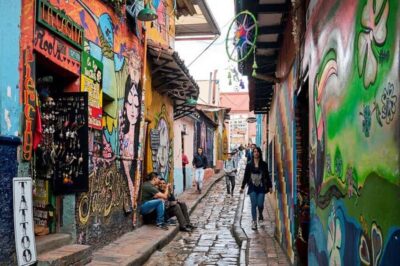
Private City Tour, Monserrate, Emerald and Botero
Read our review →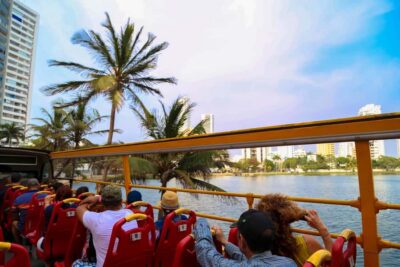
City Sightseeing Hop-On Hop-Off Bus Tour & Extras
Read our review →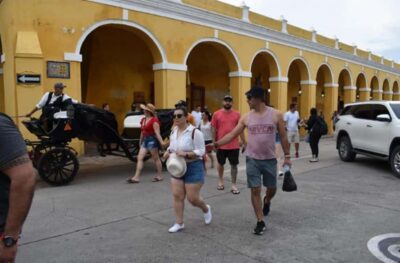
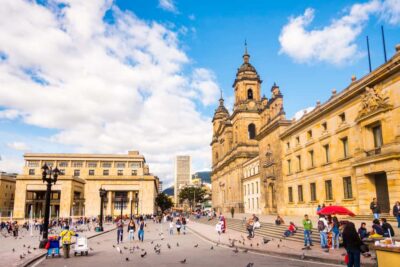
Bogotá City Tour with Monserrate, Gold and Botero Museums
Read our review →
BILINGUAL CITYTOUR + SAN FELIPE CASTLE & Old city
Read our review →
Private City Tour with Metrocable and Comuna 13
Read our review →Browse the lists this tour appears in