
Reviewed · MUSEUMS
Guided Visit to Botero Museum in Bogota
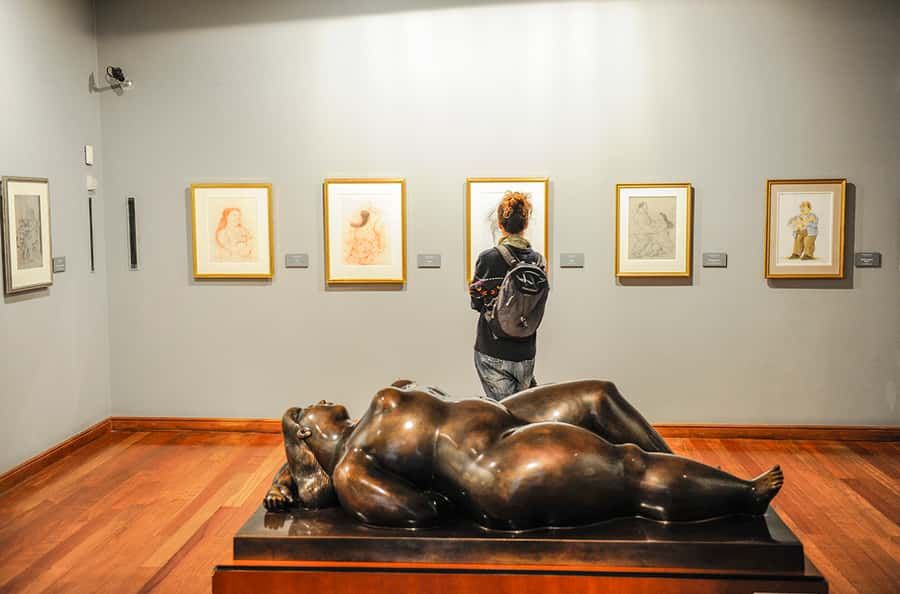
Fernando Botero’s famous figures look plump at first glance, but the museum gives you time to see the sharper ideas beneath the rounded forms. This private visit brings you face to face with 123 Botero works, then adds paintings and sculptures from his own collection by major names such as Monet, Picasso, Renoir, and Dalí.
I like the private guide, especially because the visit is meant to explain Botero’s humor, political criticism, and unusual style rather than simply point at pictures. I also like the hotel pickup, which saves you from sorting out transport before a morning museum visit. The main consideration is time: two hours is enough for a focused tour, but not enough to study every one of the museum’s 208 pieces at leisure.
Key points
- 123 Botero artworks: See the Colombian artist’s rounded figures, still lifes, sculptures, and works with social or political meaning.
- 85 works from Botero’s collection: Look for international art by Monet, Renoir, Degas, Pissarro, Picasso, Dalí, Miró, Chagall, Klimt, and others.
- Private two-hour visit: Ask questions and set the pace more easily than in a large group.
- Hotel pickup included: Private transport takes you from your hotel to the museum.
- English or Spanish guide: A guide such as Gigio can explain the art and museum background in your chosen language.
- Closed Tuesdays: Check the day before booking, since the museum does not open on Tuesdays.
Why Botero’s Round Figures Deserve a Closer Look
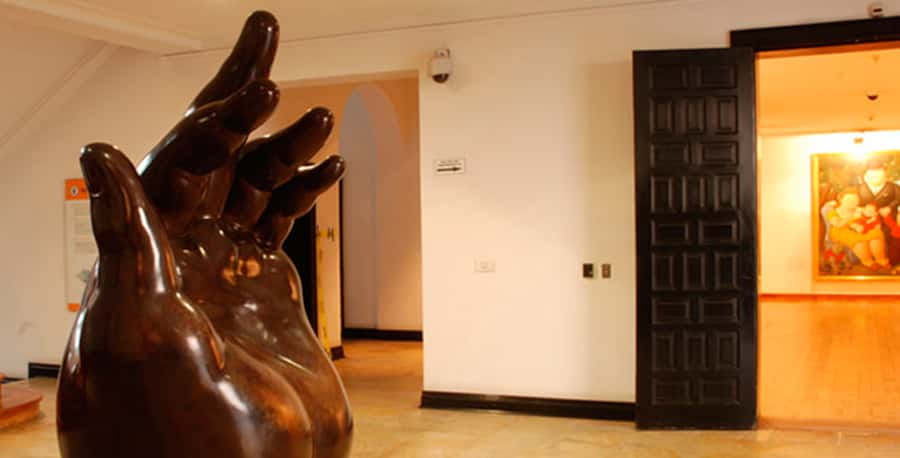
The first thing to know is that Botero was not simply trying to draw fat people. His enlarged bodies and objects are part of a personal visual language, often called Boterismo. A swollen hand, oversized fruit bowl, or broad-faced soldier can alter the mood of an entire scene.
That distortion gives his work an immediate comic quality, but the joke may not be the whole point. Botero used familiar figures and objects to look at power, class, violence, religion, daily life, and Colombian identity. A guide can help you notice how a seemingly cheerful painting may carry a dry criticism underneath.
This is where a private visit earns its keep. You can ask why a certain figure has been enlarged, what a symbol refers to, or how Botero’s style changed over time. Without that context, you might spend the whole visit admiring the unusual shapes without catching the quiet humor and political edge.
Botero was born in Medellín and became Colombia’s most acclaimed artist. He first exhibited his work in 1948 and gained national recognition in 1958 after winning an award at the Salón de Artistas Colombianos. From 1966 to 1975, he divided his time among Europe, New York, and Colombia, building the international reputation that later allowed him to create a collection of major European and American art.
More Guided Tours in Bogota
- Bogotá: Guided La Candelaria Walking Tour
★ 4.8 · 1,229 reviews - Bogotá: La Candelaria Graffiti & Urban Art Guided Tour
★ 4.7 · 250 reviews - From Bogota: La Chorrera Waterfall Guided Hike
★ 4.9 · 46 reviews
Arriving From Your Hotel at 10:00
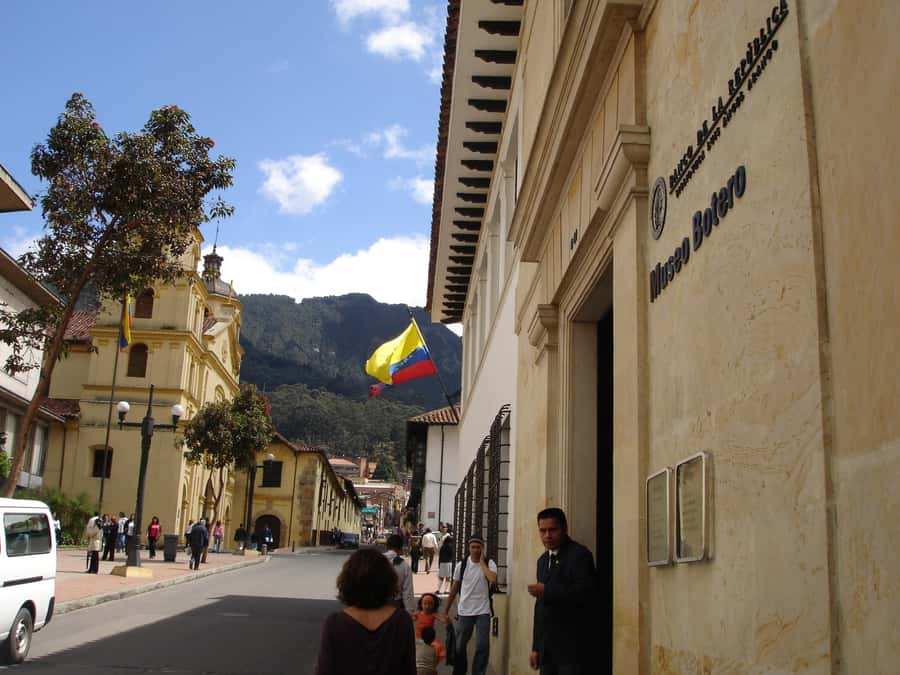
The morning plan is straightforward. Pickup is arranged at your hotel, with private transport to the museum. The listed pickup time is 10:00 in the morning, though you should check availability for the exact start time when booking.
This arrangement matters in Bogotá. You do not have to begin the day by finding the museum on your own, and the private ride gives you a clean transition from your hotel to the cultural center of the city. Transport is included from the hotel to the museum, but the provided details do not state that a return ride is included. Ask about your return plans before setting off.
Your group is private, so the visit is not built around keeping up with strangers. That gives you more freedom to stop at a painting, ask for an explanation, or move along when a work does not hold your attention. It also makes the tour a good fit for couples, families, or small groups with different levels of interest in art.
The guide can conduct the visit in English or Spanish. Gigio is specifically associated with a friendly, informative museum service, along with the driver. Still, guide assignments can vary, so treat Gigio as a possible guide rather than a guarantee when you book.
Entering the Botero Museum
The museum began with Botero’s donation to the Banco de la República, Colombia’s central bank. In 2000, he gave the institution a large collection that combined his own work with pieces from his private collection.
The gift contains 208 artworks in all. Of these, 123 are by Botero and 85 are by international artists. That combination makes the museum more than a single-artist display. You get to see the work that made Botero famous, then place it beside the art that influenced his eye and that he chose to live with.
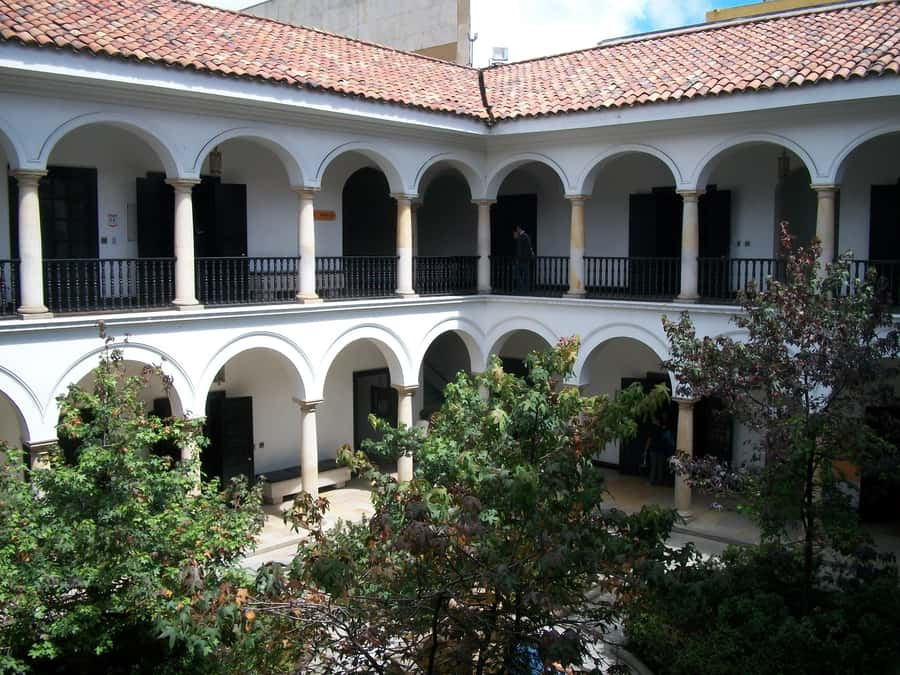
The museum itself is also part of the visit. Your guide explains its history and architecture, so pay attention to the building rather than rushing straight from one picture to the next. The setting helps show how a national institution presents a Colombian artist alongside major names from Europe and the United States.
The two-hour schedule is best treated as a guided introduction. You will not have unlimited time for every room, every label, and every artist. If you already know Botero’s work, the guide can help you focus on the pieces with the strongest stories. If you are new to him, the tour gives you a useful framework before you explore more art elsewhere in Bogotá.
Seeing the 123 Botero Works
The main attraction is Botero’s own art. His familiar figures are easy to recognize, but the collection lets you see how consistently he applied his style across different subjects.
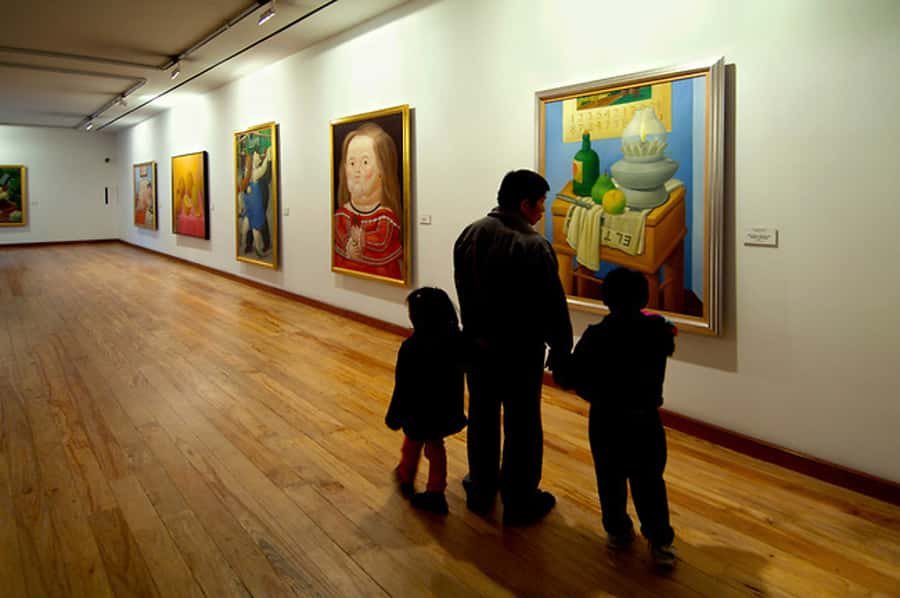
Look closely at the way ordinary objects change under his hand. A still life can feel weighty and almost theatrical. A person can appear calm, solemn, vain, comic, or quietly threatening, depending on the pose and setting. The large forms are not a lack of detail. They direct your attention toward volume, color, expression, and arrangement.
Botero’s humor is often gentle on the surface. His characters may have small smiles, formal clothing, or exaggerated proportions. Yet he also used art for criticism. Your guide can help separate a playful image from one that comments on authority, social roles, or violence.
A private guide is especially useful here because Botero’s work can divide opinion. Some people find the style funny and accessible at once. Others see only the repeated rounded bodies. The best response is to ask what changes from painting to painting. The subject, pose, setting, and tone matter as much as the body shape.
Do not assume that the most famous-looking piece is the only one worth your time. Let the guide show you less obvious works that explain Botero’s development. The artist exhibited publicly from 1948 onward, and his work changed as he moved between Colombia, Europe, and New York.
More Museum Tours in Bogota
- Bogotá City Tour with Monserrate, Gold and Botero Museums
★ 4.9 · 584 reviews - Bogotá: City Tour, Monserrate, Gold Museum, Plaza de Bolivar
★ 4.7 · 168 reviews - BOGOTA: City Tour, Monserrate, Gold Museum, Botero Museum, Plaza Bolívar
★ 4.8 · 146 reviews - La Candelaria Private Tour Bogotá + Local Lunch + 2 Museums (6 Hrs.)
★ 5.0 · 41 reviews
From Monet and Renoir to Picasso and Dalí
The second half of the collection gives you a useful surprise. Botero’s private collection includes 14 Impressionist paintings, including oils by Claude Monet, Pierre-Auguste Renoir, Edgar Degas, and Camille Pissarro.
There are also four Picassos, along with works by Salvador Dalí, Joan Miró, Marc Chagall, Max Ernst, Willem de Kooning, Gustav Klimt, Robert Rauschenberg, Alberto Giacometti, and Alexander Calder. The selection crosses painting, sculpture, modern art, and different national traditions.
You may not see every artist in detail during a two-hour visit. That is one of the tradeoffs of combining a Botero museum with an international collection. Still, the range makes the trip more rewarding than a quick look at one recognizable style.
I would use this part of the tour to ask a simple question: what did Botero admire in these artists? The answer may not be obvious from a label. His collection shows that his own art did not develop in isolation. He was paying attention to European masters and modern artists while shaping a style that became strongly identified with Colombia.
This section also helps you avoid a common mistake: treating Botero as a novelty act. Seeing his works beside Monet, Picasso, Klimt, Giacometti, or Calder places him in a wider conversation about form, color, distortion, and modern art.
The Museum’s Story Beyond the Galleries
The tour also carries a national story. Botero’s donation was described at the time as one of the greatest gifts a Colombian had given his country. The collection became a public institution rather than remaining in a private home or a distant international museum.
That decision matters when you consider the museum’s role in Bogotá. You are not simply viewing a selection of expensive art. You are seeing how a Colombian artist made his own work and his personal collection available to the public.
Botero’s relationship with Colombia also includes a difficult episode involving one of his sculptures. In 1995, a guerrilla group destroyed The Bird, a dove sculpture he had donated to Medellín. The explosion took place during a downtown street festival, and the group called Botero a symbol of oppression.
Botero cast a new dove for the plaza but insisted that the remains of the original sculpture stay in place. Together, the old and new works could represent violence and peace. This detail gives useful context to the political side of his art. His work is not only about soft shapes and comic figures. It also reflects Colombia’s conflicts and the ways art can hold painful public memory.
The destroyed sculpture is not presented as part of the museum visit in the information provided, so do not expect to see it during this tour. Its story is still worth knowing because it changes how you understand Botero’s public role.
How the Two-Hour Pace Works
Two hours is a sensible length for a first visit. It is long enough for a guide to explain Botero’s style, discuss the museum’s beginnings, and introduce several artists from the international collection. It is short enough that the tour should not become tiring for people who are only moderately interested in art.
The pace will probably feel relaxed rather than hurried. One booking note described the experience as leisurely, informative, and pleasurable, which fits the private format and the modest length. You can spend more time on the works that catch your eye instead of waiting while a large group gathers.
Still, you should set your expectations correctly. The collection has 208 pieces, and a two-hour visit cannot give every work equal attention. If you want to read every wall label or make a detailed study of the Impressionist paintings, plan additional museum time only if that is allowed by the day’s arrangements. The tour itself is designed as a guided visit, not an all-day art course.
After the museum portion, you have time to visit the souvenir shop. This is a small but useful finish if you want a gift connected to Botero or Bogotá. Souvenirs are personal expenses, and the tour does not include meals or drinks, so budget separately for anything you buy after the visit.
Is the $46 Price Fair?
At $46 per person, the cost covers the entrance fee, private transport from your hotel to the museum, and an expert guide in English or Spanish. The value depends on how much those services would help you.
For a solo visitor, the price may feel high compared with simply entering a museum independently. You are paying for convenience and interpretation, not just admission. The hotel pickup also removes a small but real transport problem, especially if you are unfamiliar with Bogotá.
For two or more people, the private format becomes easier to justify. You share the guide and transport within your own group, while still getting the chance to ask questions. The tour is particularly useful if you want to understand Botero rather than just take a quick look at his most recognizable figures.
The price is less appealing if you prefer to browse at your own pace, spend several hours with the full collection, or already know a great deal about Colombian art. In that case, the two-hour guided structure may feel limiting.
The strongest value comes from the combination of the two collections. You are not paying only to see 123 Botero works. You also receive an introduction to 85 international pieces, including Impressionist paintings and works by Picasso, Dalí, Miró, Chagall, Klimt, and Calder.
Who Will Enjoy This Visit Most?
I would choose this tour if you are visiting Bogotá for a short time and want one organized art experience without giving up an entire day. It is also a good match if you are curious about Colombian culture but do not usually spend hours in museums.
Families may appreciate the clear visual style and private setting. Botero’s figures offer an easy way into art, while the guide can add more serious context for adults. Couples and small groups can set a more comfortable pace than they might in a large public tour.
Art lovers should book it if Botero is a priority or if you want to see the artist’s personal connections to international modern art. If your main goal is a full, slow study of every piece, use the tour as an introduction and ask how much free viewing time is possible afterward.
The museum is closed on Tuesdays, so do not build your schedule around a Tuesday visit. Cancellation is free up to 24 hours in advance, and the reserve-now, pay-later option gives you some flexibility while your Bogotá plans are still changing.
Should You Book the Botero Museum Visit?
Book this experience if you want clear interpretation, private transport, and a focused look at both Botero and his personal art collection. The guide and driver service has been friendly and informative, and the leisurely pace suits a first visit.
Skip it if you would rather pay only for admission and wander alone. The $46 price is not the cheapest way into the museum, but it is reasonable for a private two-hour visit with hotel pickup and bilingual guiding. For most first-time visitors who want the stories behind the rounded figures, this is a practical and worthwhile choice.
FAQ
How long does the Botero Museum visit last?
The guided visit lasts two hours.
How many Botero artworks can I see?
The museum’s collection includes 123 works by Fernando Botero.
How many total artworks are in the collection?
The full collection contains 208 pieces, including 123 by Botero and 85 works from his private collection.
Which languages are available for the guide?
The guide is available in English or Spanish.
Is hotel pickup included?
Private transport from your hotel to the museum is included. Pickup service is listed as an option, so confirm the arrangement when booking.
Is the museum open on Tuesdays?
No. The Botero Museum is closed on Tuesdays.
Are entrance fees included?
Yes. Entrance fees are included in the tour price.
Can I cancel for a full refund?
Yes. You can cancel up to 24 hours in advance for a full refund.
Just added around Bogota
- Zipaquirá: Private tour to the Salt Cathedral, Colombia’s first wonder★ 4.9 · 33 reviews
- Zipaquira: 5 hrs Salt Cathedral Tour★ 4.4 · 9 reviews
- Wonders of Salt: Colombia’s Underground Cathedral★ 5.0 · 18 reviews
- Zipaquirá Salt Cathedral & Andrés Carne de Res (Chía)★ 4.6 · 30 reviews
- Zipaquirá: Private Salt Cathedral Mine and Walking Tour★ 4.8 · 3 reviews
- Villa de Leyva Trip by Private Transportation★ 4.8 · 27 reviews
- Wonderful tour of Villa de Leyva, and Zipaquira Salt Cathedral.★ 4.5 · 34 reviews
- MINA CATEDRAL DE SAL ZIPAQUIRA Tour Privado★ 4.5 · 38 reviews
Museums, compared.
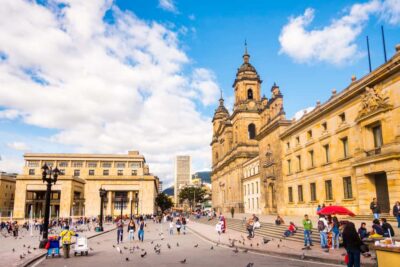
Bogotá City Tour with Monserrate, Gold and Botero Museums
Read our review →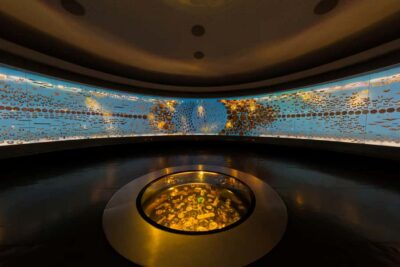
City Tour, Monserrate, Gold Museum, Plaza de Bolivar
Read our review →
City Tour, Monserrate, Gold Museum, Botero Museum, Plaza Bolívar
Read our review →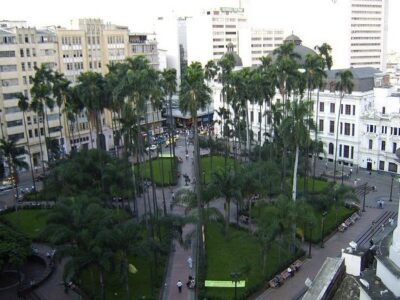
Cristo Rey, Tertulia Museum and Downtown Cali City Tour
Read our review →
La Candelaria Private Tour Bogotá + Local Lunch + 2 Museums (6 Hrs.)
Read our review →
Gran Malecón, Carnaval Museum and Downtown Barranquilla City Tour 6H
Read our review →
Walking Tour Cartagena Old City with Gold Museum and Plaza de Bolivar
Read our review →Browse the lists this tour appears in