
Reviewed · CYCLING TOURS
Medellín: History & Local Life Essentials Tour on an E-Bike
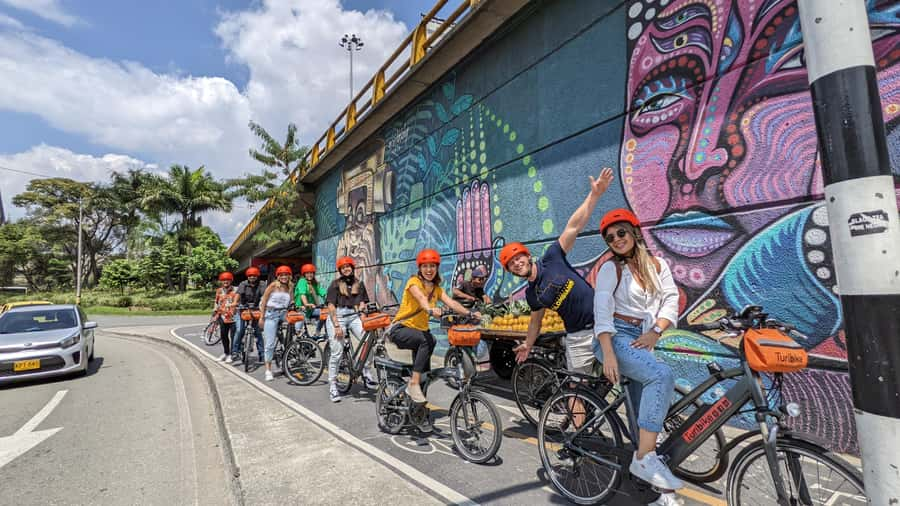
Medellín reveals itself quickly from an e-bike. In 210 minutes, you move from the modern art district to Botero’s giant bronze figures, pass under the metro, and finish beside the river. The route gives you a fast, useful first look at the city, not just a ride through one polished neighborhood.
I especially like two things here: local guides connect public places to ordinary people, and the electric bikes let you cover a lot without arriving worn out. The main caution is traffic and crowding. Some crossings are busy, cycle paths can fill with pedestrians, and one large group found the ride less enjoyable when it reached 15 people.
Key points at a glance
- Ciudad del Río sets up Medellín’s modern side, with the Museum of Modern Art and a clear look at how art and city planning meet.
- Botero Plaza and San Antonio Park add emotional weight, including sculptures shaped by Medellín’s painful past.
- The e-bikes are beginner-friendly, with guides taking time to explain the controls and help riders settle in.
- The tour covers old and new Medellín in one morning, from Perpetuo Socorro’s creative projects to the river parks.
- Dayana, Dani, Toto, Andrés, and other local guides bring strong personal energy, mixing history with stories about residents and neighborhoods.
- At $48, the tour is best value on your first day, when covering several districts helps you understand the city’s shape.
Why an e-bike is a smart way to meet Medellín
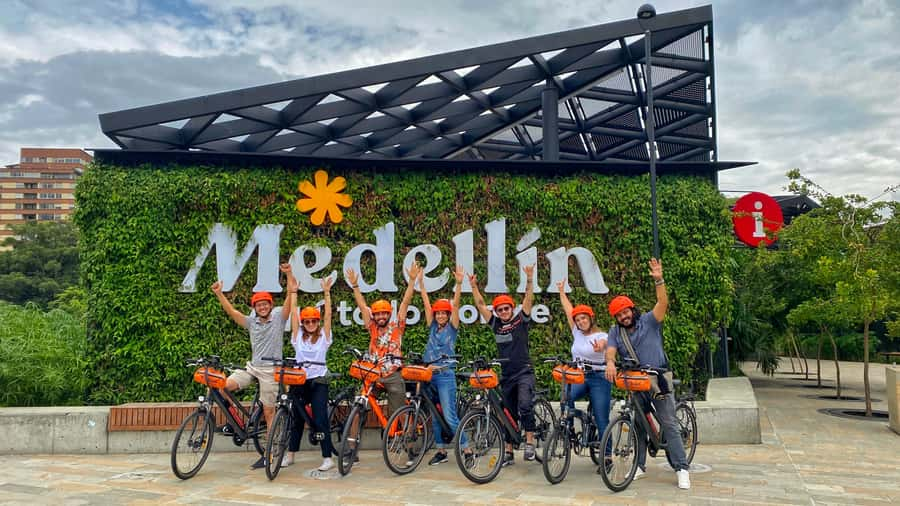
Medellín is spread through a long valley, with steep comunas climbing the surrounding hills and a busy center below. This tour does not take you up those hills, but it does connect several important parts of the city in a single outing.
That matters because Medellín can feel like several cities at once. You see museums, public squares, transport infrastructure, murals, office districts, street vendors, and landscaped riverfront spaces within a few hours. An ordinary walking tour would cover less ground, while a vehicle can leave you feeling separated from the street.
The electric assistance is useful even though much of this route is fairly flat. You still pedal, but the motor makes the ride easier and keeps the pace comfortable for people who are not regular cyclists. Beginners have been given time to learn the bikes, and guides such as Diana and Toto are praised for riding carefully and keeping the group together.
You need to know how to ride a bicycle, though. The tour is not suitable for wheelchair users, pregnant women, children under 140 centimeters, or anyone who cannot ride. Wear closed, comfortable shoes. Sandals and flip-flops are not allowed.
More Bike Tours in Medellin
- Medellín: E-bike and Foodie Tour
★ 4.8 · 102 reviews - Colombia cycling trip
★ 5.0 · 63 reviews - E-Bike City Tour Medellin with Local beer and Snacks
★ 4.9 · 55 reviews
Starting at Ciudad del Río and the Creative District
The meeting point is NOI coworking on Calle 17 # 43F-287, about a 10-minute walk from Poblado metro station. From Parque Lleras, allow about 10 minutes by car, depending on traffic.
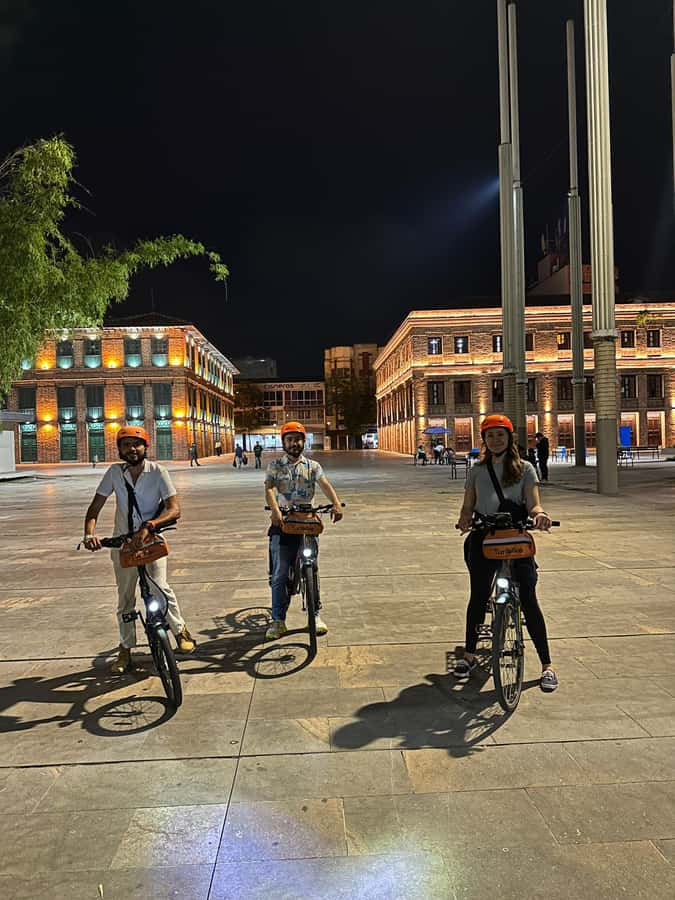
Ciudad del Río is a fitting starting point. The Museum of Modern Art has a strong brutalist form, and its concrete geometry gives you an early lesson in how Medellín uses architecture to express a complicated city. From here, the tour introduces the contrast between hard urban structures and the steep geography around them.
You may also pass through the Creative District, an area linked with murals, design, new businesses, and projects aimed at Medellín’s future. This is one of the tour’s better transitions. You begin with the city’s past and physical challenges, then see how art and new ideas are being used to reshape public space.
Guides usually stop to explain what you are looking at rather than simply pointing out a building. Dayana, Dani, and Andrés have been especially good at adding small details about local life, architecture, and the way residents experienced change. The quality of this stop depends heavily on your guide, so ask questions early. A good conversation here often sets the tone for the rest of the ride.
San Antonio Park and the story told by Botero’s sculptures
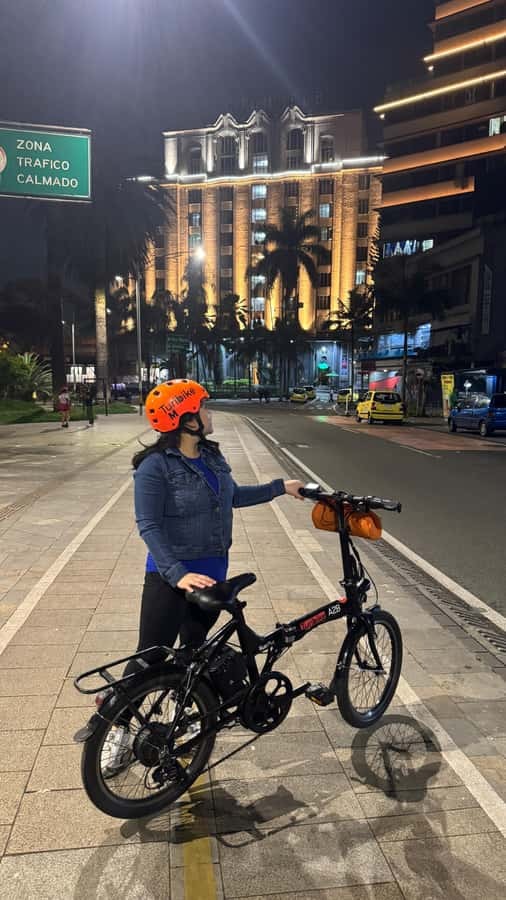
San Antonio Park brings a darker note. Two sculptures by Fernando Botero are central to the stop, including the bird sculptures that became linked with violence and recovery in Medellín.
The point is not simply to admire Botero’s familiar rounded forms. Your guide explains how one damaged sculpture remains near its replacement, turning the pair into a public record of destruction and renewal. It is a brief stop, but it gives the tour emotional depth.
This is one place where a local guide matters more than a printed description. The city’s difficult years can be reduced to a few dramatic facts, but the better guides connect events to residents and public memory. Dani has been praised for explaining how local people were affected, while Dayana is known for bringing strong feeling to Medellín’s culture and past.
The park itself can feel busy and exposed. You are not entering a quiet museum. People move through the square, traffic runs nearby, and the city continues around the sculptures. That can make the visit more affecting, though it also means you should listen closely when the guide speaks.
Perpetuo Socorro and Medellín’s creative future
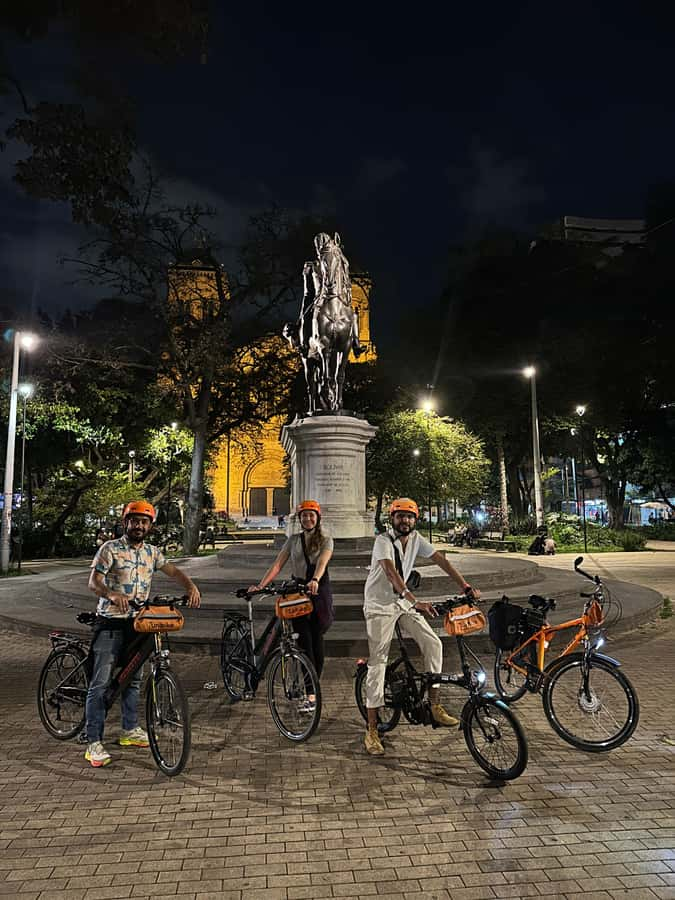
The ride passes through Perpetuo Socorro, a former industrial and repair district that has become associated with creative work, design, food, and new urban projects. The tour does not list a long stop here, so think of it as a moving introduction rather than a detailed visit.
That is still valuable. From the bike, you can see how parts of Medellín are being reworked without losing all connection to their older uses. The contrast with the historic center is clear: this is a city trying to make room for new ideas while carrying plenty of old burdens.
Because you are riding, you get a sense of distance and connection that a stop-by-stop excursion may miss. You see how districts sit beside each other and how quickly the character of the streets changes. The tradeoff is that you have less time for photos or close inspection.
More Historical Tours in Medellin
- Medellin Historic Walking Tour
★ 4.9 · 86 reviews - From Medellín: Private Pablo Escobar History Tour
★ 4.9 · 84 reviews - Pablo Escobar Historic Tour and Cable car
★ 5.0 · 38 reviews - Commune 13 Guided Tour with Local Guides | Art & Local History
★ 5.0 · 37 reviews
Riding through the center and under the metro
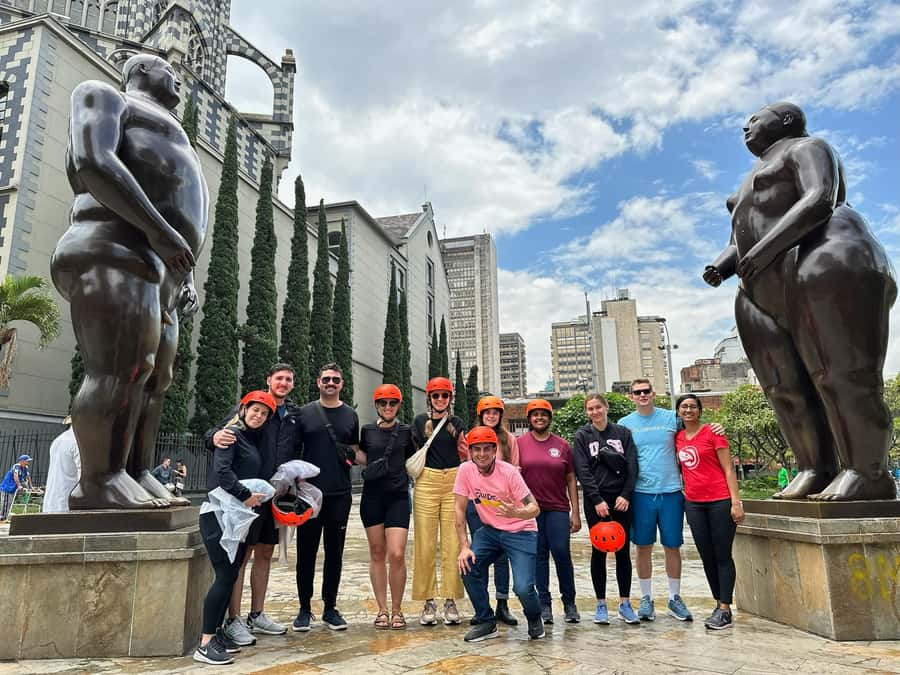
The central section is the most intense part of the tour. You ride through the metro viaduct area, where traffic, pedestrians, shops, transit, and street activity all press together. This is where the e-bike becomes both fun and practical.
You are not watching Medellín through a window. You need to stay alert, follow the guide, and manage crossings. The guides have been praised for cautious riding, and safety is clearly part of the experience, but no city bike tour can remove traffic from the equation.
Some of the route uses cycle paths. Those paths may be crowded with people, especially around busy areas. One rider found the frequent road crossings and pedestrian-filled paths tiring, while another described the route as safe and well managed. Both impressions can be true. If you are comfortable in cities, the street activity adds energy. If you want a quiet scenic ride, this is not that kind of tour.
The group size also matters. Smaller groups offer easier conversation and a calmer pace. A 15-person group was considered too large for this route, especially at junctions and on shared paths. If you can choose among departures, a smaller time slot may improve the experience.
Botero Plaza and Parque de las Luces
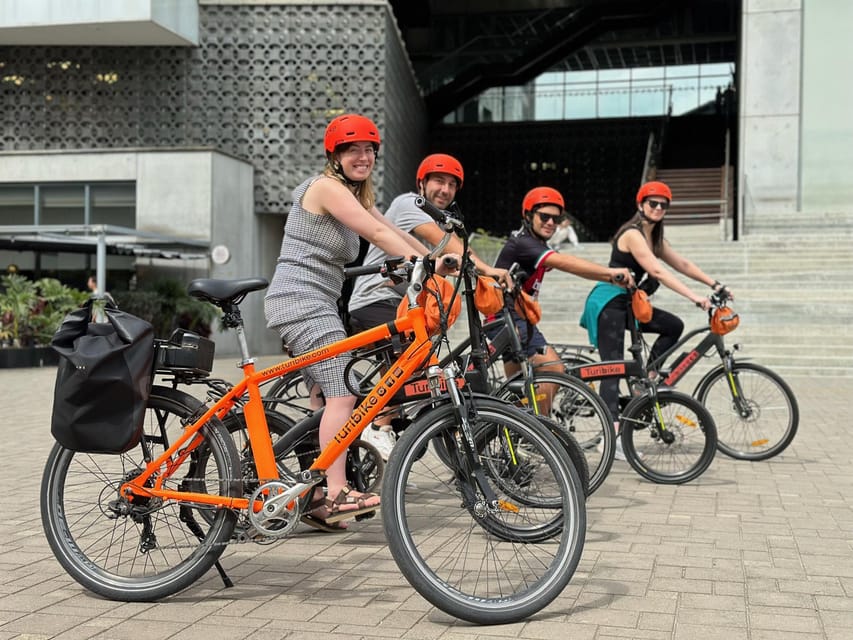
Botero Plaza is the route’s visual centerpiece. The square is filled with large bronze figures by Fernando Botero, whose exaggerated bodies and playful proportions have become one of Medellín’s best-known public signatures.
You have time to stop, look around, and hear about the art rather than simply roll past it. The plaza also gives you a strong example of how Medellín places major art in everyday public space. It is not separated from city life. People pass through, vendors work nearby, and the square has a lived-in quality.
Close by, Parque de las Luces offers a different kind of public art. Its tall light columns create a more modern setting and show how the center has been reshaped through public works. Together, Botero Plaza and Parque de las Luces make a useful pair: one is anchored in sculpture and personality, the other in design, light, and urban renewal.
You should keep your belongings secure in crowded central areas and stay with the group. The tour includes medical insurance and technical assistance, along with a helmet and rain jacket, but normal city awareness still matters.
Plaza Mayor and the final ride to the river
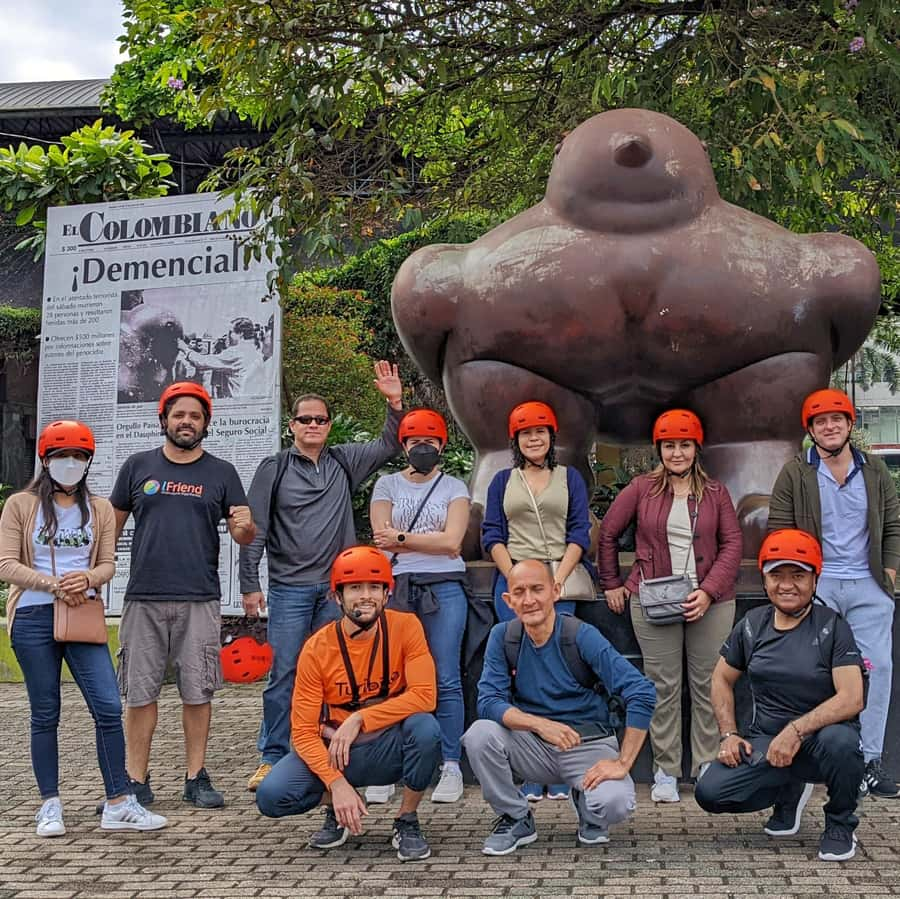
At Plaza Mayor Medellín, you leave the bikes briefly and walk. The complex is one of the city’s major event and convention areas, and it helps show the newer, more formal side of central Medellín.
This stop is less intimate than San Antonio Park or Botero Plaza. Its value comes from the shift in scale and purpose. After moving through historic squares and crowded streets, you see a planned civic area built for large gatherings and modern city life.
The final section leads to the Medellín River Parks. This is where the tour changes pace. The riverfront parks offer open space, greenery, paths, and a chance to breathe after the center’s noise and traffic.
Ending here works well. You have moved through art, memory, transport, commerce, and public planning, then finish in an urban outdoor space. The river parks do not erase the city’s problems, but they show how public areas can give residents room to walk, gather, and relax.
The guides make or break the ride
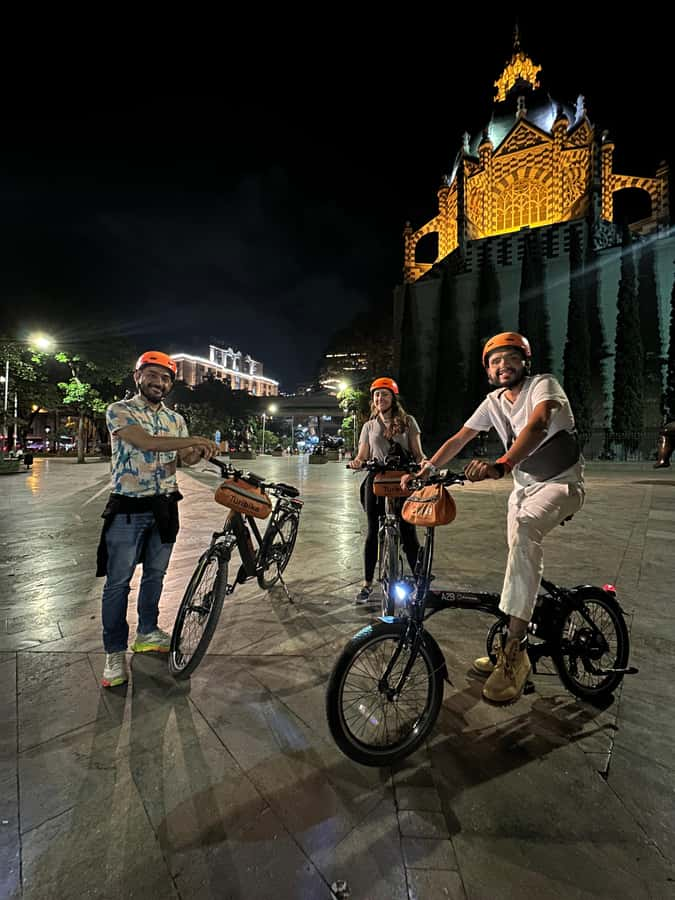
The strongest part of this experience is the guiding. The company uses bilingual guides in Spanish and English, and several names have received repeated praise: Dayana or Diana, Dani, Toto, Andrés, Juan, Carlos, Camilo, and John.
Dayana has been described as careful on the road and deeply attached to Medellín’s culture. Dani is known for humor, patience with beginners, and explanations that include how residents felt about the city’s changes. Toto has been praised for warmth, energy, and strong cycling skills. Andrés has taken a flexible approach, adjusting the route to places riders had not yet seen.
Guide assignments can change, so you should not book on the assumption that one particular person will lead your departure. Still, the pattern is clear: the guides are expected to do more than recite dates. They explain architecture, art, transport, local businesses, and the human effect of Medellín’s past.
Some guides also take photos and short videos during the ride. One guide compiled these into a video and sent it afterward, along with city recommendations. That is a welcome extra, but it should be treated as guide-dependent rather than guaranteed.
What is included, and what the $48 buys you
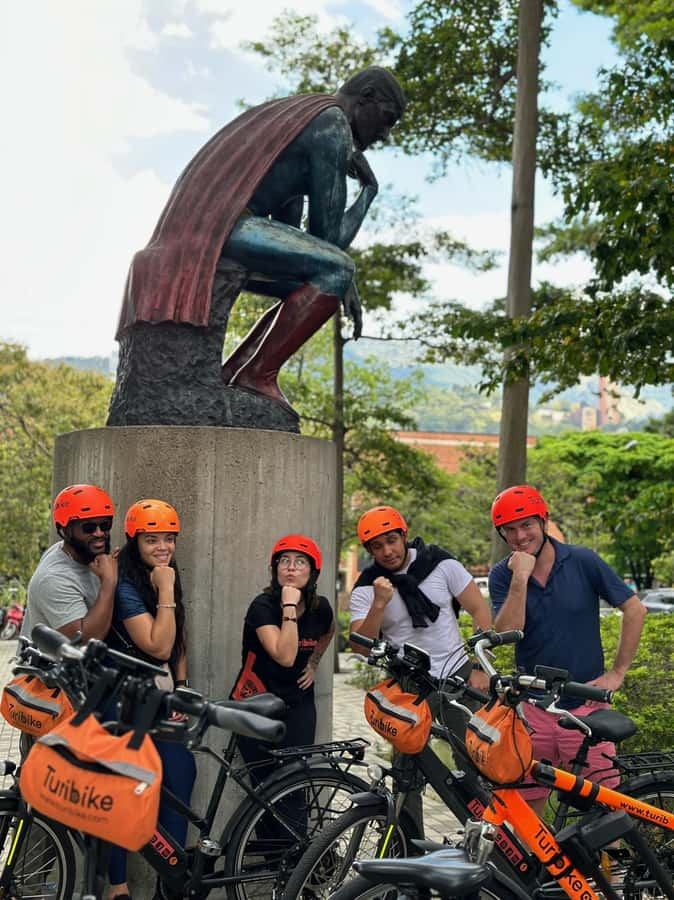
The price is $48 per person. Included are the e-bike, helmet, bilingual guide, rain jacket, Colombian drink, medical insurance, and technical assistance. Transportation to and from NOI coworking is not included.
I consider the price reasonable if you want orientation and context more than a simple bicycle rental. You are paying for a three-and-a-half-hour route, equipment, support, safety guidance, and access to a local person who can explain why the places matter.
The value is strongest at the start of your stay. After this ride, you will know where the center sits in relation to Poblado, the river, Ciudad del Río, and the creative districts. You can then decide where to return on foot or by metro.
It is less attractive if you are already familiar with Medellín or mainly want a scenic cycling workout. One rider found the route too flat to justify an e-bike, and that is a fair point. The motor helps beginners and makes the distance easy, but strong cyclists may not need it.
A refreshing Colombian drink is included, and past outings have featured sugar-cane juice, coffee, fruit, or a similar local refreshment. The exact offering can vary, so do not book solely for one specific snack.
Who should book this Medellín tour?
I would choose this for a first or second day in the city, especially if you want to understand Medellín before exploring it on your own. It suits couples, families with appropriately sized children, solo visitors, and adults who are curious about history but do not want a lecture indoors.
You should be comfortable riding in an urban setting. The tour is not a mountain-bike challenge, but you will cross roads, share paths, follow traffic instructions, and ride through crowded parts of the center.
I would skip it if you dislike bikes, feel uneasy around traffic, or want a slow museum-focused experience. I would also try to avoid the biggest departure if the booking system allows a choice.
Free cancellation is available up to 24 hours before departure, and you can reserve without paying immediately. Bring your passport or ID card, wear closed shoes, and check the starting time before booking.
Should you book the Turibike e-bike tour?
Book it if you want a lively introduction to Medellín that joins art, public space, difficult history, and daily street life. The route is broad, the guides add genuine local perspective, and the e-bike lets you see much more than a walking tour in the same time.
Do not expect a quiet ride or a perfectly smooth route. Traffic, pedestrians, group size, and equipment condition can affect the day. One rider also had a gear problem, though the overall equipment record has been strong and most descriptions point to comfortable, well-maintained bikes.
At $48, this is a good buy for first-time visitors who value orientation and conversation. Choose it early in your stay, listen closely around San Antonio Park and Botero Plaza, and treat the ride as a city introduction rather than a relaxing pedal along the river.
FAQ
Where does the Medellín e-bike tour begin?
It begins at NOI coworking, Calle 17 # 43F-287. The meeting point is about a 10-minute walk from Poblado metro station or a 10-minute drive from Parque Lleras.
How long does the tour last?
The tour lasts 210 minutes, or three and a half hours. Starting times depend on availability.
Is the tour offered in English?
Yes. The live guide service is available in English and Spanish.
What does the $48 price include?
The price includes a bilingual guide, electric bike, helmet, rain jacket, Colombian drink, medical insurance, and technical assistance. Transportation to and from the meeting point is not included.
Do I need experience riding an e-bike?
You do not need previous e-bike experience. The guides explain how the bikes work and help beginners get comfortable. You must be able to ride a bicycle.
What should I bring, and who cannot join?
Bring your passport or ID card and wear comfortable closed shoes. Sandals and flip-flops are not allowed. The tour is not suitable for pregnant women, wheelchair users, people who cannot ride a bike, or anyone under 140 centimeters tall.
Just added around Medellin
- Commune 13, Graffitour street food. History.All inclusive★ 5.0 · 35 reviews
- City tour, Commune 13, Metro Cable, Botero Park and more. Private★ 5.0 · 34 reviews
- Aerial Hammocks, Zip and Waterfall Trek on Medellin Private Tour★ 5.0 · 39 reviews
- Walking tour downtown Medellín★ 5.0 · 39 reviews
- Hiking Mountains and Magical Forests★ 5.0 · 27 reviews
- Barrio transformation and urban escalator of Comuna 13★ 5.0 · 47 reviews
- Tour to the Hacienda Nápoles Theme Park★ 4.0 · 22 reviews
- Tour Cabalgata★ 5.0 · 37 reviews
Cycling Tours, compared.


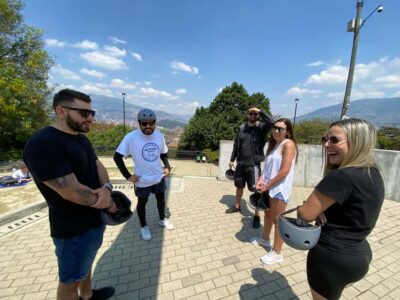
E-Bike City Tour Medellin with Local beer and Snacks
Read our review →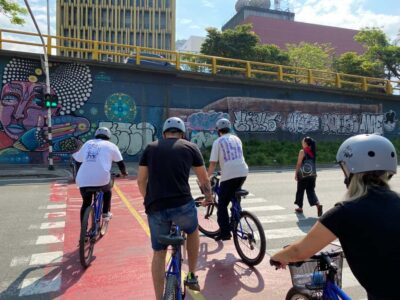
Browse the lists this tour appears in