
Reviewed · CYCLING TOURS
Medellín: E-bike and Foodie Tour
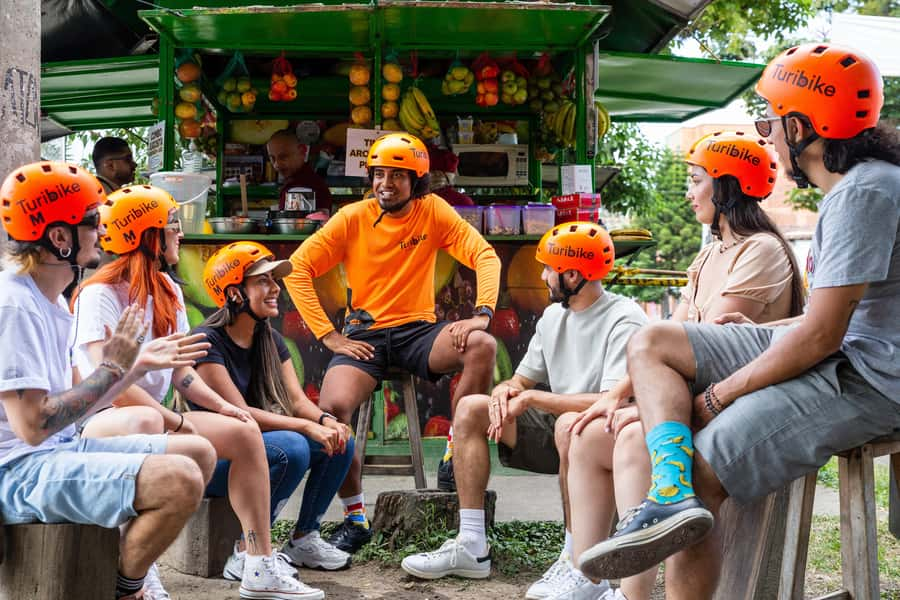
Medellín’s best stories are often found away from the usual visitor circuit, and this three-hour e-bike tour gives you a quick, practical way to reach them. You pedal through Belén, Laureles, Conquistadores, and other everyday neighborhoods while your guide explains the city’s hard past, steady change, food traditions, and daily life.
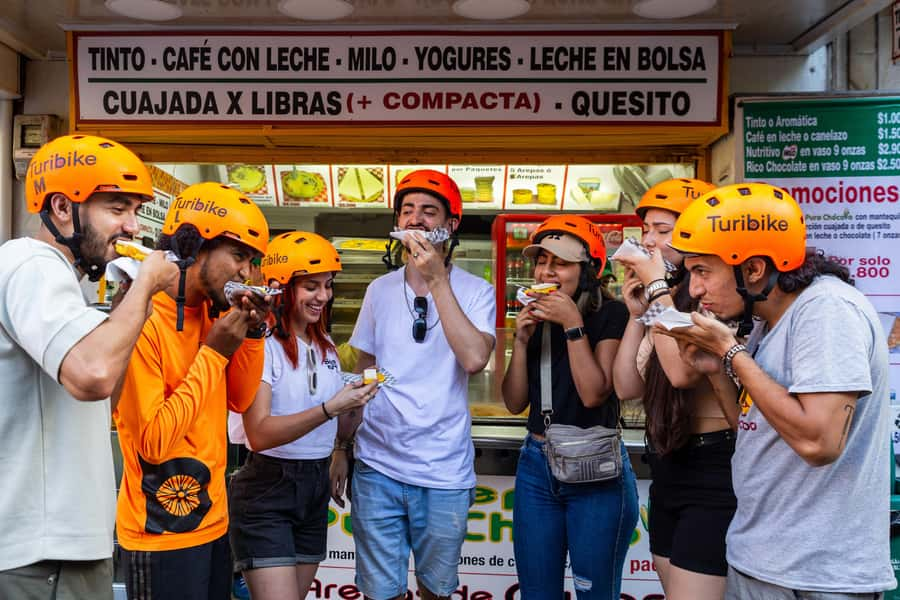
I like the easy range of the electric bikes and the small groups, limited to eight people. I also like the food stops, which go beyond a quick sample: arepas, pandebono, buñuelos, empanadas, coffee, fruit, and guarapo help explain Colombia one bite at a time. The main consideration is that the food can be plentiful, while drinks at the first three stops and food at the final stop are not included.
Key points before you book
- Ride beyond the tourist core: Reach ordinary neighborhoods, quiet parks, local bakeries, and streets where daily Medellín life takes center stage.
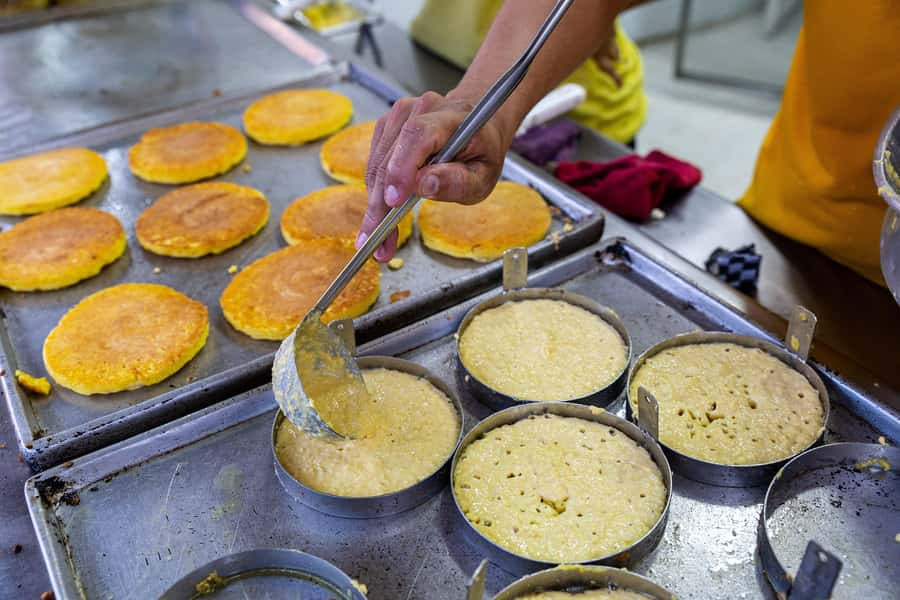
- Taste food with a story: Expect Colombian staples such as arepas, pandebono, buñuelos, empanadas, salpicón de frutas, coffee, and guarapo.
- The e-bike does the hard work: You cover more ground than on foot without turning the tour into a demanding athletic outing.
- Guides make the difference: David, Daniela, Dany, Toto, Juan, Diana, Esteban, and others are praised for warmth, local insight, and careful riding guidance.
- A good first-day introduction: You see several districts, learn basic food customs, and get a feel for Medellín’s modern bike network.
- Know the limits: You need to ride a bicycle, wear closed-toe shoes, and be at least 140 centimeters tall.
Why an e-bike is a smart way to see Medellín
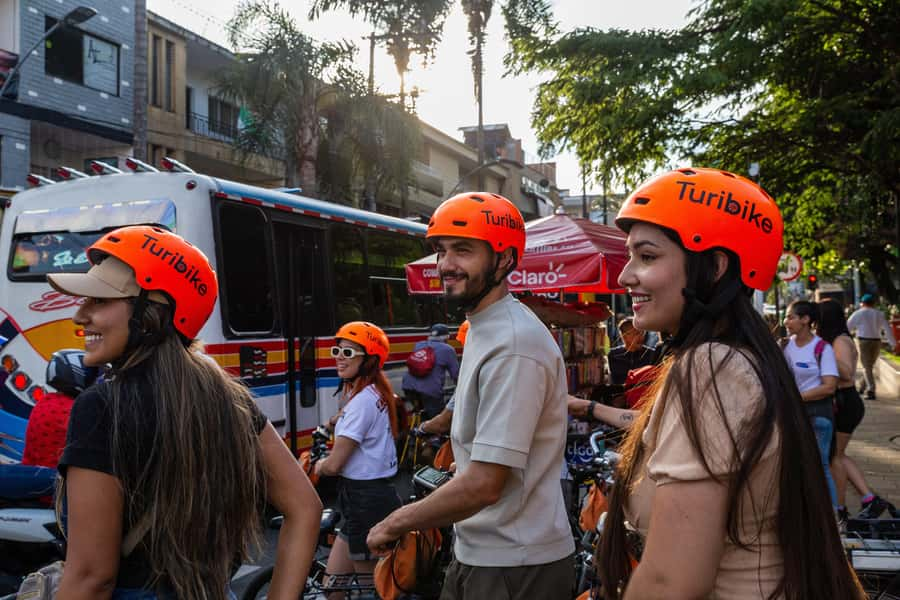
Medellín is spread across a long valley, so walking tours can leave you with only a small slice of the city. An e-bike changes that. In three hours, you can connect several districts, stop for local food, and still have time to listen to the guide rather than spend the whole outing catching your breath.
The electric assistance matters most when the route changes pace or includes a gradual climb. You still pedal, but the motor helps keep the group together. Several guides, including David, Dany, Toto, and Daniela, are praised for making first-time e-bike riders feel comfortable.
The tour also makes use of bike paths and quieter streets. That does not mean you can switch off completely. Medellín is a working city, and traffic is part of the experience. Follow your guide closely, listen to safety instructions, and keep your eyes ahead.
The bikes are described as well maintained, and medical insurance is included. One guide quickly repaired a flat tire during a tour, a useful sign that the staff is prepared for ordinary problems. Still, this is a bicycle tour, not a sightseeing bus. If you cannot ride a bike, have limited mobility, or dislike city cycling, choose another way to explore.
More Bike Tours in Medellin
- Medellín: History & Local Life Essentials Tour on an E-Bike
★ 4.9 · 130 reviews - Colombia cycling trip
★ 5.0 · 63 reviews - E-Bike City Tour Medellin with Local beer and Snacks
★ 4.9 · 55 reviews
Starting at Turibike in an industrial corner
The meeting point is at the Turibike office inside a coworking space on an industrial street. This may feel less polished than a hotel lobby or central plaza, so allow a moment to identify the building.
Look for the brick building with the large black metal door. If the door is closed, knock and the guard should let you in. Hotel pickup and drop-off are not included, so you need to arrange your own way to the start.
The first few minutes are useful for getting fitted to the bike and meeting the guide. Groups are capped at eight, though some departures may be much smaller. One person described having a private outing, while another joined with only a small number of riders. That gives you a better chance to ask about food, neighborhoods, and Colombia’s past.
Guides speak Spanish and English. Names that appear often in the tour’s guiding team include David, Daniela, Dany, Toto, Juan, Diana, Esteban, Camilo, Jhon, and Angie. The individual guide shapes the mood, but the strongest pattern is clear: expect a host who talks readily about Medellín and stays attentive to group safety.
Belén: food and everyday life first
The route heads toward Unidad Deportiva de Belén, where the food portion begins. A sports complex is an apt setting for a tour that mixes movement and eating. You start to see Medellín as a city of ordinary routines rather than a collection of postcard stops.
Food here is not treated as decoration. The guide connects what you taste with family recipes, regional habits, and the way Colombians eat during a normal day. You might encounter coffee, fruit, or another local snack at this stage, but the exact food can vary.
From there, the ride continues to Parque Belén. A public square gives you a chance to slow down and observe. You might see older men playing cards, people meeting friends, or residents passing through on errands. These small scenes help explain why this tour feels different from a route built only around famous sights.
The park stop also brings another tasting. Come hungry, but not empty. Later stops add more food, and one person found there was so much to eat that a drink stop might have been preferable to one of the tastings.
Laureles brings the city’s food traditions closer
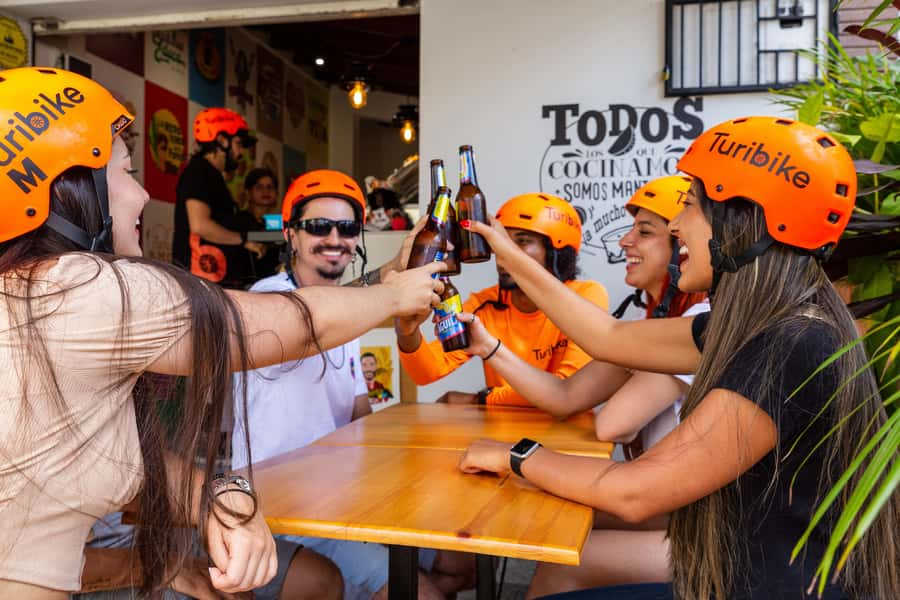
Laureles is one of the tour’s key riding areas. Here, tree-lined streets and calmer lanes make it easier to notice the city’s design and pace. You are not simply crossing the district to reach a monument. The ride itself is part of the lesson.
This is also where regional food takes center stage. Your guide may introduce you to an arepa, one of Colombia’s most important everyday foods. The point is not just to decide if you like it. You learn how a simple corn cake fits into local cooking and why recipes passed through families still matter.
Other tastings mentioned along the route include pandebono, buñuelos, crispy empanadas, salpicón de frutas, and guarapo. Pandebono is a soft, cheese-filled bread-like snack, while buñuelos are round fried bites with a familiar bakery smell. Salpicón brings fruit and sweetness into the mix, and guarapo offers a distinctly local drink experience.
The first three food stops do not include beverages, so carry some water and check what you want to purchase along the way. Food and drinks are included overall, but the exclusions matter if you are counting every expense.
More Food Tours in Medellin
- Medellin: Comuna 13 Graffiti Tour, Cable Car & Street Food
★ 4.8 · 9,046 reviews - Medellín: Comuna 13 True Story and Street Food Tour
★ 4.9 · 1,779 reviews - Medellin: Street Food and Poblado Rooftop Tour with a Local
★ 4.8 · 317 reviews - Medellin: Party Bus with DJ & Street Food Tastings
★ 4.5 · 112 reviews
Conquistadores and the pleasure of small stops
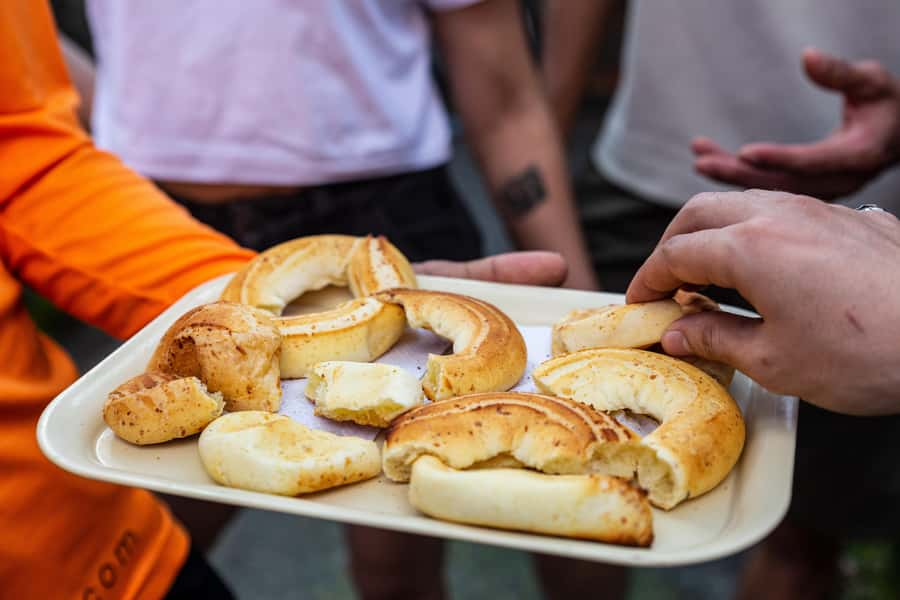
The Conquistadores section adds local snacks and more riding. This part works well because the tour alternates between movement and short breaks. You get time to digest, look around, and hear the next piece of the story instead of sitting at a table for the whole three hours.
A good guide will help you understand the difference between a snack you might find across Colombia and one tied more closely to Medellín or the surrounding Antioquia region. Ask questions. Guides such as Esteban and Dany are praised for explaining culinary differences, suggesting foods to try, and pointing out places they visit in ordinary life.
The strongest food moments are likely to be simple ones. An arepa made from a long-used recipe, a warm pandebono, or a fresh empanada can tell you more about local habits than a formal tasting menu. This is not a gourmet meal, and you should not expect one. It is a sequence of accessible street and neighborhood foods.
The final food stop is not included, so set aside a little extra money if you want to eat there. The information does not specify exactly what will be served at every stop, which is normal for a local food route. Availability can change, and the guide may adjust the order.
Medellín River Parks and the city’s change
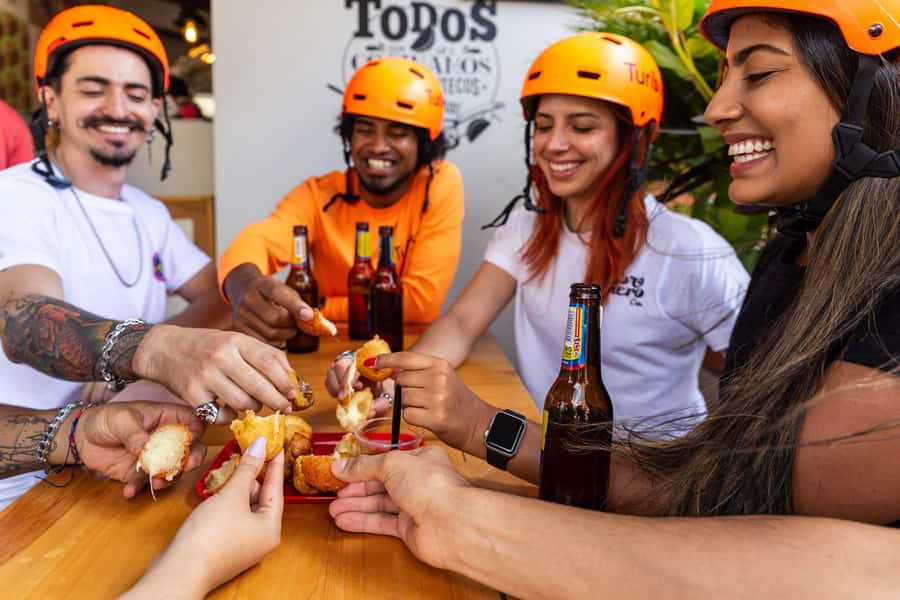
The Medellín River Parks provide a broader view of the city. Here, the tour shifts from neighborhood observation to Medellín’s public spaces and long-term changes. You get a chance to consider how the river corridor, bike routes, and shared urban areas fit into the city today.
The transformation theme is important, but it should not become a simple before-and-after story. Medellín’s past includes serious violence and inequality, and its present includes ongoing change. The best guides, including Toto, Daniela, and Dany, are praised for explaining history, culture, and society in a direct, personal way.
One outing included watching workers string wires across the river, an ordinary but memorable city scene. Another finished with an informal local bar stop where the guide and rider were offered food and drinks. That extra moment is not guaranteed, and alcohol is not part of the advertised inclusions, but it shows how a friendly guide can open a door to a less staged side of the city.
The river parks also give the group a natural place to pause before returning to Turibike. You finish with a wider sense of how Medellín connects its neighborhoods, public spaces, transport routes, and local communities.
What the food is really worth
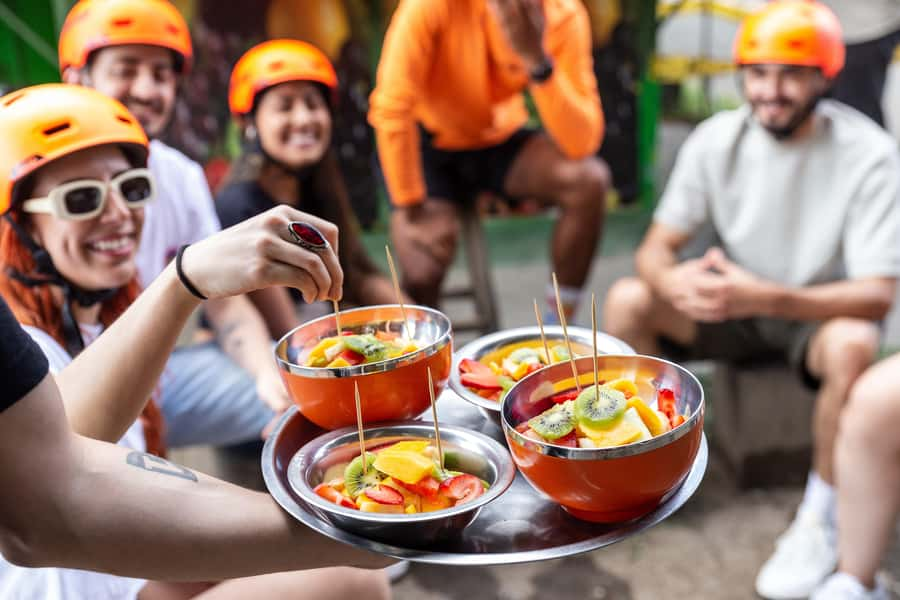
At $48 per person, the tour offers solid value if you want transport, a guide, several tastings, and a city orientation in one outing. You are paying for access to a route that would be difficult to assemble on your own in only three hours, plus the convenience of an electric bike and medical insurance.
The food is best viewed as part of the education, not as a full lunch. Some riders found the portions plentiful, while others might prefer fewer tastings and more drinks. If you want a large meal, plan another stop afterward or treat the final tasting as a small extra rather than your main meal.
The price also compares well with a private city introduction if your group is small. When only one or two people book, the guide can answer more questions and tailor the conversation. With a full group of eight, the experience will feel more social but may offer less personal attention.
The tour includes the electric bike, guide, food and drinks, and medical insurance. It does not include hotel transfers, drinks at the first three stops, or food at the last stop. Those details keep the headline price from telling the whole story, though the extras should remain modest if you plan ahead.
The guides are a major part of the experience
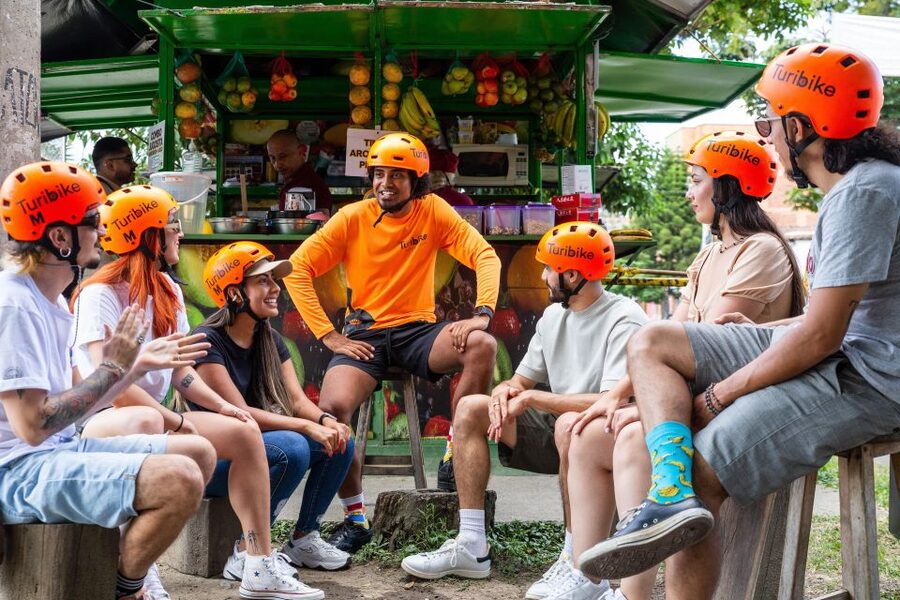
This tour depends heavily on the person leading it. David is praised for combining safety with a friendly explanation of everyday Medellín. Daniela is described as warm and engaging, with a clear affection for the city and its people. Dany is often singled out for his food, culture, and history explanations.
Toto is another strong match for first-time visitors. His style combines humor, conversation, and practical guidance, and he has helped riders feel secure on the bike paths. Juan, Diana, Esteban, Camilo, Jhon, and Angie are also named as capable members of the team.
You should not expect every departure to feel identical. A guide who loves food may spend more time on recipes and regional differences. Another may focus more on the city’s political and social changes. Ask questions early, especially if you want more detail about a particular district or dish.
The high rating of 4.8 from 102 ratings fits the main strengths: friendly guides, good equipment, safe riding, generous tastings, and access to areas beyond the standard tourist route. The rating does not erase the need to check your own comfort with bicycles, food quantity, and city traffic.
Who should book this ride
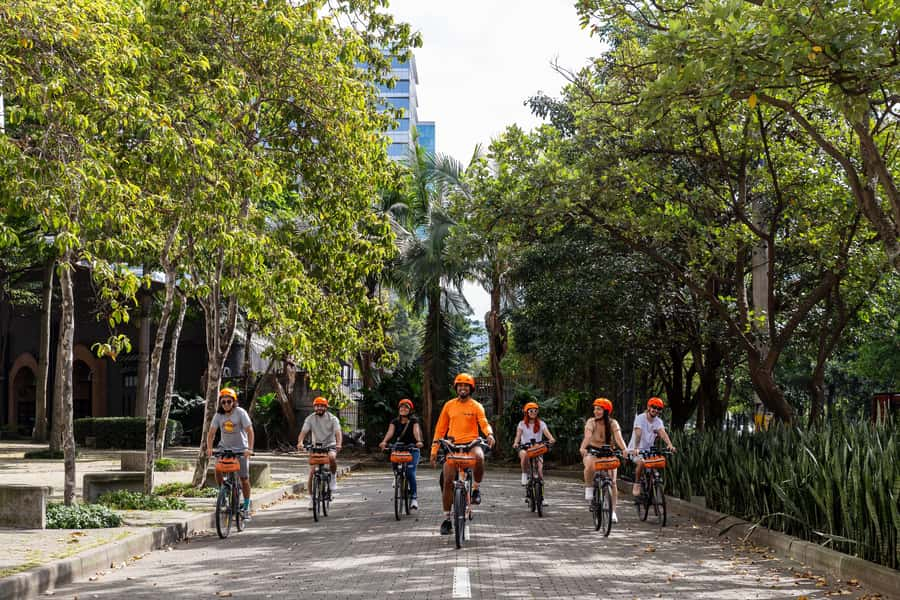
I would choose this tour early in a Medellín visit. It helps you get oriented, introduces you to foods you might otherwise pass by, and gives you a practical sense of how the districts fit together. Afterward, you can return to a bakery, park, or neighborhood that caught your attention.
It suits adults and older children who can ride confidently and meet the 140-centimeter minimum height. Comfortable shoes are required, and sandals or flip flops are not allowed. Pregnant people, those with mobility impairments, and anyone unable to ride a bicycle should not book it.
It is also a good fit if you want something active without committing to a hard cycling day. The electric motor reduces effort, but you remain on a bike for the full outing. If you want museums, long indoor talks, or a slow restaurant meal, this is not the right format.
The small-group setup makes it appealing to solo riders, couples, and friends. English and Spanish are available, and free cancellation is offered up to 24 hours before departure. You can also reserve now and pay later, which helps if your Medellín schedule is still shifting.
Should you book the Medellín E-bike and Foodie Tour?
Book it if you want a fast, flavorful introduction to Medellín that combines local streets, food traditions, and the city’s modern transformation. The e-bike lets you cover real ground, while the guide turns ordinary scenes into useful context.
Before booking, make sure you are comfortable riding in an urban setting and remember that food comes in several rounds. Bring closed-toe shoes, arrive ready to eat, and budget for drinks at the early stops and food at the last one.
For a first or second day in Medellín, this is one of the more useful ways to get your bearings. It is active, social, and rooted in daily life rather than built only around famous sights.
FAQ
How long does the Medellín E-bike and Foodie Tour last?
The tour lasts three hours, with starting times available according to the date you select.
Where does the tour begin and end?
It begins and ends at Turibike. The office is inside a coworking space on an industrial street, in a brick building with a large black metal door.
What food might I taste?
Possible foods and drinks include arepas, pandebono, buñuelos, empanadas, salpicón de frutas, coffee, and guarapo. The exact order and selection can vary.
Are drinks included at every stop?
No. Beverages at the first three stops are not included. Food at the final stop is also not included.
Is the tour available in English?
Yes. The live guide option is available in English and Spanish.
How many people are in each group?
The tour is limited to eight participants, though some departures may have fewer people.
Who should not take this tour?
It is not suitable for pregnant women, people with mobility impairments, people who cannot ride a bike, or anyone under 140 centimeters tall. Sandals and flip flops are not allowed.
Just added around Medellin
- City tour, Commune 13, Metro Cable, Botero Park and more. Private★ 5.0 · 34 reviews
- Commune 13, Graffitour street food. History.All inclusive★ 5.0 · 35 reviews
- Aerial Hammocks, Zip and Waterfall Trek on Medellin Private Tour★ 5.0 · 39 reviews
- Walking tour downtown Medellín★ 5.0 · 39 reviews
- Tour to the Hacienda Nápoles Theme Park★ 4.0 · 22 reviews
- Hiking Mountains and Magical Forests★ 5.0 · 27 reviews
- Barrio transformation and urban escalator of Comuna 13★ 5.0 · 47 reviews
- Tour Cabalgata★ 5.0 · 37 reviews
Cycling Tours, compared.
History & Local Life Essentials Tour on an E-Bike
Read our review →


E-Bike City Tour Medellin with Local beer and Snacks
Read our review →
Browse the lists this tour appears in