
Reviewed · MONSERRATE TOURS
Bogotá: Grand City Tour with Monserrate, Usaquén and Lunch
Bogotá’s best introduction may be its cable-car ride to Monserrate, where the city spreads below you at 3,150 meters. From there, this full-day outing threads through La Candelaria, the Gold Museum, Botero Museum, Bolívar Square, and Usaquén, giving you both the postcard views and the street-level feel.
I like the way the tour pairs major sights with local neighborhoods, rather than leaving you inside museums all day. I also like the included lunch and hotel transport, two useful extras in a city where traffic and altitude can eat into your time. The main caution is pace: fitting so much into eight hours can leave little time at some stops, and one booking was shortened to six hours and operated with a few extra passengers.
Key points to know before booking
- Monserrate reaches 3,150 meters: The cable car gives you fast access to Bogotá’s best city views, but bring a jacket and take the altitude seriously.
- La Candelaria comes with real walking: Expect cobblestones, historic streets, Chorro de Quevedo, Bolívar Square, and the Eje Ambiental.
- Two major museums are included: The Gold Museum and Botero Museum add substance to the sightseeing, but opening days matter.
- Lunch is part of the plan: You get a meal at a local restaurant, while extra food and drinks are your responsibility.
- Usaquén provides a calmer finish: Its narrow streets and weekend flea market offer a different feel from central Bogotá.
- Check the private-tour details: The service is sold as a private group experience, but confirm the final arrangement and full eight-hour schedule before departure.
Monserrate gives you Bogotá at a glance
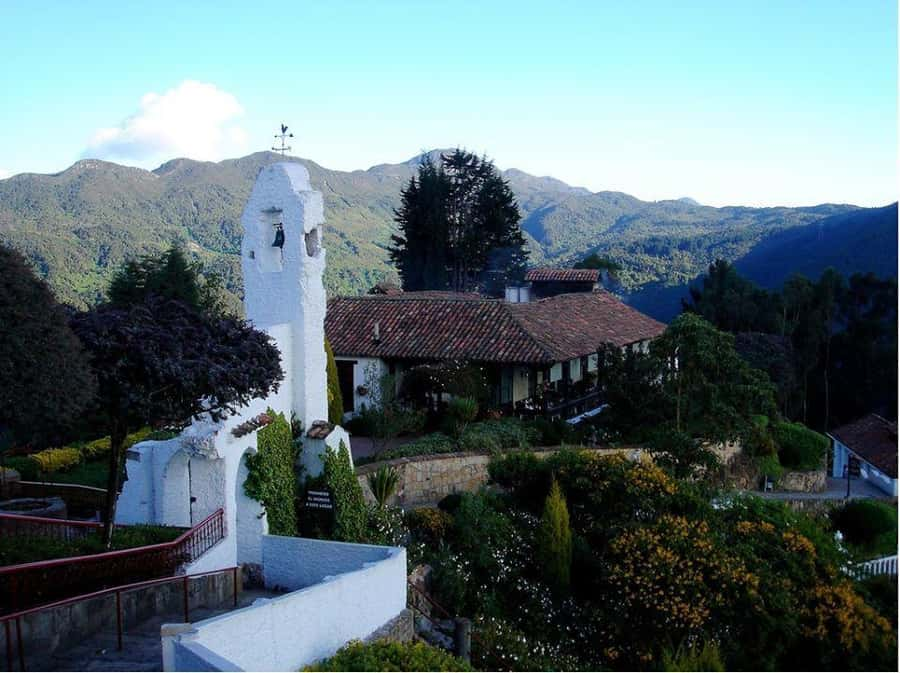
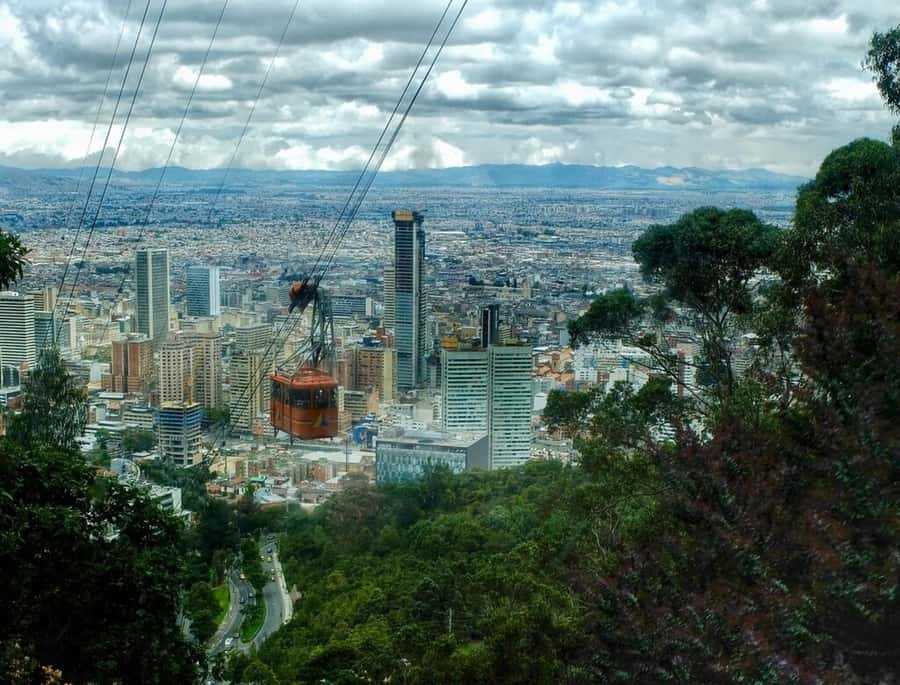
The day begins with hotel pickup in private transportation and a ride toward the eastern hills. The cable car carries you up to the Monserrate Sanctuary, one of Bogotá’s major pilgrimage sites and the clearest place to understand the city’s scale.
At the summit, Bogotá stretches across the plateau below. On a clear day, this is the tour’s strongest visual moment. You can see why the mountain matters beyond its viewpoint: the sanctuary is a religious destination, while the height gives you a quick lesson in the city’s geography.
At 3,150 meters above sea level, Monserrate is not a minor detail. You may feel the altitude, especially if you have just arrived in Bogotá. Walk at an easy pace, drink water, and bring the requested jacket and rain gear. Mountain weather can shift, and the tour continues for many hours after this first stop.
The cable car ticket is included, as are admission fees to the planned attractions. That saves you from handling several payments during a packed day. The tradeoff is that your time at Monserrate follows the group schedule rather than your own.
More City Tours in Bogota
- Bogota: Bicycle City Tour
★ 4.9 · 2,156 reviews - Bogotá: Private City Tour, Monserrate, Emerald and Botero
★ 4.9 · 798 reviews - Bogotá City Tour with Monserrate, Gold and Botero Museums
★ 4.9 · 584 reviews
La Candelaria shows Bogotá street by street
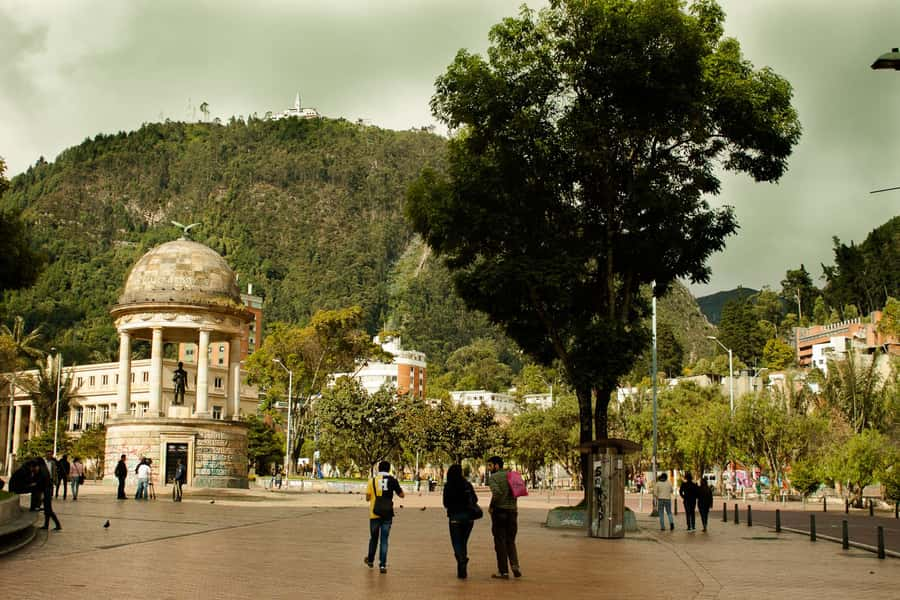
From the hills, the route moves toward central Bogotá and the old neighborhood of La Candelaria. Its cobblestone streets and low historic buildings give the center a very different character from the broad modern avenues farther north.
You walk through more than four centuries of Bogotá’s story here. The route includes the area around Universidad de los Andes, where you get a sense of the student setting, then follows the Eje Ambiental. This urban project, associated with architect Rogelio Salmona, traces the course of the San Francisco River and shows how the city grew around its waterway.
That combination is one of the tour’s strong points. You are not simply taken from one landmark to the next. The walk connects architecture, city planning, education, and Bogotá’s early development. Your guide’s explanation matters here, since the streets themselves do not always explain what you are seeing.
The walking can be tiring. Cobblestones are uneven, and the altitude may still affect your energy. Wear comfortable shoes, as requested, and expect this section to feel like an active city walk rather than a drive-by tour.
Gold, Botero, and a useful contrast in museums
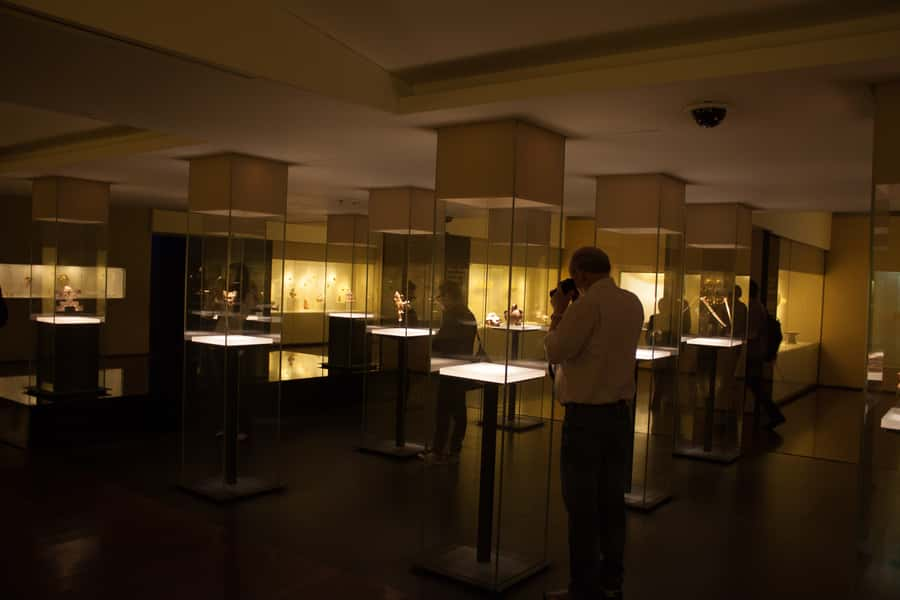
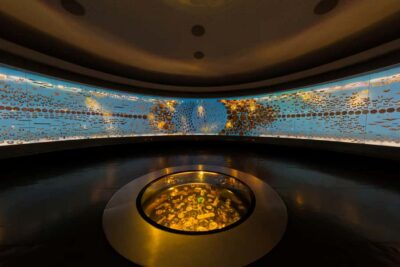
Following the San Francisco River toward Jiménez Avenue, you reach the Gold Museum. Its collection of indigenous gold objects gives you a strong look at Colombia before the Spanish conquest and helps explain why gold became so important to the country’s later history.
The Gold Museum is not just a room of shiny objects. The pieces show skilled metalwork, ceremony, belief, and social power. This stop gives the central walking route more depth, especially if you want context beyond colonial churches and government buildings.
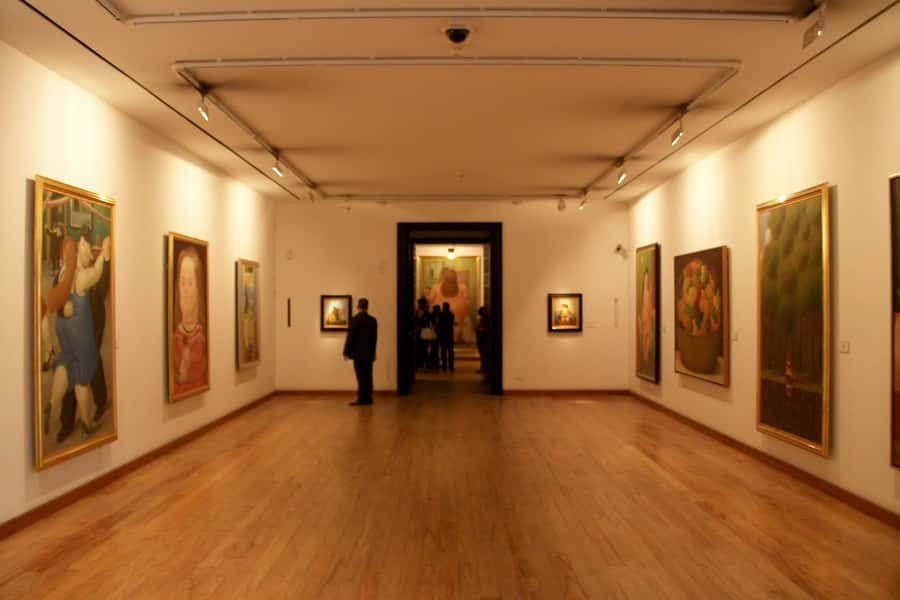
The tour also includes the Botero Museum in La Candelaria. Fernando Botero’s rounded figures are instantly recognizable, and the collection offers a lighter, more playful change of tone after the archaeological displays. You can also appreciate the building and its place within the old quarter.
Time is the concern. One booking reached the Botero Museum late and had only a short visit there. Since the tour covers Monserrate, several central neighborhoods, two museums, lunch, Bolívar Square, and northern Bogotá, delays can force the guide to trim a stop.
Museum schedules are important. The Gold Museum is closed on Mondays, while the Botero Museum is closed on Tuesdays. On those days, the tour visits another museum based on the group’s interests. If one of these collections is a priority, avoid its closure day.
Chorro de Quevedo and the old city’s changing face
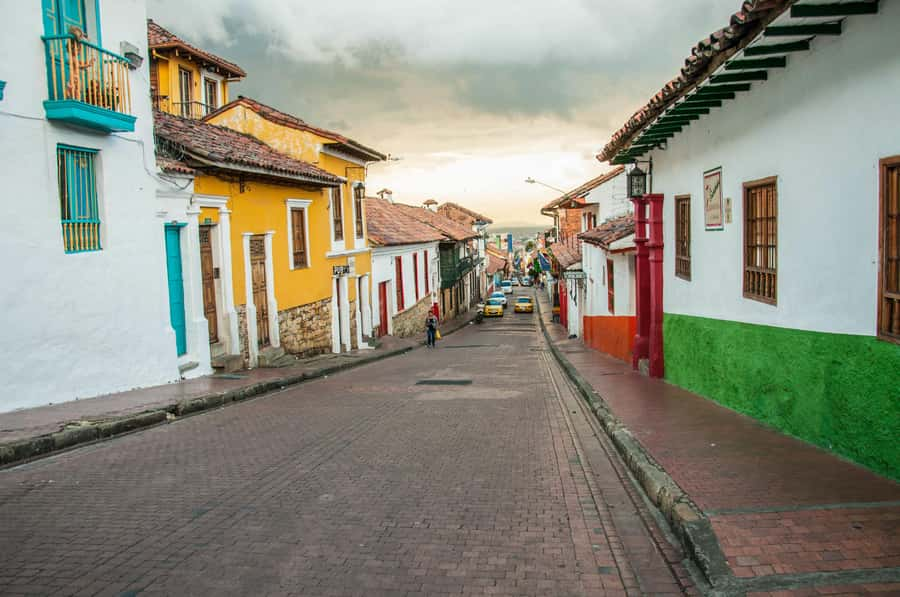
Chorro de Quevedo is one of the central area’s most characterful stops. The small plaza helps you see the contrast between Bogotá’s early streets and the city around them. It is a good place to pause and take in the mix of old buildings, narrow lanes, students, shops, and everyday city life.
This is also where the tour feels less like a checklist. The route lets you move through the center on foot and see how the old quarter functions now, not only how it appears in a guidebook. Your guide can point out details that are easy to miss when you walk alone.
The historic center is not polished into one uniform display. You may find worn surfaces, traffic, and busy stretches along with attractive architecture. That unevenness is part of the experience, but it means you should keep your belongings secure and stay with the guide.
More ways up Monserrate:
- Bogota: Monserrate Entry Ticket
★ 4.4 · 233 reviews - Bogotá: City Tour, Monserrate, Gold Museum, Plaza de Bolivar
★ 4.7 · 168 reviews - BOGOTA: City Tour, Monserrate, Gold Museum, Botero Museum, Plaza Bolívar
★ 4.8 · 146 reviews - Monserrate Tour in Bogotá Including Tickets
★ 4.5 · 82 reviews
Lunch keeps the long day moving
A local lunch is included at an authentic restaurant, which makes practical sense on an eight-hour tour. You do not have to spend time searching for a place in the middle of a tightly planned route, and you get a chance to sample typical food.
The exact menu is not specified, so do not book this expecting a particular dish. Unspecified drinks and extra food are not included. If you have dietary needs, ask the provider before booking rather than relying on last-minute changes.
Lunch also creates a natural break after the walking and museum visits. By this point, you may be ready to sit down, especially if the altitude or cobbled streets have taken more energy than expected.
Bolívar Square puts the capital’s story on one stage
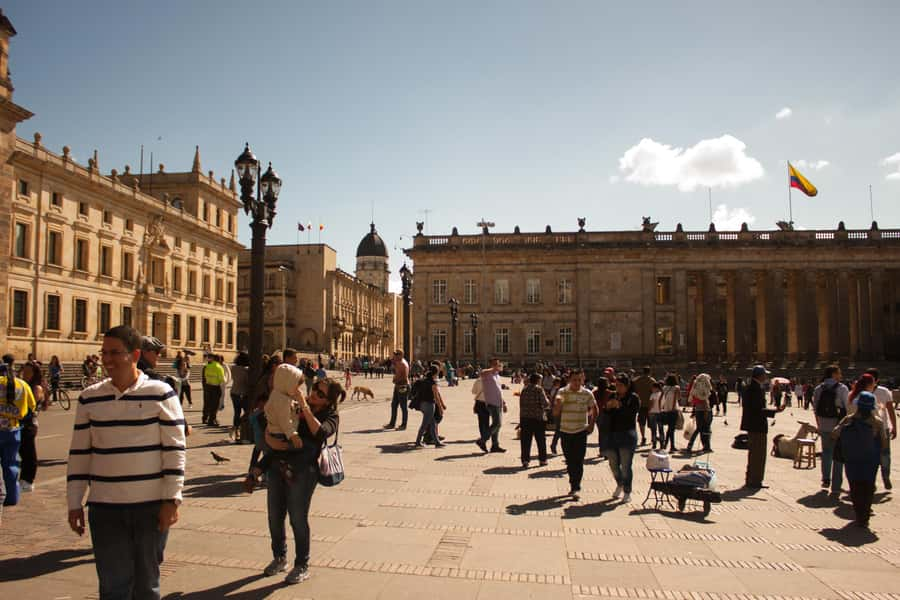
After lunch, the route continues to Plaza de Bolívar, Bogotá’s main civic center. Administrative and government buildings frame the square, making it the clearest place to connect the city’s political past with its present role as Colombia’s capital.
You also look inside the Primatial Cathedral. The cathedral adds a religious landmark to a day that already includes the pilgrimage church on Monserrate, but the two sites feel different. Monserrate is a mountain sanctuary with a sweeping view, while the cathedral sits at the center of public life in the old city.
The square is best understood with a guide. Its buildings and open space are easy enough to see, but their role in Bogotá’s development benefits from explanation. This is one of the places where a good guide can turn a quick stop into a useful lesson.
Several guides have led this route, including Gigio, Raul, Daniel, Filipe, and Jhovannoty. The strongest guide reports point to a warm, flexible style, strong knowledge of Bogotá, and an ability to add smaller local stops beyond the main sights. That matters on a private tour, since a good guide can adjust the level of detail to your interests.
The northern drive adds a wider view of the city
The tour then heads north by vehicle for panoramic views of the International Centre, La Macarena, and National Park. This portion gives your feet a rest and lets you see how Bogotá changes beyond the old center.
The International Centre represents the capital’s modern commercial side, while La Macarena is known for its restaurants, galleries, and urban character. National Park adds open space to the route. You do not get a separate long visit at each location, so think of this part as a moving overview rather than a series of full attractions.
This drive is useful because La Candelaria alone can make Bogotá seem like a colonial city. The northern route corrects that impression. It shows a capital with several distinct zones, linked by long roads and shaped by different periods of growth.
Traffic is the wild card. The tour is scheduled for eight hours, but Bogotá’s roads can affect how much time remains for later stops. Private transportation is helpful for covering this distance, though it cannot remove delays entirely.
Usaquén finishes the day on a smaller scale
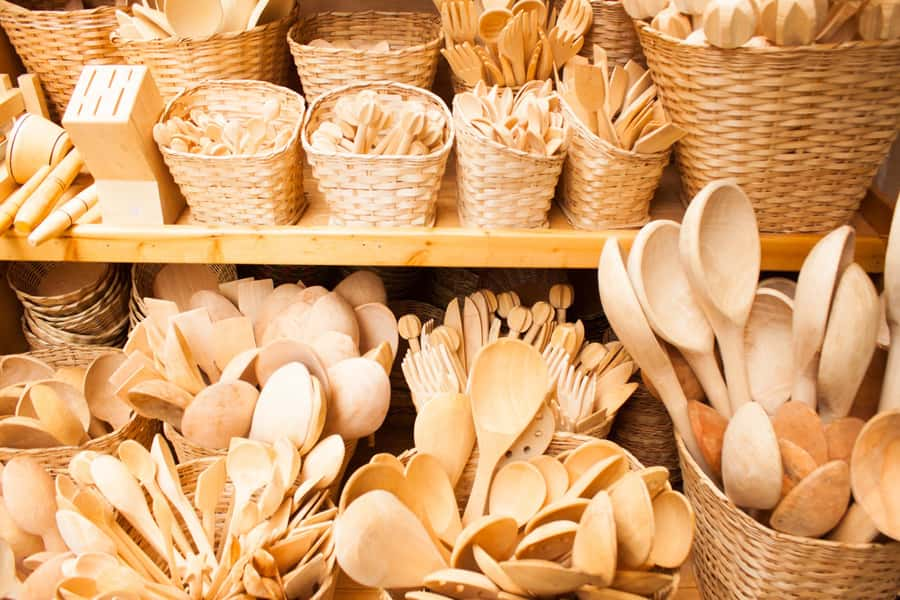
The final neighborhood is Usaquén, in northern Bogotá. Its narrow streets offer a more relaxed finish after the central city’s museums, plazas, and traffic. The area is especially known for its weekend flea market, so the day you book can affect what you see there.
Usaquén is a good contrast to La Candelaria. Instead of another major museum or government square, you get a neighborhood walk with architecture, shops, and local atmosphere. If you enjoy browsing handicrafts, this complements the earlier stop at the market near Parque Santander, where you have time to shop for local goods.
Do not expect a long independent shopping session unless the schedule allows it. Usaquén is the final stop in a day already full of activities, and the guide needs to return you to your hotel. Still, it is a pleasant way to end because you finish among smaller streets rather than beside another large civic building.
Is $251 a fair price?
At $251 per person, this is an expensive day tour by Bogotá standards. The value depends on what you want to buy: private transportation, hotel pickup and drop-off, a live Spanish- or English-speaking guide, the Monserrate cable car, museum admissions, and lunch are all bundled together.
For a first visit with only one full day, the price can make sense. You cover the city’s main viewpoints, central neighborhoods, museums, civic buildings, and a northern district without arranging separate taxis, tickets, and restaurant plans.
The value is weaker if you prefer slow museum visits or independent wandering. The schedule is ambitious, and the Botero Museum in particular may receive less time if the day runs late. You are paying for breadth and convenience, not a leisurely look at every collection.
The advertised service is a private group experience, but one booking included two additional people and lasted six hours instead of eight. The other passengers were pleasant, but the mismatch matters. Confirm that your reservation will be private and that the full eight-hour route is planned before the day begins.
There is also a 19 percent VAT issue. The displayed service price does not include this tax, but foreign tourists may qualify for the benefit by sending a copy of their passport and the photo of their entry stamp, as required by Colombia’s tax authority. Handle that paperwork ahead of time so the final cost does not surprise you.
What to bring and how to plan the day
Wear comfortable shoes. You will walk on cobblestones and spend time moving through central neighborhoods, while the mountain stop adds altitude and cooler weather.
Bring a jacket and rain gear. Monserrate sits high above the city, and the instructions specifically call for protection from changing conditions. Carry your passport or identification card, or a copy, since identification is required.
The tour offers free cancellation up to 24 hours before departure and a reserve-now, pay-later option. Starting times depend on availability, so check the schedule before you commit to other plans.
This outing suits you best if:
- You are visiting Bogotá for the first time.
- You want the major sights handled in one day.
- You value hotel pickup and private transportation.
- You like a guide who can explain history, art, architecture, and daily life.
- You are comfortable with a busy schedule and moderate walking.
You may prefer a shorter or more focused tour if you want hours inside one museum, dislike fixed schedules, or need a slow pace.
Should you book this Bogotá day tour?
Book it if you have one full day in Bogotá and want a strong first look at the city, from Monserrate’s views to La Candelaria’s old streets and Usaquén’s smaller-scale atmosphere. The included cable car, admissions, lunch, and hotel transportation remove much of the usual planning work.
Before paying, confirm three things: that the tour will run for the full eight hours, that it will be private as advertised, and that the museums you most want to see are open that day. If those points are clear, this is a useful, full-bodied introduction to Bogotá, with enough local detail to be more than a bus ride between famous sights.
FAQ
How long does the Bogotá city tour last?
The planned duration is eight hours. Starting times depend on availability.
Is hotel pickup included?
Yes. Pickup and drop-off from your hotel are included by private transportation.
Which languages are available?
The live guide is available in Spanish or English.
Is lunch included?
Yes. Lunch at a local restaurant is included. Unspecified food, drinks, and personal expenses are not included.
Is the Monserrate cable car included?
Yes. The cable-car ticket is included, along with tickets to the visited attractions.
Can I visit both the Gold Museum and Botero Museum every day?
No. The Gold Museum is closed on Mondays, and the Botero Museum is closed on Tuesdays. On those days, the tour visits another museum based on the group’s interests.
Just added around Bogota
- Zipaquirá: Private tour to the Salt Cathedral, Colombia’s first wonder★ 4.9 · 33 reviews
- Zipaquira: 5 hrs Salt Cathedral Tour★ 4.4 · 9 reviews
- Wonders of Salt: Colombia’s Underground Cathedral★ 5.0 · 18 reviews
- Zipaquirá Salt Cathedral & Andrés Carne de Res (Chía)★ 4.6 · 30 reviews
- Zipaquirá: Private Salt Cathedral Mine and Walking Tour★ 4.8 · 3 reviews
- Villa de Leyva Trip by Private Transportation★ 4.8 · 27 reviews
- Wonderful tour of Villa de Leyva, and Zipaquira Salt Cathedral.★ 4.5 · 34 reviews
- Private Zipaquira Salt Cathedral and Guatavita Lagoon Tour from Bogota★ 4.5 · 44 reviews
Monserrate Tours, compared.
Private City Tour, Monserrate, Emerald and Botero
Read our review →
Bogotá City Tour with Monserrate, Gold and Botero Museums
Read our review →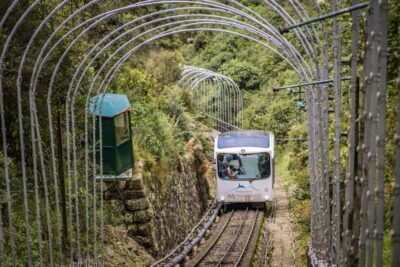
City Tour, Monserrate, Gold Museum, Plaza de Bolivar
Read our review →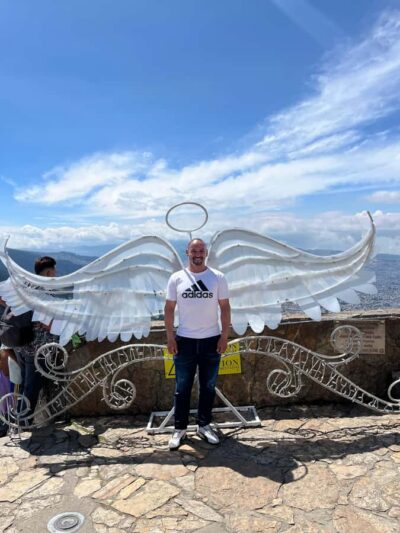
City Tour, Monserrate, Gold Museum, Botero Museum, Plaza Bolívar
Read our review →

VIP Bogota City Tour: Farmers Market, Monserrate, Candelaria, 9hr
Read our review →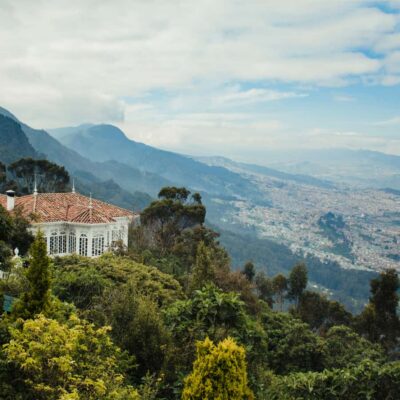
7-hour City Tour of Historic Bogotá with Monserrate
Read our review →Browse the lists this tour appears in