
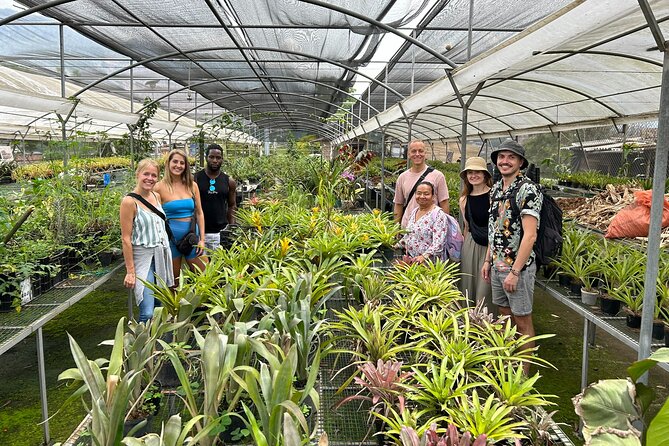
Reviewed · WALKING TOURS
Comuna 4 Walking Tour Medellin
Moravia was built on a garbage dump, then reshaped by families, government plans, and years of community resistance. This Comuna 4 walking tour gives you the side of Medellín’s transformation that polished city-center stories often leave out.
I like two things here. First, you walk with both a professional bilingual guide and a local community leader, such as Gladys, whose own life is tied to Moravia. Second, the tour tackles real subjects: health care, education, housing, football, and the strata system. The main consideration is that this is an urban walking tour about hardship, not a colorful photo stop, and some stories may feel heavy.
Key points to know
- Moravia grew from an illegal settlement on a former garbage site, and the tour explains how families made lives there.
- Toto and Gladys provide two useful viewpoints, combining city history with personal experience.
- The tour questions the standard story of Medellín’s transformation, including the effects of relocation plans.
- You discuss health care, welfare, education, and housing, not just street art and scenery.
- A tiny street empanada is included, along with visits to football spaces and the Moravia Cultural Center.
- The group is capped at eight people, making conversation easier during the 3.5-hour walk.
Why Comuna 4 tells a different Medellín story
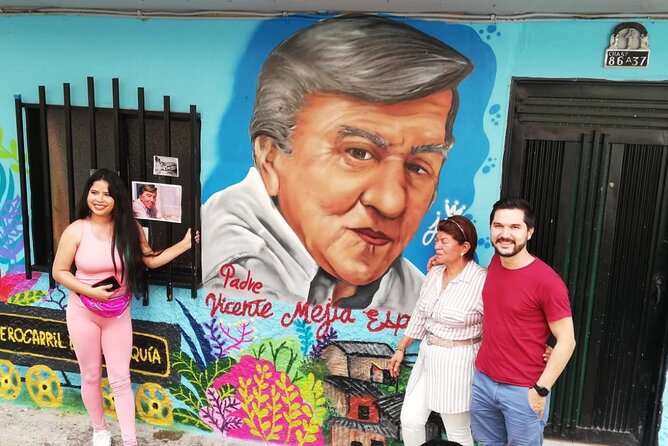
Medellín is often presented through its public transport, art projects, improved neighborhoods, and famous Comuna 13 tours. Moravia offers a less polished but more revealing look at how change reaches ordinary families.
The neighborhood began in the 1960s as an illegal settlement. Many families built their lives around a large garbage area, and the tour uses that history to explain how Moravia developed. You are not simply shown an old site and given a quick date. The discussion connects the area’s origins to housing, public services, government policy, and the people who stayed.
That makes this experience useful if you want to understand Medellín beyond its success story. The city has changed in important ways, but the benefits have not reached every family in the same way. This walk asks you to look at both progress and the cost of progress.
More Walking Tours in Medellin
- Medellin Historic Walking Tour
★ 4.9 · 86 reviews - 2-Hours Street Art Walking Tour in Medellin Comuna 13
★ 5.0 · 54 reviews - Walking tour downtown Medellín
★ 5.0 · 39 reviews
Meeting Toto and Gladys in Moravia
The tour includes a professional bilingual guide and a local community leader. Toto is the named guide associated with the experience, while Gladys joins as a woman who lived through much of Moravia’s history.
That pairing is one of the strongest reasons to book. Toto can organize the wider context, while Gladys brings memory and personal detail. You hear about Moravia as a place of policy and statistics, but also as a home shaped by resistance, work, family, and hope.
The group limit of eight is a real advantage. A small group makes it easier to ask questions and listen without a crowd forming around the speaker. It also suits the personal nature of the walk. This is not a guide rushing through a long list of photo stops.
From Estación Metro Caribe to Moravia’s beginnings
The walk begins at Estación Metro Caribe, with the guide and community ambassador setting the scene for Barrio Moravia. This first half hour explains how the area began in the 1960s as an illegal neighborhood.
Starting with context matters. Without it, Moravia’s streets could look like just another part of the city. The introduction helps you understand why families came, how settlement expanded, and why the neighborhood became tied to Medellín’s wider story of change.
The details supplied for the meeting point also list Avenida Regional near Calle 78 in Castilla. Since the booking information uses both Estación Metro Caribe and a street address, confirm the exact meeting instructions before setting out. The tour ends back at the meeting point, so you do not need to arrange a separate return transfer.
Morro de Moravia and the cost of relocation
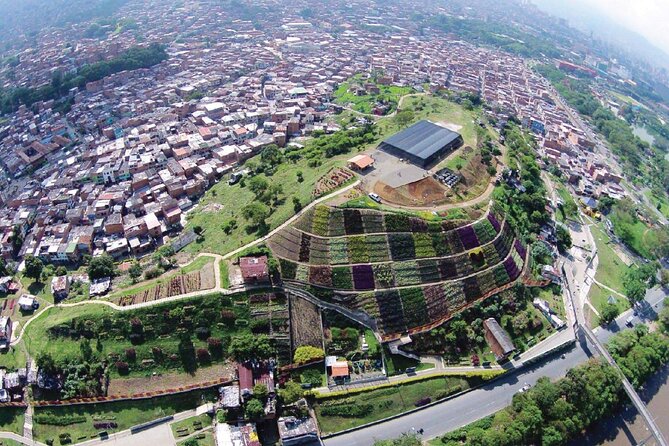
At Morro de Moravia, you visit La Resistencia de Moravia. This is the emotional center of the walk.
Here, the discussion turns to families who have resisted government relocation plans for more than a decade. That resistance is not treated as a simple argument between residents and officials. The point is to understand why relocation can threaten more than a building. It can disrupt work, schools, family networks, and a person’s sense of belonging.
You also hear the other side of Medellín’s transformation, the part often left out of official success stories. The tour does not ask you to accept a single version of events without thought. Instead, it gives you a setting where the tension between urban improvement and community rights becomes easier to grasp.
Expect this section to be serious. If you want only bright murals and easy photo stops, this may not be your best choice. If you want to understand how urban change affects people who already live in a place, this is valuable time.
A completely different kind of day, same corner of Colombia:
- Medellin: Comuna 13 Graffiti Tour, Cable Car & Street Food
★ 4.8 · 9,046 reviews - Medellín: The Real Pablo Escobar Tour
★ 4.8 · 3,205 reviews - Medellín: Comuna 13 True Story and Street Food Tour
★ 4.9 · 1,779 reviews - Medellín: Comuna 13 District Tour with Cable Car Ride
★ 4.8 · 1,467 reviews
Health care, welfare, and the street economy
The group then reaches Centro de Salud Moravia El Bosque, where you sit and discuss Colombia’s health care and welfare system.
This is a useful pause in both senses. After walking through the neighborhood, you get time to rest in a quieter place. The conversation also shifts from Moravia’s past to questions that affect daily life across Colombia.
The guide explains why street vending is so common and why a welfare system can exist while almost half of Colombians still lack access to it. That connection is important. Street sellers are not presented simply as part of the scenery or as people who have chosen informal work for easy reasons. The talk places their work within the gaps between public services, income, and access.
For you, this is one of the tour’s most practical sections. It gives a framework for understanding the small businesses and street activity you see throughout Medellín. Bring questions, since this is one of the stops designed for conversation rather than sightseeing.
Football, identity, and a neighborhood wall
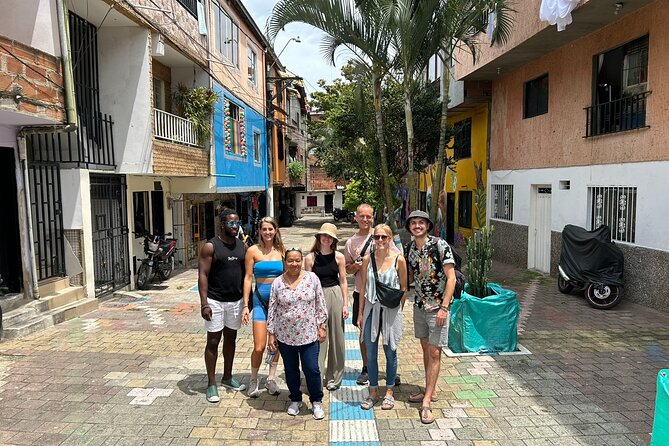
At Cigarreria La Plaquita, the tour pauses for about ten minutes to look at graffiti dedicated to Medellín’s major football clubs.
The stop is short, but the subject is not. Football carries strong cultural meaning in Colombian society, and the murals offer a way into that subject through a familiar neighborhood setting. You learn why club identity matters and how sport can reflect local pride, rivalry, and belonging.
This section also breaks up the heavier discussions. It is a quick visual stop, not a full stadium visit or a match-day experience. Still, it helps show how community identity appears on walls, in shared spaces, and in ordinary neighborhood life.
Education, social class, and a small local snack
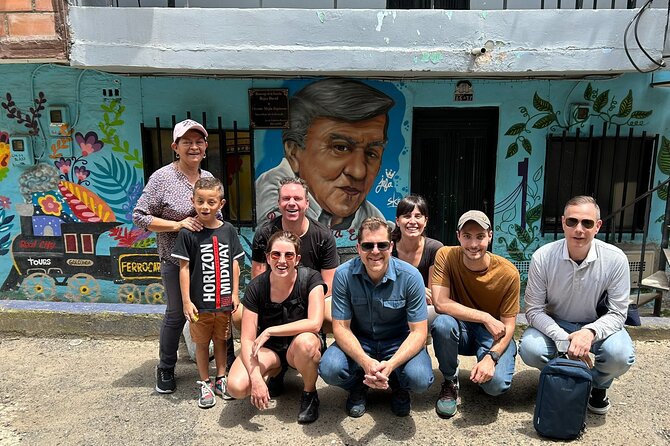
In front of Fundación Oasis Urbano, the group sits beneath the trees to discuss education and Colombia’s strata system. The shaded stop gives the walk another chance to slow down.
The strata system is an important topic for anyone trying to understand Colombian cities. It shapes how areas are classified and how some public costs are handled. Discussing it in Moravia makes the issue concrete rather than abstract. You can connect social class and public services to the streets you are walking through.
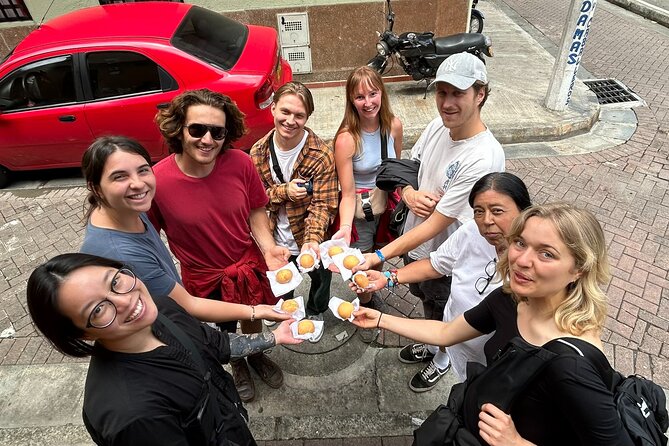
At E.I. Fe y Alegría, Luis Amigó, you stop for a small street empanada. The snack is described as one of the tiniest in the city, but also especially tasty. It is included in the price and gives you a simple taste of local street food without turning the tour into a food crawl.
Do not book this expecting a meal. The empanada is a brief snack during a walking experience, so eat beforehand if you need something substantial.
The football pitch and a story of persistence
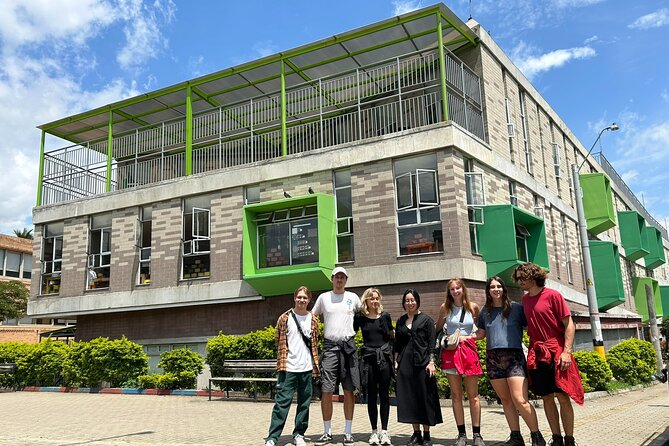
The synthetic neighborhood football pitch provides another look at community life. Here, a local ambassador shares her story of resilience, resistance, and hope.
This stop is only about ten minutes, but it adds a human scale to the broader topics. You have already heard about relocation, public services, and the neighborhood’s origins. At the pitch, those ideas come back to one person’s experience.
The setting matters, too. A football field is a shared community space, and it shows how local facilities can support connection and everyday life. The tour does not present Moravia only through its problems. It also shows the spaces residents have built, used, and defended.
Moravia Cultural Center and community-built progress
The final major stop is Moravia Cultural Center. With the community ambassador, you learn how residents helped build this important local infrastructure.
This visit gives the tour a needed sense of possibility. Earlier stops explain hardship and resistance. The cultural center shows what organized local effort can produce when a community creates places for learning, culture, and gathering.
You may find this contrast particularly useful. Moravia is not frozen in its past as a garbage settlement, nor is it presented as a finished success story. The cultural center represents work already done, while the continued challenges of overpopulation and relocation show that the story is still unfolding.
After the visit, the walk returns to the original meeting point. The full experience lasts about three and a half hours, so plan for a substantial amount of time on your feet, with several seated breaks.
What the $35 price gets you
At $35 per person, the cost is reasonable if you value access to local context and a small group rather than a long list of attractions.
The price includes the bilingual professional guide, the local community leader, and the street empanada. It does not include hotel pickup or drop-off, so you must make your own way to the starting point and back from the meeting area.
The real value comes from the two-guide format. A standard city walk might explain Moravia from the outside. Here, you also hear from someone connected to the community. That makes the price feel less like payment for sightseeing and more like support for a locally led experience, though the supplied details do not specify how the fee is divided.
You should also consider the small group. With a maximum of eight people, the walk can offer more direct conversation than a large bus or crowded neighborhood tour. If you prefer independent sightseeing, the cost may feel unnecessary. If you want a guided explanation of difficult subjects, it is a fair price.
Who should book this walk
I would choose this experience if you want:
- A less commercial view of Medellín
- Personal stories alongside historical explanation
- A small group with time for questions
- Discussion of housing, education, health care, and social class
- A community-based alternative to a standard Comuna 13 visit
- A tour that treats local residents as part of the story, not as scenery
It suits curious visitors who are comfortable hearing about poverty, displacement, and unequal access to services. It also suits anyone who has already seen Medellín’s better-known transformation narrative and wants to test it against local experience.
I would think twice if your main goal is street art, sweeping views, shopping, or a light afternoon walk. The tour includes graffiti and football culture, but those are supporting pieces. The main subject is Moravia’s people and the hard work behind its changes.
The tour is listed as suitable for most people, near public transportation, and open to service animals. Exact walking conditions are not described, so ask before booking if you need detailed mobility information. Free cancellation is available up to 24 hours before the start time. A booking confirmation is issued at the time of booking.
Should you book the Comuna 4 Walking Tour?
Book it if you want Medellín explained through the voices of people who have lived its changes. Toto’s guiding and Gladys’s personal connection give the walk both structure and feeling, while the stops cover far more than the usual street-art story.
The strongest reason to go is the balance between hard facts and human experience. You learn how Moravia began, why relocation remains contested, how health care and education affect daily life, and how community spaces offer hope. The main drawback is simply its seriousness. This is not a carefree outing, but it is an honest and worthwhile way to spend three and a half hours in Medellín.
FAQ
How long does the Comuna 4 Walking Tour last?
The tour lasts approximately 3 hours and 30 minutes.
How much does the tour cost?
The listed price is $35 per person.
Where does the tour begin?
The tour begins at Estación Metro Caribe. The booking details also list Avenida Regional near Calle 78 in Castilla, Medellín, so confirm the exact meeting instructions before departure.
Where does the tour end?
The activity ends back at the meeting point.
Who leads the tour?
A professional bilingual guide leads the walk with a local community leader. The named guide is Toto, and Gladys is identified as a local ambassador who shares her experience of Moravia.
Is food included?
Yes. A street empanada is included as a snack. Hotel pickup and drop-off are not included.
How large is the group?
The tour has a maximum of eight people.
Just added around Medellin
- Commune 13, Graffitour street food. History.All inclusive★ 5.0 · 35 reviews
- City tour, Commune 13, Metro Cable, Botero Park and more. Private★ 5.0 · 34 reviews
- Aerial Hammocks, Zip and Waterfall Trek on Medellin Private Tour★ 5.0 · 39 reviews
- Walking tour downtown Medellín★ 5.0 · 39 reviews
- Hiking Mountains and Magical Forests★ 5.0 · 27 reviews
- Barrio transformation and urban escalator of Comuna 13★ 5.0 · 47 reviews
- Tour to the Hacienda Nápoles Theme Park★ 4.0 · 22 reviews
- Tour Cabalgata★ 5.0 · 37 reviews
Walking Tours, compared.
Historic Center and Getsemaní Shared Walking Tour
Read our review →

A Pearl In The Caribbean-walking tour in English
Read our review →
Zipaquirá Salt Cathedral Private Tour + Walking Tour
Read our review →Browse the lists this tour appears in