
Reviewed · SHARED TOURS IN MEDELLíN
Shared Medellín Downtown Tour with Wireless Audio
Medellín’s downtown makes the most sense when you connect its public art, railroad history, and hard recent past. This walking tour does that in one long route, moving from Botero Plaza through Junín Street, La Alpujarra, and the Park of Lights while explaining how Medellín grew, suffered, and rebuilt itself.
I like the wireless audio receivers, which let you hear the guide over city noise while taking photos, and I like the frank treatment of the 1980s and 1990s. Guides including Santiago, Miguel, Carolina, Daniel, and Deisy are praised for making complicated history clear and personal. The main drawback is the length: you may walk about 8 km, and downtown can feel crowded and confronting in places.
Key points at a glance
- Botero Plaza begins the story: Meet by the Museo de Antioquia under Beyond Colombia’s red umbrellas and start among Fernando Botero’s famous sculptures.
- The past is not softened: The tour addresses drug trafficking, violence, politics, and social change without making the city’s story only about crime.
- Railroads explain Medellín’s growth: La Alpujarra and the old railroad story show how industry and transport helped shape the city.
- Wireless audio helps on busy streets: You can listen clearly while looking around, though the devices must be returned if rain begins.
- It is an active city walk: Plan for roughly 8 km, rest stops, changing weather, and crowded public areas.
- Local advice adds value: Your guide can suggest places for coffee, lunch, souvenirs, and later activities.
Starting at Botero Plaza with Medellín in full view
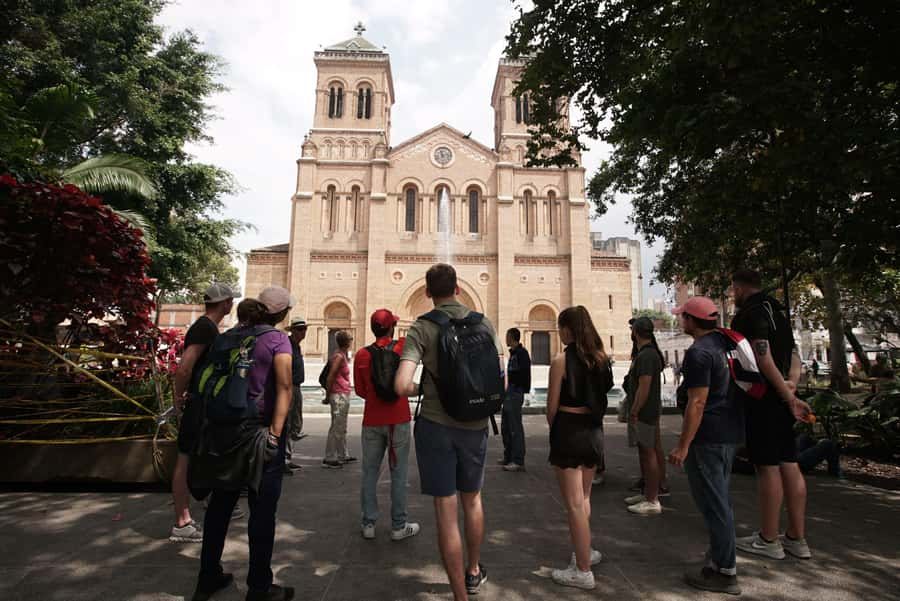
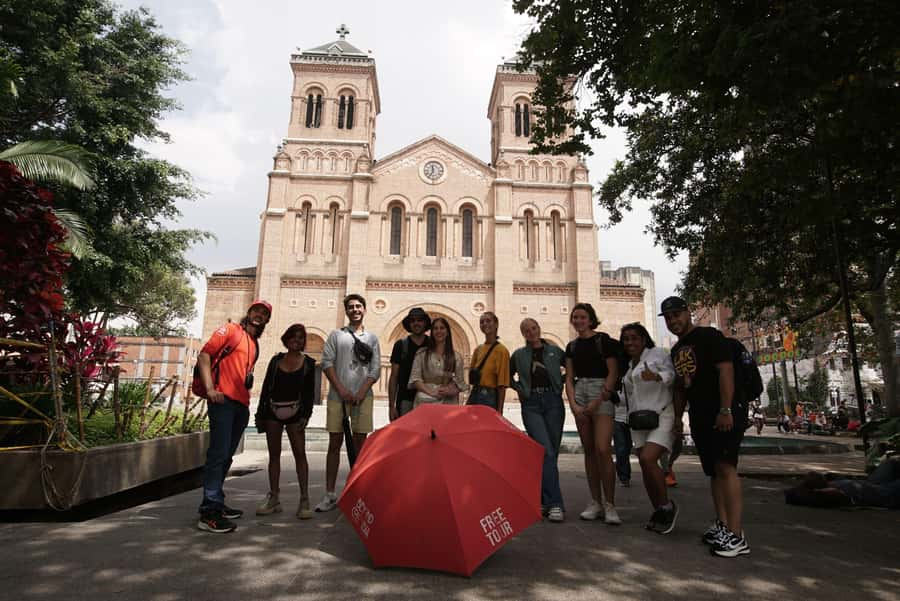
Your meeting point is directly in front of the Museo de Antioquia at Botero Plaza. Look for the red umbrellas used by Beyond Colombia. This is a sensible starting place because the square quickly introduces several sides of Medellín: art, public space, tourism, and the busy daily life of the center.
Fernando Botero’s large bronze figures give the opening stop a clear visual focus. The guide explains Botero’s connection to Medellín, his art, and his contributions to Colombia. You do not need to know his work in advance. The sculptures make it easy to begin with something you can see before moving into more complex subjects.
From here, the route uses passages and public streets rather than keeping you inside a museum. That matters. You are not simply hearing a prepared history lesson in a quiet room. You are learning while watching commuters, shopkeepers, street sellers, public buildings, and the changing rhythm of downtown.
The square can be crowded, so keep your phone and wallet secure. The tour instructions are direct about staying alert, especially in busy areas. This is basic city sense, not a reason to avoid the walk, but you should not wander with your camera or phone in hand without paying attention.
More Shared Tours in Medellin
- Post-conflict Shared Tour (Paul) and Violence Medellin
★ 5.0 · 69 reviews - Pablo Escobar Private Group Tour Including La Catedral Jail in Medellin
★ 5.0 · 56 reviews - Guatapé & Peñol Rock Day Group Tour
★ 4.6 · 15 reviews
Following Paisa culture through the city center
A central theme is the Paisa identity of Antioquia. The guide explains the customs, work ethic, industry, and regional culture that help explain Medellín’s importance in Colombia. This gives the city more depth than a simple list of plazas and monuments.
The tour connects culture to the city’s development. You hear how industry and commerce helped Medellín grow, and how local identity shaped the way people understood that growth. The useful part is the connection between ordinary city life and larger national importance.
Guides are encouraged to respond to questions, and this seems to be one of the tour’s strongest features. Santiago is repeatedly described as energetic and easy to follow. Miguel is praised for combining history with current affairs and practical suggestions. Alex is noted for answering political and social questions in a way that did not feel fixed to a script.
Guide assignments change, so you cannot book a particular personality unless the operator confirms it. Still, the repeated appearance of guides such as Santiago, Miguel, Carolina, Daniel, and Deisy gives you a sense of the team’s range. Carolina has also taken time to check that visitors understood when their Spanish was limited, which is useful on a tour with serious subject matter.
Junín Street and the everyday face of downtown
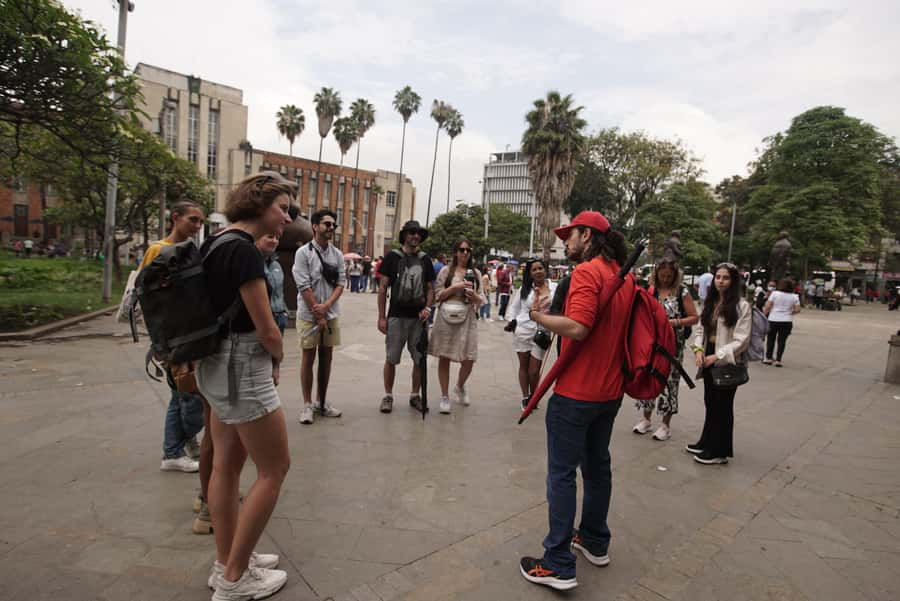
The route crosses the famous Junín Street and moves through passages in the center. This section helps you see Medellín as a working city rather than a collection of set pieces.
You may notice that the downtown experience is not polished in the way some tourist districts are. The walk brings you through crowded areas where you need to stay with the group and keep valuables close. One of the harder parts can be encountering persistent requests for money and visible drug use in some parts of the center.
That reality is worth knowing before you book. The tour does not create these conditions, and the guide can help you move through them with context, but you should not expect every block to feel relaxed. If you want only cafés, viewpoints, and carefully restored streets, this is not the right introduction to Medellín.
I see this roughness as part of the tour’s value, provided you are prepared for it. The center shows both public investment and unresolved problems. You get a more honest sense of the city than you would from staying only in a modern hotel district.
The 1980s and 1990s without a one-note story
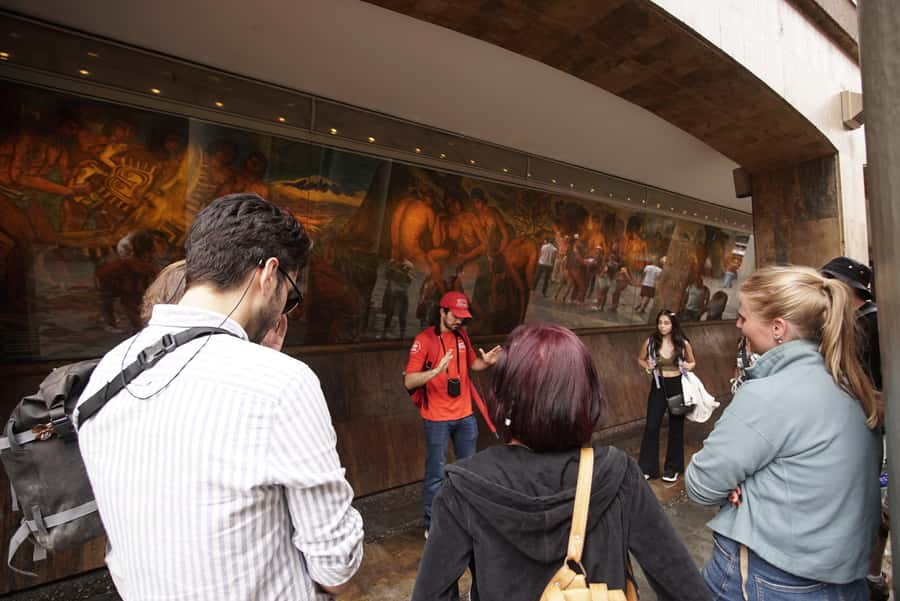
The most important part of the tour is the discussion of Medellín’s violent recent past. The guides address drug trafficking, fear, conflict, and the damage done during the 1980s and 1990s. They also explain how the city responded through social investment, collective work, and public projects.
This section needs a steady hand. Medellín is often reduced to a crime story, especially in popular entertainment. The tour pushes beyond that narrow version, but it does not pretend the violence was unimportant. You hear about the difficult period while also learning why many residents see the city’s changes as a source of pride.
The wording of the experience promises objective treatment, yet one practical point is worth keeping in mind: no account of Medellín’s transformation is perfectly detached. Guides are local, and some speak with clear affection for their city. That can make the story more human, but it also means you should listen for several viewpoints and ask questions.
Daniel has been praised for discussing the city’s progress while remaining open about its problems. Sebastian is noted for presenting Medellín’s past without making the tour mainly about narcos. That balance is exactly what you want from a first visit: clear facts, local feeling, and room for questions.
A few more Medellin half-days worth weighing up
- Medellin: Comuna 13 Graffiti Tour, Cable Car & Street Food
★ 4.8 · 9,046 reviews - Medellín: The Real Pablo Escobar Tour
★ 4.8 · 3,205 reviews - Medellín: Comuna 13 True Story and Street Food Tour
★ 4.9 · 1,779 reviews - Medellín: Comuna 13 District Tour with Cable Car Ride
★ 4.8 · 1,467 reviews
La Alpujarra and the railroad that changed Medellín
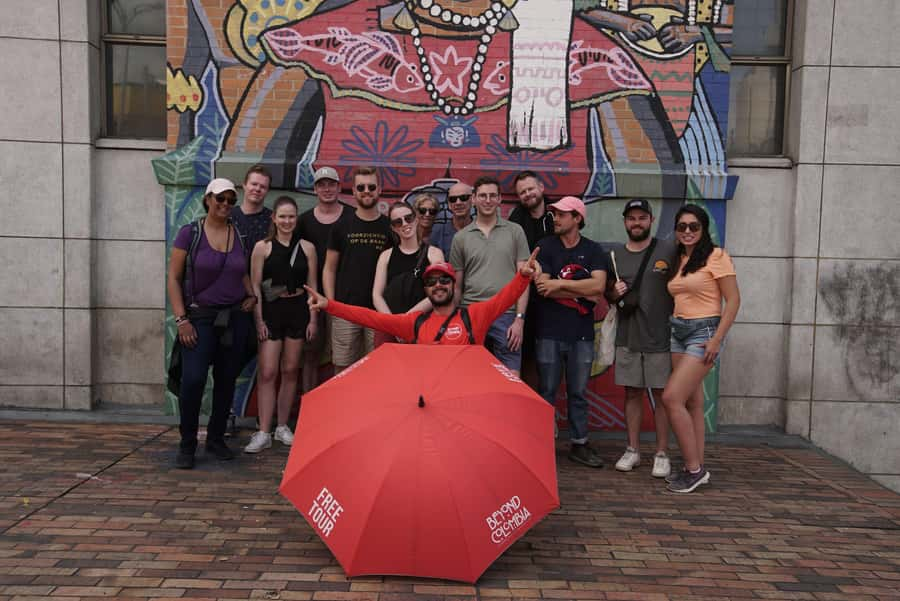
La Alpujarra is one of the tour’s key historical stops. The railroad story helps explain how Medellín connected its industries and developed its role in the country. Instead of treating the railway as a minor detail, the guide uses it as a symbol of ambition, work, and modern growth.
This is where the tour’s citywide story comes together. Botero’s art shows one part of Medellín’s cultural identity. Paisa industry explains another. The railroad gives you a physical example of how people, goods, and ideas helped the city expand.
The stop is also useful because it shifts the focus away from the most repeated stories about Medellín. You are looking at infrastructure and civic development, not only violence and recovery. The father of Medellín’s railroads receives special attention later at the Park of Lights, tying the route together.
You should expect to listen outdoors, with traffic and other city sounds around you. The wireless receiver is especially helpful here. You can stand at the edge of the group, take a photo, and still follow the explanation instead of trying to hear a guide shouting over the street.
The Park of Lights and the city’s public future
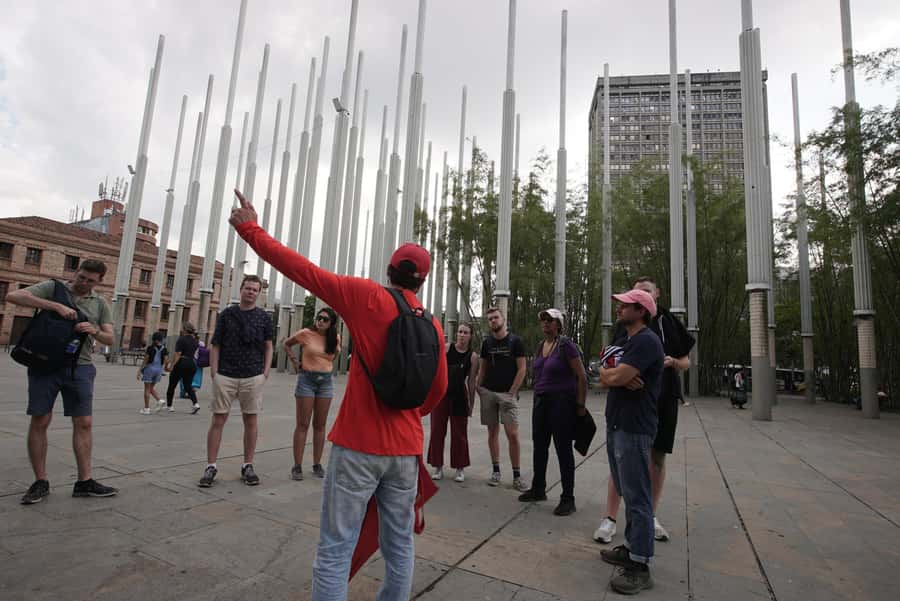
The Park of Lights is another major stop. Its lights and tall structures create a strong public setting, while the guide explains its connection to Medellín’s railroad history and its tribute to the father of the city’s railroads.
The point is not just the appearance of the park. It represents how public spaces can carry memory and signal change. The guide uses the setting to talk about Medellín’s attempt to build a brighter future after years of violence.
You may find the contrast striking: the route moves through crowded streets and difficult social conditions, then reaches a place designed around civic identity and public life. That contrast is one of the best reasons to take the walk in person. Photos alone cannot show how these spaces fit into the daily center.
The tour also includes murals and other local sites. The exact order and time at each stop can vary with the group, weather, holidays, and street conditions. Do not expect a museum-style schedule with every doorway guaranteed to be open. One group could not enter both churches because of a national holiday, a reminder that the walk is shaped by the living city.
Wireless audio, pace, and walking conditions
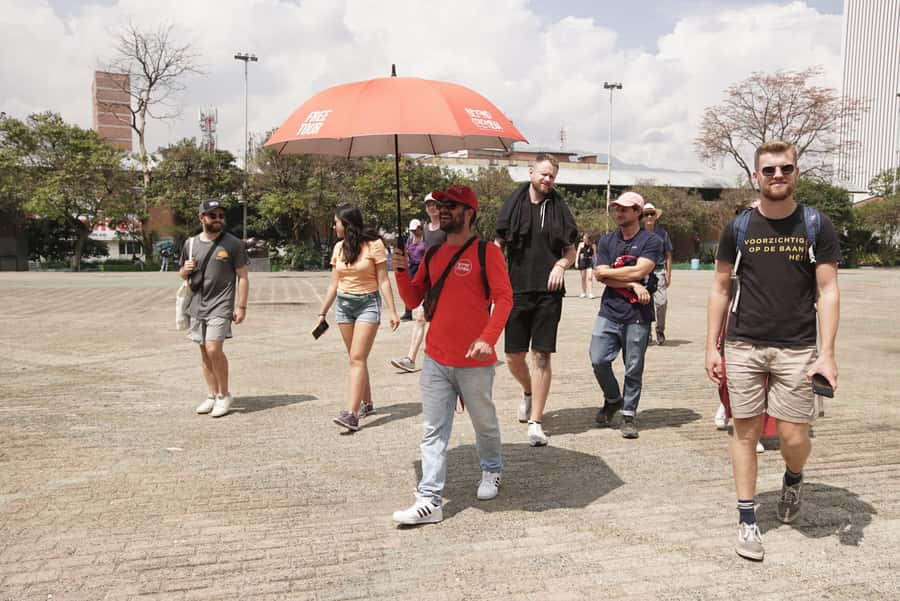
The audio system is a real practical feature. Each participant receives a wireless audio receiver, allowing the guide to speak without forcing the whole group into a tight circle. You can hear while taking pictures, and the system is useful on noisy streets.
There are two limits. The equipment is not suitable for children under 15, and it is not waterproof. If rain starts, the devices must be collected and kept safe. Bring your own rainproof coat or umbrella because Medellín’s pleasant climate does not mean dry weather all day.
The route lasts about 150 minutes to three hours. The longer estimate matters because you will walk roughly 8 km, with stops to listen and rest. Wear proper walking shoes, carry water, and choose comfortable clothing over anything stylish but restrictive.
This tour is not suitable for people with mobility impairments. It is also not a ride. Transportation to the starting point, transportation during the route, food, drinks, and souvenirs are not included. You are paying for a guided city walk, not a vehicle-based sightseeing circuit.
What $13 buys you in practical terms
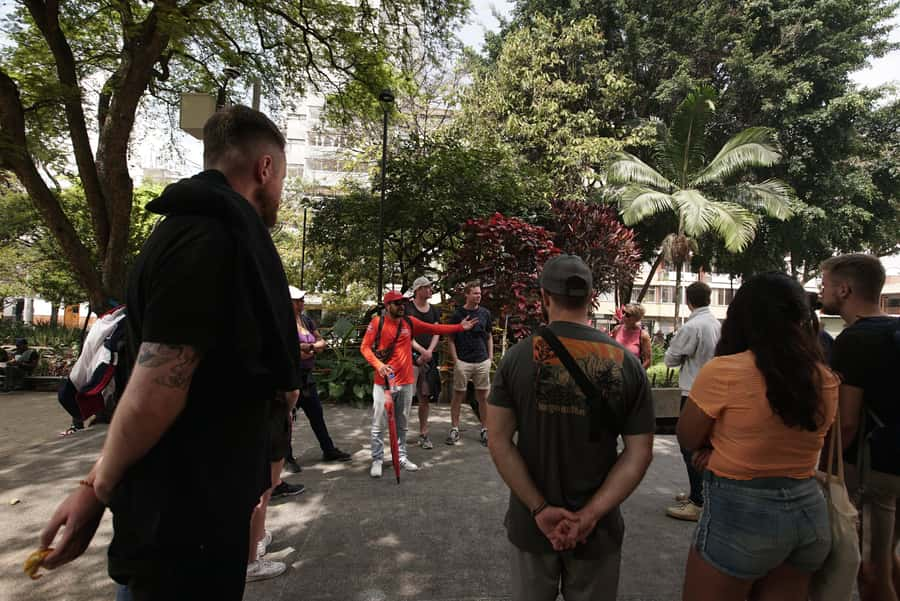
At $13 per person, this is strong value if you want context rather than a quick photo stop. You receive an English or Spanish-speaking guide, a long route through essential downtown sites, the audio equipment, and recommendations for local places to eat, buy coffee, or shop for souvenirs.
The value comes from the connections. You could visit Botero Plaza, La Alpujarra, and the Park of Lights on your own, but the meaning of each place would be harder to link. A good guide turns separate sights into one explanation of Medellín’s culture, industry, conflict, and public investment.
The shared format keeps the price low, but you do not get a private guide. Group size can vary. One particularly small group had only five people, while other departures may feel less personal. If you want a private pace or a custom route, this is not that product.
There are no surprise entrance fees built into the route. You should still bring money for anything you choose to buy afterward, but the tour is designed around public sights rather than sudden paid stops. That makes budgeting easy.
Who will get the most from this walk
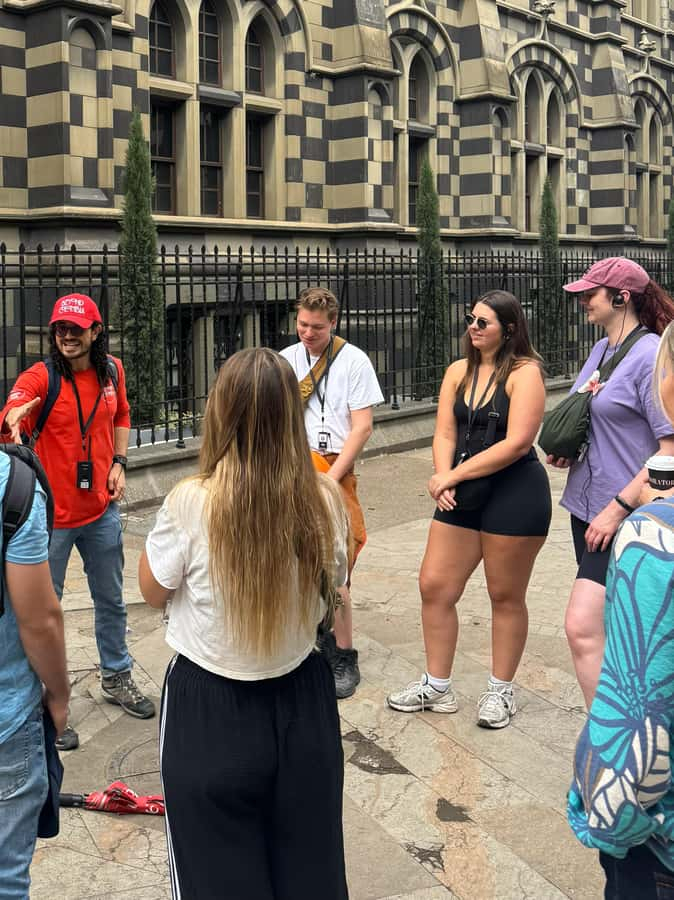
I would choose this tour for a first day in Medellín. It gives you a map in your head, introduces the center, and provides practical suggestions for what to do next. Several guides also offer advice about coffee, souvenirs, and other Colombian cities.
It suits you if you enjoy urban history, public art, politics, and honest discussion. It is also a good fit if you want to understand why Medellín is more than its reputation from the 1980s and 1990s.
You may want a different tour if your priority is food, nightlife, neighborhood architecture, or a short accessible route. The walk is long, and the center can be intense. Families should also note the wireless equipment restriction for children under 15.
Use English or Spanish according to your comfort. The guides work in both languages, and Carolina has been especially attentive when visitors struggled with Spanish. If a subject is unclear, ask. The best accounts of this tour come from guides who adjust their explanations to the group rather than racing through a memorized speech.
Small details that make the day easier
Meet at the Museo de Antioquia in Botero Plaza and arrive ready to identify the red umbrellas. Bring water, sun or rain protection, and shoes you can wear for several hours.
Keep your belongings close in crowded areas. Avoid smoking, alcohol, drugs, and littering during the activity. The tour takes place in public streets, so respectful behavior helps the group move smoothly.
If your plans change, you can cancel up to 24 hours before the start for a full refund, and you can reserve while paying later. Those policies make it easier to place the tour early in your schedule without locking yourself into a rigid plan.
Should you book the Medellín Downtown Tour?
Book it if you want a serious first look at Medellín’s center, especially its art, railroad story, Paisa culture, and difficult recent past. At $13, the combination of a long walking route, local guidance, and wireless audio offers a lot for the money.
Skip it if you dislike long walks, crowded downtown streets, or discussions of violence and drug trafficking. Also think twice if you need step-free access or a short, gentle outing.
For most independent visitors who want to understand Medellín before exploring more of the city, I would book this early in the stay. Wear good shoes, bring rain gear, and arrive with an open mind.
FAQ
Where does the tour meet?
Meet in front of the Museo de Antioquia at Botero Plaza. Look for the red umbrellas marked Beyond Colombia.
How long does the tour last?
The tour lasts about 150 minutes to three hours. The exact timing can vary, so check the available starting times when booking.
How much walking is involved?
You will walk about 8 km, with resting stops and time to listen to the guide.
Is transportation included?
No. You must arrange transportation to and from your hotel, and the tour itself is done on foot.
Which languages are available?
The tour is offered in English and Spanish with a live guide.
Is the tour private?
No. It is a shared tour, so you will be part of a group rather than accompanied by an exclusive guide.
What does the wireless audio system do?
The receiver lets you hear the guide clearly on busy streets while taking photos or looking around.
Can children use the wireless audio equipment?
The wireless audio system is not suitable for children under 15 years old.
What happens if it rains?
The audio devices must be collected and kept safe because they are not waterproof. Bring a rainproof coat or umbrella.
Can I cancel for a refund?
Yes. You can cancel up to 24 hours in advance for a full refund. You can also reserve now and pay later.
Just added around Medellin
- Commune 13, Graffitour street food. History.All inclusive★ 5.0 · 35 reviews
- City tour, Commune 13, Metro Cable, Botero Park and more. Private★ 5.0 · 34 reviews
- Aerial Hammocks, Zip and Waterfall Trek on Medellin Private Tour★ 5.0 · 39 reviews
- Walking tour downtown Medellín★ 5.0 · 39 reviews
- Tour to the Hacienda Nápoles Theme Park★ 4.0 · 22 reviews
- Hiking Mountains and Magical Forests★ 5.0 · 27 reviews
- Barrio transformation and urban escalator of Comuna 13★ 5.0 · 47 reviews
- Tour Cabalgata★ 5.0 · 37 reviews
Shared Tours in Medellín, compared.
Post-conflict Shared Tour (Paul) and Violence Medellin
Read our review →
Pablo Escobar Private Group Tour Including La Catedral Jail in Medellin
Read our review →

Guatape and El Peñol Rock Tour: Private or Shared
Read our review →

Shared Tour to Comuna 13 & Aurora Cable Car in Medellin
Read our review →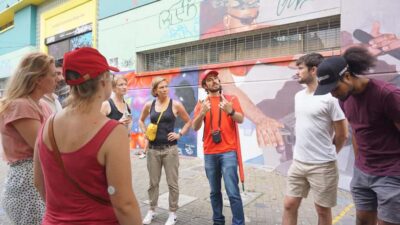
Shared Tour Medellin’s Violence & Post-conflict after Pablo
Read our review →Browse the lists this tour appears in