
Reviewed · CITY TOURS
Popayán: Gastronomic Wonders and City Tour
Popayán’s best stories may come on a plate. This five-hour walking tour pairs the White City’s colonial center with local foods such as tamal de pipián, carantantas, champús, and aplanchaos. You get more than a march past white façades: food gives you a way into daily life in Cauca.
I like the smart combination of sights and snacks, especially the stops at the Clock Tower, Caldas Park, the Cathedral, and other central landmarks. I also like the visit to Café Tiuspa – Peace Center, which adds a modern community project to the usual city walk.
The main caution is that this is not a full-day food crawl. One guest found the food portion a little light and wanted more snacks between stops. Vegans, people with food allergies, and anyone avoiding gluten should choose another tour.
Key points at a glance
- Local dishes with a clear sense of place: Try pipián pastries, carantantas, mazamorra, champús, tamal de pipián, and other Cauca specialties.
- A food tour that also covers the center: See the Clock Tower, Caldas Park, the Cathedral, monuments, statues, and colonial buildings.
- Café Tiuspa adds social context: Visit a peace and innovation center rather than spending all five hours among historic façades.
- Jaime has guided this route: His tour included the main cathedrals, the town square, university buildings, and the house linked with Alexander von Humboldt.
- Five hours is useful but tightly packed: You have time for a solid introduction, not an unhurried day of eating.
- Check the tax detail before paying: The stated price is $137 per person, and 19 percent VAT is not included unless eligible foreign visitors send passport and entry-stamp proof.
Why Popayán’s food belongs in the city tour
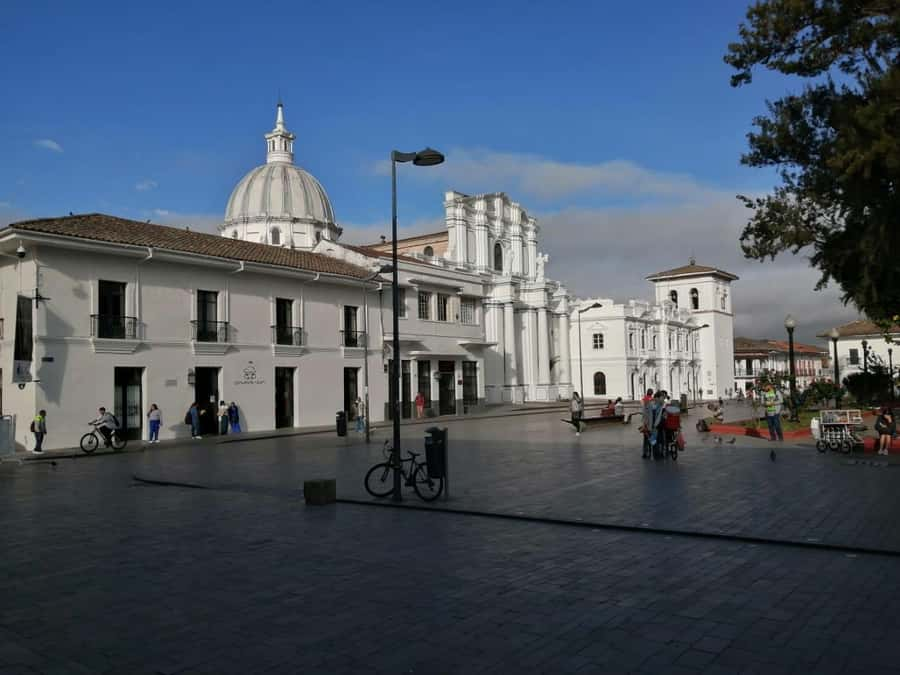
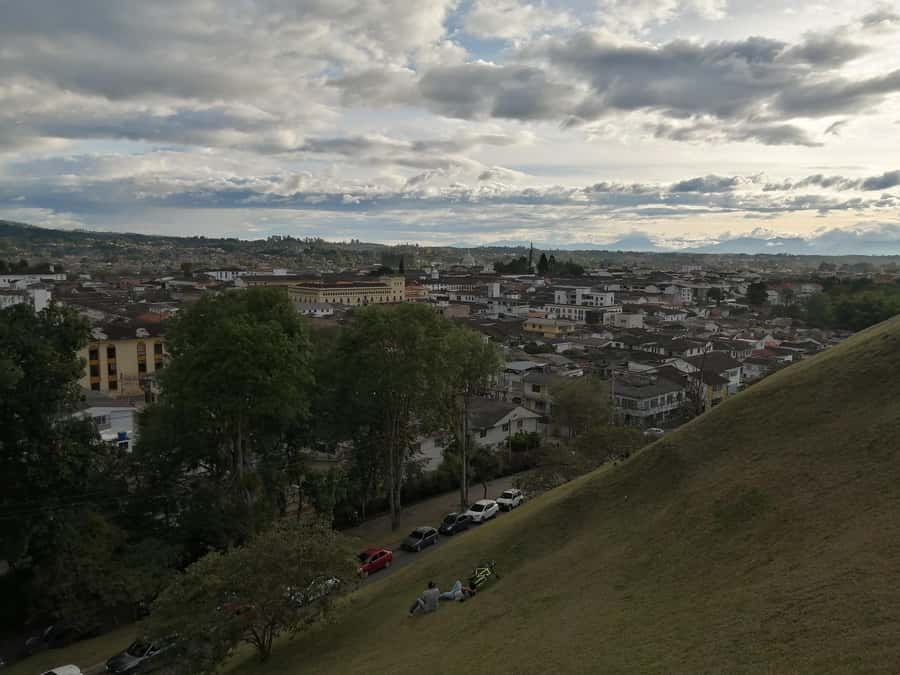
Popayán is often presented through its white buildings, stone streets, churches, and public squares. That gives you the city’s shell. Food gives you the closer look.
The local cooking reflects ingredients and habits from Cauca, with corn playing a major role. Pipián appears in several forms, while carantantas turn corn into a large, crisp snack. Drinks such as champús and salpicón add sweetness and texture to the route.
I like this approach because the food is not treated as a separate show. You see where the city’s public life happens, then taste something tied to the region. That connection makes the architecture easier to remember. A church is one thing on a guided walk. A church followed by an explanation of the food people eat nearby gives you a more human picture.
The tour is also designed for people who want local contact without arranging a private food itinerary. You share the experience with a guide and local businesses, then visit Café Tiuspa, where the focus turns toward peace and community work.
More City Tours in Cali
- Cali: City Tour
★ 4.9 · 57 reviews - Cristo Rey, Tertulia Museum and Downtown Cali City Tour
★ 4.5 · 44 reviews - Cali: Discover Cali City Highlights and Local Drink
★ 5.0 · 20 reviews
The historic center: Clock Tower, Caldas Park, and the Cathedral
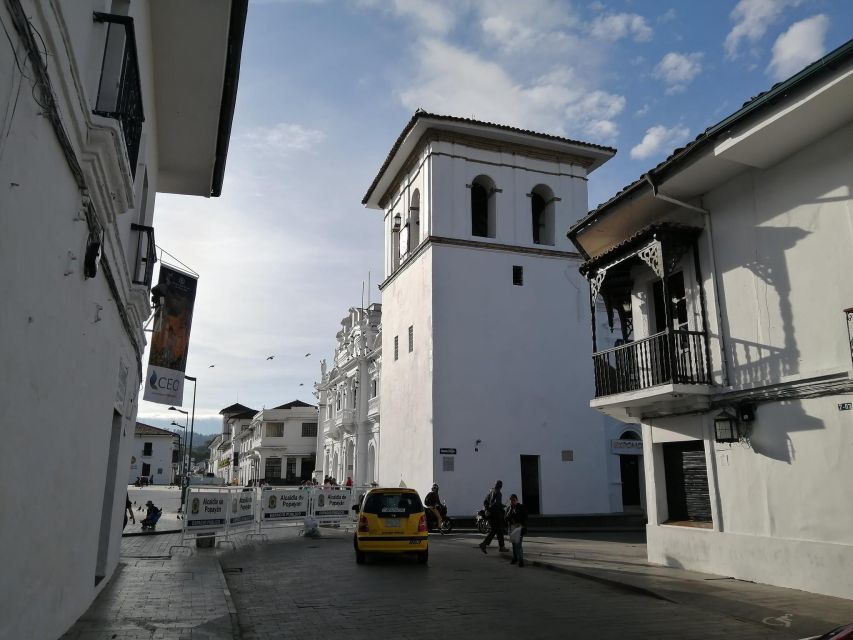
The route takes you through Popayán’s main historic district. The Clock Tower, Caldas Park, the Cathedral, monuments, statues, university facilities, and other churches form the backbone of the sightseeing portion.
Caldas Park is an important orientation point. A guide can help you read the square as more than a place to take photographs, explaining how central public spaces connect civic buildings, religious sites, and everyday city life. The Clock Tower gives you another recognizable marker and helps place the surrounding streets.
The Cathedral and other cathedrals bring the religious side of Popayán into view. You should expect a good deal of architecture on this outing. That is worth knowing because the tour is not built around constant eating. It is a city tour with food woven through it.
Jaime, one of the guides associated with the experience, has led a route that included the main cathedrals, the town square, the Clock Tower, university buildings, and the place where Alexander von Humboldt lived during his time in Popayán. Those details show the range of the walk. You are not limited to one church and a quick square visit.
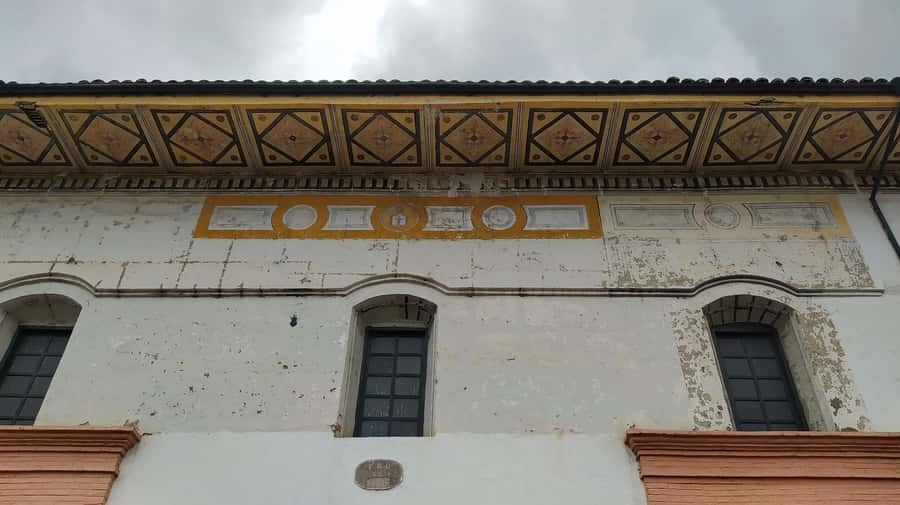
The buildings also help explain why Popayán is called the White City. White walls, colonial forms, monuments, and cobblestone streets create a consistent visual identity. Bring sunglasses, a hat, sunscreen, and comfortable clothes. The tour lasts five hours, so comfort matters more than dressing for a single photograph.
Pipián, corn, and the first taste of Cauca
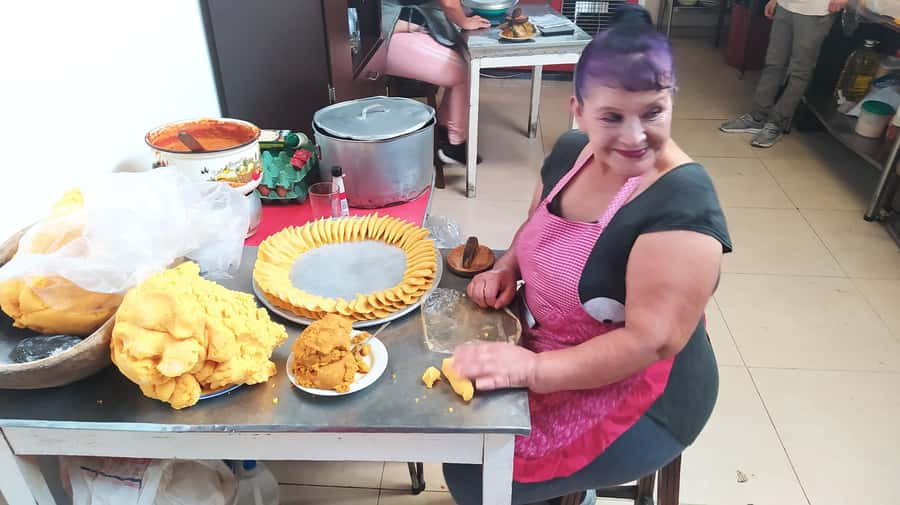
The food portion centers on familiar local ingredients rather than polished restaurant dishes. Pipián is especially important. You may taste it in empanadas de pipián, filled corn pastries, and in tamal de pipián, a leaf-wrapped preparation.
The menu also includes giant corn chips called carantantas. Their crisp texture makes them a useful introduction to the region’s corn-based cooking. Typical sweets called aplanchaos provide a different note, while mazamorra brings another traditional preparation into the picture.
You should think of these samples as a guided introduction, not a sequence of large meals. The included items are varied, but portions and timing matter. One account of the route found that most of the eating came toward the end, with fewer snacks along the way than expected. If you need regular food breaks, have a small meal before starting and treat the tastings as additions.
The tour lists a typical drink such as salpicón or champús, a coffee or other hot drink, a cold drink, and either a corn beverage or chontaduros, an exotic fruit. That gives you a broad range of flavors and temperatures. You are not simply handed one pastry and sent onward.
This is also where the tour’s limits become clear. The experience is unsuitable for vegans, people with food allergies, and people with gluten intolerance. The listed food includes corn pastries, tamal, sweets, and other items that may not fit strict dietary needs. Ask about ingredients before booking if you have any concern, but the published guidance is firm: this tour is not designed for those diets.
The market stop and the value of eating in context
The market visit is one of the more useful parts of the experience because it takes the food beyond a tasting plate. A market gives you a chance to see the ingredients and local buying habits connected with the dishes.
The exact market sequence is not specified, so you should not expect a fixed list of stalls or a formal cooking lesson. Instead, plan on a guided look at local foods and a chance to connect the dishes with the people who produce, sell, and eat them.
That matters in Popayán. A dish such as a pipián pastry can seem like a small snack when served alone. In a market setting, it becomes part of a wider food culture. The guide can explain names, uses, and local habits in a way that a restaurant menu rarely can.
Still, keep your expectations practical. This is a five-hour route with historic stops, drinks, sweets, and several foods. It is not an all-day market exploration. If your main goal is to shop, photograph every stall, or eat large portions, you may want a separate market visit.
More food tours in Cali:
- The Cali Street Food Walking Tour
★ 5.0 · 81 reviews - Cali: Street Food Tour
★ 4.8 · 71 reviews - Street Food Tour – Live A Unique Gastronomic Experience
★ 5.0 · 34 reviews - Shared Tour Cali’s Local Food at Alameda Market
★ 4.8 · 12 reviews
Café Tiuspa and a more current side of Popayán
The visit to Café Tiuspa – Peace Center gives the tour a welcome change of pace. Instead of looking only backward at colonial buildings, you spend time in a place connected with peace and innovation.
That stop supports the tour’s promise of sharing with the local community. It also keeps the outing from becoming a simple list of churches and monuments. You get a look at a present-day project and a setting where coffee or another hot drink may fit naturally into the route.
I value this part because historic city tours can become trapped in the past. Popayán is not just its monuments. A community space shows how local people are working with current social concerns and new ideas.
The available information does not give a detailed program at Café Tiuspa, so I would not book this expecting a workshop, performance, or lengthy presentation. Think of it as a meaningful stop within a broader food and city tour.
How the five hours are likely to feel
Five hours is long enough to give Popayán a proper first look, but the pace will depend on the group, guide, and time spent at each food stop. You will cover several central landmarks and have repeated tastings, so this is not a quick orientation walk.
The route appears to balance explanation with movement. You may spend one stretch discussing a cathedral or public square, then switch to a snack or drink. That variety helps, especially for people who find a building-only tour too dry.
At the same time, you should expect plenty of history. One guest particularly enjoyed seeing many buildings and learning about the city’s past, while another felt the gastronomic side could have been larger. Both reactions make sense. The tour’s strength is the combination, not a pure focus on either food or architecture.
English and Spanish are available. If you book in English, confirm the language arrangement at the time of booking. One English-speaking group received Spanish explanations with a translator and still found the detailed information clear. That can work well, but you may prefer a fully English-led route if language flow is especially important to you.
The tour is listed as wheelchair accessible. Since the route includes cobblestone streets and multiple historic areas, it is sensible to confirm the exact meeting route and any street-level conditions before booking. The published accessibility note is positive, but old city surfaces can still affect comfort and pace.
Is $137 a fair price?
At $137 per person, this is not a budget walk. The value depends on what you want from a five-hour introduction.
The price includes a guide in your preferred language, the listed tastings, drinks, the market component, and the Café Tiuspa visit. You are paying for interpretation as much as for food. If you tried to arrange separate explanations of the historic center, a market visit, and several local tastings, the convenience could be worthwhile.
The price feels less attractive if you expect a large lunch or a constant stream of street food. The food is varied, but the route is not presented as a heavy meal. One useful strategy is to view it as a cultural orientation with enough tasting to introduce the local kitchen. Plan another meal later.
Also check the tax condition carefully. The stated price does not include 19 percent VAT. Foreign visitors entering as tourists may receive the applicable benefit by sending a copy of their passport and the photo of the entry stamp, as required by Colombia’s national tax authority. This is a practical detail that can change your final cost.
The provider allows cancellation up to 24 hours in advance for a full refund and offers reserve-now, pay-later booking. Those terms help if your Colombia schedule is still changing.
Who will enjoy this Popayán experience?
I would choose this tour if you want your first day in Popayán to cover the main center while giving you a taste of local food. It suits couples, first-time visitors, and curious eaters who want context instead of a stand-alone meal.
It is also a good fit if you like guided history but lose interest when a tour becomes buildings only. The food breaks give the route a more personal rhythm, and Café Tiuspa adds a present-day community angle.
You may want another option if you are a serious food enthusiast seeking a full meal-by-meal crawl. The tasting list is broad, but the schedule also gives substantial time to churches, squares, monuments, and architecture.
I would also skip it if you are vegan, gluten intolerant, or managing food allergies. The experience does not promise suitable substitutions. A food tour should make you comfortable enough to eat, not leave you guessing about every sample.
What to bring and how to prepare
Wear comfortable clothes and shoes suitable for five hours in the city center. Pack sunglasses, a sun hat, sunscreen, and your passport or ID card.
Bring your passport in particular if you need to document tourist status for the VAT benefit. The required proof includes a copy of the passport and a photograph of the entry stamp.
Come with room for tasting rather than expecting to arrive hungry for a large lunch. Since the food may be concentrated toward the latter part of the route, a light meal before the tour can make the schedule easier.
English and Spanish are offered, and the tour is wheelchair accessible. Confirm the language and accessibility details when booking, especially if you need a specific arrangement.
Should you book it?
Book this tour if you want Popayán’s churches, squares, and white façades explained alongside the foods that shape local life. The strongest parts are the mix of pipián dishes and drinks, the central landmarks, the market connection, and the Café Tiuspa visit.
Do not book it expecting a five-hour eating marathon. The route gives food a meaningful role, but the historic center remains the main framework. At $137, the value is best for someone who wants a guided cultural introduction and would otherwise need to arrange several activities separately.
For a first visit, I think the combination makes sense. You leave with a map of the city, a list of foods to seek out later, and a better idea of how Popayán’s past and present fit together.
FAQ
How long does the Popayán food and city tour last?
The tour lasts five hours.
How much does the experience cost?
The stated price is $137 per person. The price does not include 19 percent VAT unless the applicable foreign tourist benefit is processed with the required passport and entry-stamp proof.
Which languages are available?
The tour is available in English and Spanish.
What foods and drinks are included?
The listed inclusions are a typical drink such as salpicón or champús, carantantas, aplanchaos, tamal de pipián, coffee or another hot drink, empanadas de pipián, a cold drink, and either a corn beverage or chontaduros.
Does the tour visit historic landmarks?
Yes. The route includes landmarks such as the Clock Tower, Caldas Park, the Cathedral, monuments, statues, university facilities, and other central sites.
Does the tour include a market visit?
Yes. The experience includes a visit to a market for local food and culinary context.
What is Café Tiuspa?
Café Tiuspa is described as a Peace Center connected with community peace and innovation. It is included as one of the tour stops.
Is the tour wheelchair accessible?
Yes, the activity is listed as wheelchair accessible.
Can I cancel the booking?
You can cancel up to 24 hours in advance for a full refund. Reserve-now, pay-later booking is also available.
Just added around Cali
- Street Food Tour – Live A Unique Gastronomic Experience★ 5.0 · 34 reviews
- Rivering in The Danube (The Mermaid)★ 5.0 · 40 reviews
- Salsa Bar Hopping in Cali★ 4.5 · 43 reviews
- Salsa & Music Tour of Cali★ 5.0 · 42 reviews
- Pance Waterfalls: Hike to discover the biodiversity of the valley★ 5.0 · 33 reviews
- The Cali Salsa Tour★ 4.7 · 9 reviews
- Shared Tour Cali’s Local Food at Alameda Market★ 4.8 · 12 reviews
- Friday Salsa Pub Crawl in Cali★ 4.9 · 23 reviews
City Tours, compared.
Private City Tour, Monserrate, Emerald and Botero
Read our review →
City Sightseeing Hop-On Hop-Off Bus Tour & Extras
Read our review →
Bogotá City Tour with Monserrate, Gold and Botero Museums
Read our review →
BILINGUAL CITYTOUR + SAN FELIPE CASTLE & Old city
Read our review →
Private City Tour with Metrocable and Comuna 13
Read our review →Browse the lists this tour appears in