
Reviewed · HISTORICAL TOURS
Shared Tour Cali’s Historical Downtown
Cali’s story is not just about salsa. It is also about Afro-Colombian culture, Pacific flavors, political protest, civil conflict, and the creative ways people have kept their city moving. This shared walk connects those threads while taking you from La Merced to the Río Boulevard and Jairo Varela Plaza.
I like two things right away: the subject matter goes beyond old churches, and the guides connect history to food, music, slang, dance, cinema, and daily life. Guides such as Cristian, Fernando, Juliana, Lem, and Adriana Alvarez are repeatedly praised for bringing energy and clear local insight to the walk.
The main drawback is the pace. You cover about 7 kilometers in roughly 150 minutes, with stops to listen, so this is not a slow architectural stroll. Bring water, good shoes, and patience for a tour that can sometimes run closer to three hours.
Key points to know before you book
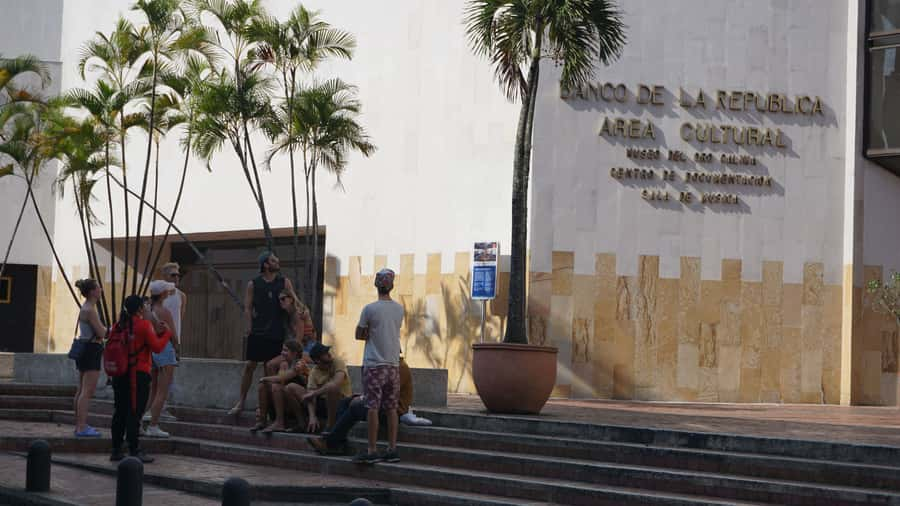
- Cali’s story begins at La Merced, where the walk links the city’s early development with the modern center.
- Afro-Colombian culture receives real attention, especially through gastronomy, Pacific music, dance, and local speech.
- The route covers major landmarks, including the Ermita, San Francisco Square, Cayzedo Square, the Municipal Theater, Puente Ortiz, and Jairo Varela.
- Salsa gets political context, including the growth of La Feria de Cali and the effects of drug trafficking.
- You walk about 7 kilometers, mostly outdoors, with resting and listening stops along the way.
- The $13 price is strong value if you want history, orientation, and local recommendations in one outing.
Starting at La Merced and meeting Cali’s past
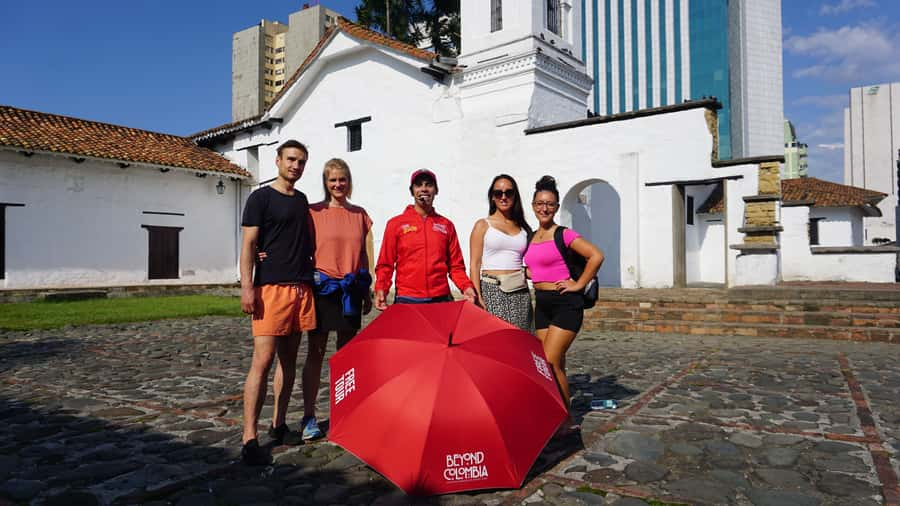
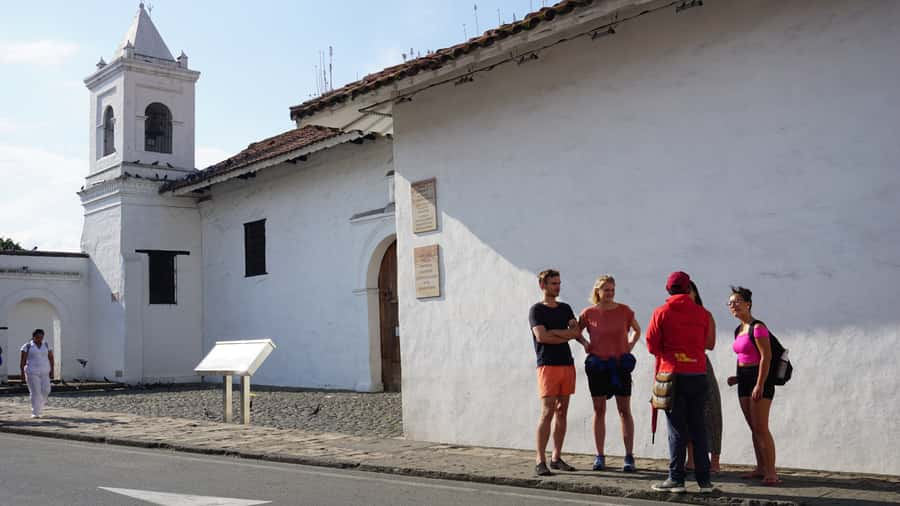
Meet the guide in front of the Museo Arqueológico La Merced, beneath the red Beyond Colombia umbrellas. This is a useful meeting point because La Merced places you near one of the city’s earliest historical layers, rather than dropping you straight into a generic shopping street.
The opening section sets up the importance of Valle del Cauca, known locally as El Valle. The tour treats the region as more than a backdrop. Its geography, agriculture, migration, and links to the Pacific help explain why Cali became a meeting point for different peoples and traditions.
That regional view is important. You will not get a story built only around statues and dates. The guide explains how Cali developed economically from the 17th century onward and how those changes shaped the city you see today.
The nearby Calima Gold Museum area adds an early cultural reference point. You should not expect a long indoor museum visit or a ticketed museum tour. The focus is on interpreting the place and its connection to the origins of Santiago de Cali, not on spending the whole morning inside an exhibit.
More historical tours in Cali:
- Historical Shared Tour Salsa, Graffiti & Resistance in Cali
★ 5.0 · 107 reviews - Cali: Walking tour of the historic center
★ 5.0 · 69 reviews - Chiva Private Cultural Tour with Audio Guide in Buga
★ 5.0 · 49 reviews
La Merced to the Río Boulevard
From La Merced, the group moves through the historic center toward the Río Boulevard. The route introduces the city’s colonial and republican architecture while also showing how central Cali has changed.
The Río Boulevard is one of the more useful stops for orientation. It gives you a sense of how public space, traffic, commerce, and city life meet in the center. It is also a place where the guide can move from older history into present-day questions about public protest and social change.
The walking route is shared, so you will not have a private guide adjusting every stop to your personal interests. The upside is a social atmosphere and the chance to meet other people. The tradeoff is that you need to stay with the group and listen in public spaces.
The guide uses resting stops while talking, but you still need to be ready for a substantial amount of walking. The stated distance is about 7 kilometers. In Cali’s warm conditions, water matters more than fashion, and a rainproof jacket or umbrella is sensible because the weather can change.
San Francisco Square and the city’s public face
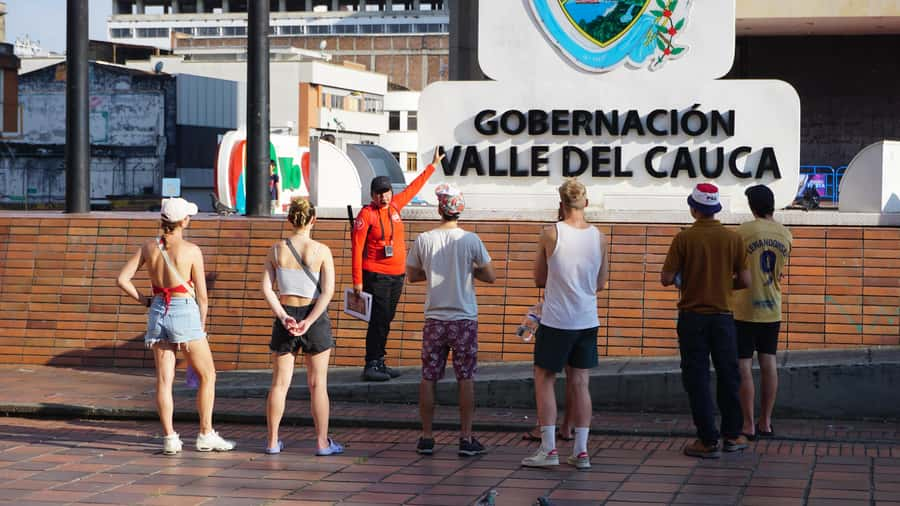
San Francisco Square brings the story into one of Cali’s important civic spaces. Here, the guide can explain how churches, government buildings, public gatherings, and ordinary street life have overlapped over time.
The tour’s approach is especially useful if you want to understand Cali as a city with competing identities. It celebrates salsa and soccer, but it also addresses discrimination, social unrest, and the effects of drug trafficking. You get a more honest picture than a tour that presents Cali only as a party destination.
The discussion of revolts during and after the pandemic adds a modern layer. It places current social tensions within a longer pattern of resistance and political action. The guide aims to present opposing sides without taking a declared position, which is helpful when the subject matter is sensitive.
You should expect discussion rather than a political rally. The walk is designed to explain how events affected daily life and public space, not to settle every argument.
Cayzedo Square and Cali’s changing identity
Cayzedo Square is another key public setting. It helps you see the historic center as a place where formal civic life and informal city life meet.
This section is likely to appeal if you want more than a list of buildings. The guide connects the square to Cali’s changing social structure, local expressions, and the way residents describe their own city. You may hear local slang and references that make more sense later when you speak with people in restaurants, cafés, or salsa venues.
The tour also explores how Cali’s three major cultural influences shaped food, music, and customs. The details provided for the walk point especially toward the legacy of African communities, Indigenous traditions, and Spanish colonial influence.
That focus gives the food discussion real purpose. Gastronomy is not treated as a quick tasting break. It becomes evidence of migration, survival, adaptation, and regional identity.
A few more Cali half-days worth weighing up
- The Cali Street Food Walking Tour
★ 5.0 · 81 reviews - San Cipriano Rainforest – River, Waterfalls and Adventure Day
★ 5.0 · 73 reviews - Cali: Street Food Tour
★ 4.8 · 71 reviews - Afro Walking Tour. The colors of Cali.
★ 5.0 · 61 reviews
Chontaduro and the taste of the Pacific
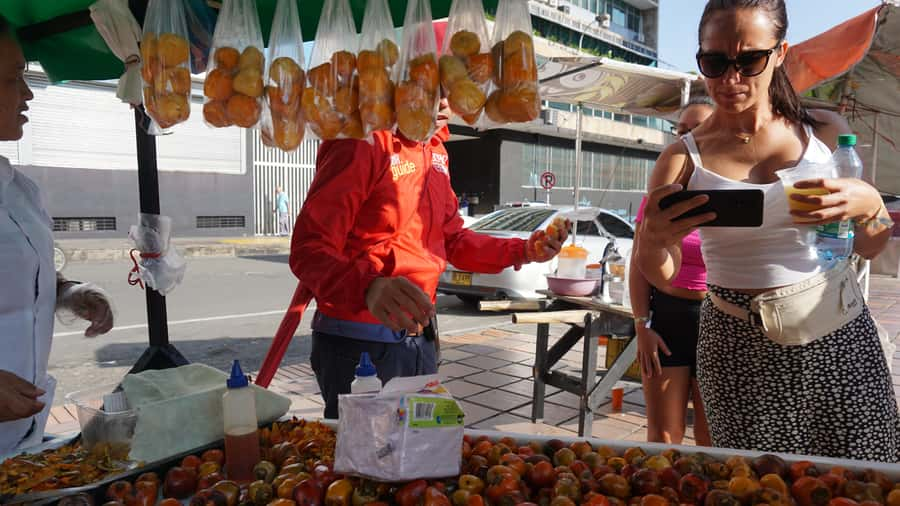
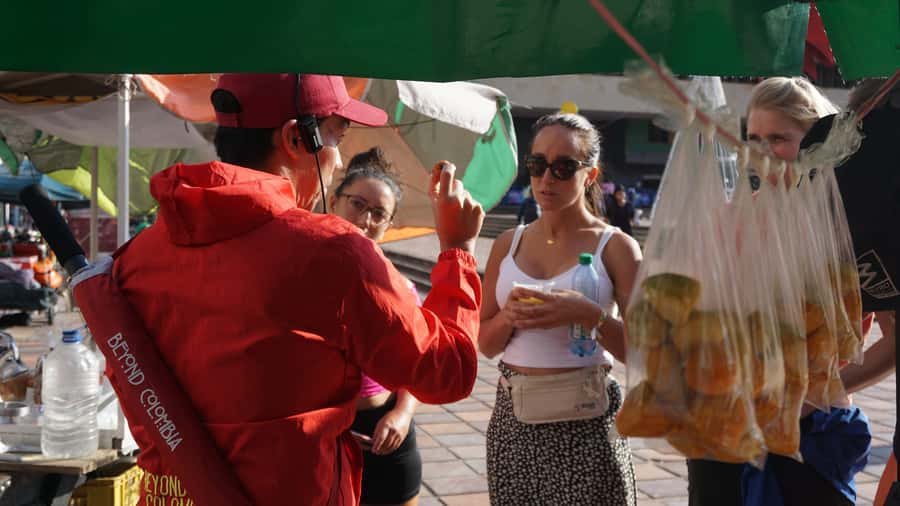
When available, you receive a chontaduro tasting. This bright orange palm fruit is strongly associated with the Pacific region and with Cali’s street-food culture.
Do not expect a full meal. Food, drinks, and souvenirs are not included beyond the possible tasting, so eat beforehand or plan lunch after the walk. The guide also points you toward local places for food, coffee, and shopping, which makes the tour more useful than a route that ends at the final monument.
The chontaduro stop may be particularly valuable if you are unfamiliar with Pacific Colombian ingredients. A small taste can open up a conversation about Afro-Colombian foodways, local markets, and the movement of people between the Pacific coast and Cali.
Availability is not guaranteed. If the tasting matters to you, treat it as a bonus rather than the reason to book.
The Ermita, theaters, and Cali’s creative side
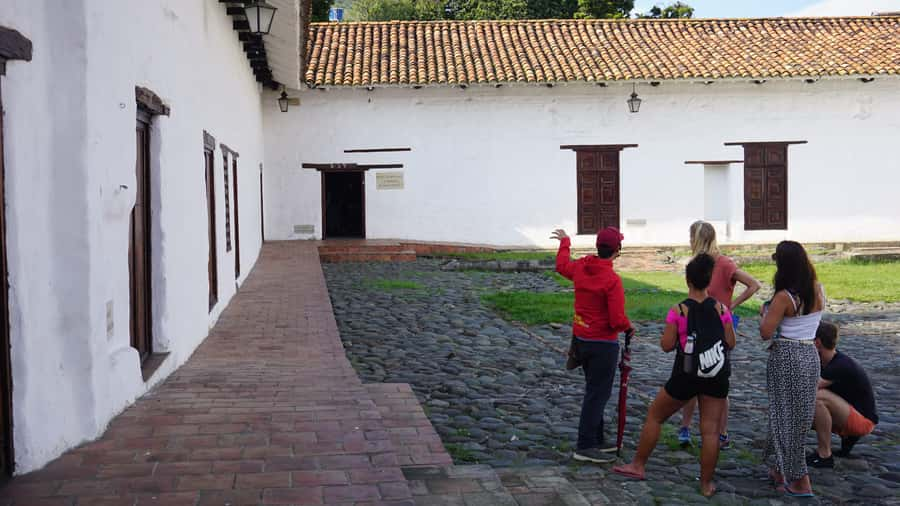
The Ermita is one of the city’s most recognizable architectural icons. Its appearance gives the route a clear visual marker, but the larger value is the way the guide places religious architecture within Cali’s social development.
The Municipal Theater and Jorge Isaacs Theater shift the focus from formal institutions to the arts. The tour explains how literature, cinema, and theater helped Cali interpret itself and express political and social change.
This part keeps the walk from becoming only a church-and-plaza circuit. You hear about the people who wrote about Cali, made films about it, performed in it, and used art to challenge accepted ideas.
The treatment of culture is broad but not shallow in intention. Because the tour has many stops, you will receive a guided overview rather than a long specialist lecture on any single theater or artistic movement. If you want detailed interior visits, check the schedule carefully, since entrances are not included and the route does not add sudden admission charges.
Salsa, soccer, and the shadow of the cartels
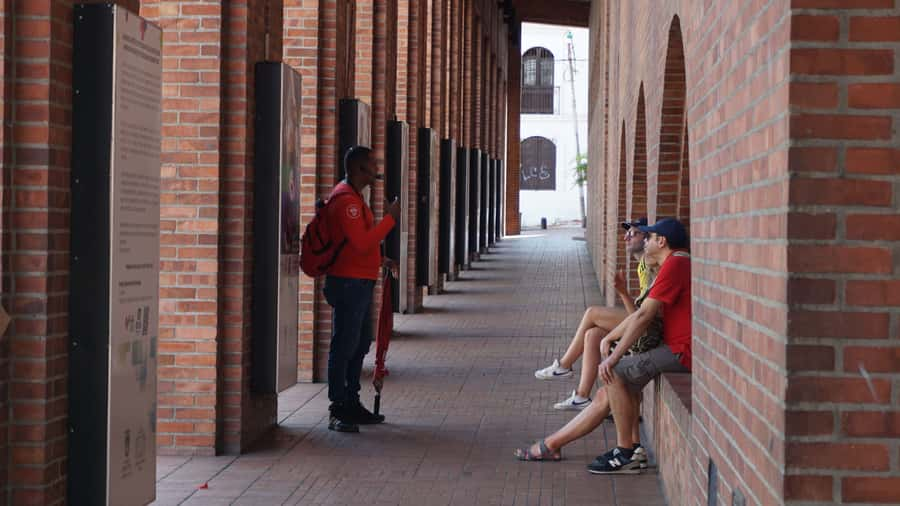
Cali’s salsa identity receives plenty of attention, including the growth of the movement during the era of drug cartels and the role of La Feria de Cali. This is one of the tour’s strongest subjects because it avoids treating salsa as decoration.
You learn how music and dance fit into social life, public celebration, and local pride. The guide also explains why salsa in Cali has its own feel, connected to Pacific influences, local dance culture, and the city’s appetite for performance.
The discussion of soccer works in a similar way. It shows how sport helps shape belonging and neighborhood identity. At the same time, the walk addresses the damaging effects of drug trafficking on the city and on ordinary routines.
That balance matters. Cali’s salsa culture is a reason to visit, but it exists alongside painful chapters. A useful tour should let you enjoy the music without pretending that the city’s modern story is simple.
Puente Ortiz and the route through public space
Puente Ortiz is one of the architectural and civic landmarks along the route. As you cross or view this important bridge area, the guide uses the setting to connect movement through the city with the way public spaces have changed.
The bridge and the Río Boulevard also help break up the more formal historical stops. You get a sense of Cali as a lived-in center, not just a collection of heritage buildings.
Expect street activity and crowded areas. Keep your belongings close and follow the practical local advice not to give papaya, a Colombian expression meaning you should not make yourself an easy target. The tour does not include transportation, so you make the entire route on foot.
Jairo Varela and the sound of modern Cali
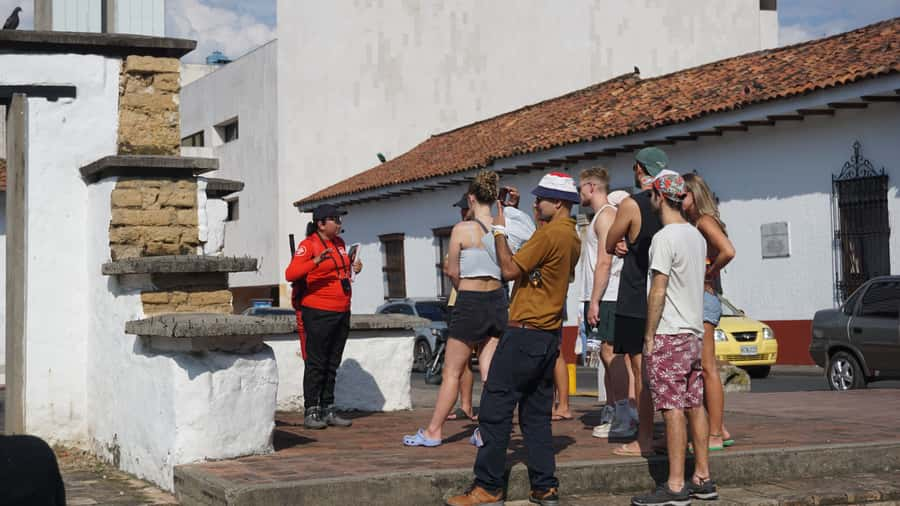
Jairo Varela is closely tied to Cali’s salsa identity, and the plaza named for him gives the tour a fitting cultural finish. The location helps connect the city’s public image with the music that made Cali famous far beyond Colombia.
This is where the walk’s themes come together: regional identity, Afro-Colombian influence, music, dance, public celebration, and the complicated path by which culture develops during hard times.
Do not expect a dance class or a club visit. The tour explains salsa and its place in Cali, but it is primarily a history and culture walk. If you want to dance afterward, use the guide’s local suggestions to plan your evening.
Guides such as Lem are especially well suited to this subject, with several comments highlighting his enthusiasm for salsa. Cristian, Fernando, Juliana, and Adriana Alvarez are also named as strong guides, praised for clear explanations, local connection, friendliness, and energy. Because assignments can change, you should not assume a particular guide will lead your departure.
What the $13 price really buys you
At $13 per person, this is a good-value introduction to central Cali. You get a live English-speaking guide, a structured route, historical context, landmark orientation, a possible chontaduro tasting, and practical recommendations for later meals, coffee, and shopping.
The value is strongest if this is your first time in Cali. In about two and a half hours, or sometimes closer to three, you cover enough ground to understand the center and decide where you want to return.
The cost does not cover drinks, meals, souvenirs, hotel transport, or paid entrances. That keeps the upfront price low, but you should budget for your own hydration and food.
Because it is a shared tour, you also pay for the social format rather than personal attention. If you want a private route, a slower pace, or a custom focus on architecture, this may not be the right fit.
Who will enjoy this walk most
I would choose this tour if you want a first look at Cali that combines landmarks with social history. It suits solo visitors and couples who want to meet other people, as well as anyone curious about salsa but unwilling to reduce the city to nightlife.
It is also a good choice for visitors who care about Afro-Colombian culture, food traditions, public protest, literature, film, and theater. The subject matter gives you useful context before you explore neighborhoods or attend salsa events on your own.
You should think twice if you dislike long walks, warm weather, public-space noise, or politically sensitive discussion. The route covers about 7 kilometers, and the tour is not suitable for people over 70 according to the activity information.
Wear comfortable clothes and shoes. Bring water and rain protection. Audio recording, alcohol, drugs, and party groups are not allowed.
Should you book the Cali Historical Downtown tour?
Book it if you want the city explained through culture and conflict, not just photographs of churches. The route covers the essential center while giving real space to Afro-Colombian heritage, salsa, La Feria de Cali, drug trafficking, protest, and the arts.
At $13, it is an easy way to get your bearings and collect local suggestions for the rest of your stay. Just arrive ready to walk, keep your expectations focused on an outdoor overview, and treat the chontaduro as an extra rather than a promise.
FAQ
Where does the tour meet?
Meet in front of the Museo Arqueológico La Merced. Look for the Beyond Colombia guides with red umbrellas.
How long does the tour last?
The stated duration is 150 minutes, although the activity information also describes it as approximately three hours.
What language is the tour in?
The live tour guide speaks English.
How much walking is involved?
You will walk about 7 kilometers, with stops to rest and listen to the guide.
Is transportation included?
No. You must arrange your own transportation to the meeting point and from the end of the tour. The route itself is walked.
Is food included?
A chontaduro tasting is offered when available. Drinks, meals, and souvenirs are not included.
Can I cancel for a full refund?
Yes. You can cancel up to 24 hours in advance for a full refund.
Just added around Cali
- Street Food Tour – Live A Unique Gastronomic Experience★ 5.0 · 34 reviews
- Rivering in The Danube (The Mermaid)★ 5.0 · 40 reviews
- Salsa Bar Hopping in Cali★ 4.5 · 43 reviews
- Salsa & Music Tour of Cali★ 5.0 · 42 reviews
- Pance Waterfalls: Hike to discover the biodiversity of the valley★ 5.0 · 33 reviews
- The Cali Salsa Tour★ 4.7 · 9 reviews
- Shared Tour Cali’s Local Food at Alameda Market★ 4.8 · 12 reviews
- Friday Salsa Pub Crawl in Cali★ 4.9 · 23 reviews
Historical Tours, compared.
Historic Center and Getsemaní Shared Walking Tour
Read our review →
History & Local Life Essentials Tour on an E-Bike
Read our review →
Historical Shared Tour Salsa, Graffiti & Resistance in Cali
Read our review →
Shared Tour of Bogota’s Historic Downtown (La Candelaria)
Read our review →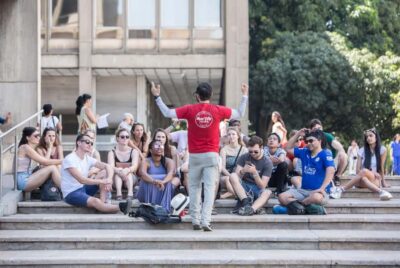

Browse the lists this tour appears in