
Reviewed · CITY TOURS
Bogota Walking Tour Teusaquillo, a different part of the city
Teusaquillo gives you a different Bogotá: grand old houses, political turning points, former industrial sites, murals, cafés, and the easygoing Parkway district. This 2.5-hour walking tour connects those pieces instead of treating the city as a string of isolated sights.
I like the focus on architecture and politics, and I like that the tour includes both a coffee tasting and a craft beer. Guide Daniel has been praised for explaining the neighborhood’s social and political meaning, not just pointing at buildings. The main drawback is simple: you walk the entire route, and lunch is not included.
Key points at a glance
- Five contrasting stops: Move from the National Museum area to former beer buildings, a politically important house, street art, and Parkway.
- A strong local-history angle: Learn how independence-era Colombia, industrial growth, political conflict, and modern urban expansion shaped the city.
- Guide Daniel may lead the walk: His explanations focus on the political and social meaning behind Teusaquillo’s streets.
- Coffee and craft beer included: The tastings add a pleasant break to a tour built around walking and conversation.
- A useful ending point: The walk finishes in Parkway, close to restaurants, coffee shops, and bars.
- Small enough to stay personal: The group limit is 20 people, though the exact group size can vary.
Why Teusaquillo makes a smart Bogotá walk
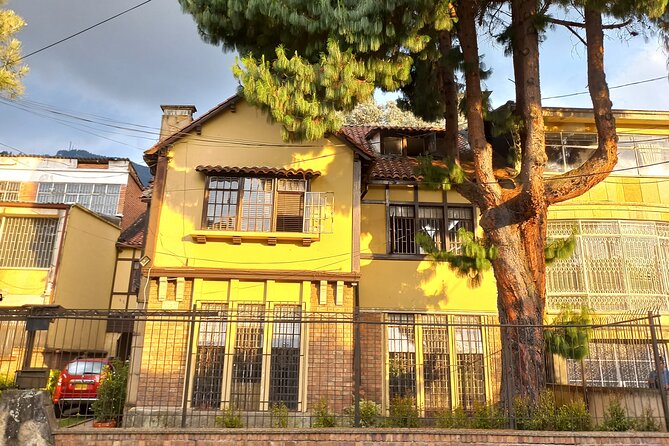
Many first visits to Bogotá center on the historic core. That makes sense, but Teusaquillo shows you another chapter of the capital. Here, the story is told through residential architecture, old industry, political memory, public art, and independent businesses.
The neighborhood also helps explain how Bogotá spread beyond its older center. As the city industrialized and developed new urban areas, places such as Teusaquillo became part of a more modern capital. You are not simply looking at pretty streets. You are seeing how economic change and political events altered the city’s shape.
I especially like the way this route brings together subjects that are often split into separate tours. One stop deals with national history. Another looks at beer production and urban growth. Another examines a house linked to a major political turning point. Then the focus shifts to murals and the cultural life around Parkway.
That mix gives the walk a clear purpose. It is less about checking off famous monuments and more about understanding how different parts of Bogotá fit together.
More City Tours in Bogota
- Bogota: Bicycle City Tour
★ 4.9 · 2,156 reviews - Bogotá: Private City Tour, Monserrate, Emerald and Botero
★ 4.9 · 798 reviews - Bogotá City Tour with Monserrate, Gold and Botero Museums
★ 4.9 · 584 reviews
Starting at the National Museum
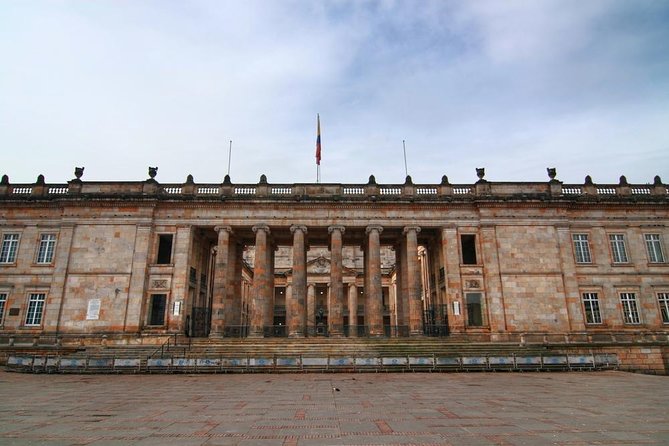
The tour begins at Museo Nacional in Santa Fe. The first stop is a museum that covers Colombia’s story from independence through recent times, with major works by important Colombian artists and a building tied to the country’s political past.
The museum matters here even if you do not enter for a full visit. It gives the tour a firm starting point: Colombia’s national story before the walk narrows its focus to Teusaquillo. You can expect discussion of independence, later political developments, art, and the role of the building itself.
That last point is important. This is not just a stop for a quick photograph. The architecture and walls carry political meaning, so the guide can use the site to connect physical surroundings with national events.
If you have already visited the museum, the stop should still work as a transition into the neighborhood. If you have not, you may feel tempted to spend far longer there than the tour allows. Keep that in mind when planning your Bogotá schedule. This experience is a walking tour with a museum-based opening, not a full museum visit.
The stop also sets the tone for the rest of the route. Daniel’s approach, based on the available feedback, is to explain why a place matters socially and politically. That is more useful than a list of dates and names, particularly if Colombian history is new to you.
Cavas and Falcas, where beer helped shape the city
The next stop focuses on the Cavas and Falcas buildings. They were once connected to the country’s first beer company, and the guide uses them to explain industrialization and Bogotá’s outward growth.
This is one of the tour’s more unusual subjects. Beer production may sound like a small detail, but it opens a window onto work, business, manufacturing, and urban change. As production expanded, so did the city around it. The former beer site helps you picture Bogotá as a place moving from older patterns into modern urban life.
The value of this stop lies in the connection between a building and a wider process. You are not only hearing that the country industrialized. You are looking at a place associated with that change and considering how industry affected the city’s development.
Architecture fans should pay close attention here. The buildings are part of the physical record of Bogotá’s changing identity. The route does not treat them as isolated relics. Instead, it places them within the city’s growth and the arrival of new urban areas.
This portion may appeal less to anyone hoping for a nonstop parade of famous sights. Cavas and Falcas are meaningful because of what they represent, so the guide’s explanation is central. Without context, you might walk past and see only old buildings. With context, the stop becomes a lesson in how ordinary urban places can carry national importance.
A politically important house in a residential setting
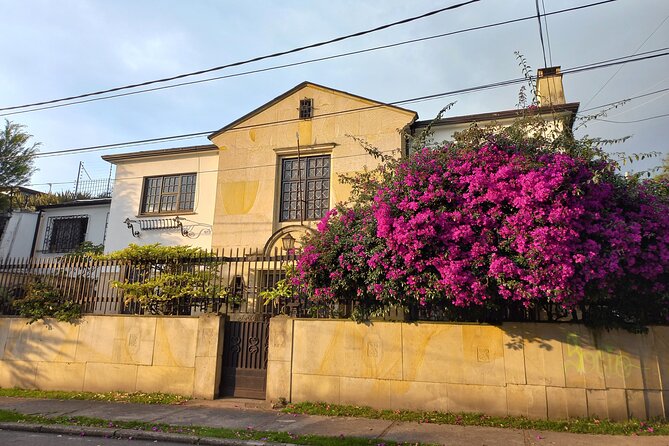
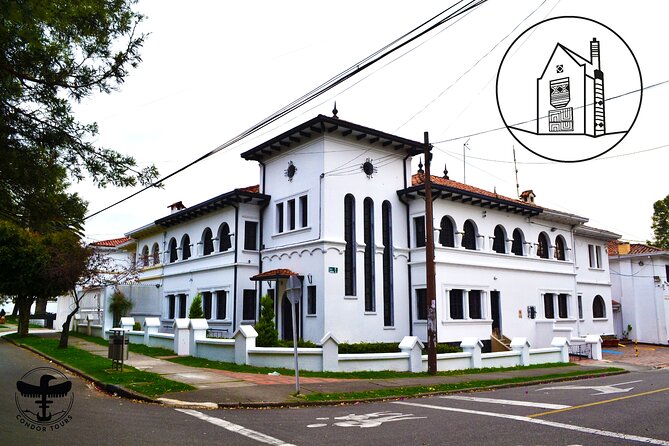
The third stop is a house connected to a figure who changed Colombian history and marked the beginning of the country’s political conflict. The property is surrounded by some of Bogotá’s most appealing architecture.
The name of the figure is not specified in the tour details, so you should expect the guide to supply the full context on site. What is clear is the importance of the stop: the house links a private residence to a major public rupture.
That contrast makes the place especially effective. Political conflict is often taught through speeches, elections, and battles. Here, the story is tied to a house and a neighborhood. You get a sense of how national events can begin or take shape in ordinary urban settings.
The surrounding architecture adds another layer. Teusaquillo is not being used merely as a backdrop. Its homes and streets help show the kind of city that existed around these political events. You can look at the buildings while listening to the larger story of class, urban development, and national tension.
This is also where a good guide makes a real difference. Daniel has been praised for explaining the political and social importance of the area in an engaging way. That matters because the site’s meaning may not be obvious from the exterior alone.
More Walking Tours in Bogota
- Bogotá: Guided La Candelaria Walking Tour
★ 4.8 · 1,229 reviews - Zipaquirá Salt Cathedral Private Tour + Walking Tour
★ 5.0 · 66 reviews - La Candelaria Walking Private Tour (3 Hrs.)
★ 5.0 · 51 reviews - Bogota Walking Tour Teusaquillo a different part of the city
★ 4.2 · 26 reviews
Street art with a Colombian point of view
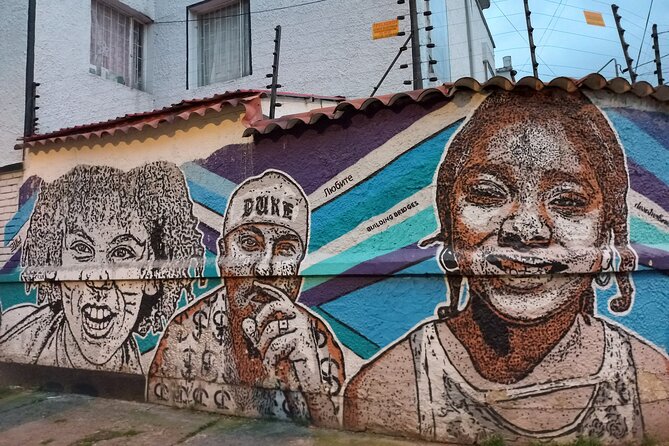
The route then turns to a street art gallery featuring artists from Colombia. This gives the walk a welcome change of pace after the museum, industrial history, and political material.
Street art works well on a neighborhood tour because it is tied to the streets themselves. You are looking at public work in the setting where people encounter it, rather than seeing it separated from daily life in a gallery. The stop also shows that Teusaquillo is not frozen in the past. Its story continues through current artistic expression.
The details provided do not identify the artists or promise a particular mural route, so you should not expect a fixed list of famous works. Instead, the guide will point out notable examples and explain their place in Bogotá’s creative life.
For you, the main benefit is variety. The murals give the route visual energy and help balance the heavier political material. They also create a natural point for questions about art, public space, and the city’s independent cultural scene.
Bring a phone or camera if you like photographing street art, but remember that this is still a guided walk. The point is not simply to collect images. Listen for the local context, since the art is one part of the neighborhood’s wider identity.
Finishing in Parkway’s 1950s atmosphere
The final stop is Parkway, one of Bogotá’s best-known meeting places for artists, cafés, restaurants, and independent projects. The area also has attractive architecture from the 1950s and a bohemian character.
This is a smart place to finish. After two and a half hours on foot, you end somewhere that invites you to stay, eat, drink, or continue exploring. The tour does not strand you at a distant monument. It drops you into a social district with practical options for the rest of your day.
Parkway also pulls together many of the themes from earlier in the walk. Architecture remains visible. Independent cultural projects show the city’s creative side. Cafés and restaurants reflect the modern neighborhood. The meeting point for artists connects back to the street art stop.
The word bohemian can be overused, but here it points to a particular mix of older buildings, cafés, creative work, and independent businesses. You can decide for yourself how long to linger. The tour ends in the Parkway zone, where restaurants, coffee shops, and bars are available.
Lunch is not included, so this is the natural place to arrange your own meal. That can be an advantage. You are free to choose what suits your budget and appetite instead of being tied to a group restaurant.
Coffee, craft beer, and the value of the $28 price
At $28 per person, the tour is priced as a focused half-day experience rather than a full-day excursion. You receive a guide, a 2.5-hour route, a coffee tasting, and craft beer. There is no lunch, and transportation is not listed as part of the experience.
I see the strongest value in the interpretation. Teusaquillo is not a place where every important detail announces itself. A guide helps you connect the museum, former beer buildings, political house, murals, and Parkway into one story.
The included drinks also make practical sense. Walking and talking for several hours can feel like a lecture if there are no pauses. Coffee and craft beer give the route a more relaxed rhythm and let you experience two everyday parts of Colombian and Bogotá culture.
Your value calculation depends on what you want from the city. If you prefer major monuments and a packed schedule, you may find the route too specialized. If you want neighborhood context and a guide who explains why places matter, the price is reasonable.
The rating information is strong, with a five-star score from 41 reviews and a recommendation rate of 100 percent. One four-star review still praised the route for showing different architectural styles and stages of Bogotá’s development. That combination suggests broad satisfaction, while also reminding you that a walking tour’s appeal depends on your interest in architecture and local history.
Walking demands and practical planning
This is a walking tour, so wear comfortable shoes and plan for an active two and a half hours. The route includes several stops, but the information provided does not give a precise distance, terrain description, or amount of sitting.
The meeting point is Museo Nacional in Santa Fe. The tour ends at Parkway near Calle 39A. Since the start and finish are in different parts of the city, plan your onward transport from Parkway rather than returning to the museum.
The area is near public transportation, which helps with both arrival and departure. You should still allow time to reach the starting point, especially if you are unfamiliar with Bogotá’s streets.
Most people can participate, and service animals are allowed. The maximum group size is 20. That is small enough for a guide to address the group directly, though it is not a private tour and the actual number of participants may vary.
The experience is confirmed at booking. Free cancellation is available if you cancel at least 24 hours before the local start time. Cancellations or changes made within 24 hours are not accepted for a refund.
Who will get the most from this walk
I would choose this tour if you have already seen Bogotá’s best-known historic sights and want a less obvious part of the city. It also suits a first-time visitor who prefers neighborhoods, architecture, and discussion over a rapid list of landmarks.
It is a good fit for:
- People interested in Colombian political history
- Architecture fans who enjoy comparing different periods and styles
- Visitors who like street art and independent cultural projects
- Coffee and craft beer drinkers who appreciate included tastings
- Anyone who wants to finish near restaurants and cafés
- Visitors comfortable walking for about two and a half hours
You may want another type of tour if you need a full meal, hotel pickup, private transport, or a detailed museum visit. None of those is part of this experience.
The guide also shapes the quality of the day. Daniel is the only guide named in the available information, and his strength appears to be explaining the social and political meaning of Teusaquillo. If that kind of storytelling appeals to you, the tour should feel more rewarding than a simple architecture stroll.
Should you book the Teusaquillo walk?
Book it if you want to see Bogotá through politics, architecture, industry, and public art, with coffee and craft beer along the way. The route has a clear sense of place and ends in Parkway, where you can keep the afternoon going over lunch or a drink.
Skip it if you want a short, low-effort sightseeing loop or a tour centered on famous landmarks only. This experience asks you to walk, listen, and connect less obvious sites to the city’s development.
For most curious visitors, the appeal is the change of angle. Teusaquillo shows that Bogotá is not only its historic core. It is also old beer buildings, politically charged houses, murals, 1950s architecture, and cafés where the city keeps reinventing itself.
FAQ
Where does the Bogotá Teusaquillo walking tour begin?
It begins at Museo Nacional in Santa Fe, Bogotá.
Where does the tour end?
The tour ends in the Parkway zone near Calle 39A. Restaurants, coffee shops, and bars are available in the area.
How long is the walking tour?
The tour lasts approximately 2 hours and 30 minutes.
What is included in the price?
The price includes a Condor Tours guide, a coffee tasting, and alcoholic beverages in the form of craft beer.
Is lunch included?
No. Lunch is not included.
How large can the group be?
The maximum group size is 20 participants.
Can I cancel for a full refund?
Yes. You can receive a full refund if you cancel at least 24 hours before the experience start time. Cancellations or changes made within 24 hours are not refunded.
Just added around Bogota
- Zipaquirá: Private tour to the Salt Cathedral, Colombia’s first wonder★ 4.9 · 33 reviews
- Zipaquira: 5 hrs Salt Cathedral Tour★ 4.4 · 9 reviews
- Wonders of Salt: Colombia’s Underground Cathedral★ 5.0 · 18 reviews
- Zipaquirá Salt Cathedral & Andrés Carne de Res (Chía)★ 4.6 · 30 reviews
- Zipaquirá: Private Salt Cathedral Mine and Walking Tour★ 4.8 · 3 reviews
- Villa de Leyva Trip by Private Transportation★ 4.8 · 27 reviews
- Wonderful tour of Villa de Leyva, and Zipaquira Salt Cathedral.★ 4.5 · 34 reviews
- Theatron Party-Tour, 20 Clubs, Map, cocktail, bottle, After-party★ 5.0 · 27 reviews
City Tours, compared.
Private City Tour, Monserrate, Emerald and Botero
Read our review →
City Sightseeing Hop-On Hop-Off Bus Tour & Extras
Read our review →
Bogotá City Tour with Monserrate, Gold and Botero Museums
Read our review →
BILINGUAL CITYTOUR + SAN FELIPE CASTLE & Old city
Read our review →
Private City Tour with Metrocable and Comuna 13
Read our review →Browse the lists this tour appears in