
Reviewed · SHARED TOURS IN MEDELLíN
Post-conflict Shared Tour (Paul) and Violence Medellin
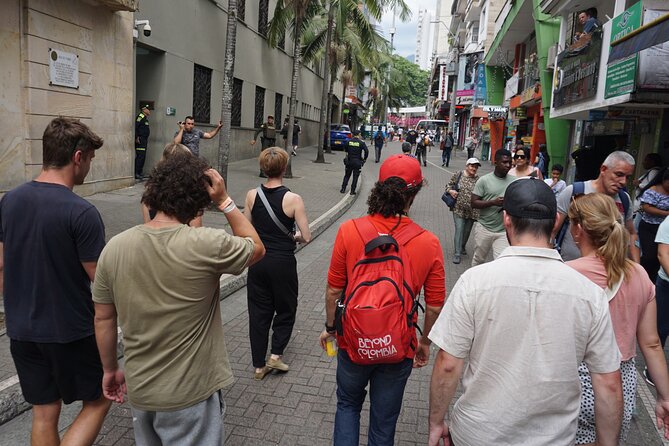
Medellín’s past is not tucked away in a museum here. It is discussed beside parks, apartment towers, schools, murals, and ordinary streets. This three-hour post-conflict walk uses the city itself to explain violence, politics, social change, and the long work of peacebuilding.
I like two things right away: the route connects history to places you can actually see, and the small group is limited to 10 people, which should give you room to ask questions. Guides including Paul, Miguel, Daniel, Manuel, Alejandro, and Sebastián have led the tour, with strong praise for clear English and honest explanations.
The main drawback is that many stops are ordinary urban spaces rather than grand sights. You are paying for the guide’s interpretation, not for monuments or museum displays. Two comments also report that the guide failed to appear, with no warning, so keep your booking details and contact information handy.
Key points to know before you book
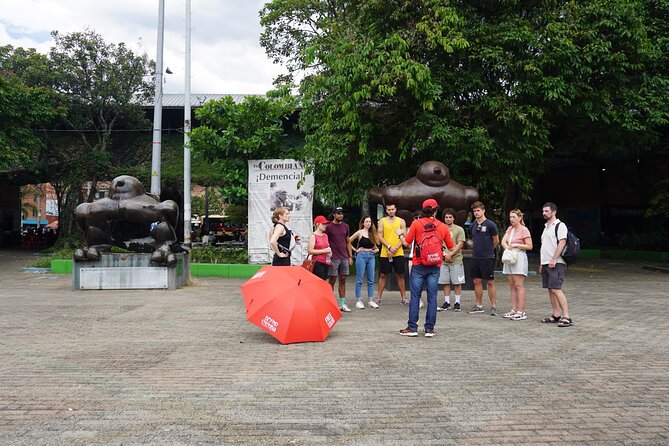
- The route links eight city stops: San Antonio Park, San Ignacio, Comfama San Ignacio, Torres de Bomboná, Pasaje Cervantes, Boston Park, Simona Duque Park, and Bicentenario Park.
- The guide is the heart of the experience: Paul and other guides such as Miguel, Daniel, Manuel, Alejandro, and Sebastián explain Colombia’s national and local struggles.
- The tour costs $14 per person: This is the suggested tip paid in advance for the guide, less the booking platform’s commission.
- Expect a serious walking afternoon: The tour starts at 2:00 p.m., lasts about three hours, and requires a strong level of physical fitness.
- The best value is context: Murals, parks, and buildings become useful tools for understanding Medellín’s difficult past and current peace efforts.
- Plan for a little uncertainty: Most feedback is highly positive, but two reports describe a no-show without communication.
Why this walk matters in Medellín
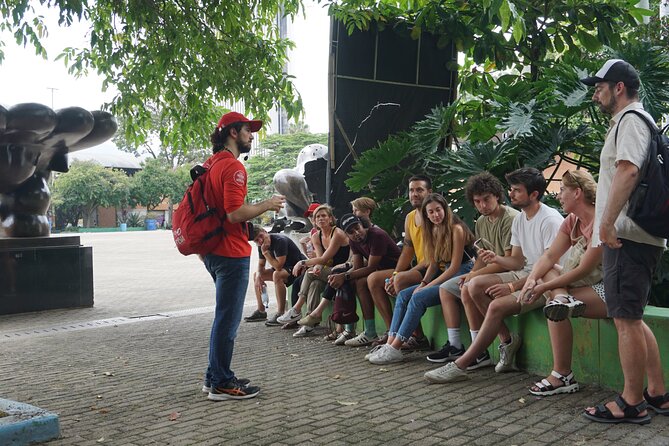
A standard city tour can show you Medellín’s central sights without explaining why the city changed so sharply. This route takes a different approach. It asks you to look at public spaces as evidence of change, then places those spaces in the story of violence, education, urban planning, and peace.
That makes the tour more demanding than a quick introduction to the city. You will hear about Colombia’s past and present political and social struggles, including the conflict that shaped Medellín and its people. The subject is serious, but the guides are also expected to keep the discussion open and approachable.
The strongest part of the experience is the connection between large national events and small local details. A park is not only a place to sit. A cultural center is not only a pretty building. A mural is not only decoration. Each stop gives the guide a reason to explain how Medellín has tried to rebuild trust and create shared public life.
You should choose this walk if you want background and discussion more than a checklist of famous sights. If you prefer grand architecture, panoramic views, or a light afternoon stroll, the route may feel slow.
More Shared Tours in Medellin
- Shared Medellín Downtown Tour with Wireless Audio
★ 4.8 · 315 reviews - Pablo Escobar Private Group Tour Including La Catedral Jail in Medellin
★ 5.0 · 56 reviews - Guatapé & Peñol Rock Day Group Tour
★ 4.6 · 15 reviews
Starting at San Antonio Park
The walk begins at San Antonio Park, at Cl 44 #50 in La Candelaria. This is a useful starting point because the guide introduces the park’s history and its place in daily city life before looking at how the area has changed over time.
The stop lasts about 22 minutes. You will not simply pass through on the way to the next attraction. Instead, the park becomes the first example of how public places can reflect a city’s wider transformation.
This is also where the guide sets the tone. Paul, who led one especially detailed version of the tour, is described as explaining Medellín and Colombia’s complex past with unusual care. Other guides, including Miguel and Daniel, have also been praised for making difficult subjects clear and personal without losing sight of the facts.
The park itself may not hold your attention for the whole stop. That is a recurring feature of this tour. You need to listen closely, ask questions, and let the explanation do the work.
Education and peace at San Ignacio
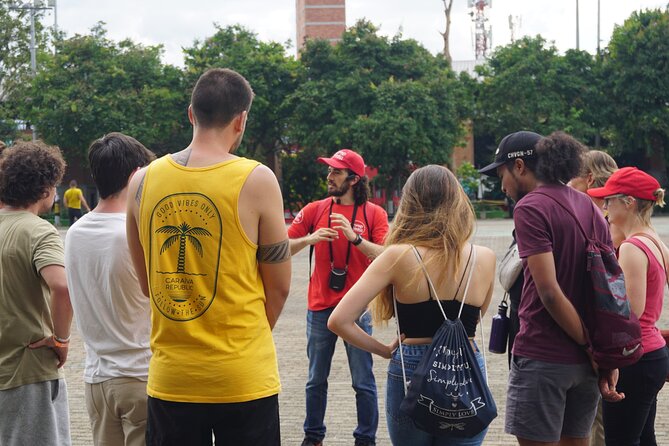
The second stop is Plazuela San Ignacio, another roughly 22-minute visit. Here the focus shifts to education and its role in Medellín’s effort to build peace.
This is one of the more useful ideas on the route. Conflict is often discussed through politics, armed groups, and crime. Education gives the story another angle. The guide explains how schools and learning have helped shape the city’s efforts to create better conditions for coexistence.
The square provides a public setting for that discussion. You can expect the guide to place local education within Medellín’s broader development, rather than treating it as a separate subject.
I like this stop because it adds balance to the tour. You are not only hearing about what went wrong. You are also considering the tools a city can use to repair social ties and give people more options.
Comfama San Ignacio and the social fabric
At Comfama San Ignacio, the tour moves into a cultural center devoted to art, culture, and education. The stop lasts about 22 minutes and looks at programs designed to strengthen the social fabric and support peaceful coexistence.
The value here comes from seeing how culture can be part of public policy and community life. You may find that the building itself is less important than the programs and ideas discussed inside it. The guide explains how spaces like this can give people reasons to meet, learn, create, and share the city.
This is a good moment to ask direct questions. How do cultural programs support peace? Who are they intended to serve? What changes when a former problem area gains useful public facilities? The tour is at its best when you treat each stop as a conversation rather than a lecture.
Admission is listed as free at this stop. Still, the route does not promise a formal visit to every interior space, so listen to the guide’s instructions about where the group will gather.
A few more Medellin half-days worth weighing up
- Medellin: Comuna 13 Graffiti Tour, Cable Car & Street Food
★ 4.8 · 9,046 reviews - Medellín: The Real Pablo Escobar Tour
★ 4.8 · 3,205 reviews - Medellín: Comuna 13 True Story and Street Food Tour
★ 4.9 · 1,779 reviews - Medellín: Comuna 13 District Tour with Cable Car Ride
★ 4.8 · 1,467 reviews
Torres de Bomboná and the meaning of architecture
Torres de Bomboná brings architecture into the story. These towers are presented as a symbol of modern Medellín and a reference point in the city.
The guide uses them to discuss urban transformation and the role of buildings in changing how a city works and feels. You will likely spend about 22 minutes here, looking at the towers while hearing how architecture connects to broader changes in Medellín.
This stop may appeal to you if you enjoy cities as living documents. It is less about admiring design for its own sake and more about asking what new buildings mean in a city that has gone through conflict and reconstruction.
The limitation is clear: if you come expecting a major architectural attraction, you may find the towers modest. Their importance depends on the explanation. Paul’s detailed approach, and Miguel’s strong grasp of both local and national history, are especially relevant here because the building alone cannot tell the whole story.
Pasaje Cervantes, where murals carry the message
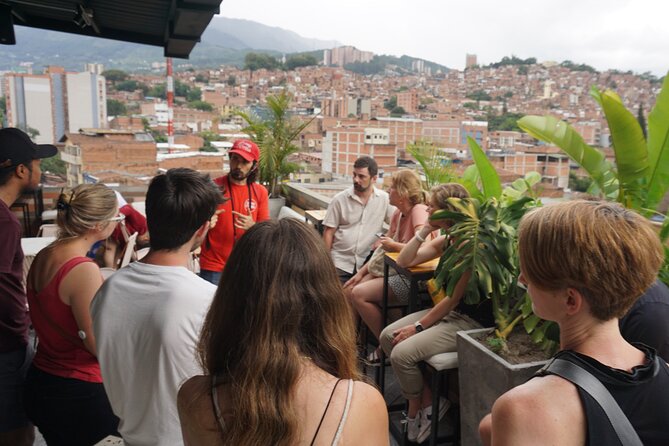
Pasaje Cervantes offers the most visual stop on the route. This passage uses colorful murals to show how urban art can change a public space.
You will hear about the artists and the messages behind their work. The stop is listed at about 22 minutes, enough time to look closely and discuss how public art can shape the way people use and understand a place.
This is a welcome change of pace after the more political and educational sections. The murals give you something immediate to see, while the guide explains how creative work can speak about identity, memory, and community.
You may want to take photographs, but do not let the pictures replace the explanation. The point is not simply that the walls are colorful. It is that art can help turn a passage into a shared place with meaning.
The tour does not name the artists in advance, so you will need to hear those details from the guide. That uncertainty is part of why the guide matters so much.
Boston Park and time to reflect
Boston Park is described as a place to rest and think about what you have seen. The stop lasts roughly 22 minutes and gives the group a chance to share thoughts before continuing.
This pause is important. A tour about violence and peace can become a flood of names, dates, and political events. Boston Park gives you space to connect the material to the earlier stops: public life at San Antonio, education at San Ignacio, cultural programs at Comfama, architecture at Bomboná, and murals at Pasaje Cervantes.
The guide may invite discussion rather than deliver another long talk. That makes the experience feel less like a classroom and more like a guided conversation.
If you prefer tours that move constantly, this may feel like a quiet section. I see it as a strength, especially because the subject needs time to settle. Bring questions, and be ready to discuss what the city’s changes mean to you.
Simona Duque Park and the human side of the story
The route then reaches Simona Duque Park, named for a woman associated with the fight for human rights. The guide tells her story and explains her legacy.
This stop adds a personal face to a tour that can otherwise focus on systems, buildings, and public programs. A named individual helps you think about how people act within difficult periods, not only how institutions respond afterward.
The visit is listed at about 22 minutes. Admission is marked as not included, so confirm with the guide if any payment is required for the specific part of the stop. The supplied information does not give a separate admission price.
The park also continues the tour’s habit of using ordinary public places to open larger discussions. You are not being taken from one famous attraction to the next. You are being shown how memory and civic values can be attached to places used by the local community.
Bicentenario Park and the road ahead
The final stop is Bicentenario Park, a modern and sustainable space. The tour ends here, near the Memory House Museum at Parque Bicentenario, Cl. 51 #36-66.
The park represents Medellín’s future and gives the guide a place to discuss the challenges and opportunities still facing the city. This matters because the tour does not present peace as a finished project. It leaves you with the idea that urban change requires continued work.
Admission is listed as not included at this final stop. The end point is useful for orientation because you finish near the Memory House Museum, but the information provided does not say that museum admission is part of the walk.
The closing discussion ties the route together. You have moved from a historic park to education, culture, architecture, public art, reflection, human rights, and a forward-looking public space. It is a thoughtful structure, even if some individual stops are visually plain.
What the $14 price really covers
The $14 price is best understood as a prepaid suggested tip for the certified guide, not as a conventional ticket that pays for attractions. The amount goes to the guide after the booking platform takes its commission.
That makes the value depend heavily on the quality of the explanation. You are not paying for admission to a series of museums, meals, or transport. You are paying for three hours of local interpretation and access to a structured conversation about Medellín.
At this price, I think the tour offers good value if you care about history, politics, and social change. It is less compelling if you want a sightseeing walk filled with famous buildings and paid attractions.
Food is not included. Bring water and plan your own snack or lunch, since the experience lists neither. Tips beyond the prepaid amount are also not included, though the payment is already framed as the suggested guide tip.
Timing, walking, and group size
The tour starts at 2:00 p.m. at San Antonio Park and lasts about three hours. Each of the eight stops is listed as approximately 22 minutes, which adds up to just under three hours before allowing for walking between locations.
You should arrive ready to walk through central Medellín and remain on your feet for much of the afternoon. A strong physical fitness level is required. The route is near public transportation, which helps with getting to the start and leaving the end, but no transport is included in the tour price.
The group maximum is 10 people. That is a good size for a topic that benefits from questions. It also means you should be able to hear the guide more easily than in a large coach group.
Service animals are allowed. Confirmation is sent at booking, and free cancellation is available up to 24 hours before the start time. If you cancel later, the amount paid is not refunded. The experience also requires a minimum number of bookings, so a cancellation by the operator can result in another date, another experience, or a full refund.
Who will get the most from this experience
Book this walk if you want to understand Medellín beyond its popular image. It suits you if you enjoy asking questions, listening to local explanations, and thinking about how cities respond to violence and social strain.
It is also a good fit if you have already taken a general downtown walk and want more historical and political context. One person who had joined a downtown tour chose this post-conflict route afterward and found that it added a much more detailed view of Medellín and Colombia.
The tour may suit first-time visitors as well, but only if you are comfortable with serious subject matter. This is not a cheerful photo walk. It deals with conflict, human rights, politics, and the ongoing effort to build peace.
You may want to skip it if your main goal is food, nightlife, shopping, or sweeping city views. The route’s appeal comes from the stories attached to its places.
Should you book the Medellín Post-conflict Shared Tour?
Yes, if you want a thoughtful introduction to Medellín’s difficult past and its attempts to build a different future. The strongest guides, including Paul, Miguel, Daniel, Manuel, Alejandro, and Sebastián, have been praised for clear, passionate explanations and for answering hard questions directly.
Go with realistic expectations. The streets and parks are often ordinary, and the experience depends more on the guide than on the visual appeal of the stops. There are also two serious reports of a guide not showing up without communication, so check your confirmation and keep the operator’s contact details available.
For $14, a small group, and about three hours of discussion, this is a fair-value choice for historically curious people. If you want Medellín to make more sense, book it. If you want a relaxed sightseeing stroll, choose another afternoon activity.
FAQ
How much does the tour cost?
The price is $14 per person. This amount is the suggested tip for the guide, paid in advance, with the booking platform taking its commission.
How long does the tour last?
The tour lasts approximately three hours.
What time does the tour start?
The tour starts at 2:00 p.m.
Where does the tour begin?
It begins at San Antonio Park, Cl 44 #50, La Candelaria, Medellín.
Where does the tour end?
It ends near the Memory House Museum at Bicentenario Park, Cl. 51 #36-66, La Candelaria, Medellín.
What places does the tour visit?
The route includes San Antonio Park, Plazuela San Ignacio, Comfama San Ignacio, Torres de Bomboná, Pasaje Cervantes, Boston Park, Simona Duque Park, and Bicentenario Park.
Is a guide included?
Yes. A certified guide is included.
Is food included?
No. Snacks and lunch are not included, so you should plan your own food.
How many people can join the group?
The group has a maximum of 10 people.
Can I cancel for a refund?
Yes. You can cancel up to 24 hours before the start time for a full refund. Cancellations or changes made less than 24 hours before the tour are not refunded or accepted.
Just added around Medellin
- City tour, Commune 13, Metro Cable, Botero Park and more. Private★ 5.0 · 34 reviews
- Commune 13, Graffitour street food. History.All inclusive★ 5.0 · 35 reviews
- Aerial Hammocks, Zip and Waterfall Trek on Medellin Private Tour★ 5.0 · 39 reviews
- Walking tour downtown Medellín★ 5.0 · 39 reviews
- Tour to the Hacienda Nápoles Theme Park★ 4.0 · 22 reviews
- Hiking Mountains and Magical Forests★ 5.0 · 27 reviews
- Barrio transformation and urban escalator of Comuna 13★ 5.0 · 47 reviews
- Tour Cabalgata★ 5.0 · 37 reviews
Shared Tours in Medellín, compared.
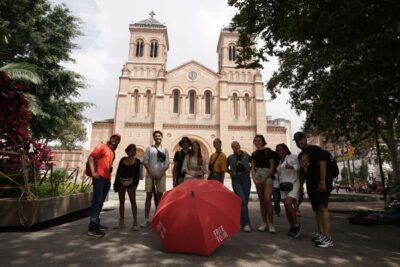
Shared Medellín Downtown Tour with Wireless Audio
Read our review →
Pablo Escobar Private Group Tour Including La Catedral Jail in Medellin
Read our review →

Guatape and El Peñol Rock Tour: Private or Shared
Read our review →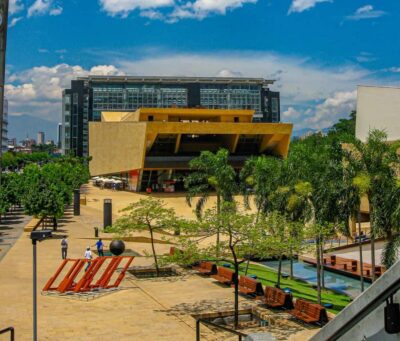

Shared Tour to Comuna 13 & Aurora Cable Car in Medellin
Read our review →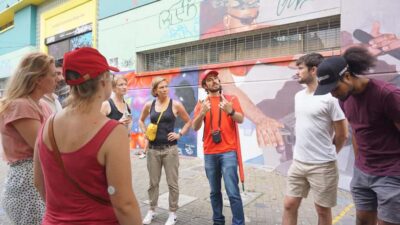
Shared Tour Medellin’s Violence & Post-conflict after Pablo
Read our review →Browse the lists this tour appears in