
Reviewed · CABLE CAR TOURS
Bogotá´s Barrios: El Paraíso Favela Tour with Cable Car
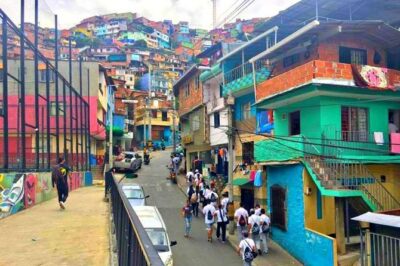
El Paraíso gives you a very different view of Bogotá: colorful homes climbing the hills, powerful street art, and a neighborhood shaped by migration, poverty, community work, and steady change. The cable-car ride makes the journey part of the lesson, not just a way to get there.
I like the close look at local improvement projects, and I like that guides such as Samuel, David, Jorge, and Jairo explain the area with care rather than treating it like a spectacle. The strongest practical benefit is having a local guide and security escort with you. The drawback is travel time: traffic can eat up much of the 270-minute outing, especially from northern parts of Bogotá.
Key points
- Cable-car views: Float above the southern districts and watch El Paraíso rise up the hillsides.
- Local perspective: Guides and community leaders explain how the neighborhood formed and how it is changing.
- Street art walk: See colorful murals among narrow streets, painted homes, and busy local roads.
- Safety support: A local security escort joins the walk, while the main guide handles the history and logistics.
- Community benefit: Part of your booking supports the Juan Manuel Ortiz community library project in Ciudad Bolívar.
- High-altitude outing: El Paraíso sits at about 9,500 feet, so water, comfortable clothing, and sensible pacing matter.
Why El Paraíso is worth your afternoon
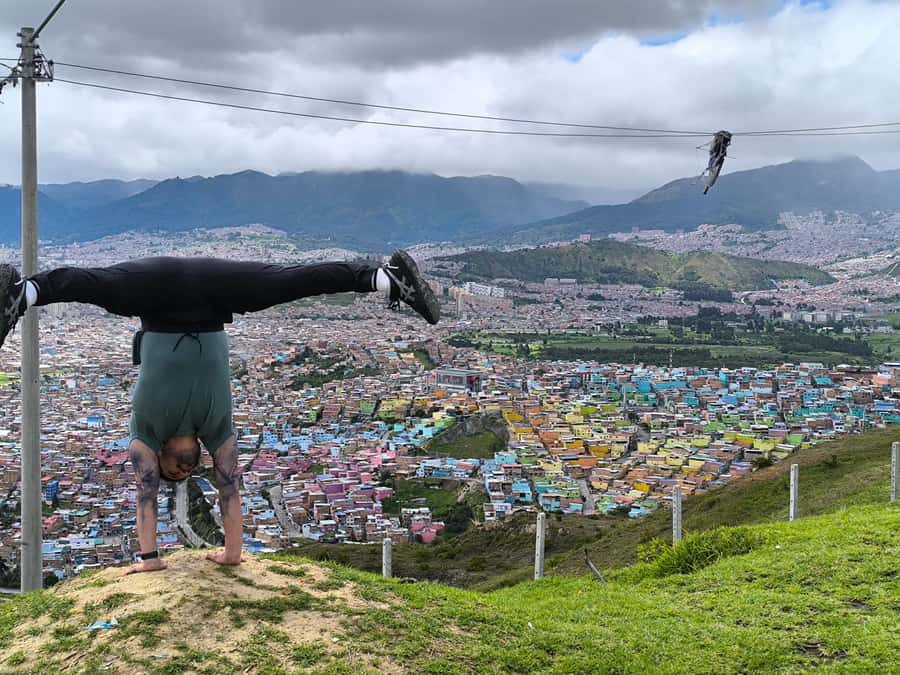
Bogotá is often introduced through La Candelaria, the Gold Museum, Monserrate, and elegant northern neighborhoods. Those places matter, but they do not show the whole city. El Paraíso, in Ciudad Bolívar, offers a look at the southern hills where many families have built lives far from the postcard center.
I like the way this tour connects urban geography with everyday life. From the vehicle and cable car, you see how large Bogotá is and how quickly its built-up districts spread across the hills. On foot, you see a more human scale: painted walls, small businesses, children playing, local roads, and community spaces.
The purpose is not to pretend that hardship has disappeared. The neighborhood still faces economic pressure and uneven development. But the visit also shows the work being done to improve safety, education, transport, and public life. That balance matters. You are not simply being shown poverty. You are being shown a community with problems, pride, and plans.
More cable car rides over Bogota:
- Cable car to el Paraiso, the city slum
★ 5.0 · 44 reviews - Medellin: Comuna 13 Graffiti Tour, Cable Car & Street Food
★ 4.8 · 9,046 reviews - Medellín: Comuna 13 District Tour with Cable Car Ride
★ 4.8 · 1,467 reviews
Meeting at the Gold Museum
The standard meeting point is by the western entrance of the Gold Museum, beside the wooden chairs. This is useful if you are staying in or near La Candelaria and want to pair the tour with a morning or afternoon in the historic center.
Pickup and drop-off can be arranged from hotels or the airport if you select that option. Pickup is available from Bogotá neighborhoods outside La Candelaria. If you arrange a private pickup, confirm the exact time and location when booking, since Bogotá traffic can change the day’s rhythm.
The drive itself can be informative. Guides may point out different districts and explain how Bogotá changes as you move south. The trip is not dead time, but it is still road time. One outing took around three hours in transport, leaving roughly 90 minutes for the main visit. That will not happen on every departure, but it is a useful warning if you are planning another appointment afterward.
The cable car turns the transfer into a highlight
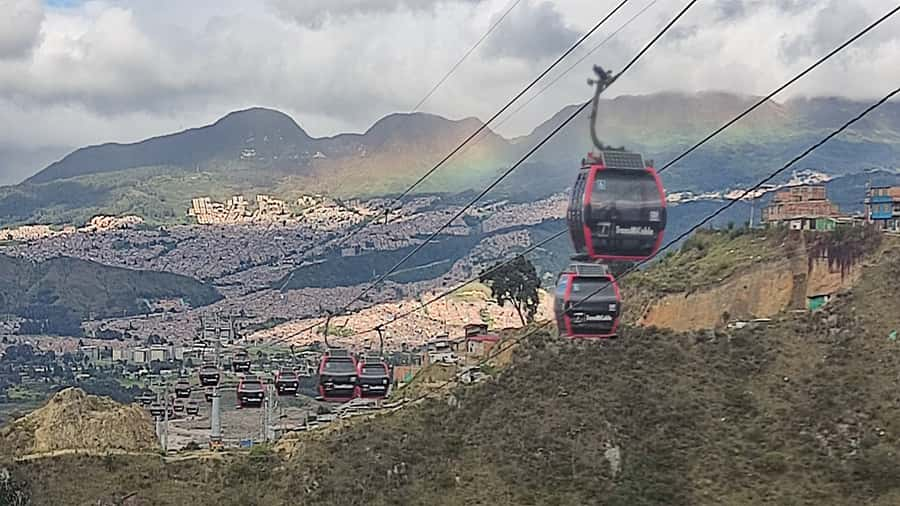
The cable car is the first major attraction. You ride uphill toward El Paraíso while looking across Bogotá and down at rows of colorful houses. From above, the city’s size becomes easier to understand. You can see the contrast between built-up neighborhoods, steep hills, and the broad spread of the capital.
For many people, the ride is the visual high point of the day. It also gives you a quick introduction to the area before you walk through it. Instead of arriving with no context, you have already seen how the neighborhood fits into the city.
People with vertigo should skip this activity. The height, movement, and open views can be uncomfortable. The altitude is also serious. El Paraíso is listed at about 9,500 feet, roughly 1,600 feet higher than Bogotá’s usual city level. Drink water, take your time, and do not treat the walk like a race.
Walking El Paraíso with local guidance
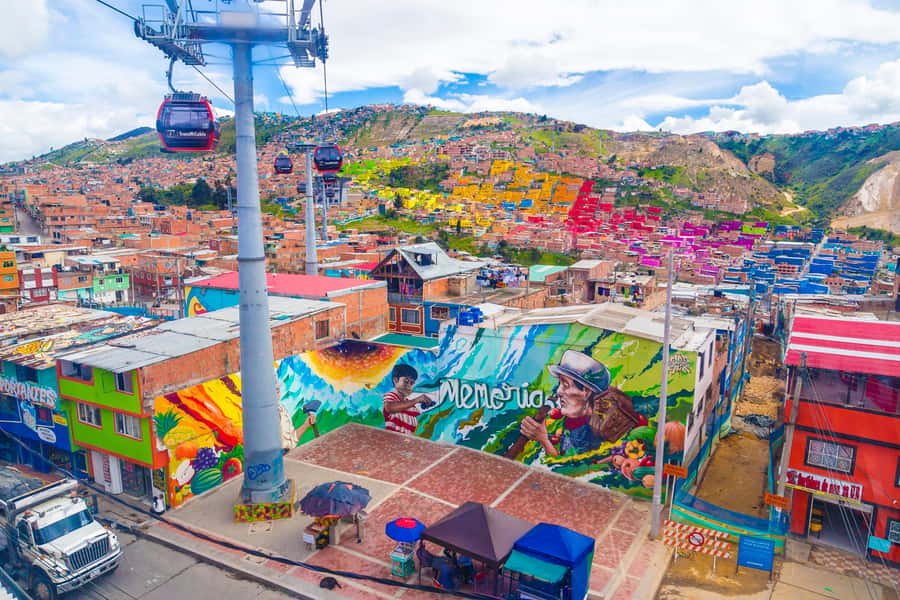
At the top, the experience changes from sightseeing to conversation and walking. Your guide leads you through the district, pointing out the way homes, streets, murals, and public areas fit together.
The walk is described as not very demanding, but the altitude can make ordinary hills feel harder. Wear comfortable shoes and loose clothing. Sunglasses are useful in the open areas, and a camera is welcome, provided you keep it discreet and remain aware of your surroundings.
The street art is a major part of the visit. Murals and painted walls bring strong color to a district that is often described only through its economic challenges. The art gives local residents a way to mark their neighborhood, tell stories, and change how outsiders see it.
You will also pass through ordinary residential and commercial areas. This is not a staged open-air museum. People live and work here, so your best approach is to stay close to the guide, ask before photographing individuals, and avoid treating private homes as attractions.
A few more Bogota half-days worth weighing up
- Bogota: Bicycle City Tour
★ 4.9 · 2,156 reviews - Zipaquirá: Salt Cathedral Group Tour with Pickup
★ 4.8 · 1,606 reviews - Bogotá: Guided La Candelaria Walking Tour
★ 4.8 · 1,229 reviews - Bogotá: Private City Tour, Monserrate, Emerald and Botero
★ 4.9 · 798 reviews
Meeting community leaders and local partners
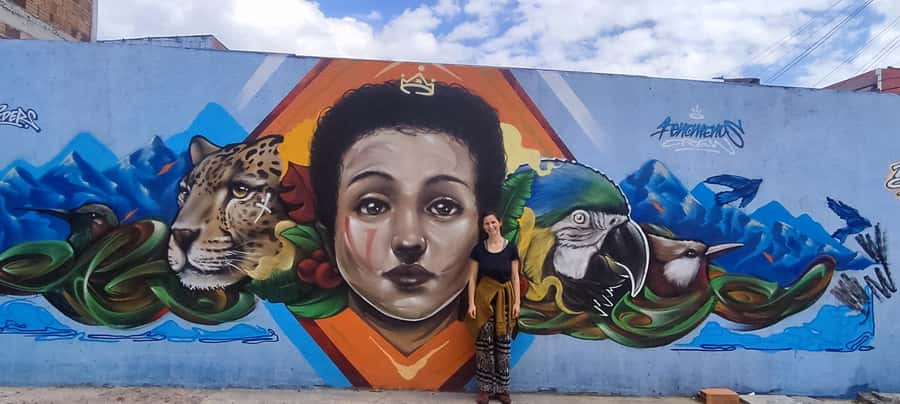
A local community leader joins the walk and explains the neighborhood from an inside perspective. The security escort is not simply there to make the group feel protected. The local escort can also help explain the streets and community work from a resident’s point of view.
The discussion covers how El Paraíso and nearby parts of Ciudad Bolívar developed, including the arrival of families who had to leave their original homes for different reasons. You learn about the difference between more established sections and newer areas, along with the ongoing effort to improve living conditions.
A particularly worthwhile part of the experience is learning about projects that support children and education. Your booking helps support the Juan Manuel Ortiz community library project in Ciudad Bolívar. The tour does not pressure you to donate separately, which keeps the focus on learning rather than sales.
I appreciate this model because it connects tourism with a local effort. Still, you should keep your expectations clear. This is a short visit, not a full study of Ciudad Bolívar. You will receive an introduction and see selected projects, but you will not understand every issue facing the district in one afternoon.
The city view from above
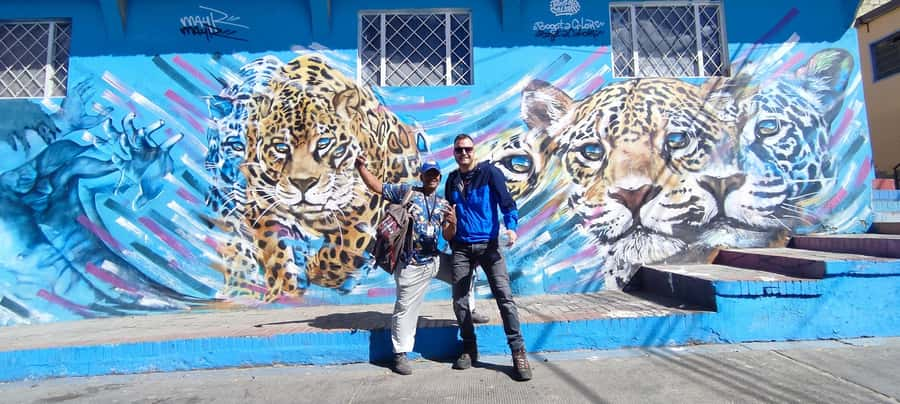
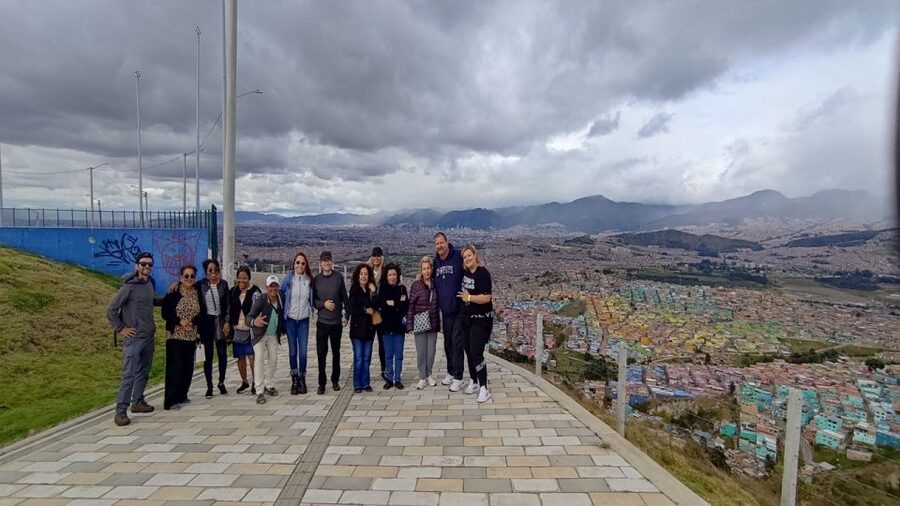
The tour continues to a high point with broad views over Bogotá. Several people who have visited Monserrate consider the El Paraíso panorama just as impressive, and sometimes better for seeing the southern spread of the city.
The view has a different character from Monserrate. It is less about looking down on a historic center and more about seeing Bogotá as a huge, uneven city shaped by hills, housing, roads, and expansion. The cable car helps you read the city from above, while the final viewpoint lets you stop and take it in.
Bring your camera, but do not make photography the entire purpose of the stop. The best value here comes from listening to the guide explain what you are seeing. The city view is beautiful, but the social and geographic context makes it more meaningful.
A Colombian snack and a local pause
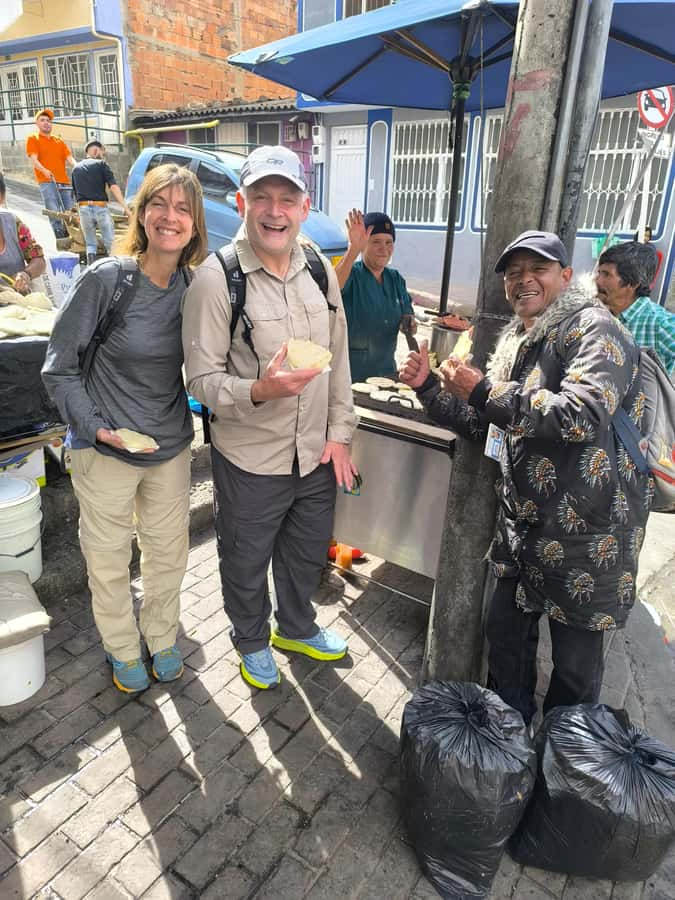
A traditional snack is included, often served with a drink at a local bakery or café. Details can vary, but the experience may include arepas with eggs and cheese, along with other simple Colombian food.
This is a small part of the tour, yet it helps break up the walking and gives you a chance to sit in a local setting. It is also practical at high altitude, where a snack and water can help you feel better.
If you have dietary needs, tell the guide early. The guides have been flexible about food, drinks, and bathroom stops, but the available food is local and simple rather than a planned restaurant meal.
Returning by cable car and what the timing means
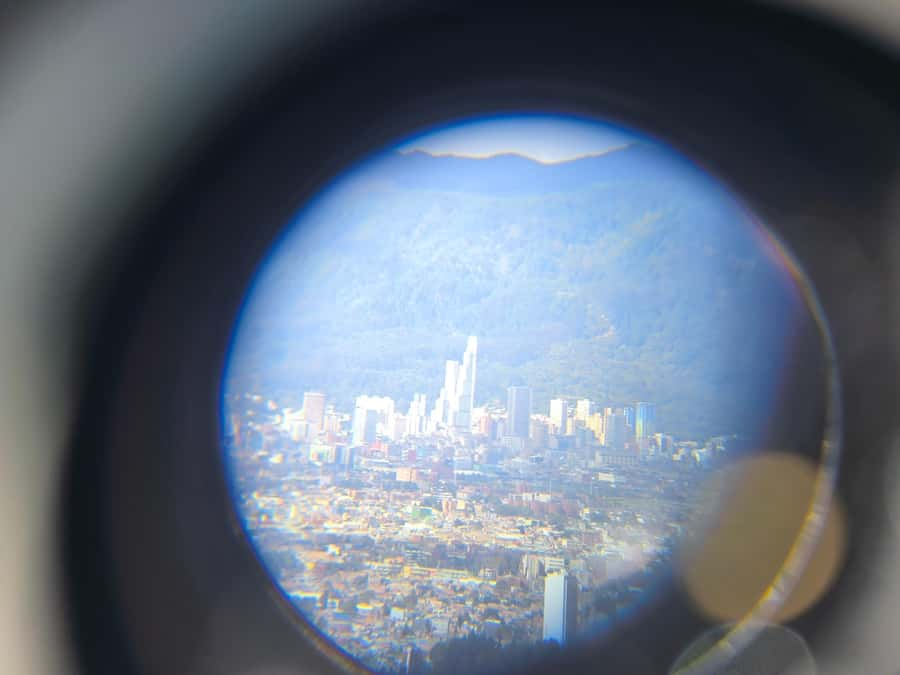
After the walk, you return by cable car and then continue to the original drop-off point or your selected hotel transfer. The standard drop-off is the Gold Museum.
The advertised duration is 270 minutes, or four and a half hours. That includes transport, the cable-car ride, the neighborhood walk, the community visit, the city viewpoint, and the return journey. The actual balance can change with traffic, group size, pickup location, and the pace of the visit.
Small groups are common, and private tours can be requested. A small group makes it easier to ask questions and adjust the pace. Some departures have had only two people, while others have included a few more. If your schedule is tight, a private option may give you better control, but ask about the added cost before committing.
Safety, respect, and sensible behavior
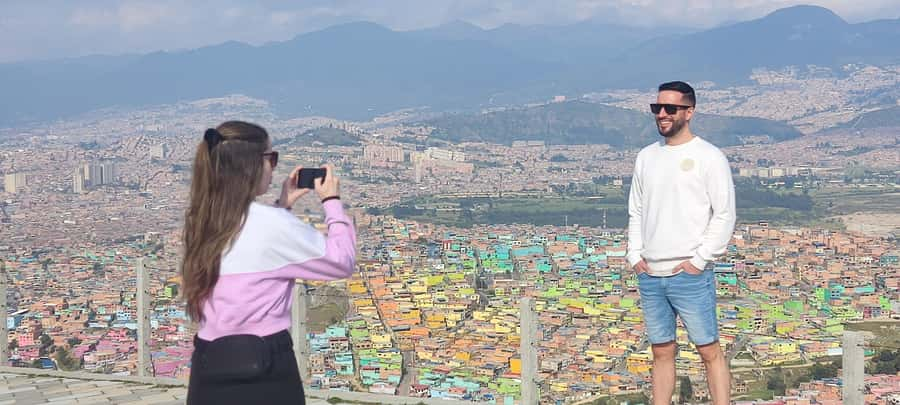
The tour includes a guide, a local security escort, and medical assistance insurance. That support is important because you are visiting an area that is not set up as a regular tourist district.
You should still take normal precautions. Do not bring valuables, do not display expensive phones or jewelry, and keep your bag close. The local phrase don’t give papaya means do not make yourself an easy target by showing off belongings or ignoring your surroundings.
Alcohol and drugs are not allowed. Keep your group together and follow instructions about where to walk and when to take photos. I would wear plain, comfortable clothes rather than anything flashy.
The safety arrangement has been a strong part of the experience, but no guided visit removes every risk. The right attitude is alert and respectful, not fearful. You are entering a working neighborhood, not a theme park.
English, Spanish, and the guide you get
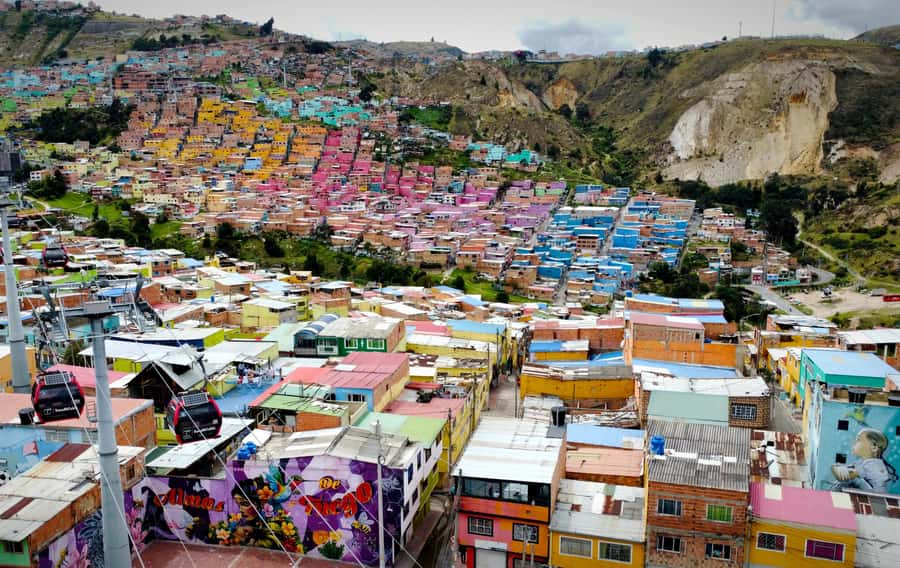
Tours operate in English or Spanish. Guide quality matters here because the experience depends on explanation, not just transport and views.
Samuel is frequently praised for clear explanations of Bogotá, city expansion, and El Paraíso. David is known for his warm manner and strong connection to the area. Jorge has guided visitors through the neighborhood and its community work, while Jairo has handled driving and transport on some departures.
The guide may be accompanied by a local resident such as John or Jhon, who can offer a more personal view of the district and help watch over the group. The exact team can change, so do not book solely because you expect one particular person.
One useful point is that the guide can adjust the conversation to your interests. If you want more detail on transportation, urban growth, murals, education, or community organization, ask questions during the drive and walk.
Is $78 a fair price?
At $78 per person, this is not the cheapest way to spend an afternoon in Bogotá. The price makes more sense when you add up what is included: round-trip transport from the meeting point, cable-car tickets, a guide, a security escort, a snack, and medical assistance insurance.
You are also paying to avoid the work of arranging transport into an unfamiliar district and navigating the cable-car system alone. The local support is the main value, especially for solo visitors and anyone uneasy about visiting El Paraíso independently.
The weaker value comes if your pickup is far from the center and traffic is heavy. You could spend a large part of the four and a half hours in a vehicle. If you mainly want a cable-car view, there are cheaper ways to ride public transport. If you want local context, community access, and a supported walk, the price is easier to justify.
Who should book this tour?
I would recommend it to you if you have already seen the main historic attractions and want a wider picture of Bogotá. It suits curious visitors who want to understand how the city is organized, how hillside communities developed, and how local projects are trying to improve daily life.
It is also a good match for solo visitors. The small-group format, guide, driver, and local security escort remove much of the stress of arranging the visit alone. Families and older visitors may enjoy it too, provided everyone can manage walking at high altitude.
I would hesitate if you dislike long drives, have severe vertigo, or want a polished sightseeing route with little social commentary. The tour is direct and sometimes sobering. It asks you to look beyond pretty views and think about the people who live among them.
Practical details before you go
Book with enough time to confirm pickup, especially if you are staying outside central Bogotá. Meet at the western entrance of the Gold Museum if using the standard option.
Bring water, sunglasses, a camera, and comfortable clothes. Keep valuables at your accommodation if possible. Canceling is free up to 24 hours before the activity, and you can reserve now and pay later, which helps if your schedule is still moving.
Allow flexibility after the tour. Traffic may be heavy, and the four and a half hour duration is an estimate for the full experience rather than a guarantee of exactly 90 minutes in the neighborhood.
Should you book it?
Book this tour if you want Bogotá to feel larger, more complex, and more real than the historic center alone can show you. The best parts are the cable-car views, the street art, the local explanation, and the chance to see community work without having to navigate the district on your own.
Skip it if you need a short, predictable activity or if heights and high altitude are serious concerns. For everyone else, El Paraíso offers a useful counterpoint to Monserrate and La Candelaria, with Samuel, David, Jorge, or another local guide helping you read the city from a different angle.
FAQ
How long does the El Paraíso Favela Tour last?
The activity lasts 270 minutes, or about four and a half hours. This includes transportation, the cable-car rides, the walking tour, the community visit, the viewpoint, and the return transfer.
How much does the tour cost?
The listed price is $78 per person. The price includes the guide, cable-car tickets, round-trip transport from the meeting point, a snack, a security escort, and medical assistance insurance.
Where is the meeting point?
Meet your guide by the western entrance of the Gold Museum in Bogotá, beside the wooden chairs.
Is hotel pickup available?
Yes. Hotel or airport pickup and drop-off are available if you select that option. Pickup is available from neighborhoods outside La Candelaria.
Is the tour offered in English?
Yes. Live guides are available in English and Spanish.
Is the tour wheelchair accessible?
Yes, the activity is listed as wheelchair accessible.
What should I bring?
Bring sunglasses, a camera, comfortable clothes, and plenty of water. Avoid bringing valuables or displaying personal belongings.
Is the walk difficult?
The walk is described as not very demanding, but El Paraíso is at about 9,500 feet. The altitude can make walking harder, so drink water and take a steady pace.
Can I cancel the booking?
Yes. You can cancel up to 24 hours in advance for a full refund. A reserve-now-and-pay-later option is also available.
Just added around Bogota
- Zipaquira: 5 hrs Salt Cathedral Tour★ 4.4 · 9 reviews
- Zipaquirá: Private tour to the Salt Cathedral, Colombia’s first wonder★ 4.9 · 33 reviews
- Wonders of Salt: Colombia’s Underground Cathedral★ 5.0 · 18 reviews
- Zipaquirá Salt Cathedral & Andrés Carne de Res (Chía)★ 4.6 · 30 reviews
- Zipaquirá: Private Salt Cathedral Mine and Walking Tour★ 4.8 · 3 reviews
- Villa de Leyva Trip by Private Transportation★ 4.8 · 27 reviews
- Wonderful tour of Villa de Leyva, and Zipaquira Salt Cathedral.★ 4.5 · 34 reviews
- Theatron Party-Tour, 20 Clubs, Map, cocktail, bottle, After-party★ 5.0 · 27 reviews
Cable Car Tours, compared.
Comuna 13 Graffiti Tour, Cable Car & Street Food
Read our review →
Private City Tour with Metrocable and Comuna 13
Read our review →
Medellín Coffee Farm Tour with Trolley and Cable Car Ride
Read our review →
Browse the lists this tour appears in