
Reviewed · FOOD TOURS
Bogota´s Gastronomic Wonders – Experience the best traditional food
Bogotá’s food culture makes the most sense on foot, and this tour links it to the city’s older neighborhoods. You’ll begin with fruit and local cooking at La Perseverancia market, then work through pastries, hot chocolate with cheese, regional dishes, Amazonian ice cream, and coca leaf products in La Candelaria. The food is also a way into Colombian culture.
I like the small private format, since guides such as Sandra, Emilio, Jorge, and Juan Frederick have been able to adjust the pace and explain the city along the way. I also like the range of settings, from a working-class market to a restored colonial house and a traditional bakery. The main caution is timing: a late visit can mean closed market stalls, and a few accounts describe too little food when the guide did not actively lead the tastings.
Quick take on Bogotá’s four-hour food walk
- Market fruit comes first: La Perseverancia offers a direct look at local produce, cooks, and everyday shopping.
- The classic Bogotá pairing: La Florida Bakery serves hot chocolate with cheese, plus pastries and a hot drink such as aguapanela.
- Neighborhoods add context: The route connects La Perseverancia, La Macarena, the Septimazo, downtown, and La Candelaria.
- Expect a full meal from samples: The planned tastings include sweet and savory foods, though the exact selection can vary.
- Coca leaf has cultural meaning: An Indigenous shop explains its nutritional and sacred role, and why coca is not cocaine.
- Private means flexible: Only your group participates, with an English- or Spanish-speaking guide.
Start at Origen Bistro, then head to La Perseverancia
The meeting point is Origen Bistro at Cra. 4 #12 C 88 in Bogotá’s historic center. This is also where the tour ends, so you can leave your day bag there only in the figurative sense: bring what you need for several hours of walking and eating.
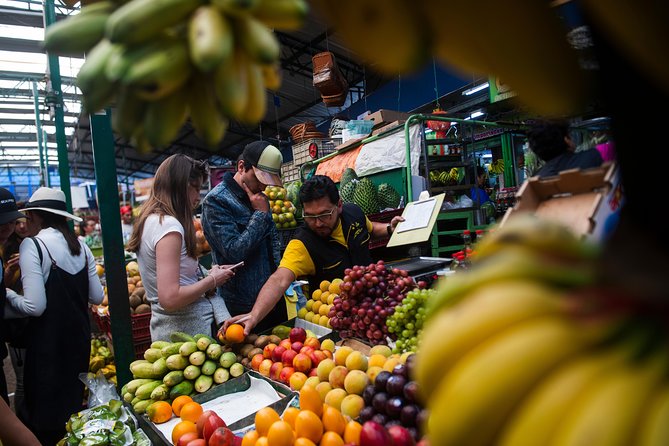
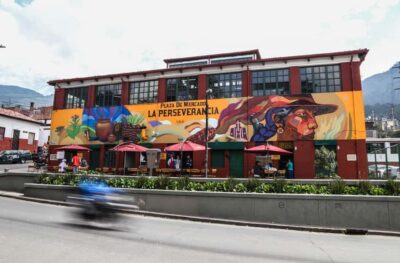
The first stop is La Perseverancia market, created by working-class residents at the beginning of the 20th century. That background matters. This is not simply a polished food hall built for sightseeing. It is tied to the people who shaped the neighborhood, and the useful part of the visit is the contact with cooks, vendors, and local shoppers.
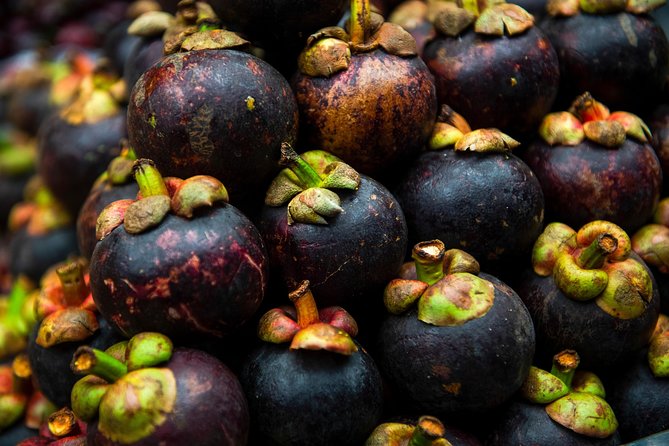
You’ll spend about an hour here. Fresh fruit is a key part of the tasting, and you may encounter unfamiliar shapes, colors, and flavors. Several food-focused tours treat the market as a quick photo stop. This one gives it enough time to become the backbone of the morning or afternoon.
Your guide’s role makes a big difference here. A strong guide will choose fruit, explain how it is eaten, and introduce you to the market’s cooking traditions. Juan Frederick, who also works as a chef, has led groups through larger markets with tastings of fruit, coffee, breads, potatoes, pork and rice dishes, and chicken soup. The exact route described for this experience centers on La Perseverancia, so do not assume you will visit every market mentioned in other versions of the tour.
More Food Tours in Bogota
- Bogota Food Tour with over 12 Tastings & Tejo
★ 4.9 · 454 reviews - PALOQUEMAO MARKET FOOD TOUR. EXOTIC FRUIT. LOCAL SNACKS. /Min 2 pax
★ 5.0 · 70 reviews - Food Tour in La Candelaria Bogotá
★ 5.0 · 63 reviews
La Macarena brings art and restaurants into the route
After the market, you walk through La Macarena, once known as Bogotá’s bohemian district in the middle of the 20th century. Today, it is associated with international restaurants and art galleries.
The stop itself is short, about 10 minutes, but it gives you a useful change of scene. You move from a neighborhood market built around daily food needs into an area shaped by dining, art, and city life. I like this contrast because it keeps the tour from becoming a simple procession of snacks.
Do not expect a long gallery visit or a formal neighborhood lecture here. La Macarena functions mainly as a walking connection between the market and downtown food stops. If your guide is in a talkative mood, you may get extra background on Bogotá’s geography and neighborhoods. Emilio, for example, was praised for combining food with a useful introduction to the city and suggestions for other things to do during a stay.
La Florida Bakery and the Septimazo
The walk along Seventh Street leads into the Septimazo, a lively route with street artists, singers, food carts, handicrafts, and notable buildings. This section helps you see how Bogotá’s public life spills into the street. It is not just about eating at fixed stops.
The main food stop is La Florida Bakery, a traditional bakery where you can try pastries and a hot drink. The most memorable choice is hot chocolate with cheese, a Bogotá favorite that may sound odd until you try the combination. The cheese softens in the hot chocolate, creating a salty, creamy contrast. If that pairing is not your style, aguapanela offers another traditional hot drink.
You should have time for food and a short look at the surrounding streets, since this section lasts about 50 minutes. Some accounts also describe tamales at this point, though the stated route names pastries, aguapanela, and hot chocolate with cheese. The selection can change with opening hours and the guide’s plan, so ask at the start what is included that day.
Heading southeast, you’ll see newer cultural, commercial, and student buildings set against colonial and republican structures. This architectural contrast is one reason the route works better than a restaurant-only food outing. You are not simply moving between tables. You are watching central Bogotá change block by block.
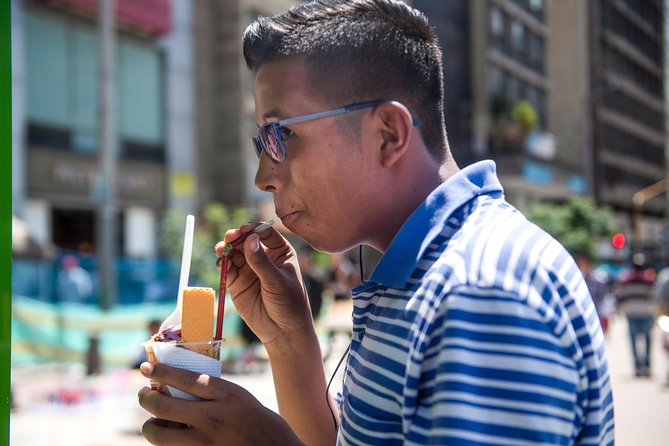
The final sweet stop in this section is an artisanal ice cream made with exotic Amazonian fruits. This is one of the tour’s more unusual tastings. It connects the capital with ingredients from another part of Colombia and gives you a cool, fruit-forward break after the bakery’s heavier flavors.
La Candelaria turns the tasting into a cultural lesson
The longest section lasts about 1 hour and 25 minutes in La Candelaria, Bogotá’s historic district. You’ll walk through streets lined with colonial and republican buildings before sitting down for a savory meal in a restored colonial house.
This is where the tasting should become substantial. The meal features recipes from different parts of Colombia, so you are not limited to one Bogotá specialty. The tour describes its food as enough snacks to make up a full meal, but lunch is not listed as a separate inclusion. Think of it as a generous sequence of tastings rather than a formal restaurant lunch.
That distinction matters if you are planning the rest of your day. You should arrive hungry, but you may still want a proper meal later, especially if you have a large appetite. One of the strongest accounts described tamales, hot chocolate with cheese, and other foods as filling enough to leave the group very full. Another account described a disappointing outing with only a few fruits and bakery items. The difference appears to be how actively the guide manages the food portion.
At the end, you visit an Indigenous shop and taste coca leaf products. An Embera woman explains why coca is not cocaine and why coca is a sacred plant and part of Indigenous nutrition. She also discusses the pressure Indigenous communities have faced from narcos, industry, and government policies while trying to protect their culture, economy, and traditions.
This is a valuable part of the experience, but it is also the part that calls for respect. Listen rather than treating the visit as a novelty. The point is not to make a daring food choice. It is to understand a plant that has been used in Indigenous life and wrongly reduced, in many outside conversations, to its association with cocaine.
A completely different kind of day, same corner of Colombia:
- Bogota: Bicycle City Tour
★ 4.9 · 2,156 reviews - Zipaquirá: Salt Cathedral Group Tour with Pickup
★ 4.8 · 1,606 reviews - Bogotá: Guided La Candelaria Walking Tour
★ 4.8 · 1,229 reviews - Bogotá: Private City Tour, Monserrate, Emerald and Botero
★ 4.9 · 798 reviews
What the food samples may include
The route promises a broad mix of tastes, but it does not provide a fixed menu. That gives the guide room to respond to market conditions, closures, and dietary needs. It also means you should not book expecting every item mentioned in a past outing.
Food described across the experience includes:
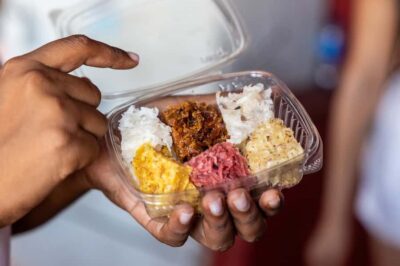
- Fresh tropical and unfamiliar fruits at the market
- Pastries from La Florida Bakery
- Aguapanela
- Hot chocolate with cheese
- A savory regional meal in La Candelaria
- Artisanal ice cream made from Amazonian fruits
- Coca leaf products
- Possible extras such as empanadas, tamales, juices, breads, coffee, chicha, or other market foods, depending on the day and guide
The named route does not promise all of those extras. Guides have added or substituted foods in the past, especially when a market was quiet or a scheduled vendor was closed. If empanadas, arepas, tamales, or a particular dish is important to you, ask whether it is planned rather than assuming it will appear.
Why the private format can be worth $93
At $93 per person, this is not the cheapest way to sample Bogotá. The price covers about four hours, a private guide in English or Spanish, and the designated meals and snacks. It does not cover hotel transportation, travel between locations, tips, or personal purchases.
The value comes from the human guidance and the city connections. A private guide can spend more time explaining an unfamiliar fruit, adjust the walking pace, and shape the route around your interests. Sandra was praised for staying beyond the planned time after a delay at one stop, while Jorge adapted a Monday afternoon outing when the main market activity was limited. Those examples show the benefit of a private booking, though they should not be treated as a guarantee of extra time.
The price makes the most sense for first-time visitors who want food and orientation together. If you already know Bogotá’s markets and feel comfortable ordering on your own, you may find it expensive. If you want someone to handle introductions, explain customs, and connect food with neighborhoods, the cost is easier to justify.
Timing is the most important practical choice
This tour is available for about four hours, but the market experience can change sharply depending on the time. Several outings found that morning was best because more stalls were open and the market had more activity. A Monday afternoon created a particular problem when the larger market section was closed.
That does not automatically make an afternoon booking a bad idea. The route still includes La Macarena, the Septimazo, La Florida Bakery, La Candelaria, and the Indigenous shop. But if your main goal is market food, choose the earliest practical time and confirm the market plan with the provider.
You should wear comfortable clothes and walking shoes. The tour uses city streets and connects several neighborhoods without transportation between sites. Public transportation is nearby, but hotel pickup and drop-off are not included, so plan your arrival at Origen Bistro and your return from the meeting point.
Who will enjoy this most
I would choose this for an adventurous eater who wants context with each bite. It suits couples, families with children aged 10 and older, friends, and solo visitors who like the attention of a private guide.
It is especially useful early in a Bogotá stay. Emilio and other guides have offered suggestions for additional activities, and the route gives you a basic sense of how the historic center, La Macarena, and La Candelaria fit together. You can use that orientation when planning later walks.
Food allergies and dietary restrictions should be shared at booking. The tour includes market sampling and prepared foods from several kitchens, so the guide needs notice to make sensible choices. The available information does not promise a fully vegetarian, vegan, gluten-free, or allergy-safe menu, so ask specific questions before paying.
Where the tour can fall short
The main risk is a passive guide. One account described a pleasant guide who allowed the group to choose fruit and bakery items without making clear recommendations or explaining the foods. That group tasted only a small amount and felt that the walking took over from the eating.
You can reduce that risk by stating your expectations at the beginning. Say that you want to try several Colombian specialties, not simply walk through the market. Ask what food is planned at each stop, and mention any must-try dishes.
The second risk is market timing. Closed stalls can remove much of the variety, particularly on a Monday afternoon. The company should communicate this clearly, but you should also ask before confirming your time.
The overall rating is 4.7 from 30 reviews, with 90 percent recommending the experience. That is a strong record, but the uneven food portions matter more here than the score. This tour depends heavily on the day, the market, and the guide’s energy.
Should you book Bogotá’s Gastronomic Wonders?
Book it if you want a private introduction to Bogotá through markets, bakeries, neighborhoods, and Indigenous food traditions. Choose a morning departure if the market is your priority, arrive hungry, and tell the guide clearly that you want active food recommendations.
Skip it if you need a fixed menu, a formal lunch, or guaranteed servings of specific dishes. At $93, the experience earns its price through personal guiding and cultural explanation, not through a large restaurant meal. With a strong guide such as Sandra, Emilio, Jorge, or Juan Frederick, it can be a memorable first look at Bogotá’s food culture. With weak timing or little guidance, it can feel like a city walk with a few snacks.
FAQ
How long does the tour last?
The experience lasts approximately four hours.
Where does the tour start?
It starts at Origen Bistro in Centro Histórico, at Cra. 4 #12 C 88, Bogotá, Colombia.
Where does the tour end?
It ends back at the meeting point at Origen Bistro.
Is transportation between stops included?
No. You walk between the sites, and transportation between locations is not included.
Is hotel pickup included?
No. Hotel pickup and drop-off are not included.
What languages can the guide speak?
You can request an expert guide in English or Spanish.
Is this a private tour?
Yes. Only your group participates.
What foods are included?
Designated meals and snacks are included. The route features fruit, pastries, aguapanela or hot chocolate with cheese, an artisanal Amazonian fruit ice cream, a savory regional meal, and coca leaf products. The exact selection may vary.
What is the minimum age?
The minimum age is 10 years.
Can I share dietary requirements?
Yes. You should advise the provider of specific dietary requirements when booking.
Can I cancel for a full refund?
Yes, if you cancel at least 24 hours before the experience starts. Cancellations made less than 24 hours in advance are not refunded, and changes within that period are not accepted.
More Food & Drink in Bogota
- Bogotá: Craft Beer Tour with Tasting
★ 4.9 · 120 reviews - Bogota: Colombian Coffee Tasting
★ 4.8 · 92 reviews - Coffee tasting experience at Divino Café Especial
★ 5.0 · 57 reviews - Tejo and Beer Tour in Bogotá
★ 5.0 · 35 reviews
Just added around Bogota
- Zipaquirá: Private tour to the Salt Cathedral, Colombia’s first wonder★ 4.9 · 33 reviews
- Zipaquira: 5 hrs Salt Cathedral Tour★ 4.4 · 9 reviews
- Wonders of Salt: Colombia’s Underground Cathedral★ 5.0 · 18 reviews
- Zipaquirá Salt Cathedral & Andrés Carne de Res (Chía)★ 4.6 · 30 reviews
- Zipaquirá: Private Salt Cathedral Mine and Walking Tour★ 4.8 · 3 reviews
- Villa de Leyva Trip by Private Transportation★ 4.8 · 27 reviews
- Wonderful tour of Villa de Leyva, and Zipaquira Salt Cathedral.★ 4.5 · 34 reviews
- Theatron Party-Tour, 20 Clubs, Map, cocktail, bottle, After-party★ 5.0 · 27 reviews
Food Tours, compared.
Comuna 13 Graffiti Tour, Cable Car & Street Food
Read our review →
Street Food and Poblado Rooftop Tour with a Local
Read our review →

Browse the lists this tour appears in