
Reviewed · STREET ART
Biking in Full Color: Urban Art Bike Tour
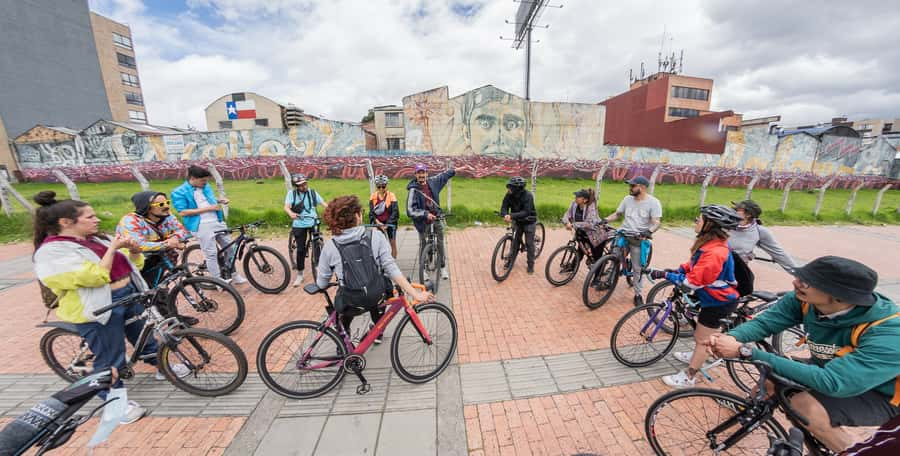
Bogotá’s street art makes more sense when you see it at bicycle speed. This three-hour ride links 13 kilometers of bike trails with murals, neighborhood contrasts, political stories, and a stop at a coffee factory. It is not just a wall-viewing circuit. The guide explains how art connects with Colombia’s social struggles and hopes for peace.
I like the chance to see murals by female artists, an angle often missed on standard graffiti walks. I also like the post-conflict mural, which gives the colorful paint a serious purpose. The main drawback is physical: 13 kilometers takes steady pedaling, and the tour runs rain or shine. Bring sports shoes and be ready for city riding.
Key points at a glance
- 13 kilometers by bike: Cover four Bogotá neighborhoods without spending the whole morning on foot.
- Four different city settings: Ride through Centro, Teusaquillo, Santa Fe, and La Macarena, with architecture and urban growth part of the story.
- Female artists in focus: Stop at walls that highlight women’s creative work in Bogotá’s street art movement.
- A mural about peace: Learn how public art reflects Colombia’s post-conflict efforts and social change.
- Coffee factory stop: Break up the ride with a look at one of the city’s coffee-related workplaces.
- Flexible group choices: Book a private outing or a small group, with guiding in English, Spanish, French, German, or Italian.
Why a bike is the right way to see Bogotá’s murals
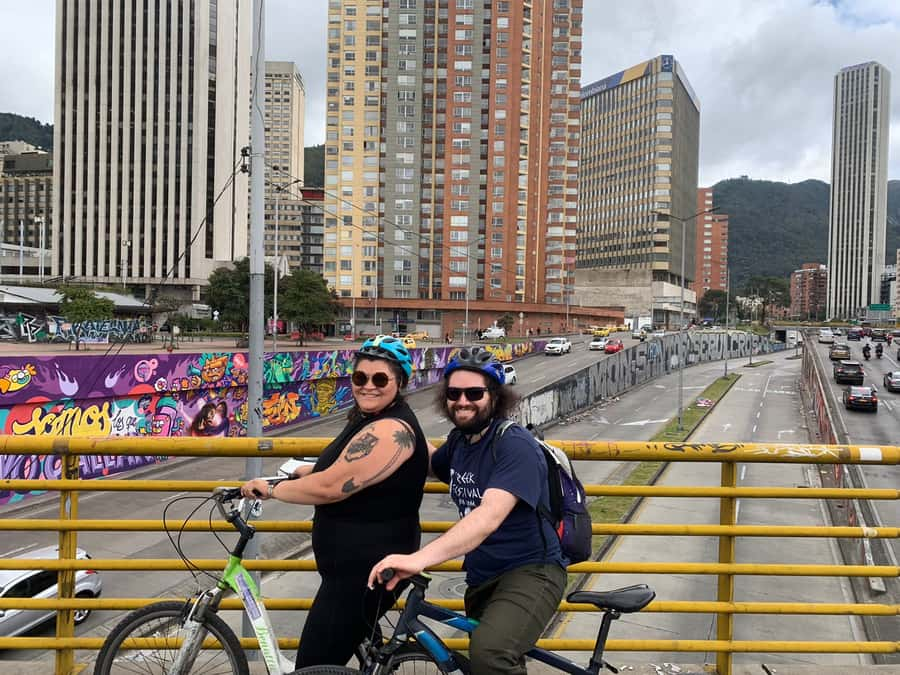
Bogotá is a large city, and the most interesting street art is spread across several areas. On foot, you would need to choose one neighborhood or spend much of your time walking between walls. A bicycle gives you a wider picture while keeping the focus on the streets.
The route uses city bike lanes and, on Sundays, may connect with the Ciclovía. This is a major Bogotá tradition in which streets open to cyclists and other recreational users, with extra routes and cultural activities on Sunday mornings. If your departure falls during Ciclovía, the ride can feel more relaxed and connected to local city life. If it does not, the regular bike-lane route still gives you a practical way to move between art stops.
I see the bicycle as more than transport here. It helps you compare neighborhoods in real time. A change in architecture, street layout, or wall space becomes part of the tour instead of a background detail seen through a vehicle window.
You should still be comfortable cycling for three hours. The total distance is 13 kilometers, and the experience takes place outdoors. The instructions specifically ask you to bring sports shoes. No cycling skill level is stated, so if you have concerns about distance or city riding, ask the operator before booking.
More Street Art Tours in Bogota
- Bogotá: La Candelaria Graffiti & Urban Art Guided Tour
★ 4.7 · 250 reviews - Fun Graffiti Workshop: The Art of Aerosol and Color
★ 5.0 · 73 reviews - Graffiti Tour in La Candelaria Bogotá with Transportation
★ 5.0 · 68 reviews
Starting at La Candelaria and reading the city walls
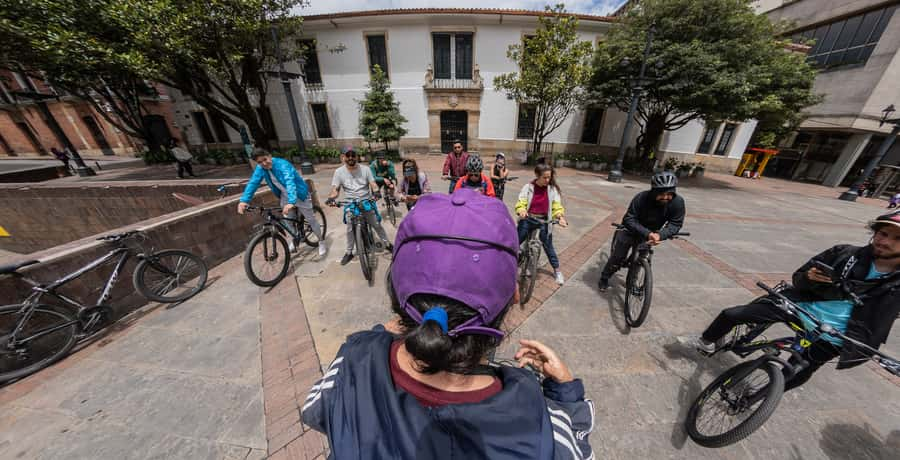
Meet in front of the large red wall at Carrera 3 #12-52 in La Candelaria. Look for the guide wearing a purple hoodie or cap, or carrying a purple umbrella. This clear landmark matters in a neighborhood with many narrow streets and colorful façades.
La Candelaria is a fitting starting point because it puts you close to Bogotá’s best-known historic center and its street art culture. The tour does not treat graffiti as decoration alone. You will hear about techniques, meanings, politics, and the local conditions that shaped the art.
The guide’s role is central. Diego is named as one of the guides, and he is also described as a practicing urban artist. That background can make the explanations more useful because the tour connects the finished image with how street art is made and why an artist might choose a particular wall.
Expect several stops rather than a nonstop ride. You will have time to look at large pieces, listen to the explanation, and consider how a wall changes the feel of its street. The tour is best for people who want context, not just a quick list of colorful photo spots.
Centro, Teusaquillo, Santa Fe, and La Macarena
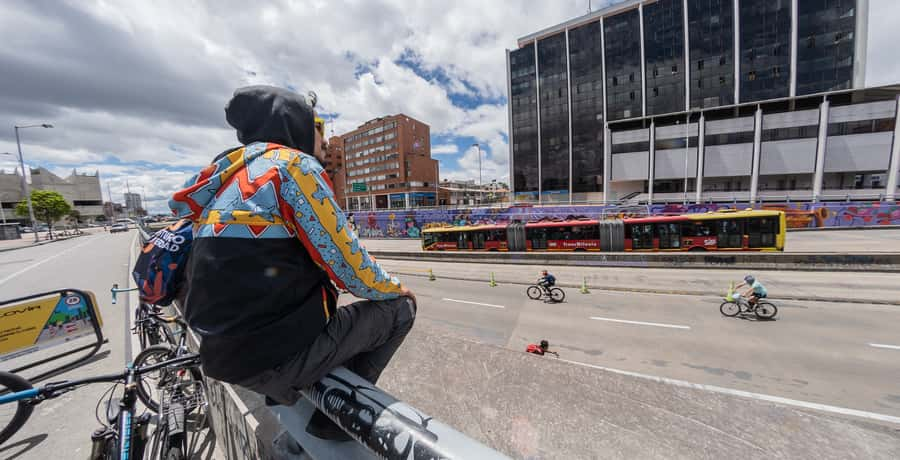
The route passes through four neighborhoods: Centro, Teusaquillo, Santa Fe, and La Macarena. The value of this sequence is comparison. You are not seeing one carefully preserved art district, but several parts of central Bogotá with different identities and urban patterns.
In Centro, the city’s older core provides a strong setting for political and social art. The exact walls can vary, since street art changes over time, but the focus is on works that reflect Colombia’s public debates and cultural life. Pay attention to how the guide links the artwork with the surrounding buildings and street design.
Teusaquillo adds another urban setting to the ride. Here, architecture and neighborhood development become part of the discussion. The tour uses buildings, streets, and public walls together, helping you see how art responds to the city rather than existing apart from it.
Santa Fe brings another contrast. The tour description specifically promises meaningful and politically charged works, so this is a place to listen closely to the explanations rather than simply photograph the largest image. Some pieces may be direct, symbolic, or difficult. That is part of the point: Bogotá’s graffiti movement gives artists a public way to address inequality, politics, memory, and identity.
La Macarena rounds out the neighborhood comparison. It is one more setting in which art, restaurants, homes, streets, and public space meet. The route’s strength is not a single famous wall, but the way the four areas show different sides of central Bogotá.
Female artists and a wider view of Bogotá’s graffiti movement
One of the most useful parts of the tour is its attention to walls created by female artists. Street art tours can easily center a few famous male names or focus only on the biggest images. This route instead includes women’s work as part of the city’s broader artistic movement.
That choice matters because a mural is also a record of who gets public space and whose ideas are made visible. Listen for the guide’s explanation of the artists, their imagery, and the issues they address. The supplied information does not identify each artist by name, so you should not expect a fixed list of women’s work. Walls can be painted over, altered, or replaced.
The female-led stops also add balance to the tour’s political story. You are not only looking at conflict and protest. You are seeing different artistic voices use the same city walls to discuss identity, community, and social change.
A completely different kind of day, same corner of Colombia:
- Bogota: Bicycle City Tour
★ 4.9 · 2,156 reviews - Zipaquirá: Salt Cathedral Group Tour with Pickup
★ 4.8 · 1,606 reviews - Bogotá: Guided La Candelaria Walking Tour
★ 4.8 · 1,229 reviews - Bogotá: Private City Tour, Monserrate, Emerald and Botero
★ 4.9 · 798 reviews
The peace mural and Colombia after conflict
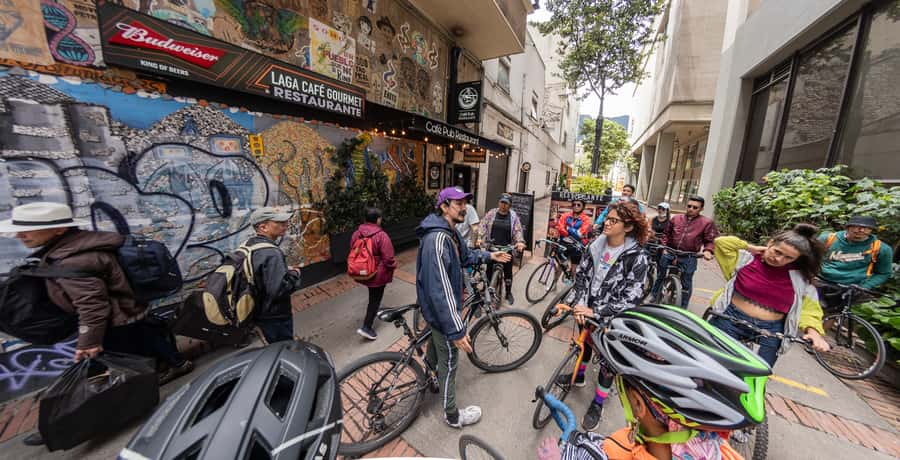
The tour includes a mural symbolizing peace and post-conflict. This is likely to be one of the most meaningful stops because it shifts the conversation from graffiti as visual style to graffiti as public memory.
Colombia’s post-conflict period is presented as a social laboratory for peace and social innovation. That phrase points to the larger idea behind the tour: peace is not only negotiated in official buildings. It is also discussed, tested, and represented in neighborhoods, schools, public spaces, and works of art.
The guide will explain the mural’s meaning and connection to Colombia. Give this stop time. Large images can be easy to admire and just as easy to misunderstand. The value comes from learning how the symbols relate to the country’s recent social experience.
If you prefer tours that stay light and purely visual, this section may feel more serious than expected. If you want a better understanding of Colombia beyond its tourist image, it is one of the strongest reasons to book.
The coffee factory stop adds a welcome change of pace
A stop at a coffee factory breaks up the mural viewing and gives the route another connection to Colombian culture. The information does not specify whether there is a tasting, production demonstration, or purchase opportunity, so do not book this expecting a full coffee workshop.
Still, the stop is useful in the rhythm of a bike tour. You get a pause from pedaling and a change from painted walls to a working part of the city’s coffee economy. It also keeps the experience from becoming repetitive. Three hours of murals can blur together; a short stop with a different subject helps you reset your attention.
Ask your guide how long the stop lasts and what it includes on your departure day. The main promise is a visit to a coffee factory, not a complete coffee education.
How the guide shapes the experience
The guide makes or breaks any street art tour. Here, the guide is expected to explain the history, techniques, and meaning behind the art, while also placing each neighborhood in its architectural and urban context.
Diego is specifically named in the available information, and he is described as deeply involved in the local art community. One verified booking described his tour as fun and enlightening, with explanations covering art, graffiti, history, neighborhoods, and the people who give those areas their character. That is the kind of guiding you want here: less memorizing dates, more connecting the wall to the place.
The tour is offered in English, Spanish, French, German, and Italian. Private and small-group options are available. A small group should make it easier to hear the guide and ask questions at each stop, while a private outing may suit you if you want to spend more time on certain works or keep the pace more personal.
Because the activity is led by an urban artist, ask about techniques when you have the chance. You may learn how artists use scale, color, lettering, stencils, or other methods, but the exact range depends on the guide and the walls visited that day.
Price, timing, and practical value
At $62 per person, this is not the cheapest way to see Bogotá’s street art. The price makes more sense when you consider what is bundled together: three hours, a bicycle-based route, 13 kilometers of city riding, four neighborhoods, a coffee factory stop, and a guide who explains both art and social context.
You are also paying for efficient movement. Walking the same distance would take more time and energy, while arranging your own route would require research and navigation. The tour gives you a planned framework and a local guide, which is useful if you have only a short stay in Bogotá.
The value depends on your interests. If you only want photographs of colorful walls, you could spend less by walking through one art-heavy area on your own. If you want to understand why the murals exist and how they relate to Colombia’s social changes, the guided ride offers more.
The tour lasts three hours, but starting times vary, so check availability before booking. It runs rain or shine, and a rain poncho is offered. Bring sports shoes. The operator asks you not to bring backpacks or valuables, so travel light and keep your essentials to a minimum.
Cancellation is flexible: you can cancel up to 24 hours ahead for a full refund. You can also reserve now and pay later, which is helpful when your Bogotá schedule is still changing.
Who should book this bike tour?
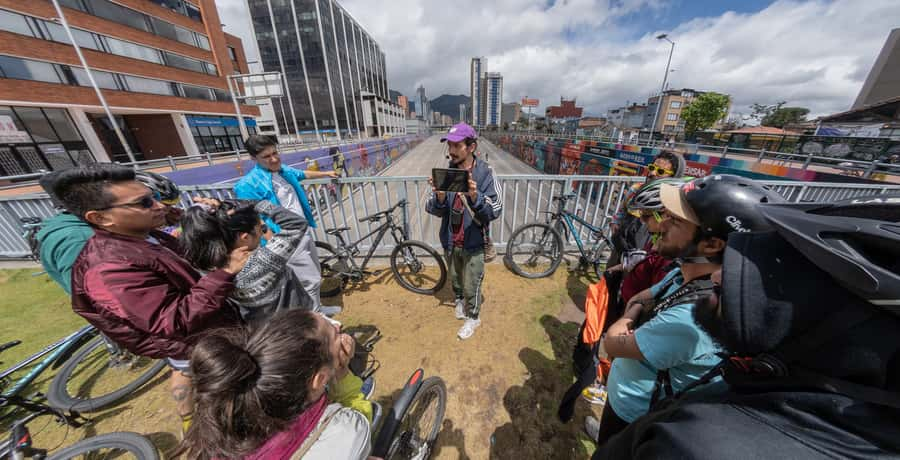
I would choose this for an active first look at central Bogotá, especially if you want more than a standard walking tour. It suits you if you enjoy public art, city history, political discussion, and seeing how neighborhoods change from one block to the next.
It is also a good match for visitors who want to support a local art perspective. The guide’s connection to urban art gives the explanations a practical angle, and the focus on female artists and peace-related work keeps the route from being only a greatest-hits collection of giant murals.
Families with older children, couples, solo visitors, and small groups can all find something here, provided everyone is ready for the distance and outdoor conditions. The private option may be useful for a group that wants a slower or more focused pace.
I would think twice if you dislike cycling, need a fully indoor activity, or want a fixed schedule built around one famous mural. The route includes several stops, but the walls seen can change, and the weather is part of the deal.
Should you book the Urban Art Bike Tour?
Book it if you want Bogotá’s graffiti explained through neighborhoods, politics, and social change, not just viewed as colorful scenery. The 13-kilometer route, female artists, peace mural, coffee factory stop, and four-area comparison give the experience a clear purpose.
Skip it if you are not comfortable riding for three hours or if rain would spoil your plans. For the right visitor, $62 is fair value for a guided look at Bogotá’s art scene with real local and historical context. Wear proper shoes, leave the backpack behind, and arrive at the red wall in La Candelaria looking for purple.
FAQ
Where does the Urban Art Bike Tour start?
It starts in front of the large red wall at Carrera 3 #12-52 in La Candelaria.
How do I identify the guide?
Look for a guide wearing a purple hoodie or cap, or carrying a purple umbrella.
How long is the tour?
The tour lasts three hours.
How far do we ride?
The route covers 13 kilometers of bike trails.
Which neighborhoods does the tour visit?
The route passes through Centro, Teusaquillo, Santa Fe, and La Macarena.
Is there a stop at a coffee factory?
Yes. A coffee factory stop is included in the route.
Does the tour include murals by female artists?
Yes. The route includes walls featuring illustrations by female artists.
Does the tour cover Colombia’s post-conflict period?
Yes. The experience includes a mural symbolizing peace and discussion of Colombia’s post-conflict period and social innovation.
Which languages are available?
Guiding is available in English, Spanish, French, German, and Italian.
What should I bring, and does the tour run in bad weather?
Bring sports shoes. The tour runs rain or shine, and a rain poncho is offered. Backpacks and valuables are not allowed.
More Bike Tours in Bogota
- Bogotá: Shared Bike Tour
★ 4.6 · 83 reviews - Bogotá Private Bike Tour with Transportation
★ 5.0 · 65 reviews - Bogotá Private Bike Tour with Transportation
★ 4.6 · 14 reviews - Medellín: History & Local Life Essentials Tour on an E-Bike
★ 4.9 · 130 reviews
Just added around Bogota
- Zipaquirá: Private tour to the Salt Cathedral, Colombia’s first wonder★ 4.9 · 33 reviews
- Zipaquira: 5 hrs Salt Cathedral Tour★ 4.4 · 9 reviews
- Wonders of Salt: Colombia’s Underground Cathedral★ 5.0 · 18 reviews
- Zipaquirá Salt Cathedral & Andrés Carne de Res (Chía)★ 4.6 · 30 reviews
- Zipaquirá: Private Salt Cathedral Mine and Walking Tour★ 4.8 · 3 reviews
- Villa de Leyva Trip by Private Transportation★ 4.8 · 27 reviews
- Wonderful tour of Villa de Leyva, and Zipaquira Salt Cathedral.★ 4.5 · 34 reviews
- Private Zipaquira Salt Cathedral and Guatavita Lagoon Tour from Bogota★ 4.5 · 44 reviews
Street Art, compared.
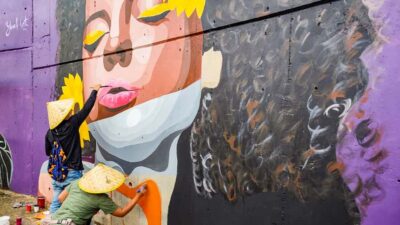
Comuna 13 Graffiti Tour, Cable Car & Street Food
Read our review →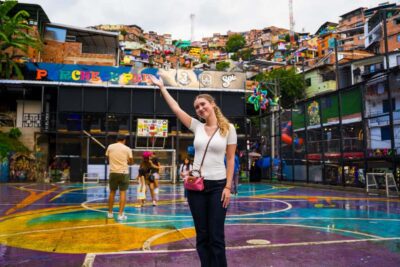
Comuna 13 Tour with Snacks And Your Own Graffiti
Read our review →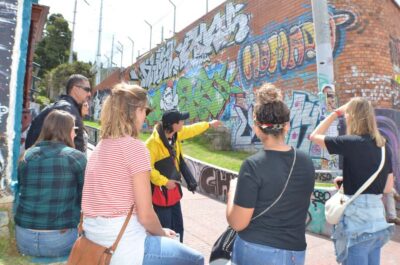
Comuna 13 and Graffiti Guided Tour with a Local
Read our review →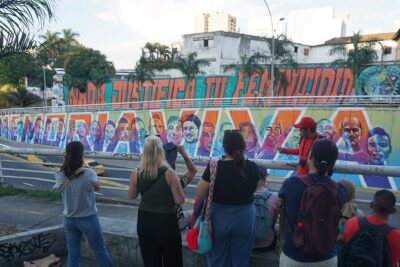
Historical Shared Tour Salsa, Graffiti & Resistance in Cali
Read our review →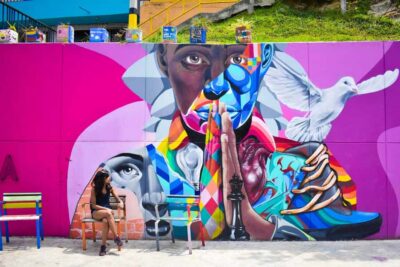
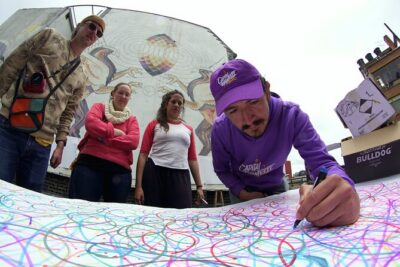
Fun Graffiti Workshop: The Art of Aerosol and Color
Read our review →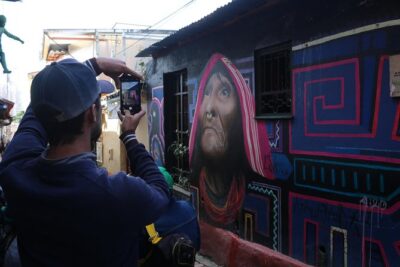
Graffiti Tour in La Candelaria Bogotá with Transportation
Read our review →Browse the lists this tour appears in