
Reviewed · BOGOTá TOURS
Breaking Borders: Bogota Gansters Story
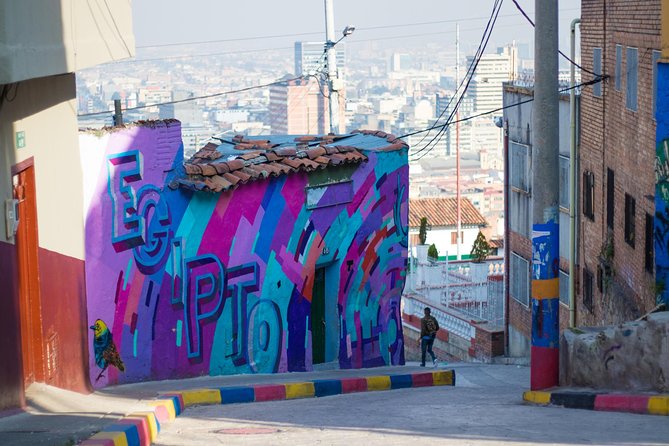
Bogotá’s Breaking Borders experience takes you from the old heart of La Candelaria into Barrio Egipto, where former gang members explain how violence shaped their community and how local people are working to change its future. You get personal testimony, not a polished city tour, and the stories can be intense.
I like the way the murals serve as a guidebook to Egipto’s past, and I like that your money supports people who are trying to create new choices for young residents. The main drawback is the steep walk into the neighborhood and the emotional weight of the subject. This is not a light sightseeing stroll.
- Former gang members lead the local portion: Hear firsthand accounts of gang life, violence, and leaving that life behind.
- Graffiti tells the neighborhood’s story: Your guide explains the people and events shown in the murals.
- Chorro de Quevedo is the meeting point: The tour begins in the traditional founding area of Bogotá.
- Egipto’s football field shows practical change: The community space represents a safer future for local children.
- Private transport is optional: Choose hotel pickup and drop-off if you want less hassle getting to La Candelaria.
- Bring cash and sturdy shoes: You may want to tip or buy personal items, and parts of the walk climb uphill.
From Chorro de Quevedo to Barrio Egipto
The tour begins at Plazoleta Chorro de Quevedo, a lively square in La Candelaria associated with the founding of Bogotá. It is an easy place to reach by public transport, though the cobbled streets and surrounding hills make comfortable shoes a wise choice.
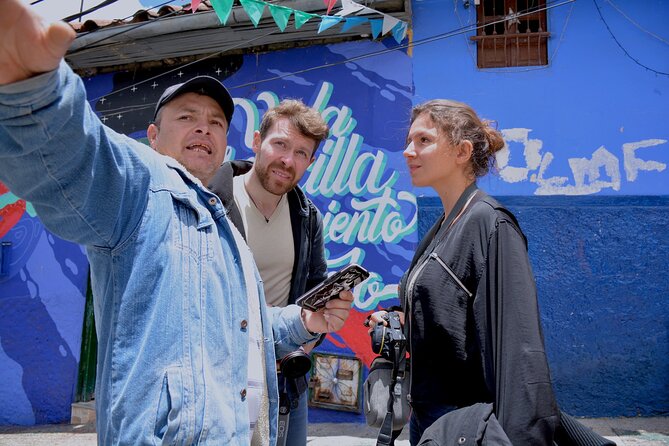
Here you meet the bilingual guide and learn about the Breaking Borders project before leaving the usual tourist circuit. The opening talk matters because it gives you a frame for what follows. You are not simply entering a neighborhood to look at murals. You are being introduced to a community-led effort to change how Egipto is seen and how its young people see their own options.
The route leads toward Nuestra Señora de Egipto, the church at the entrance to Barrio Egipto. The church is tied to the neighborhood’s major January 6 festivities, so it is more than a quick photo stop. It helps explain the community’s identity and the setting in which local celebrations take place.
One practical point: the walk from the square toward the church includes an uphill section. A past participant felt the starting point might be easier closer to the church, especially after arriving by taxi. If you have limited mobility, ask about the route before booking. The activity information says most people can participate, but this is still a walking tour on hilly streets.
Reading Egipto Through Its Murals
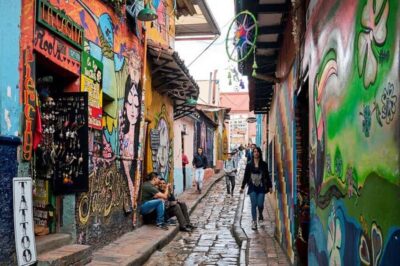
The graffiti is one of the strongest parts of the experience. Instead of treating the painted walls as decoration, your guide explains the people, memories, and struggles shown in the artwork. The murals help you follow Egipto’s movement from a neighborhood marked by drugs, weapons, and gang control toward one seeking peace and opportunity.
This is where a local guide adds real value. Names associated with the experience have included Harold, Monkey, Mr. Pumpkin, and Gildardo Arango, along with bilingual guides such as Gigio and Raul. The exact team may vary, but the format remains personal: a guide from the neighborhood helps you understand the images and connects them to lived experience.
You may hear how people joined gangs, what violence did to families, and why some chose to leave. The accounts are direct rather than academic. One story describes Friday nights once shaped by alcohol, drugs, and violence becoming family movie nights for the neighborhood. That small change says a lot. Social progress is not always a grand project. Sometimes it looks like families sharing a film in a public space.
The tone can shift quickly between pain and humor. One group ended its visit with a freestyle rap, a memorable local touch that also showed how creativity can replace fear as a way to claim public space. You may not understand every word, but the moment is part of the connection this tour tries to build.
A few more Bogota half-days worth weighing up
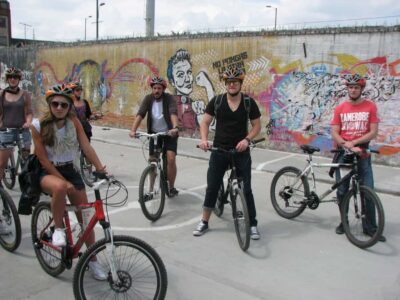
- Bogota: Bicycle City Tour
★ 4.9 · 2,156 reviews - Zipaquirá: Salt Cathedral Group Tour with Pickup
★ 4.8 · 1,606 reviews - Bogotá: Guided La Candelaria Walking Tour
★ 4.8 · 1,229 reviews
Meeting the People Behind Breaking Borders
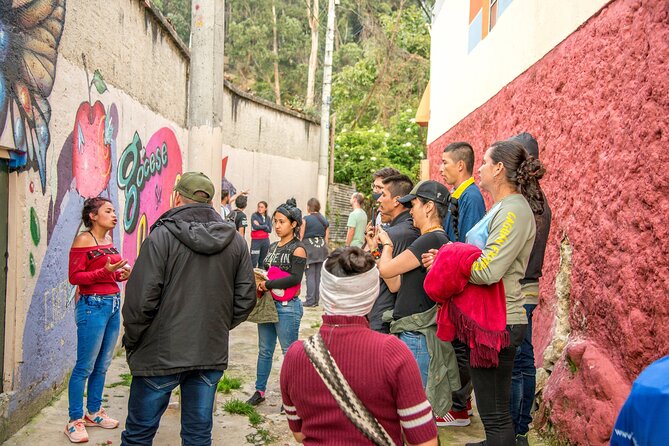
The heart of the tour is the conversation with former gang members who now work with Breaking Borders. They explain their own pasts and the reasons they chose another path. You are not asked to treat them as symbols. You meet people who have made difficult changes and who still face serious limits.
That distinction is important. The neighborhood has not been transformed into a postcard setting. The project has made progress, but poverty, limited education, and the effects of violence remain part of the story. The value of the visit comes from seeing both sides at once: there is hope, but there is also work left to do.
The guides have been praised for speaking openly and for answering difficult questions. Harold, in particular, has shared the history of injustice and violence in the area. Mr. Pumpkin has been described as animated and upbeat while discussing his former life in a gang. Gigio has served as an English-speaking guide and translator, helping visitors understand both the personal stories and the wider context.
Because the conversations are personal, you should arrive with respect. Ask questions, but do not treat someone’s past as entertainment. Listen carefully, and remember that the project is built around dignity, work, and second chances.
The Church and Football Field
The second part of the walk takes you farther into Egipto. You visit the Iglesia de Egipto and the newer community football field. The field is especially useful for understanding the project’s focus on children and teenagers.
A football field can sound like a simple sightseeing stop. Here, it represents a practical investment in public life. Young people need places to meet, play, and build plans beyond gang activity. The field does not solve every problem, but it gives the neighborhood a visible sign of what local change can look like.
This is also where the tour moves beyond stories about former gang members. You see an effort aimed at the next generation. One young participant has spoken about wanting to continue school and eventually become an English-speaking guide. That kind of goal helps you understand why tourism can matter when it is connected to training, work, and local ownership.
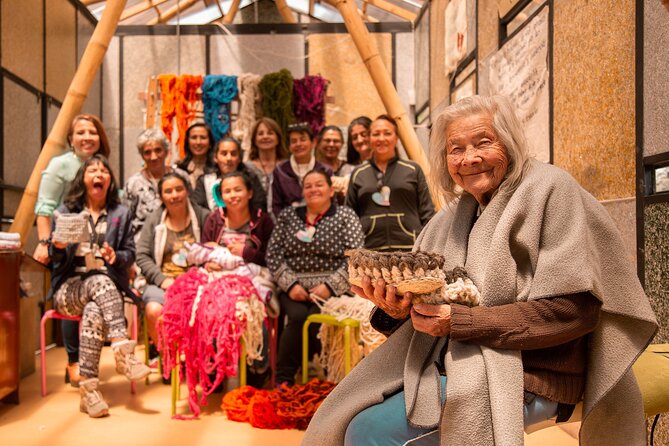
Some versions of the visit have also included a weaving workshop, where visitors could buy a hand-loomed rug directly from local women. The supplied tour details do not list this as a guaranteed stop, so do not book expecting it. If it is offered during your visit, you may find the time there brief, but purchases can provide direct support to the women involved.
What You Eat and Drink
A local snack and traditional chicha are included. Chicha is a fermented corn drink with a long place in Colombian culture. It is an appropriate part of this experience because the tour is about local life, not just famous sights.
Food beyond the included snack is not covered, and lunch is not part of the tour. Alcoholic drinks can be purchased separately, but you should bring cash for personal spending, tips, or small purchases. The snack and chicha are modest additions, not a meal replacement.
The tour lasts about three hours, with roughly one hour around the route from Chorro de Quevedo and two hours in Egipto. That gives the conversations room to breathe, though one past participant wanted more time at the weaving workshop. If you prefer a fast list of sights, the pace may feel slow. If you want time to listen, the length is useful.
A completely different kind of day, same corner of Colombia:
- Bogotá: Private City Tour, Monserrate, Emerald and Botero
★ 4.9 · 798 reviews - Bogotá´s Barrios: El Paraíso Favela Tour with Cable Car
★ 4.8 · 731 reviews - Bogota: Guatavita and Salt Cathedral Daily Group Tour
★ 4.7 · 615 reviews - Bogotá City Tour with Monserrate, Gold and Botero Museums
★ 4.9 · 584 reviews
Is the $91 Price Fair?
At $91 per person, the price is higher than a basic Bogotá walking tour. You are paying for a small, private experience, bilingual support, local participation, and a social project rather than for entry tickets to major monuments.
There is no admission fee for the listed stops. The value comes from access and context: meeting people from Egipto, hearing personal accounts, and entering a part of the city you might not visit on your own. The cost also makes more sense if you choose hotel transportation, since private pickup and drop-off remove the need to arrange your own way to and from La Candelaria.
Solo pricing can be a concern. One person paid much more than the advertised per-person figure because the booking structure did not reflect the final solo cost clearly. Check the total price for your group before confirming, especially if you are traveling alone.
Plan to tip if you feel the guides have earned it. The people sharing their stories are doing demanding work, and one participant wished they had brought more cash after giving a larger tip to the former gang members. Tips are optional, but cash gives you the choice.
Safety, Comfort, and Good Judgment
The experience is private, so only your group participates. That can make sensitive conversations more comfortable and lets the guide adjust explanations to your interests. It also means the price may feel better for two or more people than for a solo visitor.
The activity allows service animals and is near public transportation. Children must be accompanied by an adult. Most people can take part, but the uphill streets and walking time deserve attention if you have mobility concerns.
Past participants have felt safe during the visit, and the guides explain how to move through the area. Still, use normal city awareness. Keep valuables secure, follow your guide, and avoid wandering away from the group. This is a working neighborhood, not a staged attraction.
Dress for walking. Comfortable clothes and shoes are recommended, and cash is useful. If you select the transport option, hotel pickup and drop-off make the day simpler. Otherwise, you meet at Chorro de Quevedo and return there at the end.
Who Will Get the Most From This Experience
I would choose this tour if you want to understand Bogotá through current social change rather than only through churches, museums, and colonial streets. It suits adults and older children who can listen respectfully to difficult stories.
It is also a good match if you care about community tourism. The experience gives you a direct way to support a project connected to former gang members, local guides, youth, and neighborhood improvement.
I would not choose it if you want a relaxed food tour, a standard city walk, or a simple history lesson. The subject includes trauma, poverty, drugs, violence, and limited education. You may leave inspired, but you may also leave thoughtful and unsettled. That is part of the point.
Cancellation is free if you cancel at least 24 hours before the local start time. Changes or cancellations made later are not refunded.
Should You Book Breaking Borders?
Yes, if you want an honest look at a side of Bogotá that most sightseeing routes skip. The strongest parts are the personal guides, the mural explanations, and the chance to see a football field and other practical signs of change instead of hearing only broad promises.
Before booking, confirm the final solo or group price, decide if you want hotel transport, and bring comfortable shoes and cash. Go with patience and an open mind. You are not buying a polished show. You are paying for time with people who are trying to rewrite the story of their neighborhood, one conversation and one young person at a time.
FAQ
Where does the Breaking Borders tour begin?
It begins at Plazoleta Chorro de Quevedo, at Cl. 12b #2-98 in Bogotá’s La Candelaria area.
Where does the tour end?
The activity ends back at the Chorro de Quevedo meeting point.
How long does the experience last?
The tour lasts approximately three hours. About one hour is spent walking from Chorro de Quevedo toward Egipto, followed by about two hours in the neighborhood.
Is transportation from my hotel included?
Private transportation to and from your hotel is included only when you select the transportation option.
Who leads the tour?
A bilingual English and Spanish guide leads the experience, together with a personal guide from the Egipto neighborhood. Guides connected with the experience have included Harold, Monkey, Mr. Pumpkin, Gigio, Gildardo Arango, Raul, and Andrea.
Is food included?
A local snack and traditional chicha are included. Lunch and other food and drinks are not included unless specifically stated.
Should I bring cash?
Yes. Cash is recommended for personal expenses, optional tips, alcoholic drinks, and possible purchases.
Can I cancel for a full refund?
Yes, if you cancel at least 24 hours before the experience starts. Cancellations or changes made less than 24 hours before the local start time are not accepted for a refund.
Just added around Bogota
- Zipaquira: 5 hrs Salt Cathedral Tour★ 4.4 · 9 reviews
- Zipaquirá: Private tour to the Salt Cathedral, Colombia’s first wonder★ 4.9 · 33 reviews
- Wonders of Salt: Colombia’s Underground Cathedral★ 5.0 · 18 reviews
- Zipaquirá Salt Cathedral & Andrés Carne de Res (Chía)★ 4.6 · 30 reviews
- Zipaquirá: Private Salt Cathedral Mine and Walking Tour★ 4.8 · 3 reviews
- Villa de Leyva Trip by Private Transportation★ 4.8 · 27 reviews
- Wonderful tour of Villa de Leyva, and Zipaquira Salt Cathedral.★ 4.5 · 34 reviews
- Theatron Party-Tour, 20 Clubs, Map, cocktail, bottle, After-party★ 5.0 · 27 reviews
Bogotá Tours, compared.
Private City Tour, Monserrate, Emerald and Botero
Read our review →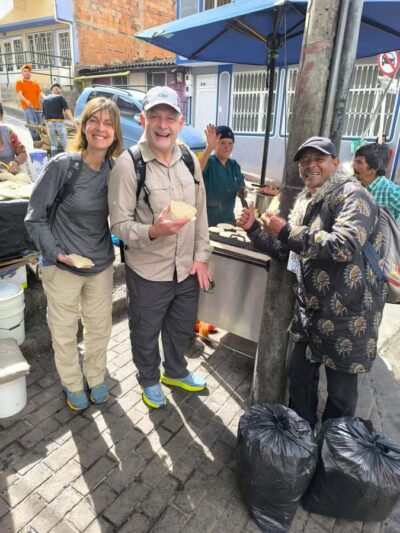
Bogotá´s Barrios: El Paraíso Favela Tour with Cable Car
Read our review →
Bogotá City Tour with Monserrate, Gold and Botero Museums
Read our review →
Zipaquirá Salt Cathedral and Lake Guatavita Day Tour
Read our review →Browse the lists this tour appears in