
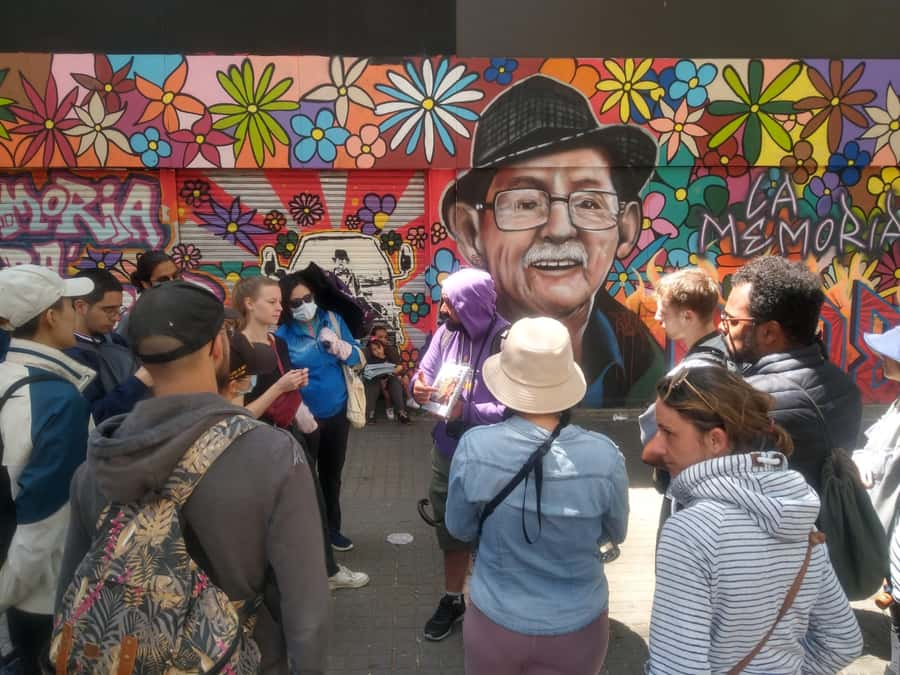
Reviewed · STREET ART
Graffiti Tour: a fascinating walk through a street art City
Bogotá’s graffiti is not just decoration. It is a public argument, a history lesson, and sometimes a warning painted across a wall. This 150-minute walk brings you to the country’s tallest illegal graffiti and explains how artists use streets to discuss politics, peace, and the future of Colombia.
I like the tour’s social purpose: the company works with local artists and community leaders, putting money into new murals and their upkeep. I also like the guide’s broad approach, connecting art techniques with political and geographic context instead of treating every wall as a quick photo stop.
The main consideration is that this is a serious, discussion-led walk. If you want only colorful murals and fast sightseeing, the political material may feel heavier than expected. The shared tour also means walking with other people, though private and small-group choices are available.
Key points to know before you book
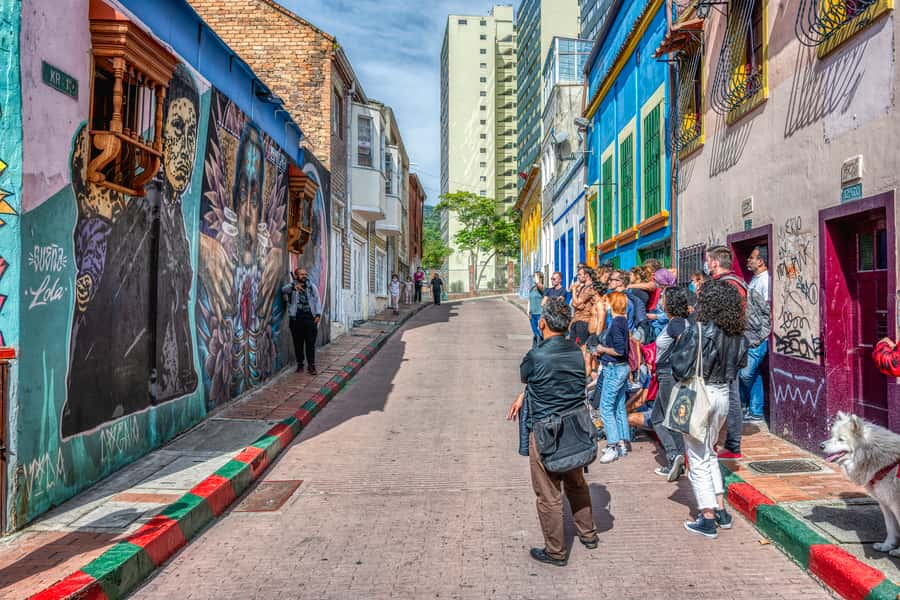
- The tallest illegal graffiti in Colombia gives the walk an immediate sense of scale and place.
- Political posters and murals address current social issues rather than only abstract artistic ideas.
- False positives and community resilience form part of the social story explained during the walk.
- Local artists help lead the experience, with attention to technique, inspiration, and public debate.
- The $15 price covers 150 minutes, an English-speaking guide, and several street art locations.
- The meeting point is easy to find, beside the Gold Museum, where you look for a purple hoodie, cap, or umbrella.
Starting beside the Gold Museum
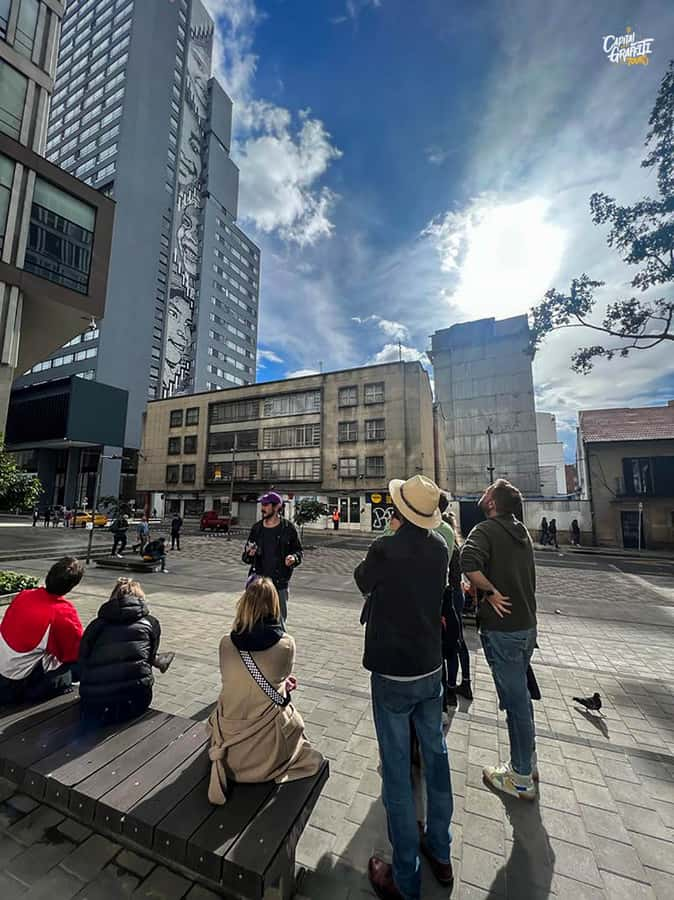
The tour begins next to the Gold Museum at Carrera 6 # 15-88. That is a useful meeting place in central Bogotá, and the guide’s purple hoodie, cap, or umbrella gives you a clear visual marker in a busy city center.
Arrive ready for a walking tour rather than a museum-style visit. The key part of the experience happens outside, among painted walls, posters, and the changing streets of Bogotá. Wear comfortable shoes and bring only what you need. Valuables are not allowed, so keep your belongings simple.
The available guide languages are English, Spanish, Italian, French, and German. That matters here because the meaning of political art can be easy to miss if you understand only the basic image. You want a guide who can explain the words, references, and local concerns behind the paint.
The exact starting time depends on availability, so check the schedule when you book. The total length is 150 minutes, long enough to cover several locations without turning the day into a full walking marathon.
More City Tours in Bogota
- Bogota: Bicycle City Tour
★ 4.9 · 2,156 reviews - Bogotá: Private City Tour, Monserrate, Emerald and Botero
★ 4.9 · 798 reviews - Bogotá City Tour with Monserrate, Gold and Botero Museums
★ 4.9 · 584 reviews
Reading Bogotá through its street art
Bogotá has earned an international reputation for street art, but the value of this walk is not simply counting murals. The guide helps you read the city as a place where artists respond to events, arguments, and hopes in public view.
You can expect a mix of street art and graffiti rather than one single style. The artists use different techniques and sources of inspiration, and the guide explains how those choices affect the final work. Some pieces may pull you in through color or scale. Others may matter because of the words, symbols, or political ideas they present.
That distinction is important. A large wall can be visually impressive, but its real subject may be a social conflict or a painful part of Colombia’s past. The tour gives you the background needed to understand why the image is there and why people care about it.
I like this approach because it avoids reducing Bogotá’s art to a collection of Instagram backdrops. You still get strong photo opportunities, but you also learn how artists make public space part of a national conversation.
The country’s tallest illegal graffiti
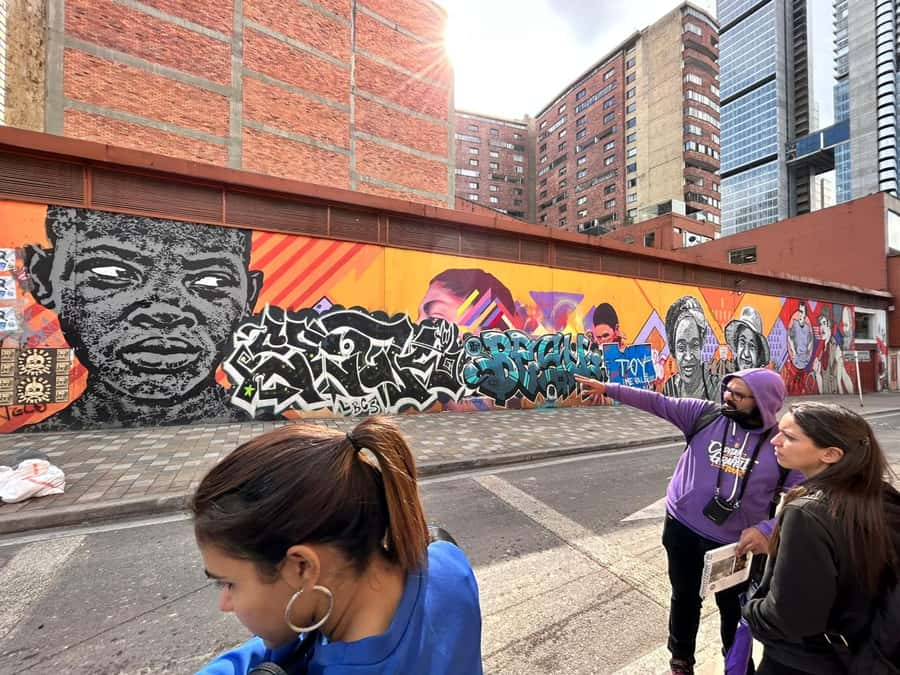
One of the main highlights is a visit to the tallest illegal graffiti in Colombia. The description alone makes this a memorable stop, but the point is not only its height.
Large illegal work raises practical questions. How was it created? Who approved it, if anyone? How does a city respond when artists change a building or wall without formal permission? Your guide can place the work within Bogotá’s wider relationship with graffiti, where public art, private property, official permits, and protest can overlap.
This is also a good example of why context improves the experience. Without an explanation, you may see an enormous image and move on. With the background, you begin to understand the risks, decisions, and public reaction tied to work of this scale.
Do not expect the tour to treat illegal graffiti as automatically good or bad. The more useful lesson is that it exists within a complicated public debate. Art can beautify a street, challenge authority, claim space for a community, or cause conflict with property owners. The guide’s job is to help you see those different sides.
Political posters and current social issues
The walk also enters an area known for political posters addressing current social issues. This part may feel less polished than a giant commissioned mural, but it can be more direct.
Posters speak quickly. They may use a short phrase, a stark image, or a recognizable public figure to make a point. Their temporary nature is part of their character. They can appear, disappear, or be covered as political conditions change.
Your guide provides the political and historical setting needed to make sense of them. The tour connects street art with Colombia’s present peace process and with hopes for a better future. That does not mean every piece offers a simple answer. Instead, you see how artists use walls and public notices to ask difficult questions in a place where anyone passing by can respond.
I find this one of the tour’s strongest features. Museums can place political art behind glass and give you time to study it. Bogotá’s posters place the argument right in the street, alongside ordinary daily life. That setting changes how you look at the work. You are not just observing an object. You are seeing a public message aimed at a real community.
The drawback is tone. Some subjects may be difficult, and the discussion may require attention rather than casual sightseeing. If you prefer a lighter art walk, ask yourself if you are comfortable spending part of the tour with present-day political material.
More Street Art Tours in Bogota
- Bogotá: La Candelaria Graffiti & Urban Art Guided Tour
★ 4.7 · 250 reviews - Fun Graffiti Workshop: The Art of Aerosol and Color
★ 5.0 · 73 reviews - Graffiti Tour in La Candelaria Bogotá with Transportation
★ 5.0 · 68 reviews - Bogotá: Graffiti Tour el mejor recorrido de arte urbano
★ 4.7 · 41 reviews
Understanding false positives and community strength
Another distinctive theme is the resilience of the community in the face of false positives. This is a painful subject in Colombia, and the tour treats it as part of the social story told through public art.
The supplied information does not give a specific mural title or explain exactly which stops cover this topic, so you should not expect a fixed museum-style exhibit. Instead, the guide uses the relevant art and posters to explain how communities respond to difficult events and how artists keep those issues visible.
This is where the tour moves beyond art criticism. You learn how a mural can hold memory, create a place for public discussion, and support a community’s effort to speak about injustice. The message is not simply that art is attractive. It is that art can help people organize ideas, preserve difficult memories, and imagine something better.
You may find this section more meaningful if you have already read a little about Colombia’s recent history. You do not need special preparation, but a basic understanding of the country’s peace process and social conflicts will help you follow the guide’s explanations.
Meeting the artists behind the walls
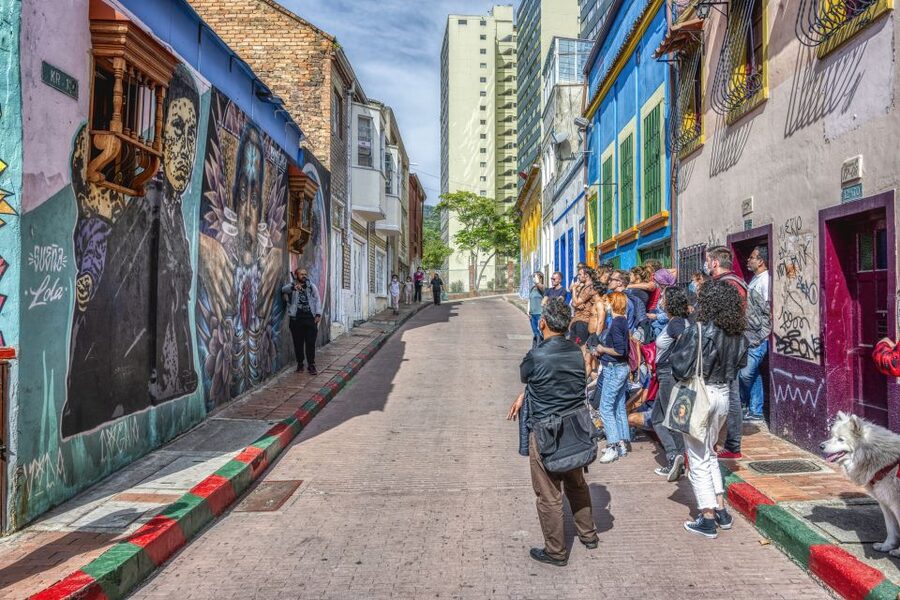
Capital Graffiti Tours is run by artists and promoters, not only by a standard sightseeing operation. That shapes the experience in a useful way. The guides introduce you to a range of artists, techniques, and sources of inspiration while also explaining the political, cultural, historical, and geographic setting.
No individual guide names are provided, so you should not book this expecting a particular guide. Instead, focus on the language and group format you need. English, Spanish, Italian, French, and German are offered.
The company also works with local artists and community leaders. Its stated goal is to reinvest in financing and managing new murals. For you, that means the tour fee is connected to an ongoing local art effort rather than ending entirely with the walk.
That social-impact claim is valuable, but it is also worth viewing it in practical terms. The tour does not promise that every mural is funded directly by your individual booking or that every artist you see is present. The benefit is that the company presents itself as part of Bogotá’s art community and uses its work to support continued cultural activity.
How the 150-minute route should feel
The length is a good middle ground. At two and a half hours, you have enough time to visit multiple street art locations and hear explanations without giving up a whole day.
The tour is best understood as a moving conversation. You walk from place to place, pause at selected works, and listen as the guide explains what you are seeing. Because street art is spread through the city rather than contained in one building, the route itself is part of the experience.
You should expect some stops to be more visually dramatic than others. The tallest illegal graffiti is likely to provide the biggest scale, while the political poster area may offer the strongest connection to current events. Smaller or less polished works can still matter because the guide places them within the larger story.
A shared tour can be a good value if you enjoy comparing impressions with other people. The stated shared option uses the amount paid per person as the suggested tip for the guides and to cover their work, minus commission. You do not need to pay extra at the end, even if other people in the group choose to do so.
Private and small-group options are available if you want a more focused pace. These formats may suit you better if you have limited time, want to ask many questions, or prefer not to discuss political topics in a large group.
Is $15 a fair price?
At $15 per person, this is a strong value for a 150-minute guided walk, particularly if you want more than photographs. The price includes an experienced English-speaking guide and visits to multiple street art and graffiti locations.
The value comes from interpretation. You can walk through Bogotá and notice painted walls for free, but you will not automatically know which artists created them, why certain images appear in particular places, or how the work connects with Colombia’s social debates.
The price also supports a tour company that says it reinvests in local murals and works with artists and community leaders. That gives the booking an added cultural purpose, although you should still judge the tour by how much explanation and access you want.
The shared payment model is worth understanding before booking. You pay the listed per-person amount, and you do not have to add a second payment at the end. That makes the final cost easier to manage than tours where the advertised price is only a suggested contribution.
Who will enjoy this walk most?
I would choose this tour if you want to understand Bogotá through its public art rather than simply collect attractive pictures. It suits first-time visitors who want a guided introduction, as well as repeat visitors who want a stronger connection to local politics and community life.
It is especially useful for you if:
- You enjoy art with a social or political message.
- You want an English, Spanish, Italian, French, or German-speaking guide.
- You prefer a 150-minute activity that fits around other plans.
- You like walking tours with discussion and local context.
- You want your booking to support a company working with artists and communities.
You may want a different activity if your main goal is formal art, indoor galleries, or a quiet route with little discussion. The subject matter can be serious, and the experience depends on paying attention to explanations as well as looking at walls.
The tour is wheelchair accessible, which makes it a practical option for many visitors. Since the route is outside and includes walking between locations, check the available starting time and any current route details when you book.
Booking, cancellation, and meeting advice
You can cancel up to 24 hours in advance for a full refund. The reserve-now, pay-later option lets you hold a place without paying today, which is useful if your Bogotá schedule is still changing.
At the meeting point beside the Gold Museum, look for the purple hoodie, cap, or umbrella. Keep valuables at home or carry only what you need, since valuables are not allowed on the activity.
If you are deciding between shared and private formats, choose shared for the $15 value and social atmosphere. Choose private or small-group if you want more control over the pace or a setting better suited to detailed questions.
Should you book the Bogotá Graffiti Tour?
Book it if you want to see why Bogotá’s street art matters, not just where to find it. The tallest illegal graffiti, political posters, peace-process context, and discussion of community resilience give the walk more substance than a simple mural hunt.
The best reason to go is the balance of visual scale and difficult subject matter. One stop shows what graffiti can achieve physically. Other areas show what it can say about society. For $15 and 150 minutes, that is a useful introduction to Bogotá’s open-air art scene.
Skip it only if you want a purely decorative art outing or do not enjoy political discussion. For everyone else, meet beside the Gold Museum, find the purple marker, and let the city’s walls do the talking.
FAQ
How long does the Graffiti Tour last?
The tour lasts 150 minutes, or two and a half hours.
How much does the tour cost?
The listed price is $15 per person.
Where is the meeting point?
Meet next to the Gold Museum at Carrera 6 # 15-88 in Bogotá.
How will I recognize the guide?
Look for a guide wearing a purple hoodie or cap, or carrying a purple umbrella.
What languages are available?
Live guides are available in English, Spanish, Italian, French, and German.
Is the tour wheelchair accessible?
Yes, the activity is listed as wheelchair accessible.
Can I cancel or pay later?
You can cancel up to 24 hours in advance for a full refund. You can also reserve now and pay later.
More Walking Tours in Bogota
- Bogotá: Guided La Candelaria Walking Tour
★ 4.8 · 1,229 reviews - Zipaquirá Salt Cathedral Private Tour + Walking Tour
★ 5.0 · 66 reviews - La Candelaria Walking Private Tour (3 Hrs.)
★ 5.0 · 51 reviews - Bogota Walking Tour Teusaquillo, a different part of the city
★ 5.0 · 41 reviews
Just added around Bogota
- Zipaquirá: Private tour to the Salt Cathedral, Colombia’s first wonder★ 4.9 · 33 reviews
- Zipaquira: 5 hrs Salt Cathedral Tour★ 4.4 · 9 reviews
- Wonders of Salt: Colombia’s Underground Cathedral★ 5.0 · 18 reviews
- Zipaquirá Salt Cathedral & Andrés Carne de Res (Chía)★ 4.6 · 30 reviews
- Zipaquirá: Private Salt Cathedral Mine and Walking Tour★ 4.8 · 3 reviews
- Villa de Leyva Trip by Private Transportation★ 4.8 · 27 reviews
- Wonderful tour of Villa de Leyva, and Zipaquira Salt Cathedral.★ 4.5 · 34 reviews
- Private Zipaquira Salt Cathedral and Guatavita Lagoon Tour from Bogota★ 4.5 · 44 reviews
Street Art, compared.
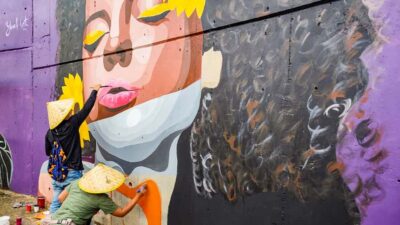
Comuna 13 Graffiti Tour, Cable Car & Street Food
Read our review →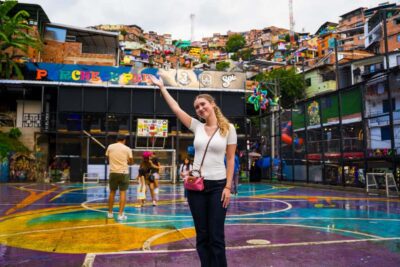
Comuna 13 Tour with Snacks And Your Own Graffiti
Read our review →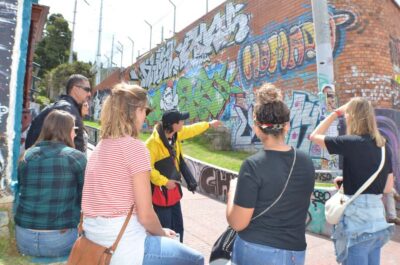
Comuna 13 and Graffiti Guided Tour with a Local
Read our review →
Historical Shared Tour Salsa, Graffiti & Resistance in Cali
Read our review →
Fun Graffiti Workshop: The Art of Aerosol and Color
Read our review →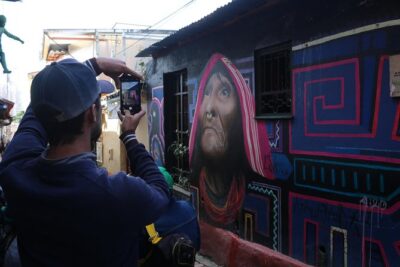
Graffiti Tour in La Candelaria Bogotá with Transportation
Read our review →Browse the lists this tour appears in