
Reviewed · SALT CATHEDRAL TOURS
New & Cheapest ZIPAQUIRA & GUATAVITA LAKE Visit 5 Sites/PICKUP
Guatavita’s high mountain lake and Zipaquirá’s underground Salt Cathedral make an unlikely pair: one is tied to the Muisca legend of El Dorado, while the other is a former mine turned Catholic place of worship. This full-day Colombian outing links both with a colonial town, wide views across the Sabana, and a local lunch stop.
I like the range here. You get a real country day outside Bogotá, not just one polished attraction, and the bilingual guide adds useful context about Muisca culture, local plants, and the story behind the salt mine. The main drawback is the pace: 11 to 14 hours is realistic, and the small vehicle can feel tight, especially in the back seats.
Five useful things to know before you book
- The Guatavita walk reaches nearly 3,000 meters, with an uphill path, uneven ground, and changing weather.
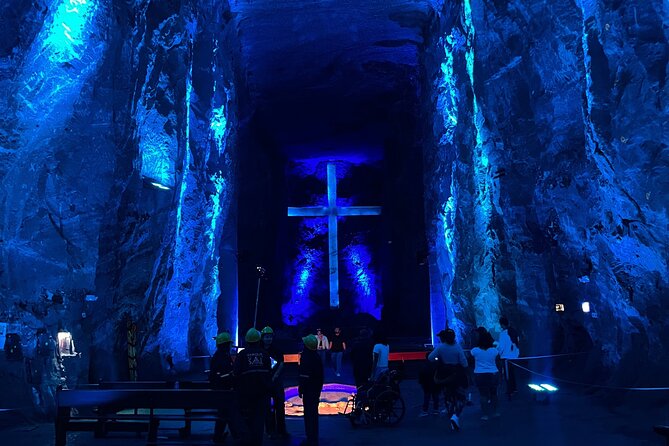
- The Salt Cathedral is underground, with a huge central cross, chapels, a light show, shops, a cinema, and other optional attractions.
- Tatiana is often the guide, and her clear English, Spanish, energy, and organization receive especially strong praise, though another guide may lead your departure.
- The advertised price is $53 per person, but the two largest entrance fees are not included.
- This is a shared group tour capped at 16 people, not a private car experience for just you and your party.
- Bring cash in Colombian pesos, comfortable walking shoes, rain protection, and patience for a long day on the road.
Why this Bogotá day trip works
I see this as a broad sampler of the countryside around Bogotá. In one day, you move from high Andean scenery to a whitewashed colonial town, a protected mountain reserve, a traditional meal, and an unusual religious site cut into salt rock.
That variety is the tour’s strongest feature. If you have limited time in the Bogotá area, it gives you several of the region’s best-known sights without requiring you to plan buses, taxis, admission windows, and rural transfers yourself.
The tradeoff is clear. You are covering a lot of ground, and the road time is substantial. Pickup begins around 7:00 a.m., and return can be close to 9:00 or 10:00 p.m., depending on your hotel location, traffic, and the number of pickups. I would not schedule an evening flight, restaurant booking, or anything important after the tour.
The experience is priced at $53, which is low for hotel pickup, transportation, guidance, insurance, and a full day of sightseeing. Yet the price needs one important adjustment: Guatavita Lake and the Salt Cathedral charge separate admission fees, and those costs vary for foreign visitors, Colombian nationals, seniors, and people with disabilities. Lunch is also extra.
More trips down to the salt cathedral:
- Zipaquirá: Salt Cathedral Group Tour with Pickup
★ 4.8 · 1,606 reviews - Bogota: Guatavita and Salt Cathedral Daily Group Tour
★ 4.7 · 615 reviews - Bogota: Zipaquirá Salt Cathedral and Lake Guatavita Day Tour
★ 4.8 · 551 reviews
The early ride through La Calera and the Sabana
The morning starts with hotel or accommodation pickup. Because this is a group departure, the vehicle may spend time collecting other people before leaving Bogotá. That can make the beginning feel slow, but it also gives you an early look at different parts of the city.
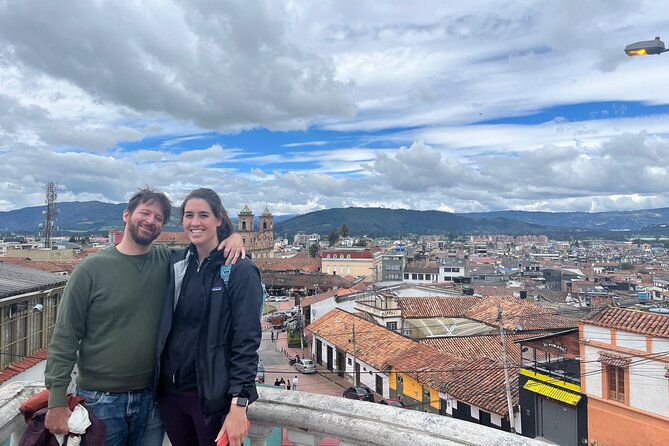
The route via La Calera provides a panoramic view toward northern Bogotá and the broad Sabana. This is not a formal sightseeing stop with a long visit, so think of it as a scenic introduction rather than a dedicated viewpoint excursion. Keep your camera ready.
The Sabana is later described as one of the tour’s five points, but it is not a single attraction. It means the countryside passed during the day: valleys, towns, farms, vegetation, flowers, animals, and occasional lagoons. This matters because much of the appeal comes from the journey between the named stops.
I like having this countryside context. You see how quickly Bogotá gives way to open country and smaller communities. A few people have wished for more roadside photo stops, so do not expect frequent chances to leave the vehicle.
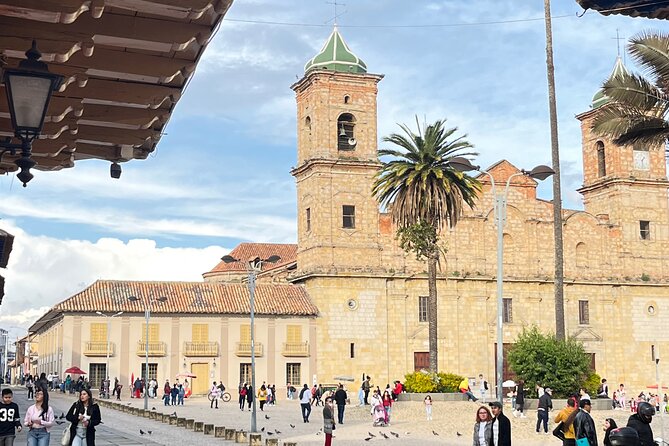
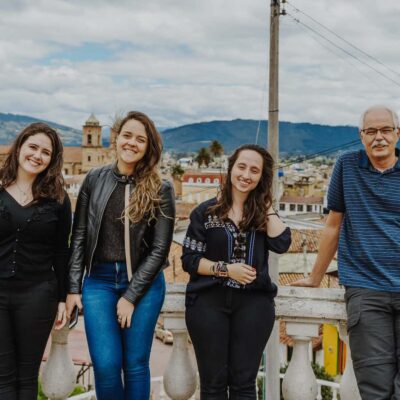
Guatavita town, 45 minutes among white walls
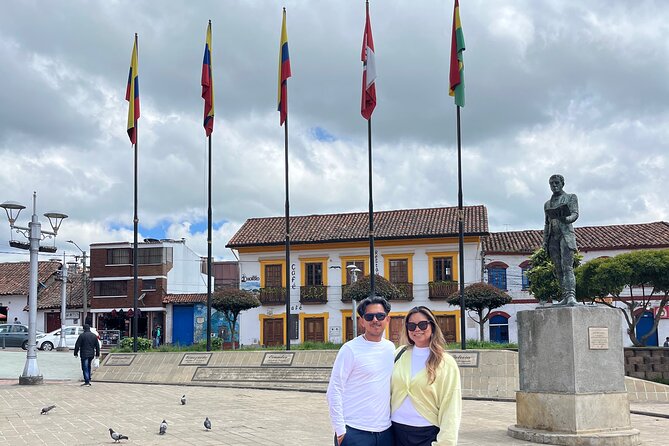
The first proper stop is the colonial town of Guatavita, reached at about 8:30 a.m. You get roughly 45 minutes to walk its streets and take photographs.
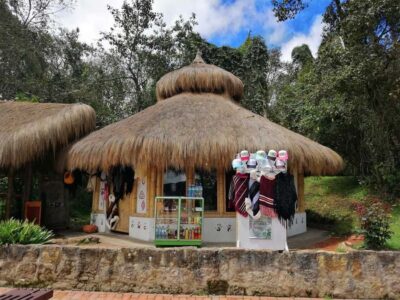
Guatavita is known for its white houses, clay-tile roofs, and stone paving. It is tidy, compact, and easy to explore in a short visit. The town’s style also prepares you for the Muisca stories connected with the nearby lake, especially the El Dorado legend.
Forty-five minutes is enough to walk around, see the main streets, and buy a coffee or small souvenir. It is not enough for a slow museum visit or an extended wander. I would use this stop for photos and a quick look at the architecture rather than expecting a full historical tour.
Bring a little Colombian cash. Coffee shops and souvenir stalls may not accept your preferred payment method, and small purchases are easier with pesos.
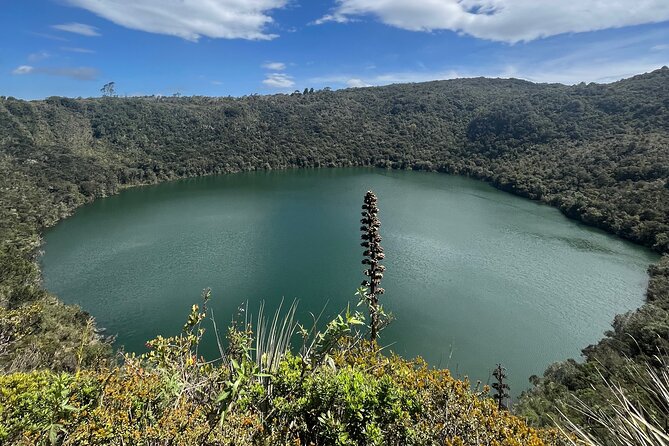
The Guatavita Lake walk at nearly 3,000 meters
This is the most physically demanding part of the day and, for many people, the most rewarding. After about 35 minutes by vehicle, you reach the entrance to the natural reserve around Guatavita Lake.
A local guide leads the walk and explains Muisca rituals, the origin of the El Dorado story, and the importance of the lake. The route climbs toward the water, which sits on a mountain at almost 3,000 meters. The walk is described as moderate and takes roughly 90 minutes to two hours, depending on the group and stops.
You should expect an uphill path, narrow sections, uneven surfaces, and thinner air. Several people in their 20s through their 70s have completed it, but that does not mean it feels easy for everyone. If you can comfortably climb several flights of stairs, you may manage it, but balance, knees, breathing, and altitude all matter.
Wear hiking shoes or firm walking shoes. A light rain jacket is wise because weather can shift quickly at altitude. Rain ponchos and hot tea may be available to buy, but do not rely on this as your only protection.
The lake itself is tied to the Muisca ceremonial tradition and the famous tale of a ruler covered in gold before offerings were made. The guide’s explanation gives the site more meaning than a quick photo stop would. You are not simply looking at a mountain lake. You are seeing the setting for one of Colombia’s most enduring legends.
English support can vary in how it is delivered. The tour includes English and Spanish guidance, and bilingual guides may translate the local reserve explanation. The description also notes that an English translation through the bilingual driver may require an additional payment at the entrance, so confirm the language arrangement before departure.
A few more Bogota half-days worth weighing up
- Bogota: Bicycle City Tour
★ 4.9 · 2,156 reviews - Bogotá: Guided La Candelaria Walking Tour
★ 4.8 · 1,229 reviews - Bogotá: Private City Tour, Monserrate, Emerald and Botero
★ 4.9 · 798 reviews - Bogotá´s Barrios: El Paraíso Favela Tour with Cable Car
★ 4.8 · 731 reviews
Lunch in Zipaquirá and what the price leaves out
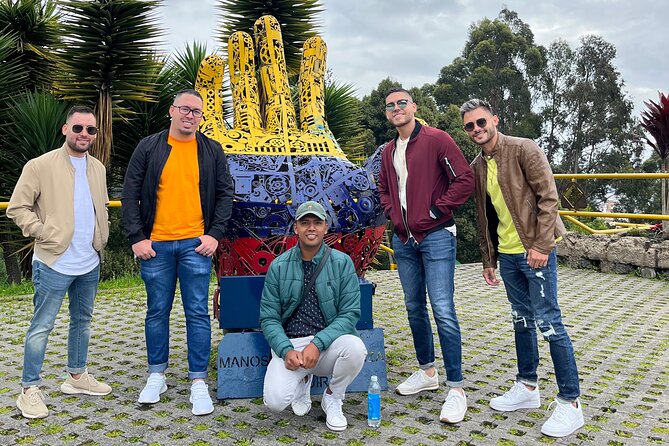
After the lake, the vehicle continues across the Sabana toward Zipaquirá, usually for more than an hour. The schedule allows about an hour for lunch at a local restaurant serving Colombian food.
Lunch is not included in the $53 price. The restaurant and menu are part of the planned stop, but you decide what to order and pay separately. Prices are displayed, so check the menu before choosing. The meal is useful because it gives you a proper break after the mountain walk, but do not think of it as a complimentary part of the package.
This is also where the tour’s value becomes easier to judge. Transportation and guiding are doing much of the work, while entrance tickets and food remain extra. If you add both admissions and lunch, the final cost will be notably higher than the advertised starting price.
Zipaquirá itself is more than a meal stop, but the schedule leaves limited time to explore its streets before entering the mine. If your priority is the town’s historic center, this tour may feel too rushed. If your priority is the Salt Cathedral, the stop does its job.
Inside the Zipaquirá Salt Cathedral
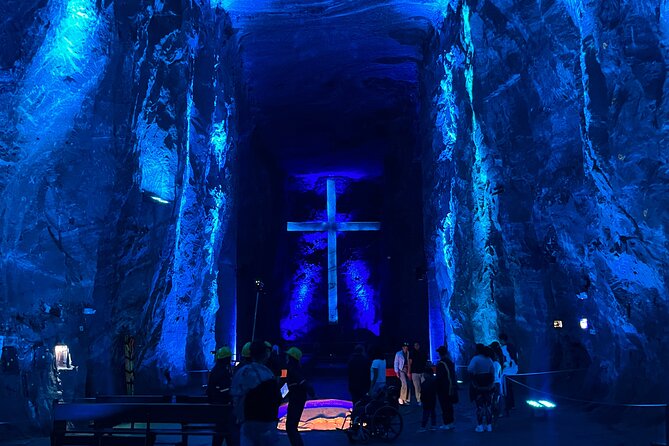
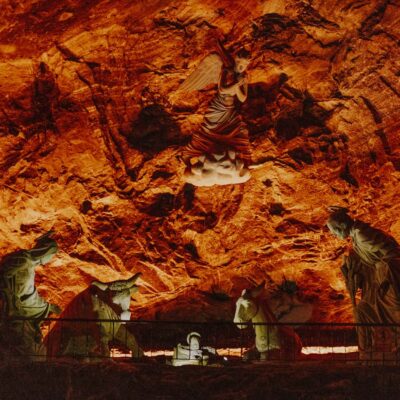
The Salt Cathedral is the day’s grand finale. It occupies a former salt mine, with religious spaces cut underground from the rock. You descend below the surface and eventually reach a large central area with an enormous underground cross and a hall used for ceremonies.
The mine is not a conventional cathedral with a tall exterior, stained-glass windows, or a bell tower. Its appeal is the setting: dark tunnels, carved salt chambers, religious symbols, colored lighting, and the sense of being far below ground. For some people, the mixture of faith, engineering, and mining history is fascinating. For others, the commercial areas and optional attractions may make the experience feel less like a church and more like a managed tourist complex.
Plan on about two to two and a half hours inside. You can request an audio guide in English or Spanish, and I recommend doing so if one is available with your admission. It helps you understand what you are seeing instead of simply walking through a series of lit chambers.
Depending on the entrance package, you might also find a cathedral light show, a film about the mine, a water mirror, shops, food areas, and a spa. These are optional additions, not reasons to rush through the central cathedral spaces.
The admission fee is not included and can be a major extra expense. One recent price cited was 125,000 Colombian pesos, though rates can change and may differ by visitor category. Check the current amount before committing to the tour if your budget is tight.
The vehicle, group size, and long return to Bogotá
The tour uses an air-conditioned vehicle, often a Mercedes Sprinter-style van, with a maximum group size of 16. The shared format keeps the price down and makes hotel pickup convenient, but comfort depends on where you sit.
Several people have found the rear seats cramped, especially on rough roads near Guatavita. Tall passengers may have trouble with legroom, and reclining seats in front can reduce the space behind them. One person also reported hitting their head on a luggage rack, so pay attention when moving around the vehicle.
I would ask about seating at pickup, especially if you are tall or have back, knee, or balance concerns. The ride between stops is part of the experience, but it can be tiring after the mountain walk. The route back to Bogotá takes more than an hour, and traffic can stretch the day.
The driver is an important part of the experience. The strongest accounts describe friendly, careful drivers, including Giovanni, Victor, Carlos, and Camillo. One person did report seeing a driver use a phone while driving, which is a serious safety concern. If you notice unsafe driving, speak up immediately to the guide.
The guides make a real difference
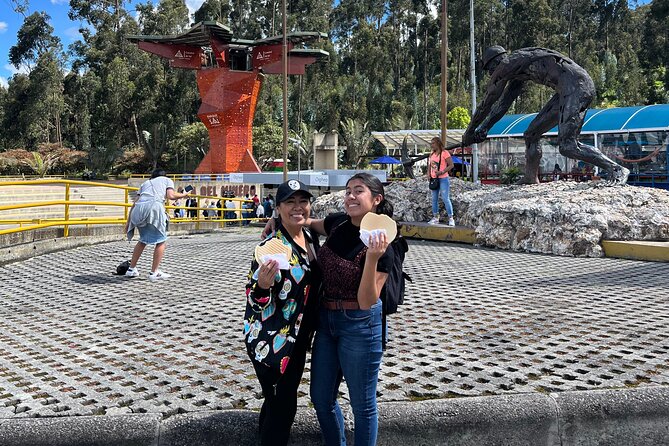
Tatiana receives especially warm praise for her energy, English, Spanish, stories, and ability to keep a mixed-language group together. She is described as explaining the El Dorado legend, local culture, plants, animals, and practical instructions in a lively way. She also appears to make a point of checking that people are comfortable during the long day.
You may be assigned another guide, such as Karen Lorena, so Tatiana is not guaranteed. The important point is that the tour depends heavily on the guide. Good bilingual explanations help during the lake walk, the town visit, and the transitions between stops. They also keep the long vehicle sections from becoming dead time.
This is a group experience, and outside the reserve you may encounter other tour groups. At Guatavita Lake, a local guide may lead several people along the same route. That can create noise and crowding at times, even though your booked group remains separate.
Who should book this tour?
I would choose this tour if you want to see both major attractions in one day and prefer someone else to handle rural transportation. It suits first-time visitors to Bogotá, people with limited time, and anyone who likes a full schedule with history, nature, food, and unusual architecture.
It is also a good match for social travelers who enjoy meeting a small international group. The maximum of 16 people is manageable, but the vehicle may feel full.
I would choose a slower, separate visit if you want long meals, quiet photography, detailed exploration of Zipaquirá, or a relaxed hike. I would also think twice if high altitude, uneven trails, long sitting periods, or late returns are difficult for you.
The cancellation policy is flexible up to 24 hours before the start time, with a full refund. The tour requires a minimum number of participants, so a cancellation by the operator may result in another date, another experience, or a full refund.
Should you book it?
Book it if your goal is maximum sightseeing for a relatively low starting price. The combination of Guatavita Lake and the Salt Cathedral is genuinely unusual, and the colonial town and Sabana scenery add useful variety.
Go in with open eyes: pay the extra admission fees, bring money for lunch, prepare for altitude and rain, and expect a very long day. Ask about seating if you are tall, and confirm how English guidance will be handled. For the right person, this is a strong value-packed day outside Bogotá. For someone seeking comfort and a leisurely pace, it may feel like too much road and too little time.
FAQ
What is included in the $53 tour price?
The price includes accommodation pickup and drop-off, transportation, English and Spanish guidance, travel insurance, visits to Guatavita town, Guatavita Lake, the Bogotá Sabana, Zipaquirá, and time for lunch. Food and entrance tickets are not included.
Are the Guatavita Lake and Salt Cathedral entrance fees included?
No. You pay both admission fees separately. Prices can vary for foreign visitors, Colombian nationals, seniors, and people with disabilities.
How long does the tour last?
The advertised duration is about 11 to 12 hours, but the day can run from approximately 7:00 a.m. until 9:00 or 10:00 p.m. The exact return time is not guaranteed.
Is the Guatavita Lake walk difficult?
The walk is described as moderate and takes about 90 minutes to two hours. It includes an uphill route on uneven ground at almost 3,000 meters, so comfortable shoes and reasonable fitness are important.
Is lunch included?
No. The tour allows time for lunch at a typical Colombian restaurant in Zipaquirá, but you pay for your own meal. Breakfast and dinner are also excluded.
Is this a private tour?
No. It is a group tour with a maximum of 16 people. You travel in a shared air-conditioned vehicle with other participants.
Can I get information in English?
The tour provides English and Spanish guidance. The Salt Cathedral also offers a free audio guide in English or Spanish, and the bilingual driver or guide may assist with translation during the day.
Just added around Bogota
- Zipaquirá: Private tour to the Salt Cathedral, Colombia’s first wonder★ 4.9 · 33 reviews
- Zipaquira: 5 hrs Salt Cathedral Tour★ 4.4 · 9 reviews
- Zipaquirá: Private Salt Cathedral Mine and Walking Tour★ 4.8 · 3 reviews
- Wonders of Salt: Colombia’s Underground Cathedral★ 5.0 · 18 reviews
- Zipaquirá Salt Cathedral & Andrés Carne de Res (Chía)★ 4.6 · 30 reviews
- Villa de Leyva Trip by Private Transportation★ 4.8 · 27 reviews
- Wonderful tour of Villa de Leyva, and Zipaquira Salt Cathedral.★ 4.5 · 34 reviews
- Theatron Party-Tour, 20 Clubs, Map, cocktail, bottle, After-party★ 5.0 · 27 reviews
Salt Cathedral Tours, compared.
Zipaquirá Salt Cathedral and Lake Guatavita Day Tour
Read our review →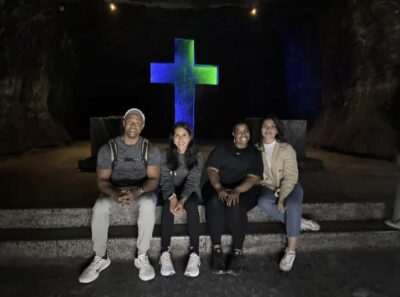
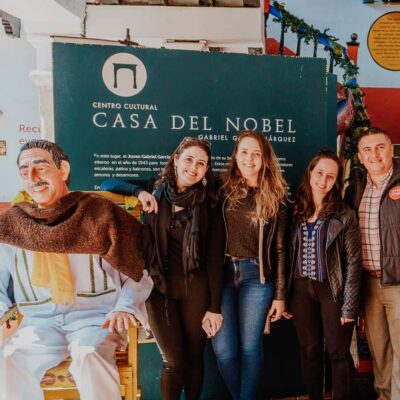
Zipaquirá Salt Cathedral & Guatavita Trip with Pickup
Read our review →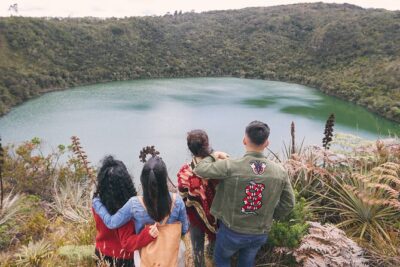
Shared Tour Zipaquirá Salt Cathedral and Guatavita Lagoon
Read our review →
Salt Cathedral of Zipaquirá & Lake Guatavita: Private or Shared
Read our review →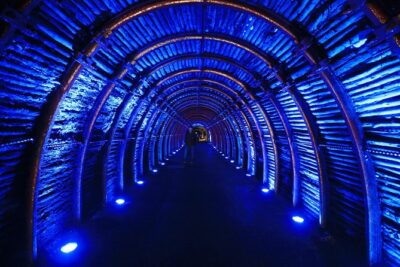
Private Salt Cathedral of Zipaquira Tour from Bogota with Lunch
Read our review →Browse the lists this tour appears in